
Could Small Modular Reactors Soon Power Data Centers?
In
Login if you are already registered
(votes: 5, rating: 5) |
(5 votes) |

Ph.D. in Physics, Project Director at Rosatom Energy Projects JSC

Ph.D. in Political Science, Executive Director at Colaboratoria ANO
Data centers rank among the most energy-intensive facilities in today’s infrastructure. In 2024, they accounted for 1.5% of global electricity consumption, driven by the rapid growth of artificial intelligence (AI) and cloud computing. Data center electricity consumption has grown by around 12% per year since 2017, more than four times faster than the rate of total electricity consumption. This massive energy demand exposes some shortcomings of traditional energy sources such as coal, gas and large nuclear power plants (NPPs), which often struggle to deliver what modern data centers need the most: flexibility, fast scalability and environmental sustainability. Could small modular reactors (SMRs), with their fundamentally new approach to powering data centers, become a solution to this trilemma? We discussed this with Alexander Volgin, Project Director at Rosatom Energy Projects JSC.
Data centers rank among the most energy-intensive facilities in today’s infrastructure. In 2024, they accounted for 1.5% of global electricity consumption, driven by the rapid growth of artificial intelligence (AI) and cloud computing. Data center electricity consumption has grown by around 12% per year since 2017, more than four times faster than the rate of total electricity consumption. This massive energy demand exposes some shortcomings of traditional energy sources such as coal, gas and large nuclear power plants (NPPs), which often struggle to deliver what modern data centers need the most: flexibility, fast scalability and environmental sustainability. Could small modular reactors (SMRs), with their fundamentally new approach to powering data centers, become a solution to this trilemma? We discussed this with Alexander Volgin, Project Director at Rosatom Energy Projects JSC.
How viable from a technological and economic perspective are SMRs (in particular, KLT-40S and RITM-200) as an energy source for energy-intensive facilities such as data centers in Russia and abroad? What scenarios are realistic in the next five to 10 years in terms of commercial and logistical efficiency?
Nuclear Power and the Global South
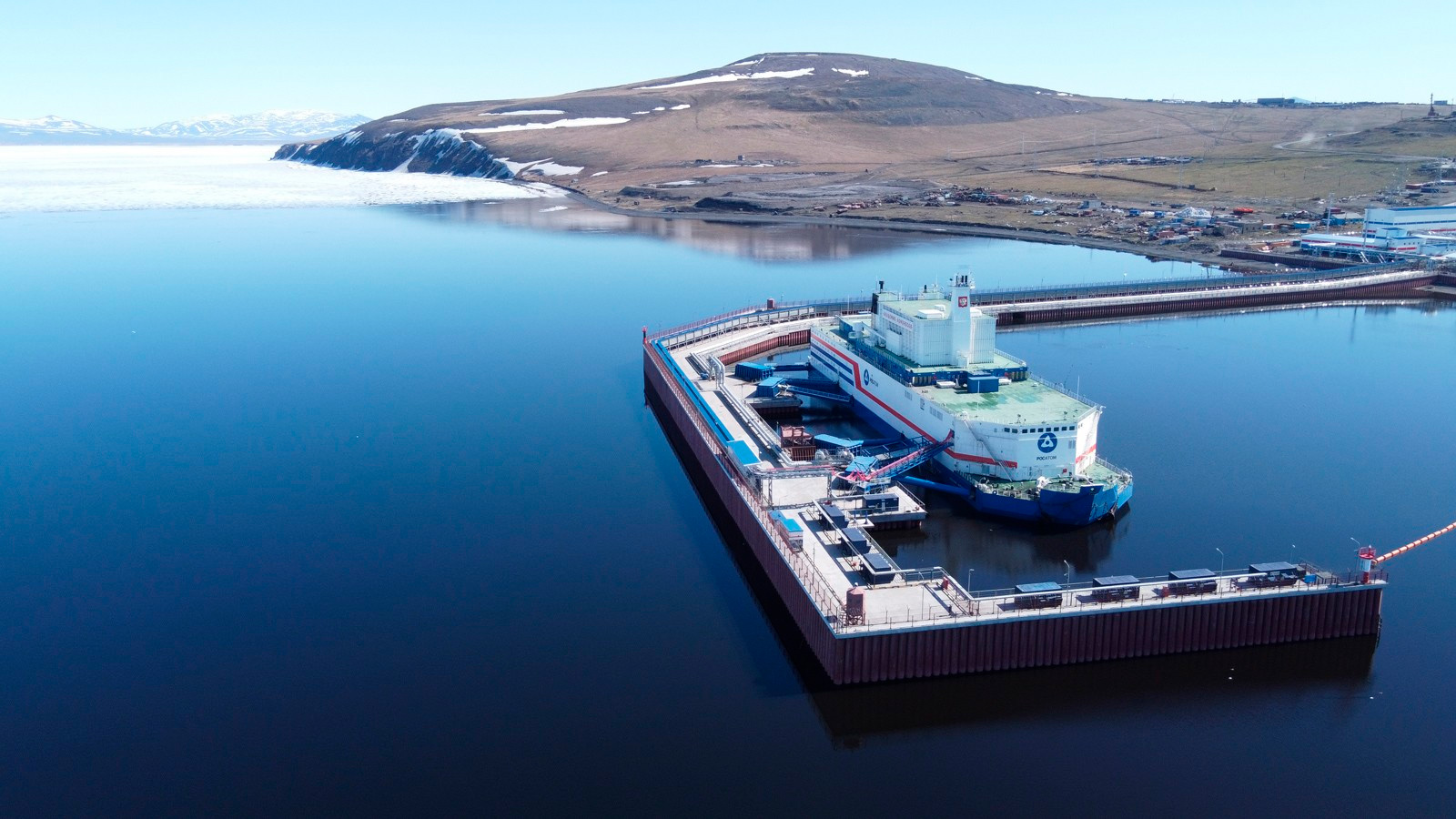
From a technological and economic perspective, SMRs are one of the most promising solutions for powering data centers. Why? Because they are a great match in technology. Data centers require vast amounts of reliable and predictable power 24/7, along with cooling water and network connectivity. Small nuclear power plants (SNPPs), such as those equipped with the RITM-200 reactor, also need water and grid infrastructure, making them a natural fit for data centers. Their key advantages include modular design (so capacity can grow together with data centers, which are also built in modules), factory readiness (cutting construction time and risks), long operating cycles before refueling (around six years for RITM-200) and exceptional reliability. Picture a data center located in a remote region or on the coast: a floating power unit like the Akademik Lomonosov (KLT-40S) or a land-based RITM-200N becomes a perfect, and sometimes the only, solution for reliable power. The low-grade heat generated by data centers can also be recycled for use onsite.
From an economic standpoint, it is true that the upfront investment is substantial, but overall SNPPs are less capital-intensive than large NPPs. For data centers, the key issue is predictable electricity prices over decades, since energy accounts for up to 40% of operating expenses. SMRs offer stable rates over the long term, shielding operators from market fluctuations. Right now, the Kalinin data center, which runs on power from a large NPP, enjoys below-market electricity rates and 100% uptime. At first glance, electricity from SNPPs may seem more expensive than solar or wind power. But add in the cost of backup capacity, energy storage (batteries) and downtime due to the intermittency of renewables, and the balance tilts toward SNPPs.
Looking five to 10 years ahead, Russia is actively developing a network of data centers powered by existing NPPs, starting with a pilot in Kaliningrad and projects at Novovoronezh, Balakovo and Smolensk power plants. In the Arctic and Far East, key solutions are floating power units (adapted to the needs of Chukotka) and land-based small NPPs with the RITM-200N reactor. In 2024, a modular data center project was launched at the Kola NPP, which is expected to serve as a model for other remote energy-intensive facilities. Globally, the biggest opportunities lie in the markets with underdeveloped grid infrastructure, unstable generation or stringent requirements for clean energy. Floating power units (running on the KLT-40S or the more powerful RITM-200M) are ideally suited for coastal data centers in South and Southeast Asia, Africa and Latin America, while land-based RITM-200N reactors are a solution for continental locations.
Which of Russia’s SMR projects, both land-based and floating ones, are at the stage of export readiness, particularly as solutions for sustainable and autonomous power supply to data centers in friendly countries?
Rosatom is offering for export several ready-to-use solutions that have been proven in real-world conditions. The floating NPP equipped with the KLT-40S is a well-tested technology. The Akademik Lomonosov has been operating successfully for several years now, supplying electricity to a remote region. The capacity of a single unit is 35 MW, and the twin-unit power plant generates 70 MW. This is a turnkey solution for coastal data centers or island nations in need of an autonomous and reliable power source. It is perfect for rapid deployment.
As for land-based SNPPs with RITM-200N reactors, we are now building the first power plant of this kind in Ust-Kuyga (Yakutia), and it is scheduled to come online in the next few years. But this technology has been proven in icebreakers! Each module generates 55 MW. This is a next-generation solution: more powerful, more compact, with improved economic performance and a long fuel cycle. The RITM-200N is our flagship design for land-based SNPPs for export markets, especially for large data centers or industrial clusters in countries with advanced infrastructure or in remote regions where new construction is possible.
Floating power units equipped with RITM-200M reactors will generate and supply electricity under power purchase agreements—long-term contracts between energy buyers and suppliers. Their capacity is significantly higher, up to 100 MW. Fuel and critical systems are already prepared. This project is tailored to export markets, catering to energy-intensive industries such as large data centers or mining operations in coastal areas (such as the project in Chukotka).
We are in talks with several friendly countries and see interest from them. For example, in Brazil, where Rosatom has experience in nuclear fuel supply, SMRs are being considered as a potential solution for powering metropolitan data centers and remote industrial facilities. We are actively discussing the use of our SMRs in building sustainable data center infrastructure at BRICS and other international forums.
What is the growth potential of SMR exports, and is this a strategic priority for Rosatom over the next five to 10 years, given the global demand for decentralized and low-carbon power sources?
Rosatom sees SMR exports as a strategic direction for the next decade and a central pillar of its global low-carbon agenda. Why? Because there is vast market potential as demand for decentralized, reliable and low-carbon energy sources is soaring worldwide. By 2030–2050, the SNPP market is projected to reach tens of gigawatts of capacity and hundreds of billions of dollars in investment. The European Union, for example, has announced plans for 25 GW of SMRs by 2030, which includes powering data centers. Our reactors offer unique competitive advantages: proven technology (especially in the nuclear fleet), modular design and adaptability to different environments.
We are focusing on markets where our solutions are needed most: countries with underdeveloped or unstable grid infrastructure (Africa, Southeast Asia and Latin America); regions scaling up renewables but requiring reliable low-carbon baseload or backup generation to maintain grid stability, which is essential for data centers; and remote industrial facilities and communities where data centers could drive the growth of the digital economy.
Rosatom’s strategic objective is to secure a leading share (15–20%) of the emerging global SNPP market by 2030. To achieve this, we are promoting SNPPs and floating power units equipped with the RITM-200 reactor series as our flagship export products.
We are tapping development finance mechanisms (including partnerships within BRICS) and forming international alliances with strong local players.
We are also working to bring down capital expenditures to a level that would be competitive in the most demanding markets, with a target of around $3,500–4,000 per kilowatt of installed capacity.
Of course, competition is fierce, with players such as Holtec in the United States and CNNC in China. Our key goals are further cost optimization, faster construction timelines and adaptation to different regulatory requirements.
How seriously is Rosatom looking at the possibility of expanding Russia’s network of data centers linked to the energy infrastructure of existing NPPs, beyond the projects that are already underway?
Developing the network of nuclear-powered data centers is undoubtedly a strategic priority for Russia, and we are actively working on it, going beyond the projects already announced. One good example is the Kalinin data center (48 MW, 4,800 racks), directly connected to the Kalinin NPP. It demonstrates the full range of advantages: top-notch reliability (Tier III, 100% uptime), competitive electricity rates and exceptional security. The next step is a pilot modular data center at the Kola NPP for the Arctic.
Our expansion plans focus on building a geographically distributed network of Russian data centers powered by NPPs. In the coming years (our target is 2026), we are planning to launch similar modular data centers at other large plants such as Novovoronezh, Balakovo and Smolensk NPPs. The goal is to set up a network of 10 or more facilities with a total capacity above 100 MW.
The model’s advantage lies in disaster resilience. By spreading data centers across multiple regions and time zones, it is possible to build systems for mutual data backup that are protected from local disruptions. Energy and cost efficiency are achieved through direct connection to a powerful and stable energy source.
NPPs are facilities with an unprecedented level of physical and cyber security, which is critical for data centers. We are already implementing advanced solutions here, for example, AI-driven facial recognition and access control systems.
The challenges for expansion include balancing energy capacity. At some plants, especially in the Far East, where capacity is tight and export demand to markets like China is high, resource allocation for new data centers must be planned carefully so as not to compromise existing obligations or regional needs. This requires a comprehensive approach to the development of generating capacities as a whole.
The interview questions were prepared by Maria Bazlutskaya, Ph.D. in Political Science, Executive Director at Colaboratoria.
(votes: 5, rating: 5) |
(5 votes) |
Policy Brief #52/2024
Nuclear Power and the Global SouthThe shift of leadership in nuclear power development from the Global North to the Global South is a natural process of transformation in global energy markets


