
Artemis II: The United States, China, and the Second Lunar Race
In
Login if you are already registered
(no votes) |
(0 votes) |

Ph.D., Associate Professor at the School of Advanced Studies, Tyumen University
Tyumen University
NASA’s new lunar plan and Elon Musk’s “shift” from Mars to the Moon signal that the Second Moon Race has entered the second and crucial phase where the U.S. and China are accelerating their programs, increasing the quantity and complexity of automated stations, and preparing for manned missions by the end of the decade. Unlike the 1960s Space Race, these programs seek not only to plant the flag on the Moon, but also to explore possible locations for permanent settlements near the lunar south pole and test life-support systems. In other words, both China and the U.S. aim to put the first stone on the Moon by 2030 and subsequently establish a permanent presence on strategic locations on the lunar surface. Artemis II appears to be the starting point of a long race to dominate the ultimate frontier: outer space.
NASA has just sent four astronauts to the Moon on the historical Artemis II voyage, 53 years after the last lunar mission. NASA Administrator Jared Isaacman pointed out: “America is back in the business of sending astronauts to the Moon and bringing them home safely.” The four astronauts joined a group of just 24 other humans that have travelled to another celestial body. Moreover, the Artemis II crew has been farther from Earth than any other human being has ever been. As the first crewed lunar mission in over five decades after the Apollo era, Artemis II tested systems required for subsequent lunar surface operations, particularly Artemis III (life-support systems, navigation, communications, and deep-space operational procedures with humans aboard).
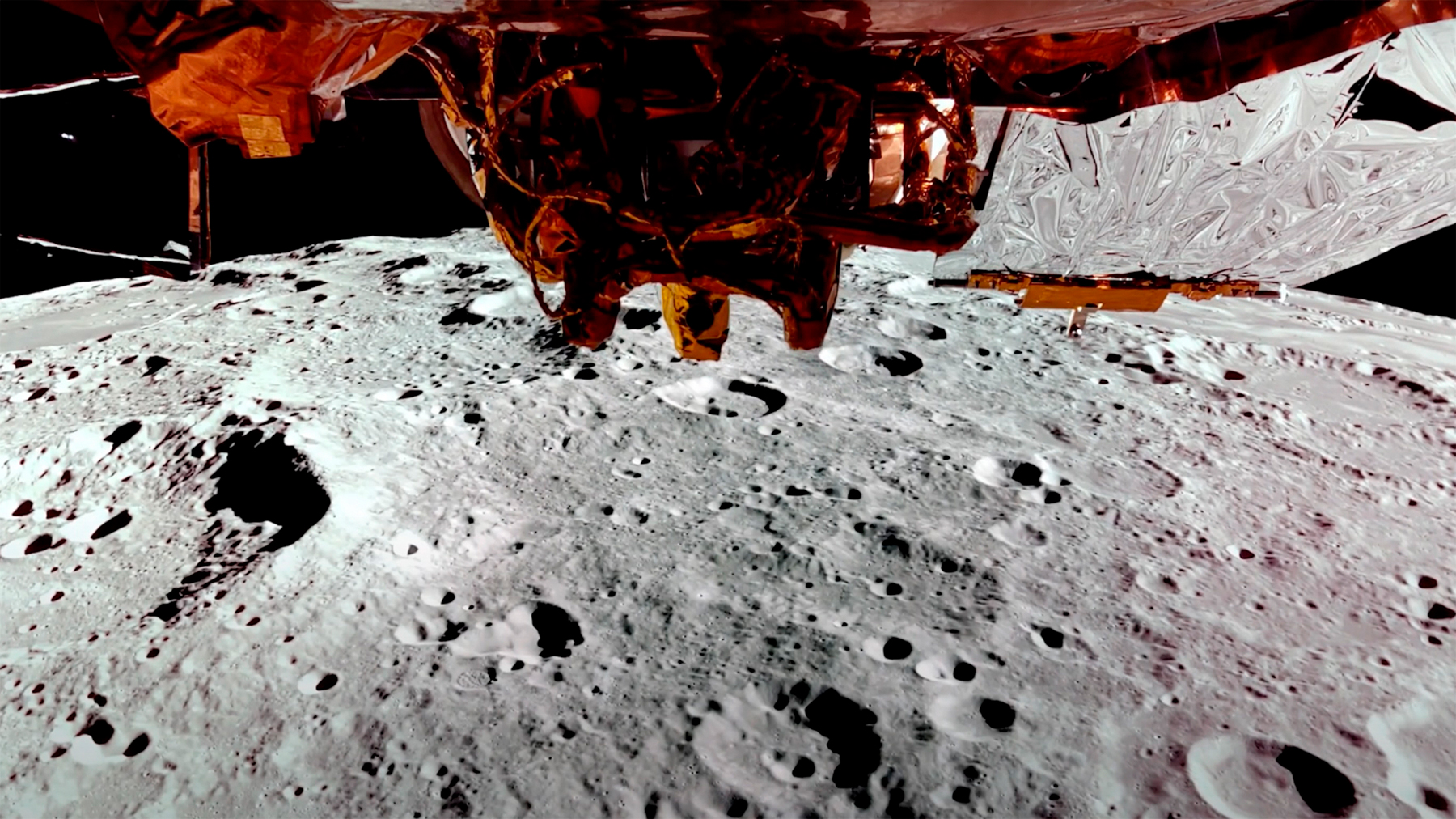
Moon Fever 2.0
The Artemis II mission included many emotional moments and spectacular images with views that human eyes had never seen before, such as fantastic images of a lunar eclipse, the far side of the Moon, Earthset and Earthrise. During the historic lunar flyby, and while being the farthest from Earth in history, Artemis II astronaut Hansen said “We most importantly, choose this moment to challenge this generation and the next to make sure this record in not long-lived.” In this sense, Artemis II is intended to serve as a stepping stone toward a permanent human presence on the Moon and the human exploration of Mars.
It should be emphasized that the historic Artemis II mission was preceded by SpaceX’s “turn” to the Moon: this February, Elon Musk surprisingly announced that SpaceX is now prioritizing the development of a self-growing city on the Moon, “as we can potentially achieve that in less than 10 years, whereas Mars would take 20+ years.” Following the statement, Musk shared a series of updates about new plans to build a lunar base and develop orbital AI databases. These statements have raised several questions, as SpaceX, since its inception, set itself the goal to establish a self-sufficient city on Mars as the first stage of humanity becoming an interplanetary species. Thus, one question immediately arises: has SpaceX abandoned Mars and is backing away from the ultimate goal of a multiplanetary civilization? According to Musk, “the mission of SpaceX remains the same: extend consciousness and life as we know it to the stars.” Similarly, Musk mentioned that first launches to Mars would start in five to six years. Accordingly, a permanent lunar settlement would establish a foothold beyond Earth sooner that one on Mars. Still, what are the deeper purposes of this shift?
Arguably, the main reasons behind this turn are geopolitical. China’s ambitious space program has set the goal to transform the country into a spacefaring nation within the next decade. An integral part of this project is to land a taikonaut on the Moon by 2030. In this regard, Chinese Lunar Exploration Program (the Chang’e Project) has made tremendous achievements in the last fifteen years: from a simple orbiter to far-side sample return. China has also demonstrated its capabilities to operate in cislunar space and deploy satellites near Earth-Moon Lagrange points. China’s broader lunar program has evolved into a highly systematic and technologically ambitious effort that combines robotic exploration with preparations for future crewed missions and the development of an International Lunar Research Station (ILRS) jointly with Russia.
China’s continuous achievements in the last five years have generated serious concerns for NASA and Washington elites, as the U.S. plans to put back an astronaut on the Moon by the end of this decade are lagging behind. NASA’s Space Launch System (SLS) that carried the Orion spacecraft and the Artemis II crew to the Moon is only designed to orbit the Moon but not to land on the lunar surface. In order to put humans back on the Moon, NASA needs a lander. SpaceX won the competition to design the lunar lander for Artemis III, but has not yet completed a prototype, although it is expected to be ready for testing next year. Arguably, Elon Musk’s extensive involvement in politics last year caused significant setbacks for SpaceX in its efforts to develop and test Starship—the new-generation super-heavy reusable spacecraft—and its lunar lander.
Additionally, in February 2026, NASA announced revisions to the architecture of its Artemis program. As of the original plan, Artemis III should have attempted a lunar landing by 2027. Under the updated plan, Artemis III will focus on integrated testing rather than attempting a lunar landing. NASA still aims to land astronauts by 2028, but the first landing will now occur on Artemis IV, while Artemis III concentrates on testing tasks originally planned alongside the landing. This approach mirrors the early Apollo program, which launched incremental, quick-succession missions to test and prove the technologies necessary to safely land astronauts on the Moon. Analysts describe the change as a pragmatic recalibration rather than a retreat from lunar exploration. The original plan required several unproven steps, including orbital refueling of Starship and complex docking procedures, so the revised Artemis III mission is viewed as a necessary measure that reduces technological leaps between test flights and actual lunar surface operations.
Aside from the success of Artemis II, two events will further cement the trajectories of both U.S. and China’s lunar programs in 2026: China’s Chang’e-7 mission to the Moon and Starship refueling and docking procedures.
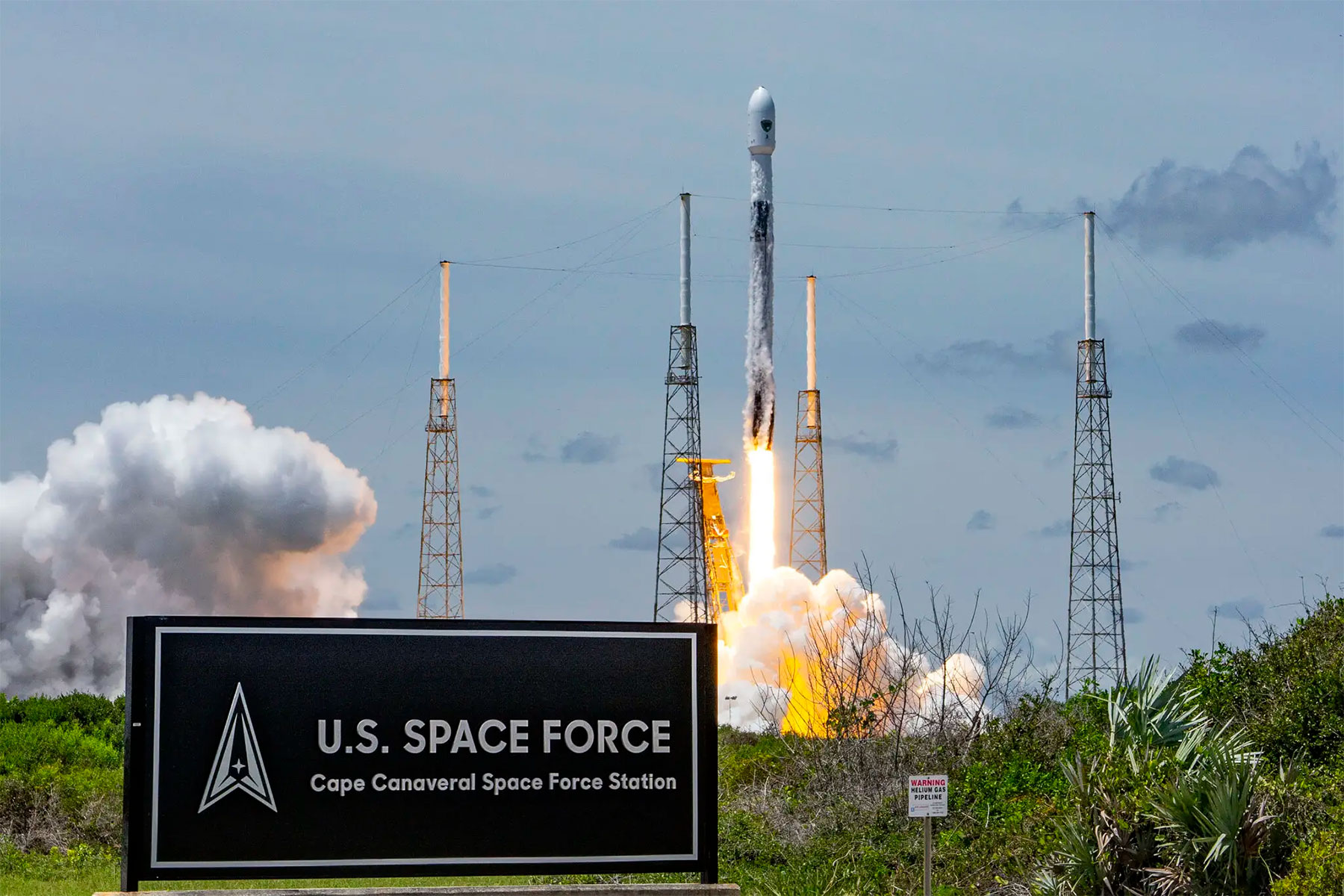
China’s Chang’e-7 mission remains on track for a late-2026 launch and is intended to conduct a detailed scientific investigation of the Moon’s south polar region, an area of high scientific interest due to permanently shadowed craters and potential water-ice deposits. The mission architecture includes an orbiter, a lander, a rover, and a mini-hopper vehicle. This multi-component approach is designed to enable a comprehensive exploration of the lunar south pole, particularly targeting permanently shadowed regions where water ice may be present. Search for such a vital resource as water ice underscores not only the experimental, but also the strategic nature of this mission for future crewed space exploration because of the potential to be converted into drinking water, breathable oxygen, and even rocket fuel. Moreover, the mission is expected to test critical technologies such as high-precision landing, autonomous navigation, and mobility in extreme environments, all of which are essential for future human missions. Taken together, these developments suggest that China’s lunar program is not limited to isolated scientific missions but constitutes a coordinated strategy aimed at establishing a sustained presence on the Moon.
Starship, likely to become operational as an orbital vehicle this year, has been contracted to take astronauts to the Moon as part of NASA’s Artemis program. In this sense, a key technological milestone for SpaceX in 2026 would be the demonstration of orbital propellant transfer between Starship vehicles as Starship cannot go all the way to the Moon without refueling. In this sense, in-orbit refueling using liquid methane and liquid oxygen is widely considered essential for enabling long-duration lunar missions and future interplanetary travel. Analysts emphasize that without successful refueling demonstrations, Starship’s lunar and deep-space capabilities would remain limited. In addition, it is imperative for SpaceX to increase the rate of test launches this year in order to progress towards initial commercial and scientific payload missions.
NASA’s new lunar plan and Elon Musk’s “shift” from Mars to the Moon signal that the Second Moon Race has entered the second and crucial phase where the U.S. and China are accelerating their programs, increasing the quantity and complexity of automated stations, and preparing for manned missions by the end of the decade. Unlike the 1960s Space Race, these programs seek not only to plant the flag on the Moon, but also to explore possible locations for permanent settlements near the lunar south pole and test life-support systems. In other words, both China and the U.S. aim to put the first stone on the Moon by 2030 and subsequently establish a permanent presence on strategic locations on the lunar surface. Artemis II appears to be the starting point of a long race to dominate the ultimate frontier: outer space.
(no votes) |
(0 votes) |
The new theory of success proposed by the US Space Force is an attempt to justify the force component in space exploration. Obviously, these plans have to be judged not only as a new Manhattan project, but also as a military-economic support for the establishment of a new world order
Moon Fever 2.0As the Moon’s economic attractiveness grows, so will the potential for conflict


