
Turkey's "Terror-Free" Initiative: A Complex Geopolitical Landscape
In
Login if you are already registered
(votes: 5, rating: 5) |
(5 votes) |

Juris Doctor, Researcher and lecturer at Duhok Polytechnic University, Iraqi Kurdistan Region
Upon reaching an agreement with the Turkish state, Turkey has taken the first definitive step towards executing the “Terror-Free Turkey” plan, which seeks to find a legal and constitutional approach for the Kurdistan Workers' Party (PKK) to disband and lay down its arsenal. Last October, PKK leader Abdullah Ocalan backed this plan, which was promoted by Nationalist Movement Party (MHP) leader Devlet Bahceli. The plan has been approved by President Recep Tayyip Erdogan. A parliamentary committee on the subject convened for its inaugural session on August 5th with a mandate to recommend to parliament amendments to the law and constitution that would carry out this plan and this course. With this phase, the plan's elements are becoming more apparent, but it still falls far short of the openness and genuine ambitions that the Turkish government, Ocalan, and his party agreed upon.
Despite the political and parliamentary efforts in Turkey for the "Kurdish-Turkish reconciliation," the Kurdish question is not being resolved in an unconventional manner as most Kurds anticipate; rather, there is only a limited and well-defined reconciliation between the Turkish state and the Kurdistan Workers' Party (PKK). The primary objective of this reconciliation is Turkish foreign policy; if Syria stays unified, it seeks to increase Turkish political power there; if it chooses to divide it, it seeks to increase its military might and possibly its geographic reach. This will be accomplished by turning Abdullah Ocalan, the leader of the Kurdistan Workers' Party, into a future representative of the Turkish state in Syria and by attempting to entice the SDF as a "potential ally" through agreements that might coincide with the Turkish perspective on its sovereign territory (Misak-I-Milli-National Pact).
As of right now, the most likely scenario is that the parliamentary committee will be successful in crafting proposals that appease the PKK and its leader, Ocalan, and that parliament will accept them, establishing Ocalan as a political figure and ally of the Ankara government. Talk of "the seriousness of the situation in northern Syria and its threat to Turkey's security, and Ankara's need for Ocalan and the Kurds to help it "will probably mask the political response this is likely to cause from some Turkish popular movements. This would speed up communication between Ankara and the SDF, and Ankara might even try to convince the SDF to break with Israel, join the Syrian army, and keep Syria united through Ocalan.
However, there is still a chance that public pressure against the decisions to free Ocalan and pardon PKK militants will cause the opposition Republican People's Party (CHP) to withdraw from the committee. The committee's work, which consists of a majority of members from the ruling coalition, tiny opposition parties, and the Kurdish party, will still be able to make the required recommendations even if the withdrawal takes place, albeit in a way that goes against consensus.
More significantly, the SDF's inclination to depend on Washington and Tel Aviv for assistance and the potential for the SDF to go to war with the transitional government forces in Damascus might make the discussion between Turkey and the SDF fail. The intended "path to a solution" in Turkey is impeded by all these alternatives. If it turns out that Abdullah Ocalan has limited authority over the SDF and the Syrian Kurds, political pressures may force President Erdogan to terminate this reconciliation, which under present circumstances offer him no political advantages either at home or abroad. Given that the idea has been rejected from the beginning by successive Turkish governments, the Turkish public still views a deal that would dissolve the Kurdistan Workers' Party (PKK) and pardon its leader and militants in exchange for their return to political activity in the Turkish parliament as unacceptable.
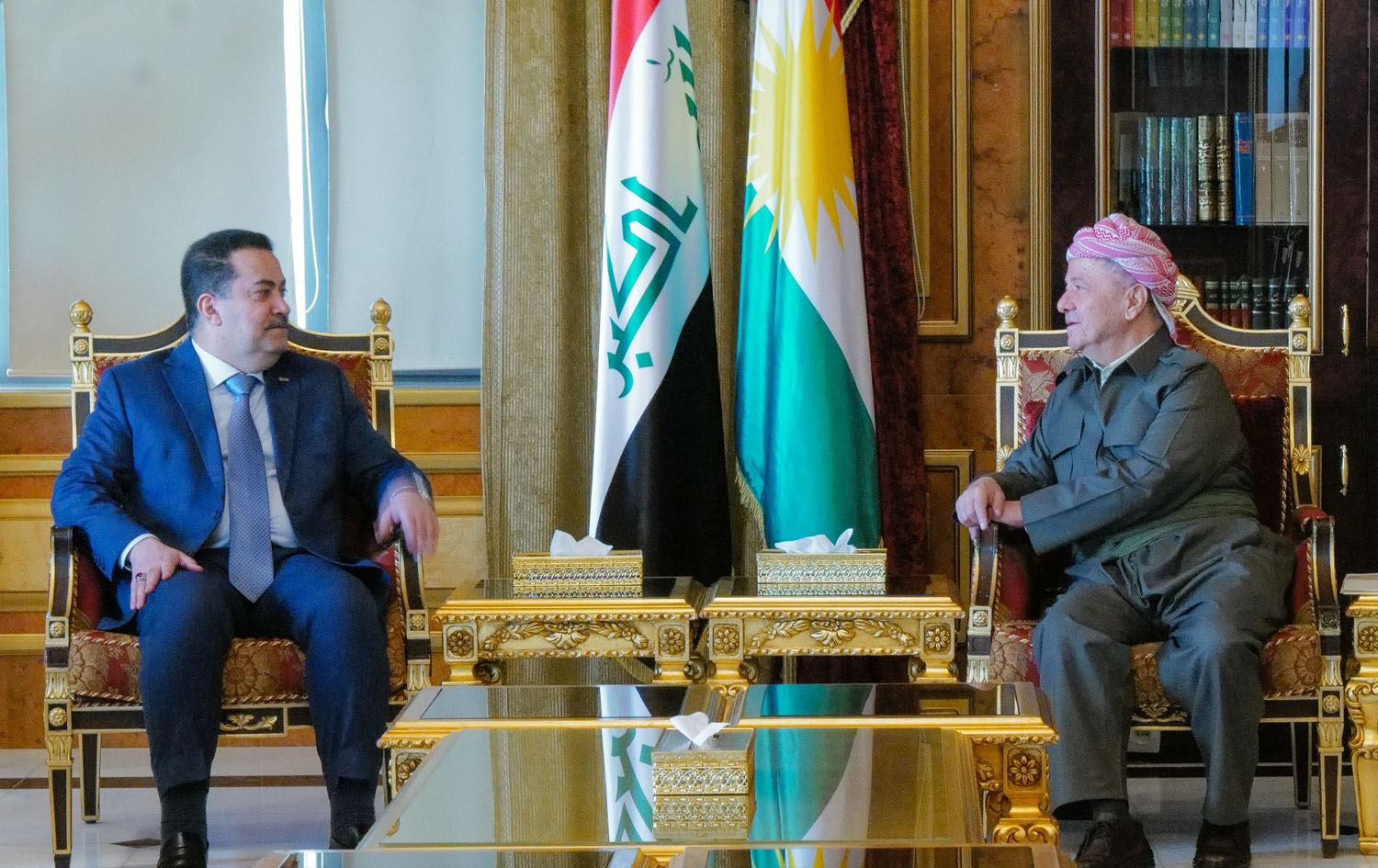
Ankara's relations with the Kurdistan Regional Government of Iraq, which is controlled by the Kurdistan Democratic Party (KDP), will be impacted if the first scenario comes to pass and Ocalan becomes a prominent political figure in Turkey (the Vice President of the Republic of Turkey). This is especially relevant considering the tight ties between Ocalan and his party and the Sulaymaniyah-based Patriotic Union of Kurdistan (PUK). This will influence the economic and political conditions and make them favorable for foreign investment in Erbil, the capital of Iraq's Kurdistan Region. With the help of Iran and Turkey, the PUK may even attempt to take over the entire region through this geopolitical standing.
Upon reaching an agreement with the Turkish state, Turkey has taken the first definitive step towards executing the “Terror-Free Turkey” plan, which seeks to find a legal and constitutional approach for the Kurdistan Workers' Party (PKK) to disband and lay down its arsenal. Last October, PKK leader Abdullah Ocalan backed this plan, which was promoted by Nationalist Movement Party (MHP) leader Devlet Bahceli. The plan has been approved by President Recep Tayyip Erdogan. A parliamentary committee on the subject convened for its inaugural session on August 5th with a mandate to recommend to parliament amendments to the law and constitution that would carry out this plan and this course. With this phase, the plan's elements are becoming more apparent, but it still falls far short of the openness and genuine ambitions that the Turkish government, Ocalan, and his party agreed upon.
Commission Objectives and the Position of the Opposition

A New Era for the Kurdish Question
Nationalist Movement Party (MHP) leader, Devlet Bahceli, advocated in May that a parliamentary commission be formed to supervise the “Terror-Free Turkey” initiative. Involving the opposition in this process, portraying the initiative as a national initiative rather than a government strategy, and ensuring the legitimacy of decisions pertaining to the release of Abdullah Ocalan, the leader of the PKK, and the amnesty of PKK members were the priorities. There may be public opposition to these decisions, which the government may not choose to handle on its own.
The Republican People's Party (CHP), the largest opposition party, was first hesitant to join the committee because they considered it would only serve to legitimize it without giving them any say in its decisions. Therefore, CHP leader Ozgur Ozel insisted that a two-thirds majority be used to decide the committee's decisions. The CHP joined the committee when Speaker of the House of Representatives Numan Kurtulmus agreed to this condition. The 51-member committee's foundation, however, shows that this need was only used as a pretext to support membership. Only ten members of the CHP are on the committee, while the ruling Justice and Development Party (AKP) has twenty-one, the Kurdish Peoples' Equality and Democracy Party (DEM Party) has four, and the Nationalist Movement Party (MHP), its partner, has four. This implies that if the ruling coalition agrees with the Kurds and three additional members from smaller parties on the committee, it might obtain a two-thirds majority—31 votes. Therefore, it seems that the government and the opposition Republican People's Party (CHP) may have brokered a deal for the CHP to join the committee in exchange for the release of several opposition party mayors facing corruption trials. However, this alleged deal is not anticipated to include Istanbul Mayor Ekrem Imamoglu.
In its August 5 issue, the pro-government tabloid "Turkiye Gazetesi" stated that the committee's mission is to recommend to parliament that Abdullah Ocalan be freed, that a new political party be formed, and that PKK members be granted complete amnesty. Additionally, it seeks to revise several constitutional provisions, chief among them Article 66, which defines Turkish citizenship, to modify the current meaning of "all citizens of the Turkish Republic are Turkish." However, the ruling coalition, which has 25 members on the committee, is certain to oppose any opposition proposal to release other political detainees. The opposition cannot muster a two-thirds majority for any such request with this membership distribution.
Ozgur Ozel, the leader of the opposition Republican People's Party (CHP), stated: "The Commission does not create constitutions. Those who plan to do so will not find us on their side," meaning that his party would not accept any suggestion from the committee to change any of the sections of the constitution that deal with the national-state structure or secular identity of the Turkish Republic. During its next meeting on October 1, the committee is expected to conclude its work this summer and submit its conclusions and recommendations to Parliament for constitutional and legal approval.
The Kurdish Question in Turkey: Reconciliation or Geopolitical Strategy?
At its inaugural meeting, the parliamentary committee decided to rename itself the "People's Solidarity and Democracy Committee," at the request of opposition members who want to resolve the Kurdish issue and advance democracy and freedom in Turkey. The head of the Republican People's Party (CHP), Ozgur Ozel, stated in this regard that “we cannot consider issuing an amnesty for terrorists who took up arms against the state and killed its people, and excluding from this amnesty political prisoners who did not take up arms and prisoners of conscience.” The plan of the ruling coalition, however, does not seem to embrace this course. The ongoing detention of Former Kurdish leader Selahattin Demirtas and the court's failure to free him, in spite of a decision more than three years ago by Turkey's Constitutional Court, serve as proof, at least thus far. Demirtaş poses a threat to the project being pursued by President Erdogan and Ocalan because of his well-known political background and strong ties to the youth. Demirtas supports extending democracy and eschewing nationalist and factional demands to resolve the Kurdish question. Therefore, the current approach to addressing the Kurdish question in Turkey does not provide a true democratic solution for Kurdish rights in Turkey; rather, it is restricted to a "reconciliation" between the Turkish state and the Kurdistan Workers' Party (PKK). This is especially evident after Ocalan gave up his party's claims for autonomy or federalism. Amnesty for himself and party members, as well as allowing the PKK to become an active political party in Turkey solely under Ocalan's leadership, have been the main demands of Ocalan and his party. The developments occurring in Syria because of the overthrow of Bashar al-Assad's government make this reconciliation necessary. Stated differently, the reasons behind this reconciliation are entirely external rather than internal.
In addition to the miserable economic situation Turkey is currently facing, expanding freedom of expression, democracy, and transparency also runs counter to the current ruling coalition's policies and will not help it stay in power in the future. This is especially true given the coalition's practices of imprisoning opponents and implementing a media censorship campaign against the opposition. As a result, what appears like a "foreign and security policy" endeavor is an effort to address the Kurdish question by extending democracy and freedoms. In a more direct sense, the issue is a project of reconciliation between the Kurdistan Workers' Party (PKK) and the Turkish government, pursing a shared goal in the region, specifically in Syria and Iraq.
Turkey's Political Strategies Amidst Syria's Ongoing Challenges
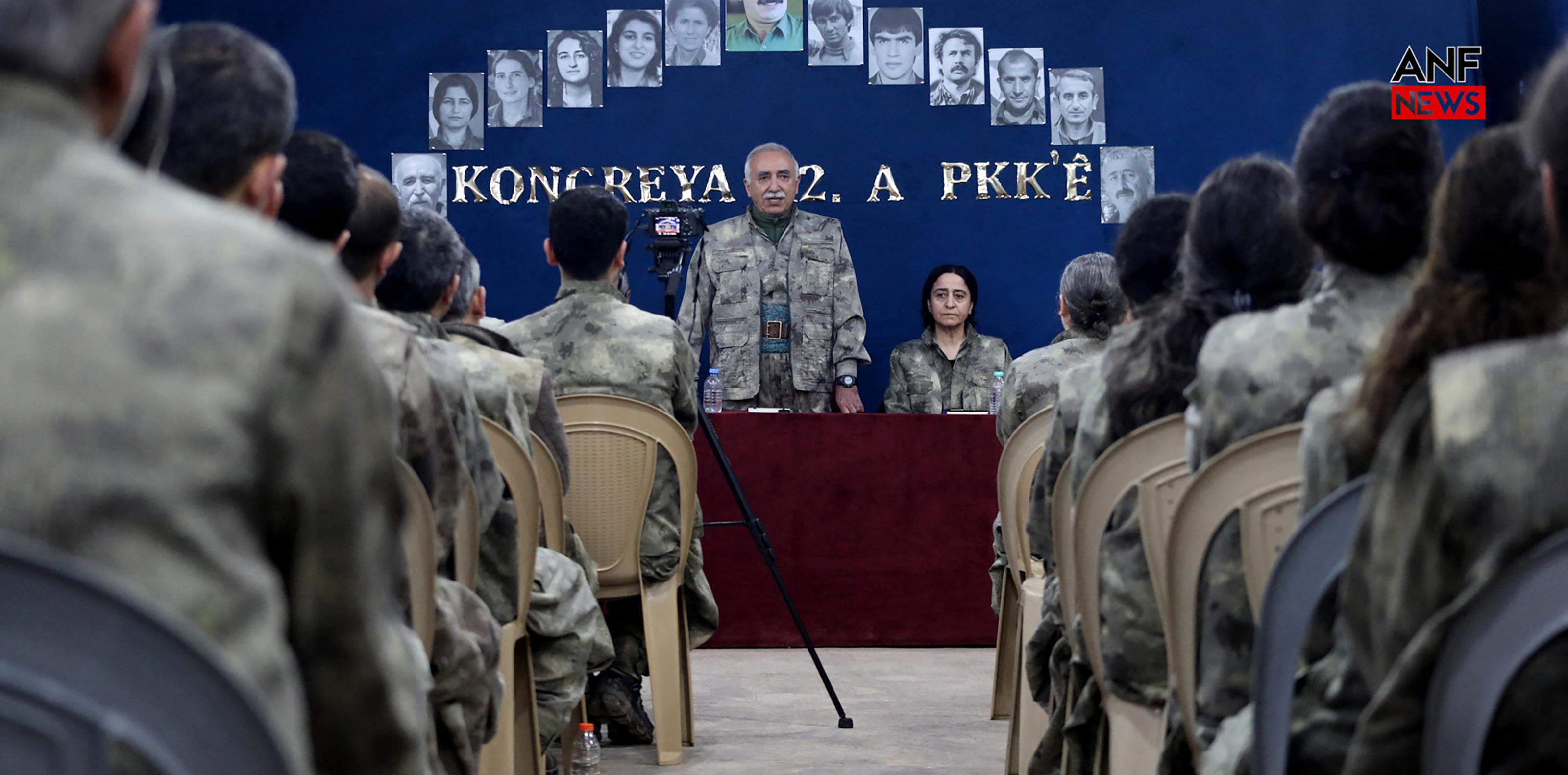
Disbandment of the PKK: What Awaits the Region?
Given the challenges that are posed by the events in Syria, Turkey needs to formulate several political strategies to deal with the various scenarios that may arise. Splitting Syria is a possibility that cannot be disregarded, even though Syrians, Turkey, and Arab governments prioritize keeping Syria as a single nation-state. These considerations include the unrest in Syria, the identity of the transitional government, and Israel's strong drive for its division. Therefore, regardless of whether Syria stays unaltered or is split, Ankara's policy to strengthen its ties with the Kurds in Syria—through the Kurdistan Workers' Party (PKK) and Turkish Kurds—is crucial. This also clarifies the indications given by certain Turkish officials to capitalize on the attitudes of Syria's various religious communities.
The Nationalist Movement Party (MHP) leader, Devlet Bahceli, was cited in July, stating that "the constitution in Turkey should be amended to include a Turkish president with a Kurdish and an Alevi vice president." The MHP and its leader, Bahceli, did not refute the comment or provide an explanation, despite the outrage and backlash it caused in political circles due to its direct jeopardy to Turkey's ethnic composition. On the other hand, Kurdish, Turkish, and Arab people will form an alliance, according to President Recep Tayyip Erdoğan. Continuing with the statement made by Erdogan, “the Jerusalem Alliance is taking shape today.” This comment also brought up several issues, particularly given that the Arab population Turkey is nonexistent and ineffectual in comparison to the Kurdish and Alevi components, which have cultural and human rights groups, as well as indirect political participation. Given this, many have interpreted the statement to be about the Arabs and Kurds in Syria, as well as Turkey and those there. The idea that the "Kurdish reconciliation" project is a foreign policy endeavor is supported by this, particularly given that should the reconciliation be successful and Bahceli's vision be approved by the Turkish parliament, Turkey might hold new elections in a year under a new system that would install Recep Tayyip Erdogan as president and Abdullah Ocalan as his Kurdish deputy. This would include Ocalan becoming a Kurdish leader and an ally of the Turkish government competent in interacting with the Kurds in the region, particularly the Syrian Kurds who support him and his party, such as the Syrian Democratic Forces. This is a crucial situation that would enable Turkey to re-establish relations with the SDF and extend its influence into northern Syria, fulfilling Ocalan's vision of a Turkish-Kurdish alliance in the region to combat "Israeli threats."
Kurdish-Turkish Reconciliation and Influence-Sharing in Syria with Israel
There were no agreements reached during the Turkish-Israeli meetings in Baku in May on the allocation of influence in Syria, or at the very least, how to avoid a military conflict between the two countries. This followed Israel's bombing of Syrian military installations that Turkey was considering establishing there. By confining its actual impact on the ground to northern Syria, Tel Aviv has set a red line for Turkey in Syria, as seen by these Israeli military actions. Thus, it would be advantageous for Turkey to make peace with the SDF and increase its power east of the Euphrates, or at the very least, come to agreements with the SDF that keep Israeli influence from spreading to its territories. Theoretically, this might be accomplished by using Abdullah Ocalan, a prominent Kurdish leader in the region and a key figure in the Turkish government, to increase communication with the SDF and Syrian Kurds and build mutual confidence between them and Turkey. According to the Syrian Observatory for Human Rights, which cited Kurdish officials in Syria, a sizable Kurdish faction is contemplating rapprochement with Turkey in the event that the SDF's talks with Damascus are unsuccessful. The movement has even asked to become a part of the Turkish state. No one in the SDF has yet to deny this news, although it might be an idea in the making.
Although it is currently difficult to separate Syria and redefine the regional map, if the Kurdish reconciliation process in Turkey continues unabated, Turkish influence could be extended east of the Euphrates, much like it was in the past between Ankara and Erbil in Iraqi Kurdistan. In fact, it could even be a strategic political and security objective for Turkey, which understands that it will be unable to stop Syria from separating due to the current Syrian government's lack of governance and Tel Aviv's efforts to encourage this pattern. Therefore, securing some political or geographic separation of influence in Syria would be its best course of action. This explains why Turkey has placed its bet on Abdullah Ocalan and why Devlet Bahceli, the head of the Nationalist Movement Party, has recently praised him.
Conclusions
Despite the political and parliamentary efforts in Turkey for the "Kurdish-Turkish reconciliation," the Kurdish question is not being resolved in an unconventional manner as most Kurds anticipate; rather, there is only a limited and well-defined reconciliation between the Turkish state and the Kurdistan Workers' Party (PKK). The primary objective of this reconciliation is Turkish foreign policy; if Syria stays unified, it seeks to increase Turkish political power there; if it chooses to divide it, it seeks to increase its military might and possibly its geographic reach. This will be accomplished by turning Abdullah Ocalan, the leader of the Kurdistan Workers' Party, into a future representative of the Turkish state in Syria and by attempting to entice the SDF as a "potential ally" through agreements that might coincide with the Turkish perspective on its sovereign territory (Misak-I-Milli-National Pact).
As of right now, the most likely scenario is that the parliamentary committee will be successful in crafting proposals that appease the PKK and its leader, Ocalan, and that parliament will accept them, establishing Ocalan as a political figure and ally of the Ankara government. Talk of "the seriousness of the situation in northern Syria and its threat to Turkey's security, and Ankara's need for Ocalan and the Kurds to help it "will probably mask the political response this is likely to cause from some Turkish popular movements. This would speed up communication between Ankara and the SDF, and Ankara might even try to convince the SDF to break with Israel, join the Syrian army, and keep Syria united through Ocalan.
However, there is still a chance that public pressure against the decisions to free Ocalan and pardon PKK militants will cause the opposition Republican People's Party (CHP) to withdraw from the committee. The committee's work, which consists of a majority of members from the ruling coalition, tiny opposition parties, and the Kurdish party, will still be able to make the required recommendations even if the withdrawal takes place, albeit in a way that goes against consensus.
More significantly, the SDF's inclination to depend on Washington and Tel Aviv for assistance and the potential for the SDF to go to war with the transitional government forces in Damascus might make the discussion between Turkey and the SDF fail. The intended "path to a solution" in Turkey is impeded by all these alternatives. If it turns out that Abdullah Ocalan has limited authority over the SDF and the Syrian Kurds, political pressures may force President Erdogan to terminate this reconciliation, which under present circumstances offer him no political advantages either at home or abroad. Given that the idea has been rejected from the beginning by successive Turkish governments, the Turkish public still views a deal that would dissolve the Kurdistan Workers' Party (PKK) and pardon its leader and militants in exchange for their return to political activity in the Turkish parliament as unacceptable.
Ankara's relations with the Kurdistan Regional Government of Iraq, which is controlled by the Kurdistan Democratic Party (KDP), will be impacted if the first scenario comes to pass and Ocalan becomes a prominent political figure in Turkey (the Vice President of the Republic of Turkey). This is especially relevant considering the tight ties between Ocalan and his party and the Sulaymaniyah-based Patriotic Union of Kurdistan (PUK). This will influence the economic and political conditions and make them favorable for foreign investment in Erbil, the capital of Iraq's Kurdistan Region. With the help of Iran and Turkey, the PUK may even attempt to take over the entire region through this geopolitical standing.
(votes: 5, rating: 5) |
(5 votes) |
Can Turkey's Leadership Make Peace with the Kurdish Freedom Movement?
Challenges and Prospects of Disbandment
Relationship in Crisis: Identifying Strategies for Kurdistan and Iraq to Re-establish Cooperation in the Context of Energy DependencyThe disputes between Baghdad and Erbil now affect the essence of the Iraqi state itself and are no longer merely a Kurdish issue
Turkey Terminates Iraqi Oil Export Agreement: Reasons and ConsequencesTurkey's New Strategy in the Region: Oil, Security and International Routes


