Turkey's Kurdish Solution: Political Maneuvering and Future Scenarios
Devlet Bahceli, the head of the Nationalist Movement Party (MHP), met with Hikmet Cetin, the former leader of the Republican People's Party (CHP)
In
Login if you are already registered
(votes: 4, rating: 4) |
(4 votes) |

Juris Doctor, Researcher and lecturer at Duhok Polytechnic University, Iraqi Kurdistan Region
Turkey is going through a serious and perilous political crisis that will affect democracy and political work in the future. The Turkish state, represented by the Nationalist Movement Party (MHP), perceives the "Kurdish solution" project as one of its most significant strategic initiatives, and this crisis seems to be a necessary outcome of that ambition. For the sake of Turkey's vital interests and regional national security, this project must be completed at all costs. Turkish President Recep Tayyip Erdogan aims to take advantage of the dependence of both the state and the MHP on his leadership while undertaking a delicate political initiative focused on reconciliation with the Kurdistan Workers' Party (PKK), a group that Turkey labels as a terrorist organization. His political needs, which include extending his power indefinitely, are meant to be enforced by this. This could initially begin with potentially amending Turkey's constitution for ideological motives. This requires strict media and political control, effectively silencing opposition. The Republican People's Party (CHP), the biggest opposition party, has been shattered by the courts and judiciary because of the Turkish presidency gaining near complete control over the judicial system in Turkey.
Turkey is going through a serious and perilous political crisis that will affect democracy and political work in the future. The Turkish state, represented by the Nationalist Movement Party (MHP), perceives the "Kurdish solution" project as one of its most significant strategic initiatives, and this crisis seems to be a necessary outcome of that ambition. For the sake of Turkey's vital interests and regional national security, this project must be completed at all costs. Turkish President Recep Tayyip Erdogan aims to take advantage of the dependence of both the state and the MHP on his leadership while undertaking a delicate political initiative focused on reconciliation with the Kurdistan Workers' Party (PKK), a group that Turkey labels as a terrorist organization. His political needs, which include extending his power indefinitely, are meant to be enforced by this. This could initially begin with potentially amending Turkey's constitution for ideological motives. This requires strict media and political control, effectively silencing opposition. The Republican People's Party (CHP), the biggest opposition party, has been shattered by the courts and judiciary because of the Turkish presidency gaining near complete control over the judicial system in Turkey.
Legal Battles and Political Maneuvering: CHP’s Ongoing Challenges

A New Era for the Kurdish Question
In May 2023, Turkey held its most recent general-parliamentary and presidential elections. Six parties from various political backgrounds came together to create a coalition against the Justice and Development Party (AKP) and the Nationalist Movement Party (MHP) to prepare for these elections. Despite his Kurdish and Alevi identity, Kemal Kilicdaroglu, the then leader of the nation's major opposition party, ended up running for president as the opposition alliance's candidate. However, this identity, along with the opposition's incredibly disjointed structure, has been claimed to have contributed to his narrow election loss.
Since Kemal Kilicdaroglu personally took responsibility for the results, after insisting on running against candidates he thought had a better chance of winning like Istanbul Mayor Ekrem Imamoglu and Ankara Mayor Mansur Yavas, the opposition assumed that he would resign as party leader after this defeat. As a result, internal elections were organized in November 2023 by the opposition Republican People's Party (CHP). Following 13 years, Kemal Kilicdaroglu lost his position as leader, and Ozgur Ozel emerged victorious with the backing of Istanbul Mayor Ekrem Imamoglu and the party's young base. As seen by the outcomes of the municipal elections that were held only seven months following this shift in party leadership, this triumph had a major influence on the party's programs and leadership, greatly enhancing its performance. In those municipal elections, the main opposition party came out on top, and its proportion of the vote grew, especially in Istanbul and Ankara. For the first time in its electoral history, the ruling coalition was defeated. Ozgur Ozel, the new general chairman of the Republican People's Party (CHP), has sided politically with Ekrem Imamoglu, the mayor of Istanbul Metropolitan, who is progressively winning over the public.
Then, in October 2024, Nationalist Movement Party (MHP) leader Devlet Bahceli unexpectedly unveiled an initiative to reconcile with Abdullah Ocalan and the Kurdistan Workers' Party (PKK). President Erdogan was initially taken aback by this and cautiously distanced himself from it because of the unclear implications. However, due to the worsening economic situation, President Erdogan quickly realized that he would have to target the opposition and the Republican People's Party (CHP) to eliminate any electoral competition for him in the coming elections. He would not have sufficient time to complete the "Kurdish reconciliation" process to take in its political advantages, not to mention if there is a chance that it would not succeed. As a result, several campaigns were launched against the CHP and the Istanbul mayor, which took the following forms:
- Lutfu Savas, a former Hatay mayor and Republican People's Party (CHP) member, accused the present party leadership of rigging the most recent party leadership elections in a criminal lawsuit filed in court on February 15, 2025. He claimed that the elections for the Istanbul Executive Office and party leadership were rigged by current leader Ozgur Ozel and Istanbul Mayor Ekrem Imamoglu. Lutfu Savas and several delegates allege party officials of violations and vote-buying during the internal elections in November 2023. By demanding that the congress be deemed "absolutely null and void," the plaintiffs hope to deprive Ozel of his authority and reinstate Kilicdaroglu’s team, or possibly impose a trustee selected by the court. However, the ruling Justice and Development Party (AKP)-controlled courts will hear the corruption charges against Lutfu Savas, who holds a connection to former party chairman Kemal Kilicdaroglu.
- In early March, Ekrem Imamoglu’s diploma was cancelled by Istanbul University for administrative reasons that many felt unconvincing. In July, the same university revoked Imamoglu’s master's degree, denying him another academic certification and preventing him from ever seeking the presidency in future elections. Imamoglu and a number of other mayors of Istanbul's sub-municipalities were arrested by police immediately after, on suspicion of massive corruption and creating a criminal organization.
- Under the guise that the Syrian Democratic Forces (SDF) had not disarmed, the Turkish government started to put pressure on the Nationalist Movement Party (MHP) in August by threatening to stop the Kurdish solution process. Threats of a military attack against the SDF were made by the government. At the same time, three MHP-affiliated solicitors were detained by police on suspicion of corruption. As it turned out, President Erdogan's pressure on his nationalist ally was intended to neutralize and threaten the MHP if it pressed Erdogan on the issue of Ekrem Imamoglu and the Republican People's Party (CHP).
- The results of the elections for the Istanbul Executive Office were declared null by the Istanbul Criminal Court in early September, and five party members close to Kilicdaroglu were named trustees for the Istanbul office. This was the court's first decision in the Republican People's Party (CHP) case. However, the lawsuit to annul the CHP national congress was put on hold until an October 24 hearing by the 42nd Chamber of the Ankara Civil Court of First Instance in mid-September. Additionally, the court denied the plea of plaintiff attorneys to impose precautionary measures on the party, which included appointing temporary trustees and suspending the party's chairman and board of directors. Note that no court may directly influence the outcome of general or party elections, according to Article 67 of the Turkish Constitution. Instead, it limits intervention to the Supreme Election Board, which has already authorized the outcomes of party elections, and limits this to judicial supervision of the voting process. As a result, the government and its obedient judiciary support this issue, which is seen as political.
The Complex Identity of Turkey's Republican People's Party (CHP)
Disbandment of the PKK: What Awaits the Region?
Unlike the Justice and Development Party (AKP), which has a single leader, the Republican People's Party (CHP) is a framework that unites a variety of orientations, as is the case with many other social-democratic parties worldwide. There are liberals in the CHP who support Western social democracy, Kemalists who think Turkey's many identities should be melted into the republic's crucible, and various degrees of secularists and Alevis who are against the AKP's organizational structure, which places a higher priority on political Islam and a single, distinct leader.
Alevis experienced discrimination and exile while Turkey was ruled by the Republican People's Party (CHP) as the sole political party from 1923 to 1950. When the Alevi tribes in the Kurdish region of Dersim rebelled against central authority in 1937–1938, the government employed collective force against them and bombarded their territory. Despite this past, Alevis eventually partnered with the CHP and participated in its events due to the belief that parties that promoted Sunni Islamist ideology would be more harmful to them. Alevis held a prominent position in the party's organizations, ranging from local to district and provincial organizations, under the leadership of Kurdish Alevi Kilicdaroglu. Among the delegates at the general headquarters, who choose the party's leadership, Alevis also became more numerous. However, the degree to which the party is an Alevi party is still up for debate because Turkey lacks statistics that are broken down by religious group. In any event, the CHP firmly supports secularism and does not create measures that give Alevis priority. Those Alevi leaders who had ruled under Kilicdaroglu lost their positions of power inside the party when he lost the general presidency at the 38th Congress on November 5, 2023. On September 21, the CHP re-elected its chairman, Ozgur Ozel, in an attempt to protect him and other top party leaders from an upcoming court ruling that would require their removal. The 42nd Chamber of the Ankara Civil Court of First Instance is set to rule on October 24 on whether to cancel the results of the 2023 CHP congress, a case that government critics say shows Turkey's slide towards autocracy under Erdogan.
Potential Political Scenarios for Turkey's Republican People's Party (CHP) Leadership Dynamics
Scenario 1: The government might try to remove Ozgur Ozel in a different method by accusing the CHP leadership of being involved in corruption investigations against Ekrem Imamoglu and many mayors after the present CHP leadership successfully held an early leadership election (September 21) and re-elected him.
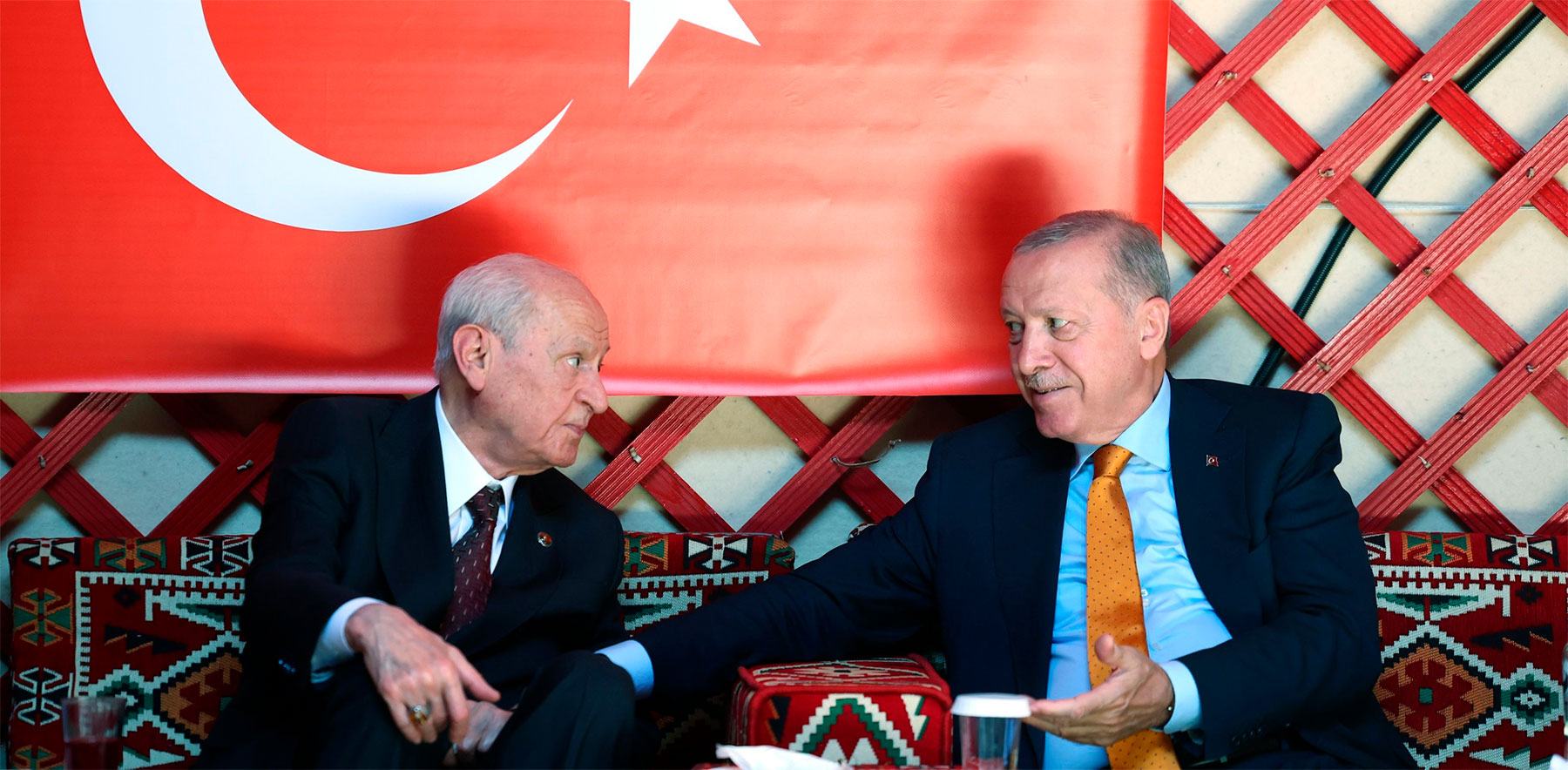
Scenario 2: Taking into account the offer to negotiate power made by Ozgur Ozel, the current leader of the party. "Let me resign from the general presidency (of the party)," he noted in a September statement. Let Imamoglu refrain from running for president, but only if President Erdogan is involved in the early general and presidential elections that are held right away." This suggestion received no response from the ruling side. However, Erdogan's ally Devlet Bahceli, the head of the Nationalist Movement Party (MHP), met with Hikmet Cetin, the former leader of the Republican People's Party (CHP), who is opposing the current state of affairs within the party. This meeting's contents were not disclosed to the public. Consequently, it is thought that there are clear indications of talks between the ruling party and the CHP.
Early elections are the CHP's most significant trump card in this case. The existing constitution states that Erdogan cannot be elected president for a third term if elections are held within the allotted time. Either the constitution must be amended, or the parliament must dissolve before the end of its term for this to occur. There are not enough parliamentarians in the coalition government to dissolve the parliament or implement a constitutional amendment. The ruling side has 330 votes, whereas these decisions need at least 360. The coalition government is speeding up a procedure relating to resolving the Kurdish question to obtain the support of the Kurdish Peoples' Equality and Democracy Party (DEM Party), which is needed to gain the 30 votes that remain required. Converting independent parliamentarians or parliamentarians from other parties to the AKP is an additional choice. The AKP is negotiating the transfer of parliamentarians to its own party to achieve the objective at hand. The autumn of 2027 appears to be the best time for the governing coalition to hold elections.
Turkey's "Terror-Free" Initiative: A Complex Geopolitical Landscape
Scenario 3: There is also an opportunity that the existing CHP leadership may quit the party and establish a new one if they are unable to restore power after losing it as a result of judicial intervention. Parties that have emerged from within the CHP have been successful in taking power, according to experience. A new party entering the election process so quickly, however, could be challenging under Turkey's current political structure, and this would probably split the opposition vote.
Scenario 4: There is a possibility that the existing CHP leadership may quit the party and establish a new one if they are unable to restore power after losing it because of judicial intervention. Parties that have emerged from within the CHP have been successful in taking power, according to experience. A new party entering the election process so quickly, however, could be challenging under Turkey's current political structure, and this would probably split the opposition vote. Returning Kilicdaroglu as the party's chairman might potentially cause the situation to go out of control, with supporters of the Republican People's Party (CHP) and its current leadership staging large-scale protests in the streets. The protests that broke out on September 8 to stop the board of trustees from giving the Istanbul branch to the trustees council were clear indications of this. The government had to shut down internet connection in the region, block off the roads leading to the building, and send about 5,000 police officers to the scene. However, the public reacted fiercely, and it took the trustees council five hours after the demonstrators struggled with police—who used tear gas to disperse them and arrested dozens—to gain entry to the party headquarters.
In the event that people continue to take to the streets, the government might turn to a different strategy: start an isolated confrontation with the Syrian Democratic Forces in Rojava in tandem with the award handed down by the court. In addition to diverting attention away from the CHP's stance, this would characterize anyone who takes to the streets as a "traitor" who wants to overthrow a government that is battling "terrorism."
Conclusions
Tension and hopelessness within the Turkish opposition have been stoked by the ongoing political crisis, which has demonstrated that the government has penetrated the opposition and that the Republican People's Party (CHP) is split. Turkey will face dire consequences if the government is successful in splitting the CHP, turning it into a entirely Alevi party. Voter unwillingness to cast ballots in the future and their diminished belief in the existence of a truly democratic political process will be among the most important of these effects.
President Erdogan will have the political circumstances favorable to proceed with reconciliation with the Kurdistan Workers' Party (PKK) if his strategy to split the Republican People's Party (CHP) or plunge it into an ongoing internal battle is successful. However, if for whatever reason his plan fails, the CHP will gain plenty of support and it might even go out of control, with people flocking to the streets. As a result, Turkey might even descend into political, economic, and security chaos. The Nationalist Movement Party (MHP), his partner, is currently prioritizing reconciliation with the Kurds and is therefore waiting the situation out. Yet there is still no guarantee that the MHP could undermine President Erdogan's plan, for example, by calling early elections.
(votes: 4, rating: 4) |
(4 votes) |
Can Turkey's Leadership Make Peace with the Kurdish Freedom Movement?
Challenges and Prospects of Disbandment
Turkey's "Terror-Free" Initiative: A Complex Geopolitical LandscapeThe primary objective of "Kurdish-Turkish reconciliation" is Turkish foreign policy