
Turkey Terminates Iraqi Oil Export Agreement: Reasons and Consequences
In
Login if you are already registered
(votes: 1, rating: 5) |
(1 vote) |

Juris Doctor, Researcher and lecturer at Duhok Polytechnic University, Iraqi Kurdistan Region
The agreement that Turkey signed with Iraq on August 17, 1973, to ship Iraqi (Kurdish) Kirkuk oil to the Turkish port of Ceyhan on the Mediterranean for export was terminated by a decree issued by Turkish President Recep Tayyip Erdoğan on July 20, 2025. Several conditions led to the decision to end this agreement almost 52 years after it was signed, even if the timing of the Turkish decision—which will go into effect in August 2026—was viewed as unexpected given the geopolitical shifts in the region.
Baghdad and the Kurdistan Region of Iraq would suffer political and economic setbacks if the Iraqi oil export deal with Turkey were to be terminated without an effective alternative. This would be made worse by the crisis of water scarcity in the Euphrates and Tigris rivers brought on by Turkish water-related investments. This implies that Turkey anticipates Iraq will sign an alternative agreement with more potential and investment, enabling Turkey to carry out the Development Road project, connect its ports to the Basra oil fields, and start several petrochemical and refinery projects on its territory that are comparable to the Basra-Aqaba project. However, considering that the Iraqi government's term is coming to an end in a few months, and that the political landscape leading up to the next elections is marked by division and infighting, this Turkish ambition might not materialize into long-term agreements.
The agreement that Turkey signed with Iraq on August 17, 1973, to ship Iraqi (Kurdish) Kirkuk oil to the Turkish port of Ceyhan on the Mediterranean for export was terminated by a decree issued by Turkish President Recep Tayyip Erdoğan on July 20, 2025. Several conditions led to the decision to end this agreement almost 52 years after it was signed, even if the timing of the Turkish decision—which will go into effect in August 2026—was viewed as unexpected given the geopolitical shifts in the region.
Turkey's New Strategy in the Region: Oil, Security and International Routes
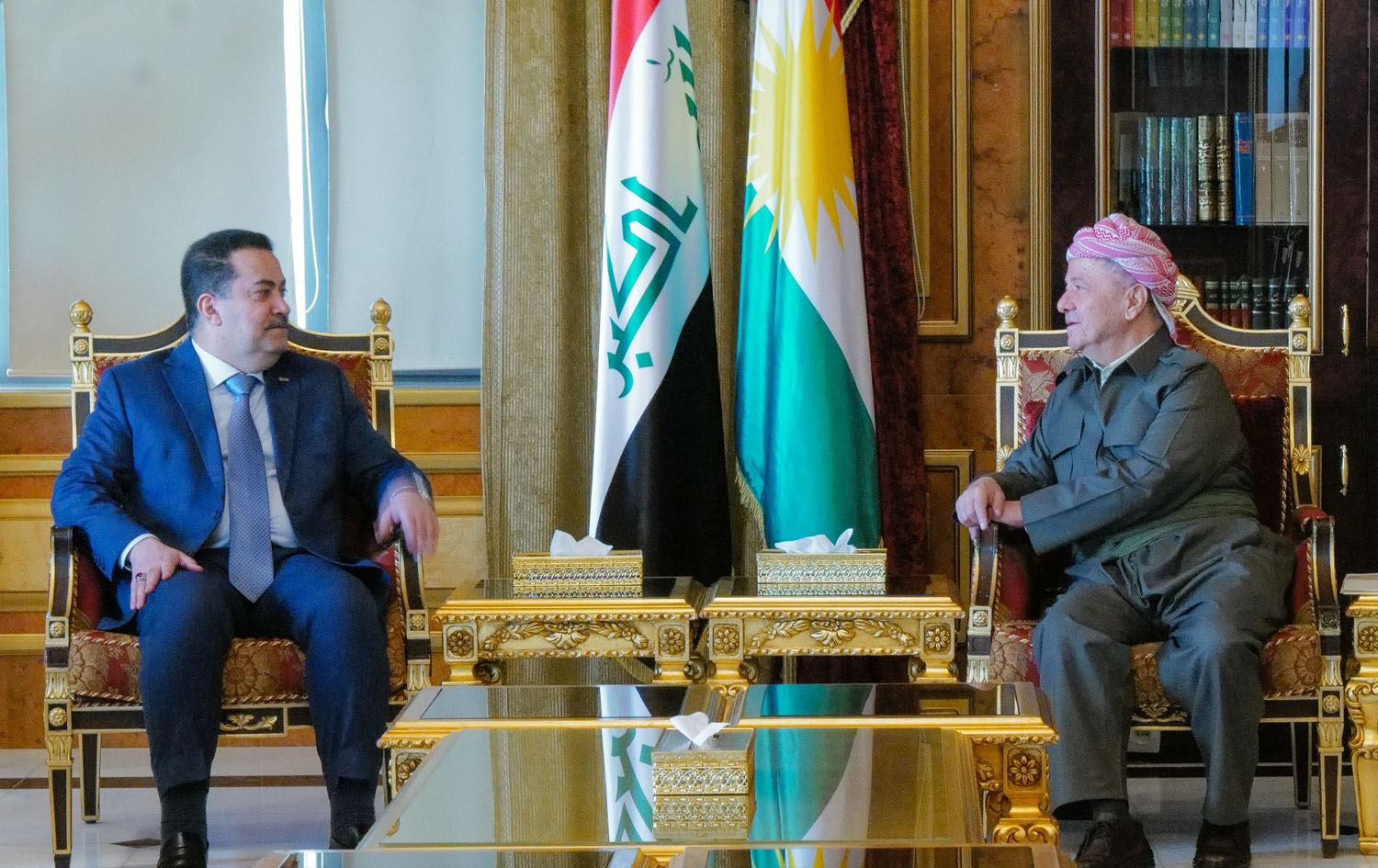
Iraq agreed to use Turkey to transport some of its oil from the Kurdish north (now known as the Iraqi Kurdistan Region) due to strategic and economic reasons. Oil exports through the Persian Gulf were disrupted during the Iran-Iraq War (1980–1988), but the deal was successful in expanding Iraq's strategic alternatives for oil exporting. Turkey also benefited from the arrangement, which allowed it to profit from Iraqi oil export earnings, advantageous oil prices at the time, and the pipeline's upkeep and operation expenses via its borders.
The pact is still important for both countries today, even though it was signed 52 years ago. Despite signing agreements and discussing ideas for developing pipelines to the Red Sea via Saudi Arabia (the project is suspended), to the port of Aqaba via Jordan (the project is under construction), or to Baniyas on the Mediterranean via Syria (the project is still not completed), Iraq has yet to successfully revive any project to transport its oil away from the Umm Qasr oil port in southern Iraq.
Given the ongoing security risks in the Persian Gulf region, especially in the context of the recent Israeli-Iranian war and Iran's repeated threats, both officially and through its loyal militias in the region, to close the Strait of Hormuz, the Kirkuk-Ceyhan oil pipeline is an essential option for securing the export of oil, even though its limited export capacity (not exceeding 500,000 barrels per day, subject to increase) is important. Oil revenues have accounted for over 99% of exports, 85% of the government's budget, and 42% of GDP.
The decision to terminate the agreement does not imply that Turkey is giving up on it. In addition to its implications for the continued Turkish influence in Iraq and Syria, it is a pivotal moment for the stability of the Turkish economy and the beginning of Turkey's future vision for Iraq and the region, especially the Development Road project, to which Ankara adheres to given that it will represent a qualitative economic shift connecting its economy to the markets of the Gulf and South and East Asia, as well as the passage of international trade and energy lines through its territory via Iraq to Europe.
Iraq and Turkey Head to the ICC
Iraq complained to the International Chamber of Commerce (ICC) in Paris in 2014, that Turkey had disregarded the 1973 agreement by using the Kirkuk-Ceyhan pipeline to export oil from Iraqi Kurdistan without first informing the Baghdad-based Iraqi government. Surprisingly, the Iraqi case was filed four years after both state oil ministers signed an extension of the agreement in 2010, that added annexes and extended it for another 15 years, ending in August 2026.
International sanctions placed on Iraq after 1990 caused the Kirkuk-Ceyhan pipeline to stop transporting oil. Even after Saddam Hussein's rule ended and economic sanctions against Iraq were lifted, oil exports did not start up again. This was because the pipelines on both sides of the border had been severely damaged with time, as well as by military actions, especially after 2003, when armed Iraqi groups began regularly targeting the pipeline. On the Turkish side, Kurdistan Workers' Party (PKK) fighters also attacked the pipeline.
Iraqi attempts to offer Turkey additional benefits to guarantee the agreement's survival were reflected in the 2010 amendment, which increased transportation costs and regulated compensation owed to Turkey for maintenance work and the wages of workers on the line. However, security instability and growing conflicts between the Baghdad government, then led by Nouri al-Maliki, and the Kurdistan Regional Government over Kirkuk's oil fields and contracts with foreign companies to invest in fields in the Kurdistan Region and the Nineveh Plains prevented these amendments from reviving the pipeline's operation.
After the construction of a parallel pipeline through the borders of the Kurdistan Region in 2014, the Kurdistan Regional Government of Iraq (KRG) restarted the pipeline's operation. After ISIS gained control of much of western Iraq, this pipeline ensures Kirkuk and KRG oil reach the Turkish border while avoiding insecure regions.
The Kurdistan Regional Government's Ministry of Natural Resources entered into special accounting agreements with Turkey and several international banks to collect oil export proceeds separately from Baghdad. The Maliki government consequently filed a case against Turkey, which had persisted for nearly nine years. On February 13, 2023, the French International Chamber of Commerce (ICC) Arbitration Court issued its final ruling, fining Turkey about $1.5 billion. In exchange, Turkey was permitted to reimburse Iraq for maintenance costs, the cost of constructing the alternative pipeline, and damages for Iraq's failure to meet minimum export restrictions. Turkey claims that these costs total more than $1 billion.
In actuality, President Erdogan's recent decision was greatly influenced by this case, the consequences of which are still being felt, particularly after the United States District Court (District of Columbia) decided in September 2024, to halt the Paris Court's proceedings. The Iraqi complaint would damage bilateral relations between the two governments and Turkey's economic reputation, according to reports, and Turkey had already told the Iraqi side over the previous years that it intended to terminate the agreement if Iraq upheld litigation.
The Intersection of Internal and External Strategies
Disbandment of the PKK: What Awaits the Region?
The political and economic conflict between Baghdad and Erbil, which peaked during the second term of former Prime Minister Nouri al-Maliki (2010-2014), is the root cause of the Iraqi complaint against Turkey. Maliki saw the complaint as a powerful tool for weakening the Kurdistan Regional Government's (KRG) economic autonomy. As ties between Baghdad and Erbil soured and Erbil held an independence referendum in 2017, his successor, Haider al-Abadi, upheld the complaint and its procedures.
However, when Adel Abdul-Mahdi took over the Iraqi government in 2018 and 2019, and he was close to Masoud Barzani, the president of the Kurdistan Region, there seemed to be hope that Iraq would withdraw its complaint and turn to bilateral understanding, as outlined in most of the agreement's clauses. Under pressure from the dominant Shiite forces, led by Maliki himself, Abdul-Mahdi and his successor Mustafa al-Kadhimi (2020–2022) failed to withdraw the complaint, despite their efforts to do so by delaying it, refusing to issue a court ruling, and pointing out that the matter could be resolved amicably between both governments.
The unstable conditions in which Mohammed Shia al-Sudani's government came to power, as well as its submission to the forces of the "Coordination Framework," led the government to begin trial procedures as soon as it took office in November 2022, according to both current and former Iraqi officials. Three months later, the final decision was rendered, and it was hailed as a significant victory for the new government.
Notably, the Kurdistan Regional Government, and in particular the Kurdistan Democratic Party (KDP), which joined the Sudanese government in Baghdad as part of the "State Administration Coalition," has not done much to encourage the Iraqi government to come to a comprehensive agreement with Turkey before the court resumes its proceedings and renders a final decision in the case, or to push for a settlement with Turkey or at least delay the onset of the Paris court proceedings.
The International Chamber of Commerce (ICC) Arbitration Court rejected one of the five points, that favored Iraq, so in turn the decision aided Turkey. The court's ruling also lowered Iraq's financial demands and created a path that is unlikely to be closed anytime soon, in terms of payment methods and procedures, as well as how Turkish wages, compensation, and other issues are subtracted. In practice, funds from the case against Turkey are not expected to be collected by Baghdad. Probably "setting off," the financial settlement will leave Iraq with a tiny profit margin and have a detrimental effect on Turkish morale.
The suspension of oil exports through the Ceyhan port has resulted in additional economic losses for Iraq, the Kurdistan Region, and Turkey. This is especially true in light of the recent ruling by the Iraqi Federal Supreme Court (FSC) on February 15, 2022, which restricted exports to SOMO, a subsidiary of the Iraqi Ministry of Oil. In turn, this decision has drawn criticism and proven challenging to execute.
In terms of politics, Iraq lost the chance to build trusting and communicative relations with Turkey, its northern neighbor, and insisted on using international arbitration in a dispute that could have first been settled by internal deliberation (between Bagdad and Erbil) and then through dialogue between Turkey and Iraq.
The decision by President Erdogan to halt the agreement puts Iraq, which still faces political divisions between the governments of Baghdad and Erbil, as well as divergent interpretations of the constitution and laws, in a difficult position as it attempts to lead a national effort to create new agreements with Turkey on the core of the 1973 Agreement.
Ankara Proposes to Expand Oil Pipelines in Iraq
Iran's Anxieties and Azerbaijan's Alliances
Turkish President Recep Tayyip Erdogan, as confirmed by Iraqi and Turkish officials, thought that Iraq would eventually withdraw the complaint against the Turkish government, particularly in light of the two country's growing trade ties and their agreement on a land link between their borders and the Iraqi port of Faw, known as the “Development Road.” One interpretation of Erdogan's decision is that it puts pressure on Iraq to enact an alternative agreement that ensures the implementation of the Development Road, which is beset by financial, technical, and economic challenges. Additionally, it seeks to expand Turkey's economic clout in Iraq, specifically in the fields of investment and the transportation of gas and oil, as well as the establishment of petrochemical facilities on Turkish territory.
Ankara has suggested to Baghdad in recent months that the pipelines be extended to include gas and oil pipelines that reach the Basra oilfield in addition to connecting to Kirkuk. Like the Basra-Aqaba pipeline agreement, which was signed under new procedures distinct from the 1973 Agreement with Turkey (despite also facing significant political opposition and challenges), this would also entail the construction of petroleum chemical and refining complexes within the framework of long-term cooperative cooperation between the two countries. Notably, unlike the Kurdistan Region of Iraq, the Basra-Aqaba pipeline does not cross federal territory.
Following its successful involvement in overthrowing Bashar al-Assad's regime in Syria and its enhanced ties with the United States and the Gulf Arab states, Turkey is attempting to reposition itself within regional geopolitical surroundings. In the meantime, Iran's recent confrontation with Israel has caused a significant geopolitical shift. A key priority for Turkey's strategic realignment seems to be Iraq.
However, Turkey's success in extending its geopolitical influence within Iraq is not assured by the diminishment of Iran's regional influence following the conflict with Israel. Several internal causes contribute to the ongoing instability and the absence of a clearly identifiable Iraqi state. This project was hampered by a number of factors, including the demographic distribution of the Turkish-Iraqi development route, because its proposed plans go through Faysh Khabur (which is where the Iraqi oil pipeline enters Turkey) rather than the Kurdistan Region of Iraq, which insists on being an integral part of the project rather than on its periphery.
Unquestionably, Ankara's recent peace endeavor with the Kurdistan Workers' Party (PKK) and its illustrious ties with the new Syrian government are elements that encourage Turkey to lower risks associated with its future energy production and transmission projects and its development expansion. However, it will have to deal with a number of obstacles in Iraq, the most significant of which, for the time being at least, is waiting for a new Iraqi government to be formed following the November 2025 parliamentary elections and establishing a peaceful and compatible political environment in order to pass a new comprehensive agreement that would not only settle the arbitration dispute over the 1973 agreement but also initiate a wider partnership within the framework of Turkey's strategic vision.
Following a recent agreement between the Kurdistan Regional government and Baghdad, Turkey may resume Kurdish oil exports from Iraq under US pressure. In any event, such an exception would only last for a year and would not reverse the Paris Court's decision. However, it appears that Turkey, Baghdad, and the Kurdistan Region of Iraq need this brief window of opportunity to consider alternatives.
Conclusion
Baghdad and the Kurdistan Region of Iraq would suffer political and economic setbacks if the Iraqi oil export deal with Turkey were to be terminated without an effective alternative. This would be made worse by the crisis of water scarcity in the Euphrates and Tigris rivers brought on by Turkish water-related investments. This implies that Turkey anticipates Iraq will sign an alternative agreement with more potential and investment, enabling Turkey to carry out the Development Road project, connect its ports to the Basra oil fields, and start several petrochemical and refinery projects on its territory that are comparable to the Basra-Aqaba project. However, considering that the Iraqi government's term is coming to an end in a few months, and that the political landscape leading up to the next elections is marked by division and infighting, this Turkish ambition might not materialize into long-term agreements.
(votes: 1, rating: 5) |
(1 vote) |
Challenges and Prospects of Disbandment
Relationship in Crisis: Identifying Strategies for Kurdistan and Iraq to Re-establish Cooperation in the Context of Energy DependencyThe disputes between Baghdad and Erbil now affect the essence of the Iraqi state itself and are no longer merely a Kurdish issue
Iran's Anxieties and Azerbaijan's AlliancesIf Tehran persists in its accusations and Baku clings to its alliances, the tension between the two will likely remain within the bounds of a "cold war" dynamic


