
Benin’s Northern Crisis: Can the Government Contain JNIM’s Expansion?
In
Login if you are already registered
(no votes) |
(0 votes) |

Geopolitical Analyst and Commentator
The rise of militancy and the Al-Qaeda-backed offshoot Jama’at Nusrat al-Islam wal-Muslimin (JNIM) has become a major threat not only to Mali but to the whole Sahel region and its neighboring countries. The group merged from the four hardliner Salafi Jihadi fractions and turned into a united front while reshaping the entire region with a new reign of insurgency.
Having tribal support and with more and more tribesmen joining their ideology, the future intentions of this group could turn it into a major proxy force. Benin’s northern areas share borders with three countries: Burkina Faso, Nigeria, and Niger. The infiltration of Jama’at Nusrat al-Islam wal-Muslimin (JNIM) into the northern part of Benin has been downplayed by the government.
The major challenge for Romuald Wadagni, the newly elected President of Benin is the northern border linked with Burkina Faso. This border is a major source of smuggling and the illegal trafficking of migrants. Thousands of migrants have been moved from volatile regions toward Benin.
Benin’s small military, with roughly 4,750 to 12,000 active personnel (including paramilitary elements), faces significant strain. Limited equipment, modest resources, and the vast terrain of northern parks make effective control difficult. JNIM exploits these weaknesses by using safe havens in protected areas for staging, resupply, and cross-border movements.
As JNIM embeds deeper through local mediation, propaganda in native languages, and economic incentives amid poverty, the risk grows that northern Benin could serve as a launchpad for wider coastal threats. Regional players continue to watch closely, while Benin balances security needs with development efforts to address root causes like marginalization and ethnic tensions.
The situation remains uncertain as the Benin government attempting military operations and community engagement, but the combination of geography, grievances, and militant adaptability presents a serious long-term challenge. Whether Benin becomes the next major hotspot for Al-Qaeda-linked activity will depend on how effectively these threats are contained in the coming months and years.
The rise of militancy and the Al-Qaeda-backed offshoot Jama’at Nusrat al-Islam wal-Muslimin (JNIM)* has become a major threat not only to Mali but to the whole Sahel region and its neighboring countries. The group merged from the four hardliner Salafi Jihadi fractions and turned into a united front while reshaping the entire region with a new reign of insurgency.
Having tribal support and with more and more tribesmen joining their ideology, the future intentions of this group could turn it into a major proxy force. Benin’s northern areas share borders with three countries: Burkina Faso, Nigeria, and Niger. The infiltration of Jama’at Nusrat al-Islam wal-Muslimin (JNIM) into the northern part of Benin has been downplayed by the government.
In March 2026, a major assault by Jama’at Nusrat al-Islam wal-Muslimin (JNIM) on an army base in Koufouno, North Benin, killed 15 soldiers. A similar attack occurred on January 8, 2025, when hundreds of militants stormed a military base near the Mekrou River, killing at least 35 soldiers. Last year in total, at least 60 soldiers and civilians were killed in various attacks.
West Africa, a region rich in resources, has become the next proxy front for global and regional players. The United States, France, Russia, Turkey, and China are major players in the region.
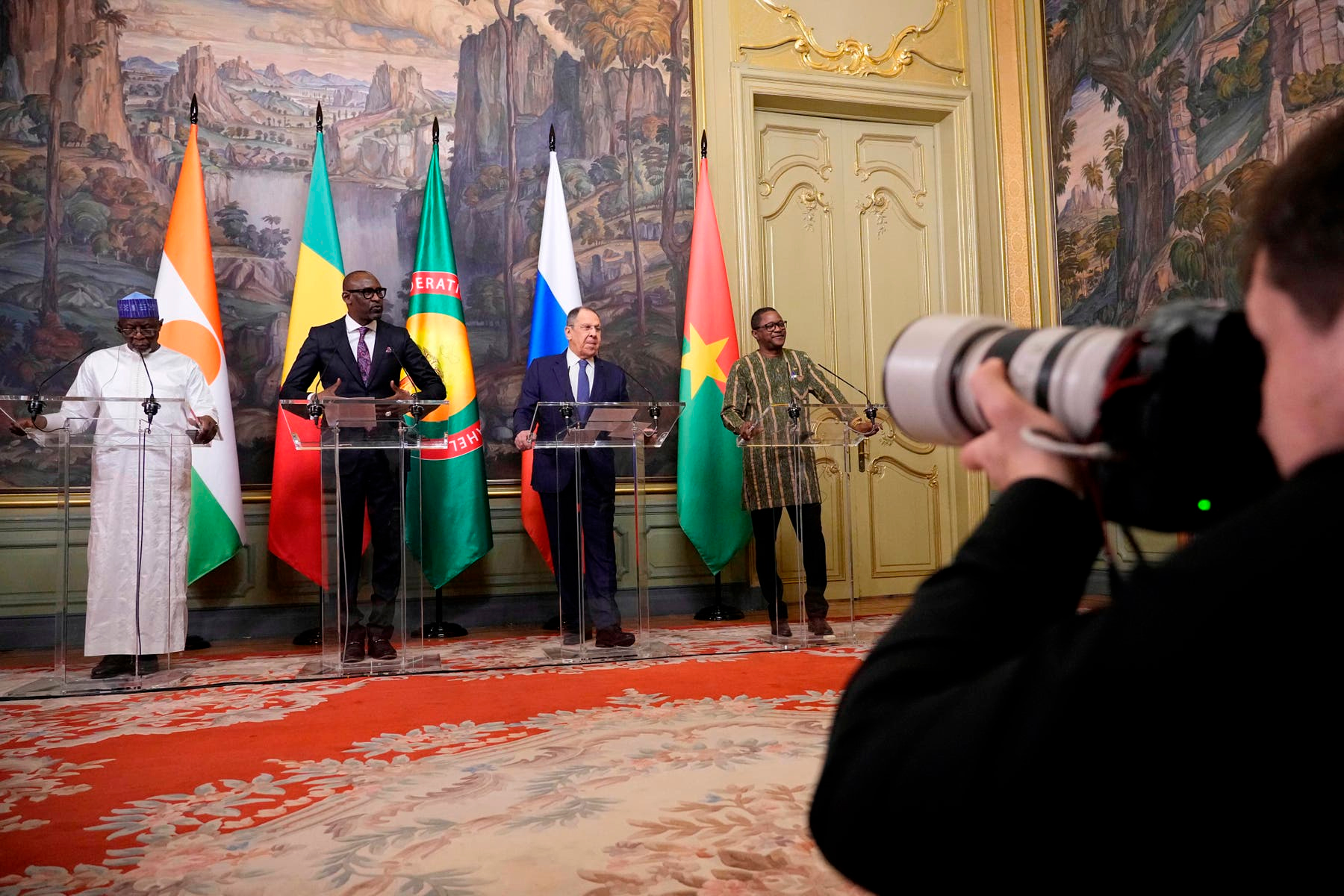
Russia and the Great Transition: From Normative Enforcement to Global Plurality
The major challenge for Romuald Wadagni, the newly elected President of Benin is the northern border linked with Burkina Faso. This border is a major source of smuggling and the illegal trafficking of migrants. Thousands of migrants have been moved from volatile regions toward Benin.
The insurgency in Benin has been dramatically increasing, while there are key supports and backing from various ethnic tribes. Extreme poverty paves the way toward the recruitment of various tribes to join this militia. Key tribes, including the Fulani, who form a minority in northern Benin, are a key recruitment pool due to cross-border ties with Sahel Fulani communities. Benin’s former President Patrice Talon held meetings in 2024 to curb youth recruitment, especially in villages like Mamassi Peuhl.
JNIM has expanded outreach to non-Fulani communities like the Gourmantche in western Atakora (an early expansion zone including Pendjari National Park). The region is an ethnic melting pot with Berba, Ditamari (Tammari/Somba-related), Natemba, Yende, and Fulani pockets. Recruitment drives have occurred in villages like Koabagou, with militants embedding via religious activities and smuggling networks.
The Bariba are a major northern ethnic group (especially in areas like Banikoara-Kerou-Kouande). JNIM has targeted them with propaganda in the Bariba language, urging resistance to “land grabbers” and promising justice. The group has mediated Bariba-Fulani land disputes to build sympathy and local support, rather than relying solely on proselytization. This is a key tactic in gaining footholds where relations between groups are otherwise cordial.
However, the Benin government has failed to establish its writ, and every day is becoming a challenge as the militia like Jama’at Nusrat al-Islam wal-Muslimin (JNIM) succeeds in turning the northern areas of Benin into buffer zones and no-go areas for the Benin military. These buffer zones are the massive parks and other compounds where insurgents enjoy mobility while commuting on motorbikes across the borders with Burkina Faso and Niger.
The demoralized forces, where the top brass has been involved in a failed military coup, always hover as a major threat to the current government. The weak defense budget of Benin—around $138–154 million USD—and the low salaries of forces pose a major challenge for combating the insurgency.
The rise of JNIM will have a strong economic impact on Benin, as the insurgency is increasing. The influx of this group in northern Benin can further extend to other major cities like Porto-Novo and Cotonou.
Benin’s small military, with roughly 4,750 to 12,000 active personnel (including paramilitary elements), faces significant strain. Limited equipment, modest resources, and the vast terrain of northern parks make effective control difficult. JNIM exploits these weaknesses by using safe havens in protected areas for staging, resupply, and cross-border movements.
As JNIM embeds deeper through local mediation, propaganda in native languages, and economic incentives amid poverty, the risk grows that northern Benin could serve as a launchpad for wider coastal threats. Regional players continue to watch closely, while Benin balances security needs with development efforts to address root causes like marginalization and ethnic tensions.
The situation remains uncertain as the Benin government attempting military operations and community engagement, but the combination of geography, grievances, and militant adaptability presents a serious long-term challenge. Whether Benin becomes the next major hotspot for Al-Qaeda-linked activity will depend on how effectively these threats are contained in the coming months and years.
* Al-Qaeda — extremist organization banned in Russia
(no votes) |
(0 votes) |
The African Sahel as a Laboratory for Global Transformation


