
The Strait of Hormuz Conflict: Why Controlling a Chokepoint is Harder Than Winning a War
In
Login if you are already registered
(no votes) |
(0 votes) |

Research Associate at Maritime Center of Excellence (MCE), Pakistan, M.Phil. Degree in Strategic Studies from National Defense University, Islamabad, Pakistan
The Hormuz crisis is not merely a regional conflict but a case study in the limits of conventional military power. It highlights how weaker actors can exploit geography and leverage cost-effective technologies to challenge even the most advanced militaries. Traditional measures of military superiority—such as advanced platforms and firepower—are less decisive in environments where geography and asymmetric tactics dominate. For the United States, achieving complete security in the strait would require near-perfect interception and a continuous presence—an operational standard that is virtually unattainable under current circumstances.
The escalating conflict between Iran, Israel, and the United States has directly impacted the security dynamics of the Strait of Hormuz. The geography of strategically crucial Strait of Hormuz makes it both a vulnerability and a geopolitical leverage. The strait is deep and wide enough to handle the world's largest crude oil tankers, and it is one of the world’s most important chokepoints with very limited transit alternatives. On average, 20 million barrels per day or the equivalent of about 20% of global petroleum liquids consumption passes through the strait each year. At its narrowest, the waterway is roughly 30 miles wide, yet the actual shipping lanes are only about two miles across. This creates a “fatal funnel”: a predictable, constrained route where ships must pass through a confined space. Unlike blue water naval operations where maneuverability and distance provide crucial protection, vessels transiting this strait are inherently exposed to multi-domain threats.
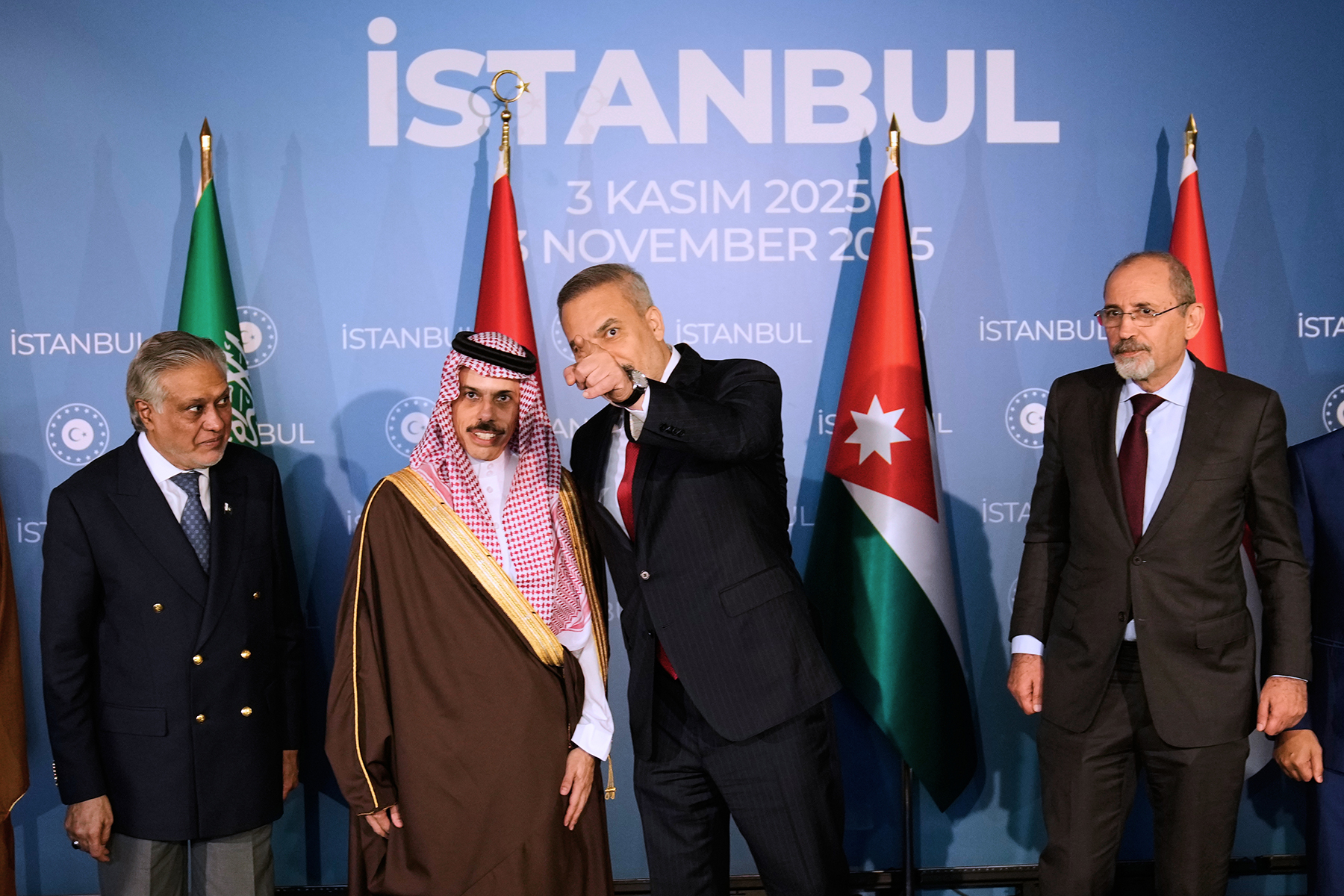
At the Dawn of a New Strategic Axis: How the Conflict with Iran Is Reshaping Regional Alliances
When conflict erupted, degrading Iran’s naval might was one of the key objectives of United States. Since the ignition of hostilities, U.S. forces have conducted multiple precision strikes against Iranian naval forces resulting in the destruction of multiple naval warships, including the sinking of IRIS Dena frigate when it was torpedoed by nuclear attack submarine (SSN) off the Southern coast of Sri-Lanka in the Indian Ocean. However, despite suffering significant losses, Iran has still managed to impose naval blockade in the Strait of Hormuz. Several commercial vessels including: tankers, namely Hercules Star, Stena Imperative, Libra Trader, Sonangol Namibe, Safesea Vishnu, Zefyros, and Skylight; bulk carriers including Gold Oak, Mayuree Naree, and Star Gwyneth; and container ships like Safeen Prestige and One Majesty, have been targeted by Iranian Revolutionary Guard Corps (IRGC) in the Gulf using asymmetric tactics. Iran has, however, allowed the passage of commercial ships belonging to China, Pakistan, Turkey, and India. Regardless, the passage remains blocked for nations involved in hostilities against Tehran.
This is not the first time the Strait of Hormuz has witnessed a grave security crisis. During the Tanker War of 1980s, both Iran and Iraq targeted oil shipments, prompting the United States to launch Operation Earnest Will to escort commercial shipping. But when a U.S. Navy frigate was struck by an Iranian mine, the U.S. Navy initiated Operation Praying Mantis which led to the destruction of multiple Iranian warships. However, much has changed since then. Technology has advanced, tactics have evolved, economic stakes have expanded, and above all, geopolitical dynamics have transformed, making the threat environment far more complex. Both the United States and Iran have extensively strategized to better prepare for such crisis. Yet inherent strengths and limitations continue to persist on each side. The United States enjoys overwhelming technological superiority in the military domain, while Iran has augmented its asymmetric capabilities using its geographical leverage.
Iran’s advantage stems largely from its proximity and control over the northern coastline of the strait. This provides it with interior lines of communication and the ability to conceal and disperse military assets within mountainous costal region. Unlike traditional conventional military systems, the majority of combat systems employed by Iran are mobile and decentralized. Truck mounted suicide drones, mobile missile launchers, speed boats equipped with missiles and rockets, kamikaze drone boats and small boats loaded with naval mines, all capable of deployment in large numbers, are relatively inexpensive and yet can generate remarkable mission effects if employed effectively. A saturated strike of missiles and suicide drones can overwhelm even sophisticated air defense systems through sheer numbers and varying trajectories, while a single explosive-laden boat or mine can inflict catastrophic damage on any commercial tanker.
From the standpoint of the United States, opening the Straits of Hormoz by neutralizing diverse Iranian threats is a complex undertaking. Washington’s allies have already refused to send their warships in the Gulf to assist U.S. war-fighting efforts. The USS Gerald Ford nuclear-powered aircraft-carrier (CVN-78) has already retreated to Crete amid fire damage. Currently, USS Abraham Lincoln (CVN-72)—with three Arleigh Burke-class destroyers—is the only deployed carrier strike group (CSG) in war theater. As the conflict prolongs, the CSG is facing an immense strain on its operational endurance due to the high-consumption rate of onboard weapon systems amid overstretched logistics. To relieve pressure, U.S. forces are currently attempting to destroy Iranian mine-lying capability using A-10 Warthog attack aircrafts and AH-64D Apache attack helicopters. However, this approach is unsustainable and a highly-risky endeavor, considering that a major segment of Iranian air-defense in the Gulf is still intact. Also, the U.S. Navy currently has no dedicated mine-hunting capability in the Gulf. Four Avenger class minesweepers, dedicated for operations in the Persian Gulf, have been retired earlier this year. Two Independence class LCS, configured for minesweeping, were supposed to fill the gap but both vessels are currently stationed in Malaysia thousands of miles away. Although the USS Tripoli amphibious assault ship, with 2,200 marines and dedicated air-wing, is currently heading towards Iran to supplement U.S. forces, its ability to penetrate the Iranian asymmetric defenses and launch amphibious assault on any of Iranian islands—particularly Kharg Island—to re-open the Strait is highly dubious under current circumstances.
Unlike destroying Iranian naval assets with stand-off munitions, escorting commercial shipping through the strait occluded by naval mines and shadowed by flying projectiles need continuous presence, rapid response, and near-perfect interception rate. Even a single successful attack can degrade the entire mission, as civilian shipping companies operate under extremely low risk tolerance. For escorting shipping, the primary asset available at U.S. disposal are Arleigh Burke-class destroyers, each equipped with advanced radar systems, an Aegis combat system, and a layered air defense capability made up of the Standard Missiles family (SM-2, SM-3, SM-6) and Evolved Sea Sparrow Missiles (ESSMs). However, these missiles are designed for high-end threats like aircraft and missiles, not for swarms of low-cost drones or small speed boats. In addition, the cost asymmetry is overwhelming: intercepting a relatively cheap drone with a missile costing over a million dollars is economically unsustainable in prolonged engagements. Naval guns and close-in-weapon-systems (CIWS) like Phalanx CIWS and Sea-RAM can provide a last line of defense, but their range and coverage are limited. Ship-borne helicopters can engage surface as well as slow-flying aerial threats, but their efficiency is degraded by a lack of persistence and slow reaction time. In sum, although United States and Israel continue to exercise air-superiority over Iran, Washington’s options to establish sea-control of the Strait of Hormuz are rapidly depleting.
Ultimately, the Hormuz crisis is not merely a regional conflict but a case study in the limits of conventional military power. It highlights how weaker actors can exploit geography and leverage cost-effective technologies to challenge even the most advanced militaries. Traditional measures of military superiority—such as advanced platforms and firepower—are less decisive in environments where geography and asymmetric tactics dominate. For the United States, achieving complete security in the strait would require near-perfect interception and a continuous presence—an operational standard that is virtually unattainable under current circumstances.
(no votes) |
(0 votes) |
A War Without a Coalition
At the Dawn of a New Strategic Axis: How the Conflict with Iran Is Reshaping Regional AlliancesThe Israeli Polygon versus the Sunni Arc


