
Navigating Complexities: The New Kurdistan Oil Export Agreement
In
Login if you are already registered
(votes: 2, rating: 5) |
(2 votes) |

Juris Doctor, Researcher and lecturer at Duhok Polytechnic University, Iraqi Kurdistan Region
Following a two-and-a-half-year pause, Iraqi federal authorities and the Kurdistan Regional Government (KRG) are marking an agreement to resume oil exports via Turkey. An obvious prerequisite to addressing long-standing disagreements over civil servant salaries in the semi-autonomous region is the agreement, which permits crude pumped in Iraqi Kurdistan to flow northward under federal supervision. The agreement is precarious, though, as observers caution that specifics that have not yet been revealed could cause the agreement to fall apart.
Dark clouds over the deal are still present, even with the claims that oil pumped in Iraqi Kurdistan has started to flow through the Kirkuk-Ceyhan pipeline. Currently, there appear to be several major obstacles to the agreement's sustainability that could jeopardize its long-term viability. Reportedly scheduled for renegotiation in December, the 30-day rolling renewable structure appears to indicate a short-term horizon reflecting mutual mistrust, leaving the arrangement open to political upsets. The deal is also more immediately threatened by Iraq's November parliamentary elections. Shiite political groups with ties to Iran might use the uncertainty following the election to urge the prime minister into changing or removing provisions they believe to be overly advantageous to KRG interests.
International petroleum companies also seem to be a crucial factor in the success of the deal. According to reports, preliminary agreements have been signed by eight companies that account for 90% of KRG production; however, execution may be hampered by unresolved debt difficulties. The arrangement's continuation is more uncertain due to external factors. New treaty negotiations are necessary in light of Turkey's August decision to not extend the 1973 pipeline agreement with Iraq past 2026, which might change crucial export parameters. The effectiveness of the deal ultimately rests on the ability of the various parties to turn this tactical compromise into a long-lasting framework. As Iraq deals with growing regional instability, this will require striking a balance between appeasing foreign interests and resolving conflicting home pressures.
Following a two-and-a-half-year pause, Iraqi federal authorities and the Kurdistan Regional Government (KRG) are marking an agreement to resume oil exports via Turkey. An obvious prerequisite to addressing long-standing disagreements over civil servant salaries in the semi-autonomous region is the agreement, which permits crude pumped in Iraqi Kurdistan to flow northward under federal supervision. The agreement is precarious, though, as observers caution that specifics that have not yet been revealed could cause the agreement to fall apart.
In a post on Twitter/X on September 25, Iraqi Prime Minister Muhammad Shia’ Al-Sudani declared the deal, calling it “historic” and “an achievement 18 years in the making.” The deal, the premier added, “ensures the fair distribution of wealth, diversification of export outlets and encouragement of investment.” The US embassy in Baghdad also issued congratulatory messages, and Secretary of State Marco Rubio said he hoped that the deal would "bring tangible benefits for Americans and Iraqis while reaffirming Iraq’s sovereignty."
Kurdish authorities were also quite hopeful. Notably, Peshawa Hawramani, a KRG spokesman, told the press in Erbil that although the DNO and Genel Energy oil companies had reservations about the deal, “it was not a big deal.” There have been hopeful statements in the media that the deal will offer a viable way to resolve the frequently postponed wage payments for more than 1.2 million civil servants in the Kurdistan region. According to one hopeful opinion piece by Iraqi journalist Faqar Fadil, the agreement signifies a "strategic shift" in the relationship between Baghdad and Erbil. The arrangement will "directly impact the political balance" in Iraq, Fadil added.
Given that "oil is the backbone of the Iraqi economy," political analyst Ahmed Youssef told several Iraqi news agencies that the agreement is "a necessary step to resolve disputes" between Iraq's political parties. Abdul Salam Barwari, a former member of the Kurdistan Parliament, says that "the agreement represents an optimistic step that aligns with Article 111 of the Iraqi Constitution, which stipulates that oil and gas revenues belong to the Iraqi people and are deposited in the general budget, while Articles 112 and 115 allow the region to manage oil and gas extraction.” The recent oil deal between the Iraqi Kurdistan Region and the federal government in Baghdad is a significant step towards controlling oil exports and partially resolving financial obligations, according to Mohammad Saleh Sedgian, chairman of the Arab Centre for Iranian Studies in Tehran. Nonetheless, he underlined that commitment of both parties, and that the internal and external political pressures are the main factors influencing this agreement's future. Iraqi President Abdul Latif Jamal Rashid emphasized that while the recent oil deal between the federal government and the Kurdistan Region is a good and significant step in fostering trust, it needs to be permanently consolidated into law by passing an oil and gas law.
Despite these favourable opinions, some analysts interpret the seeming absence of particular facts as a red flag, expressing long-standing worries about the viability of any eventual, larger settlement. Pointing out that the agreement's precise terms are still unknown. Furthermore, there are still several unresolved issues on the Turkish side of the agreement, making it quite unclear.

Turkey Terminates Iraqi Oil Export Agreement: Reasons and Consequences
The Future of KRG Oil: Navigating the Complex Pipeline Agreement
Following a decision on a 2014 complaint filed by Baghdad with the International Chamber of Commerce (ICC), the Kirkuk-Ceyhan pipeline was closed in March 2023. The KRG's autonomous sale of crude oil to Turkey without Baghdad's consent was at the heart of the dispute; it brought in billions of dollars for the Kurdistan region.
In its arbitration decision from 2023, the ICC decided in favor of Baghdad. By accepting independent KRG oil exports, Turkey violated a 1973 Iraq-Turkey pipeline agreement, the chamber said, and it ruled that Ankara reimburse Baghdad for losses totaling about USD 1.5 billion.
Turkish authorities responded by stopping the pipeline's daily flow of about 450,000 barrels. Despite multiple rounds of talks, the KRG lost billions of dollars in revenue since the great majority of the crude was pumped in Iraqi Kurdistan. While Baghdad was largely unaffected because federal exports primarily pass through southern Iraq, the stoppage swiftly grew into a financial disaster for Erbil. The KRG was allegedly forced to illegally ship some crude to Iran and Turkey at far cheaper prices and quantities as a result of the cessation of salary payments to government employees in the Kurdistan region.
Baghdad used the stalemate to establish constitutional control over oil exports, with the KRG appearing to be on the defensive in larger conflicts over its future political independence. The latest deal between Baghdad and Erbil seems to be a complicated compromise that reflects the geopolitical considerations of both parties, even if a partial settlement to reopen the pipeline was struck with Turkey in February. According to the agreement, which is supported by strict monthly reporting requirements, the KRG must supply crude to the federal State Oil Marketing Organization (SOMO) at the Faysh Khabur metering station on the Turkish border. The revenue split under the arrangement—16 USD per barrel going to an escrow account for foreign oil companies, with the remaining earnings going to SOMO—indicates a calculated plan meant to win over investors. The above terms are probably meant to allay commercial concerns over prompt payments while postponing the settlement of the roughly $1 billion USD in unpaid debts the KRG incurred following the pipeline's closure.
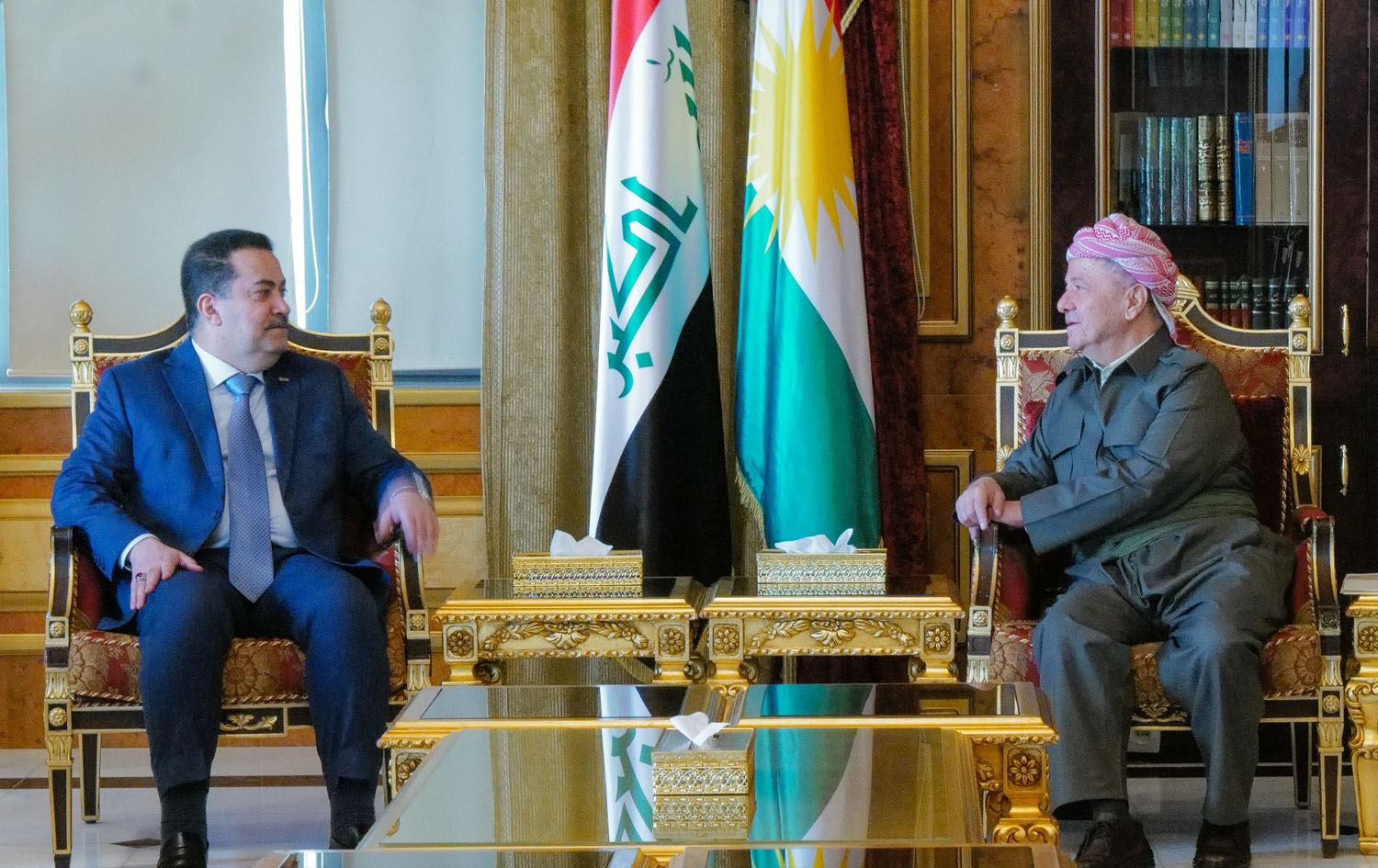
Key Factors Influencing the Future of Kurdistan's Oil Deal
Dark clouds over the deal are still present, even with the claims that oil pumped in Iraqi Kurdistan has started to flow through the Kirkuk-Ceyhan pipeline. Currently, there appear to be several major obstacles to the agreement's sustainability that could jeopardize its long-term viability. Reportedly scheduled for renegotiation in December, the 30-day rolling renewable structure appears to indicate a short-term horizon reflecting mutual mistrust, leaving the arrangement open to political upsets. The deal is also more immediately threatened by Iraq's November parliamentary elections. Shiite political groups with ties to Iran might use the uncertainty following the election to urge the prime minister into changing or removing provisions they believe to be overly advantageous to KRG interests.
International petroleum companies also seem to be a crucial factor in the success of the deal. According to reports, preliminary agreements have been signed by eight companies that account for 90% of KRG production; however, execution may be hampered by unresolved debt difficulties. The arrangement's continuation is more uncertain due to external factors. New treaty negotiations are necessary in light of Turkey's August decision to not extend the 1973 pipeline agreement with Iraq past 2026, which might change crucial export parameters. The effectiveness of the deal ultimately rests on the ability of the various parties to turn this tactical compromise into a long-lasting framework. As Iraq deals with growing regional instability, this will require striking a balance between appeasing foreign interests and resolving conflicting home pressures.
(votes: 2, rating: 5) |
(2 votes) |
The disputes between Baghdad and Erbil now affect the essence of the Iraqi state itself and are no longer merely a Kurdish issue
Turkey Terminates Iraqi Oil Export Agreement: Reasons and ConsequencesTurkey's New Strategy in the Region: Oil, Security and International Routes


