Islamic NATO?
In
Login if you are already registered
(votes: 1, rating: 5) |
(1 vote) |

Juris Doctor, Researcher and lecturer at Duhok Polytechnic University, Iraqi Kurdistan Region
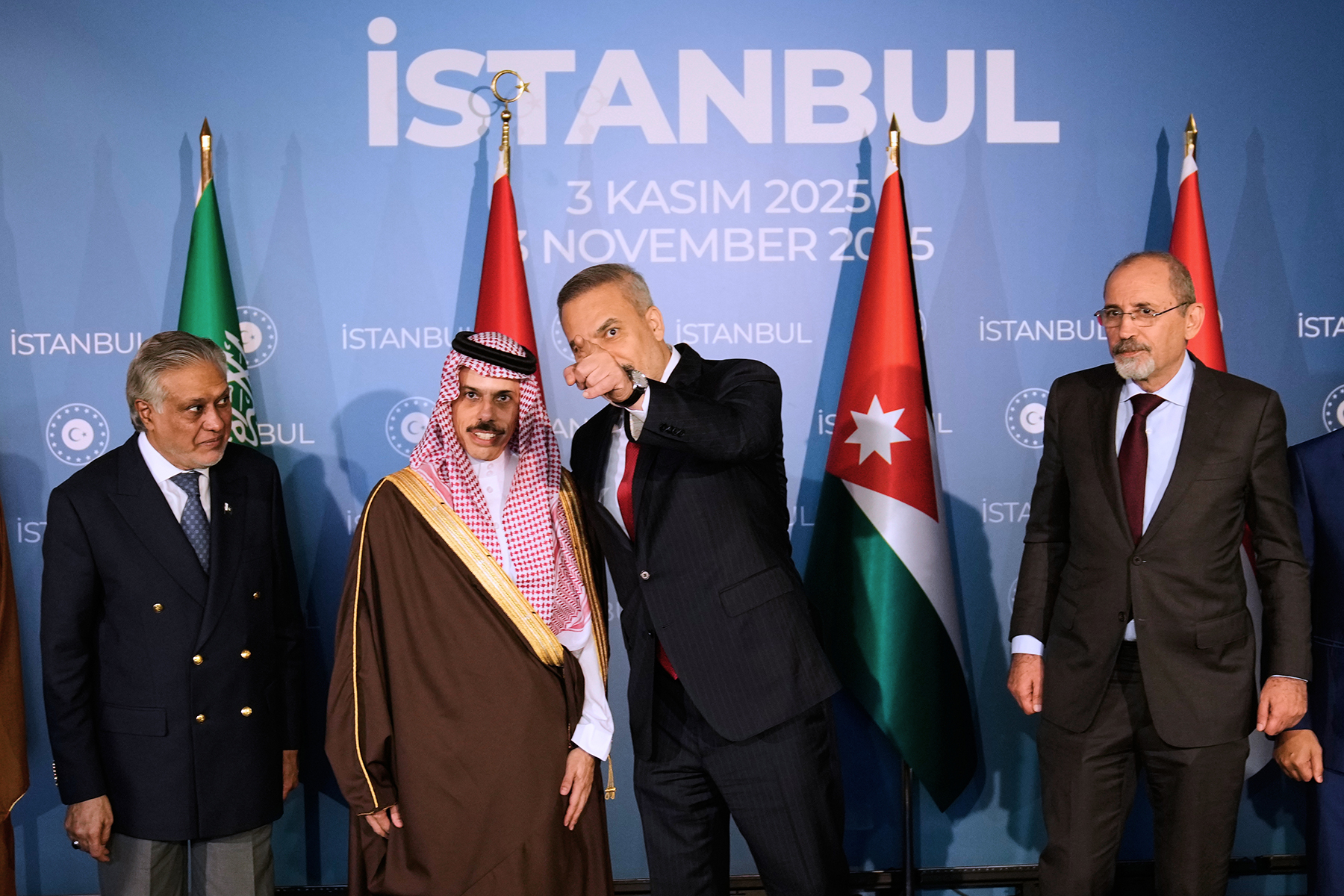
On April 17, 2026, the foreign ministers of Saudi Arabia, Turkey, Egypt, and Pakistan met alongside of the Antalya Diplomacy Forum. While deputy ministers met for the first time on April 14 in Islamabad, the foreign ministers from these nations met for the third time in a single month (the first meeting took place in Riyadh on March 18 and the second in Islamabad on March 29). According to official statements, the quadrilateral talks centered on how to resolve regional issues and control the confrontation between the United States and Israel on the one hand, and Iran on the other. Additionally, these quadrilateral gatherings pledged to "strengthen the partnership" and enhance coordination and collaboration in areas of "common interest." Numerous investigations have examined the potential for the four nations to join a four-way bloc, which some have dubbed an "Islamic NATO."
Different threat assessments, a lack of institutionalization, economic weakness, and internal political instability in some member countries are some of the fundamental limitations that the Quadrilateral Coalition of Nations must contend with. Because of this, it is now a fluid consultation and coordination mechanism rather than a formal alliance. Previous regional attempts, including the Baghdad Pact in the 1950s, failed because of similar circumstances—insufficient institutionalization and competing national interests. Therefore, if the four countries do not establish a formal framework and a shared command structure, the Quadrilateral Coalition runs a risk of being driven by events and unable to sustain pace in peacetime.
On April 17, 2026, the foreign ministers of Saudi Arabia, Turkey, Egypt, and Pakistan met alongside of the Antalya Diplomacy Forum. While deputy ministers met for the first time on April 14 in Islamabad, the foreign ministers from these nations met for the third time in a single month (the first meeting took place in Riyadh on March 18 and the second in Islamabad on March 29). According to official statements, the quadrilateral talks centered on how to resolve regional issues and control the confrontation between the United States and Israel on the one hand, and Iran on the other. Additionally, these quadrilateral gatherings pledged to "strengthen the partnership" and enhance coordination and collaboration in areas of "common interest." Numerous investigations have examined the potential for the four nations to join a four-way bloc, which some have dubbed an "Islamic NATO."
At the Dawn of a New Strategic Axis: How the Conflict with Iran Is Reshaping Regional Alliances
Factors Behind the Formation of the Quaternary Bloc
The emerging bloc's institutional architecture has not yet been completed by the quadrilateral meetings, but official discussions, media reports, and the regional security conditions suggest that this bloc is motivated by the following advantages:
I. Each allied state contributes a unique set of abilities in security, defense, economy, and diplomacy, making their powers complimentary. Turkey has a sophisticated defense sector that includes drones and naval hardware, whereas Pakistan has both a functioning military force and a nuclear deterrent. In a comparable manner, Saudi Arabia possesses wealth and power in the oil industry, as well as religious sway over the Islamic world. Egypt has a sizeable army that may provide military personnel to collective defense in regional crises, as well as geo-strategic depth owing to the Suez Canal. By compensating for member states' shortcomings, these strengths can create an involved power structure that allows for the best possible burden sharing.
II. A Cooperative Defense Manufacturing System, developing a cooperative defense manufacturing system among the four countries to lessen reliance on outside powers for defense procurement is a crucial aspect of the developing quartet. By creating such a system, these countries would move from consumer-supplier interactions to a network of collaborative invention and manufacturing. In this regard, the combined production of combat and reconnaissance aircraft, drones, missile systems, and naval equipment, including warships, may be made easier by Turkey's industrial base, Saudi finance, and the labor and technological know-how of both Egypt and Pakistan. By working together, the aforementioned countries may be able to lessen their dependency on Western arms markets and localize defense supply chains.
III. After Saudi Arabia and Pakistan signed the Strategic Mutual Defense Agreement (SMDA) in September 2025 in Riyadh, a collective security structure might extend bilateral security agreements to additional like-minded states. In contrast to the SMDA between Saudi Arabia and Pakistan, the quartet of nations are currently debating how to improve their combined military and security capabilities through joint military, air, and naval exercises, fighter pilot training programs, intelligence sharing frameworks, and crisis response coordination. To solve regional security issues, the new Quartet will endeavor to create a soft collective security architecture rather than to a NATO-style alliance.
IV. One of the main arguments and traits regarding this quartet, along with the presence of cooperative and coordinated tactics on regional geopolitical challenges, is the coordination of strategic decision-making. This would guarantee that these four countries' national interests are achieved. For instance, cooperative methods are needed to lessen external pressures, especially those from powerful nations, in relation to the Iranian-Israeli armed conflict, Red Sea security, involvement in the Gaza Peace Council, the Palestinian issue generally, and other related issues. In this regard, the deputy ministerial level meeting on April 14 suggested hosting frequent security communications and summits to cooperate strategically and take shared stances on the aforementioned concerns. Additionally, a framework for diplomatic cooperation inside regional and international organizations, such the Organization of Islamic Cooperation and other platforms, is expected to be developed by the foursome.
Different threat assessments, a lack of institutionalization, economic weakness, and internal political instability in some member countries are some of the fundamental limitations that the Quadrilateral Coalition of Nations must contend with. Because of this, it is now a fluid consultation and coordination mechanism rather than a formal alliance. Previous regional attempts, including the Baghdad Pact in the 1950s, failed because of similar circumstances—insufficient institutionalization and competing national interests. Therefore, if the four countries do not establish a formal framework and a shared command structure, the Quadrilateral Coalition runs a risk of being driven by events and unable to sustain pace in peacetime.
(votes: 1, rating: 5) |
(1 vote) |
The Israeli Polygon versus the Sunni Arc
The Gulf States: Geographic Unity and Political FragmentationIt may be more prudent for Russia to engage the Gulf states as individual actors rather than as a cohesive bloc