
Al-Sharaa's Washington Visit Impacts on the Syrian Democratic Forces
In
Login if you are already registered
(votes: 1, rating: 5) |
(1 vote) |

Juris Doctor, Researcher and lecturer at Duhok Polytechnic University, Iraqi Kurdistan Region
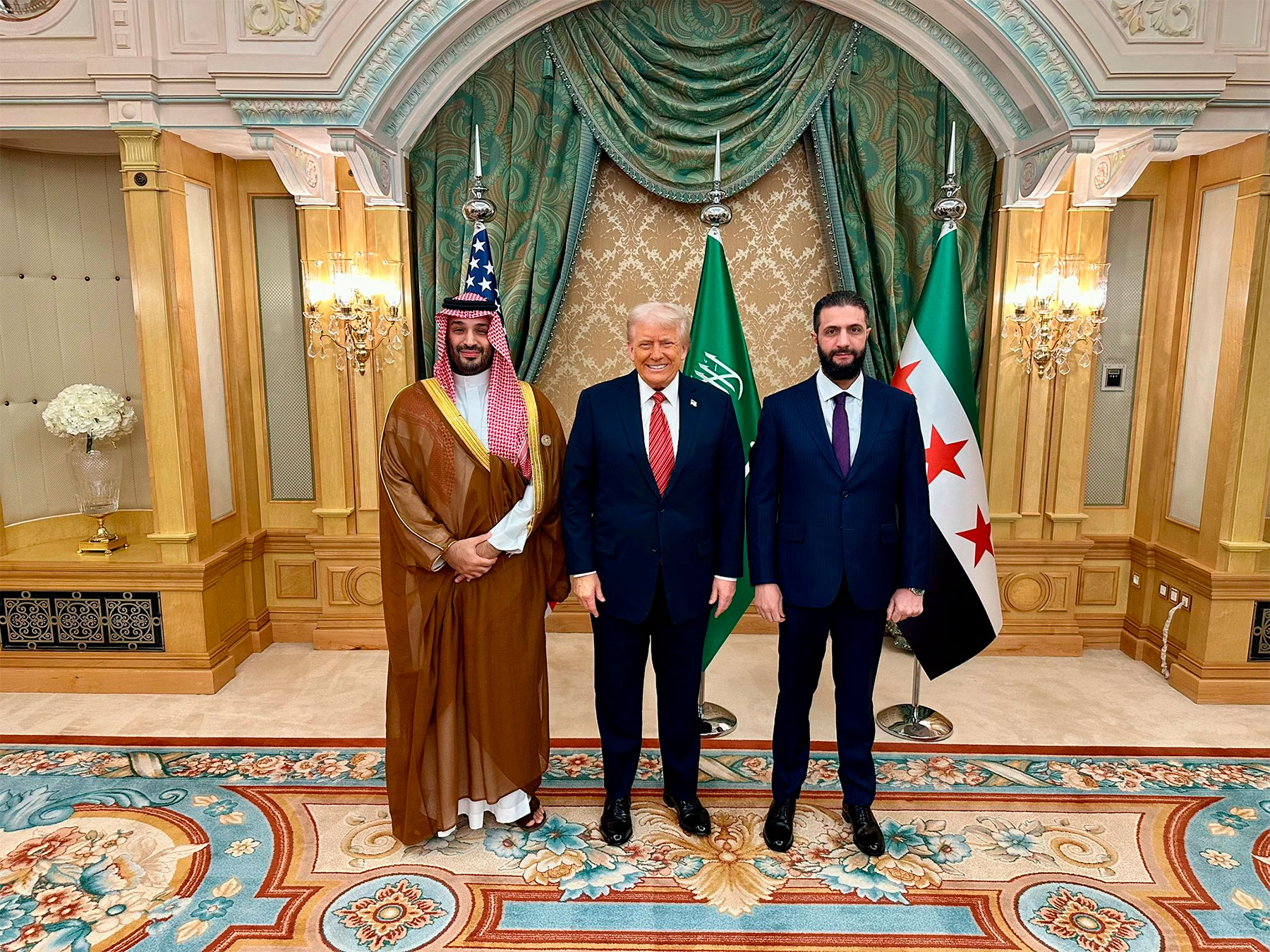
Ahmed al-Sharaa visited Washington D.C. and met with U.S. President Donald Trump on November 10, 2025. This was an additional step toward strengthening his international power, especially since it came after the UN Security Council. Under the initiative of the United States, the UN decided to remove him from the sanctions list. Beyond a high-level Syrian-Turkish-U.S. meeting on key regional security files (SDF, Suwaida, Hezbollah, Southern Syria, Israel), the visit culminated in the Syrian administrator’s declaration of intent to join the international coalition against ISIS. Al-Sharaa sought above all to repeal the Caesar Act, seen as an obstacle to Syria’s recovery and reconstruction.
It is impossible to ignore the significance of al-Sharaa's visit to Washington, but the Syrian interim president has not yet demonstrated any concrete readiness to move toward genuine national reconciliation or genuine dialogue, whether with the SDF or the Druze and Alawites. Since he is surrounded by Israeli surveillance, pressure from the Trump administration to form a "more representative government," and demands from some members of Congress to link the termination of the Caesar Act to obtaining strict pledges from the Syrian administration regarding the rights of minorities, it is more likely that his thinking is shifting toward taking advantage of the visit's outcomes in his conflict with his internal opponents and tightening the siege on them more and more, but cautiously.
Ahmed al-Sharaa visited Washington D.C. and met with U.S. President Donald Trump on November 10, 2025. This was an additional step toward strengthening his international power, especially since it came after the UN Security Council. Under the initiative of the United States, the UN decided to remove him from the sanctions list. Beyond a high-level Syrian-Turkish-U.S. meeting on key regional security files (SDF, Suwaida, Hezbollah, Southern Syria, Israel), the visit culminated in the Syrian administrator’s declaration of intent to join the international coalition against ISIS. Al-Sharaa sought above all to repeal the Caesar Act, seen as an obstacle to Syria’s recovery and reconstruction.
What Does the Easing of Sanctions Mean for Syria?
Navigating Sanctions: Al-Sharaa's Influence on U.S. Legislative Actions
Al-Sharaa achieved a few modest successes during his stay in Washington. These included the six-month suspension of the Caesar Act by U.S. Secretary of State Marco Rubio and clarifications from the U.S. Departments of State, Commerce, and Treasury about export limitations, exemptions from sanctions, and the activities allowed or prohibited with Syria. Additionally, Rubio informed Asaad al-Shaibani, his Syrian counterpart, that restrictions on the Syrian embassy and diplomatic mission in Washington would be lifted, allowing them to resume full activities. In the context of al-Sharaa's announcement that his country would become the 90th member of the “Global Coalition to Combat ISIS” during his meeting with Trump, the U.S. decision sought to “enhance coordination on counterterrorism, security, and economic issues.” The Syrian government, however, was careful to note, while it had joined the coalition's political division, it had not yet joined its military division, “Operation Inherent Resolve.”
Additionally, the White House reminded al-Sharaa that they would "help" Damascus and Tel Aviv negotiate a security arrangement, ostensibly as part of a larger accord for Syria to join the Abraham Accords. Meanwhile, Damascus is receptive to a U.S.-backed proposal to strengthen Syrian-U.S. ties and create a joint security-military operations room with the ultimate objective of stabilizing southern Syria and eliminating outlaw militias. Furthermore, Syria has no problem with Israel establishing a liaison office in Damascus as long as it is not granted diplomatic status. A few days following al-Sharaa's visit, Trump called the Syrian president “a very strong leader” and told that “We want to see Syria become a country that’s very successful, and I think this leader can do it.” According to his Secretary of State, Washington was concentrating on promoting stability in Syria and giving the Syrian government opportunities to prosper "Let’s say that this government project failed, either because they make it fail or because it’s just not successful." However, he cautioned that excluding minorities from the administration of the state would result in "inevitable failure," urging the establishment of “a government that represents every element of Syrian society.” Al-Sharaa's visit helped turn Syria into a “key partner” for the United States, according to U.S. Special Envoy to Syria Tom Barrack.
The most significant outcome of his visit was the advancement of the U.S. Congress's efforts to repeal the Caesar Act. Brian Mast, chairman of the House Foreign Affairs Committee, became less opposed to easing the sanctions after their meeting, but he still insisted on a provision that would guarantee their reimposition in the event that the Syrian government failed to fulfill its commitments. According to Syrian-U.S. advocacy groups, Congress approved the language Mast asked for as a "non-binding condition" for the U.S. government. Al-Sharaa reminded Syrian leaders of organizations in Washington that "the sanctions are in their final stages." The U.S. House of Representatives passed a bill on November 20, requiring the administration to evaluate potential terrorist threats to the United States that might arise from individuals in Syria affiliated with foreign or international terrorist organizations, while Congress considers repealing other laws that formed the legislative framework for sanctions against Damascus, such as the 2003 Syria Accountability and Lebanese Sovereignty Restoration Act. This demonstrates the persistent concern in U.S. circles about the "foreign jihadists" who support al-Sharaa. On Saturday, January 10, 2026, a military operation against SDF’s fighters started in Aleppo's Kurdish neighborhoods, amply illustrating this concern. This was demonstrated by the mutilation of SDF dead and captives, as well as the disdain for Kurdish nationalism displayed by (military) elements of the Syrian Arab Army.
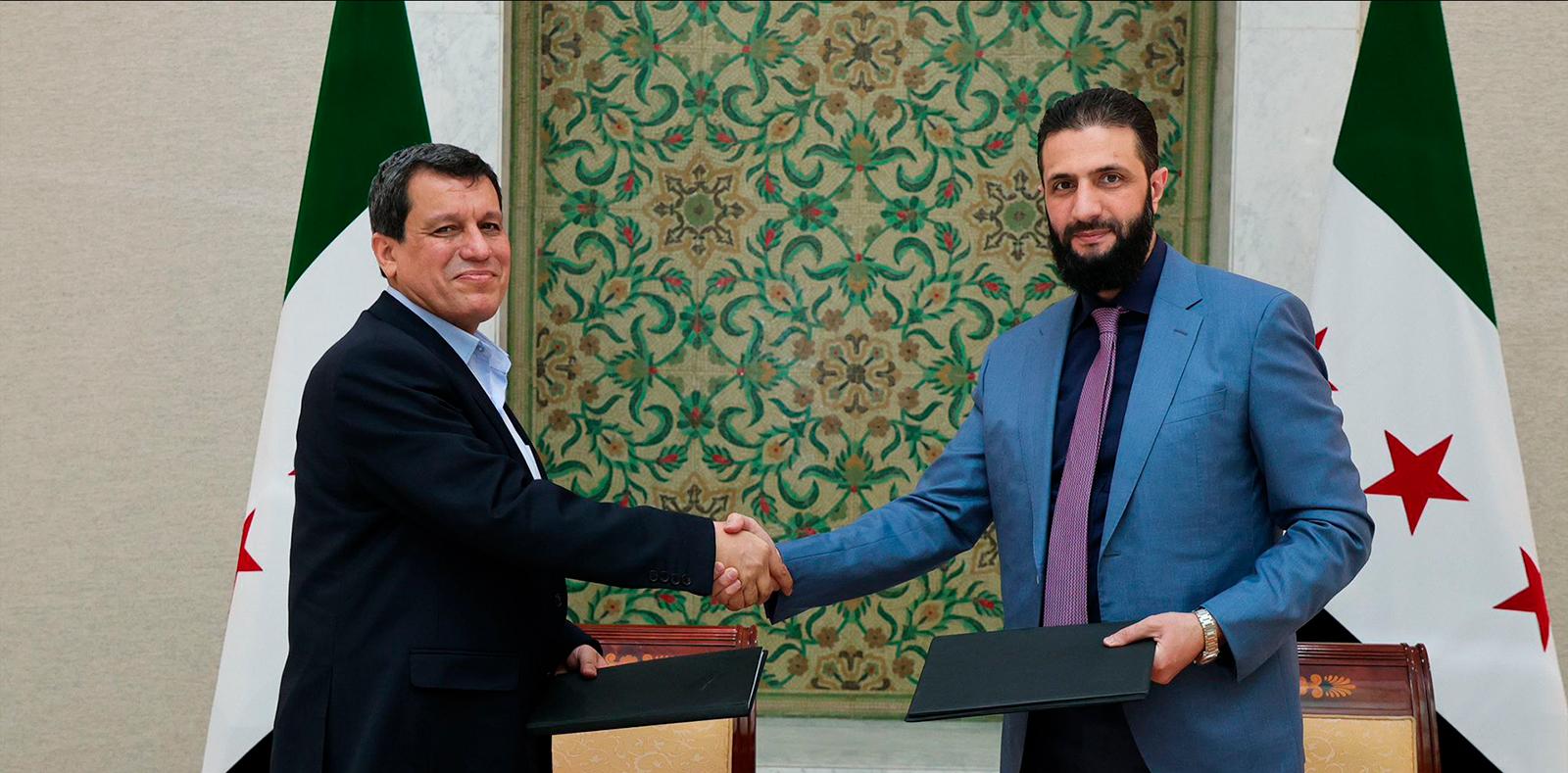
Negotiation Dynamics: Rojava's Path Towards Integration with Syria
U.S.-Syria Relations: Implications for the SDF and Rojava
The Washington Al-Sharaa sessions had the greatest impact on the Syrian Democratic Forces (SDF) in Rojava because their future hinged on U.S.-Syria and U.S.-Turkey relations. Senior SDF commanders objected to al-Sharaa's unilateral approach to structuring the interim phase, and negotiations between the SDF and the Syrian government were at a very sensitive point before al-Sharaa's visit.
Although senior SDF officials were disappointed that al-Sharaa was invited to the White House while the Kurdish leadership was not, Mazloum Abdi, commander-in-chief of the Syrian Democratic Forces (SDF), thanked President Trump. The officials also expressed doubts about the negotiations between Trump, al-Sharaa, and Turkish Foreign Minister Hakan Fidan, which led to the three sides deciding to implement the March 10 agreement. In response to U.S. Special Envoy to Syria Tom Barrack's request that the SDF take concrete action in this area, Abdi promised to accelerate the process of integrating the SDF with Syrian governmental institutions.
Barrack was keen to start a conversation between the two parties about Qamishli International Airport, border crossings, oil resources, and the state of state institutions. Abdi, however, maintained his composure, stressing the necessity of collaborating with "international partners" for a safe future for a “unified Syria,” an obvious allusion to the U.S. and France, without bringing up the Syrian government. However, there were some positive aspects of the trip for the SDF. Its leaders saw Fidan's attendance at the White House meetings as Turkish endorsement of the March 10 agreement, which Ankara had resisted for months, and applauded Syria's entry into the international coalition against ISIS.
In fact, Fidan estimated that negotiations between the Syrian government and the SDF would advance in the days following the Washington meetings, while Turkish President Recep Tayyip Erdogan seemed more accommodative, stating that he was prepared to make every effort to guarantee the success of the March 10 agreement. This change in tone occurred weeks after Fidan's demand that the SDF remove its forces from regions with a large Arab population and Erdogan's ultimatum to the SDF demanding the “immediate implementation” of the March 10 agreement.
A large-scale meeting between the Syrian government in Damascus and the Autonomous Administration in Rojava was scheduled for the second part of November, but it never happened. Rather, the leaders of the Autonomous Administration and the Syrian Democratic Forces (SDF) met and reiterated their commitment to “national dialogue.” The supreme sheikh of the Shammar tribe, which forms the fundamental unit of the Sanadid Forces, one of the SDF's constituent units, Maneh Hamidi al-Daham al-Jarba, visited al-Sharaa in Damascus on November 19. Al-Jarba informed Abdi about his conversations with al-Sharaa on November 21, taking into consideration the sensitivities. Al-Sharaa and Abdi's concurrence over al-Jarba mirrored the growing struggle between the Kurdish-led Autonomous Administration and the Syrian Interim Administration over the future of the mostly Arab territories east of the Euphrates River. Thus, the fact that fighting broke out on the evening of November 19, when al-Jarba arrived in Damascus to meet with al-Sharaa, was no accident. Following an agreement that gave al-Sharaa territorial gains, these conflicts between groups connected to the New Syrian Army and the SDF forces stationed in the Maadan desert east of Raqqa province came to an end. On the morning of November 23, the conflict moved to the front lines in the province of Deir ez-Zor between the two parties.
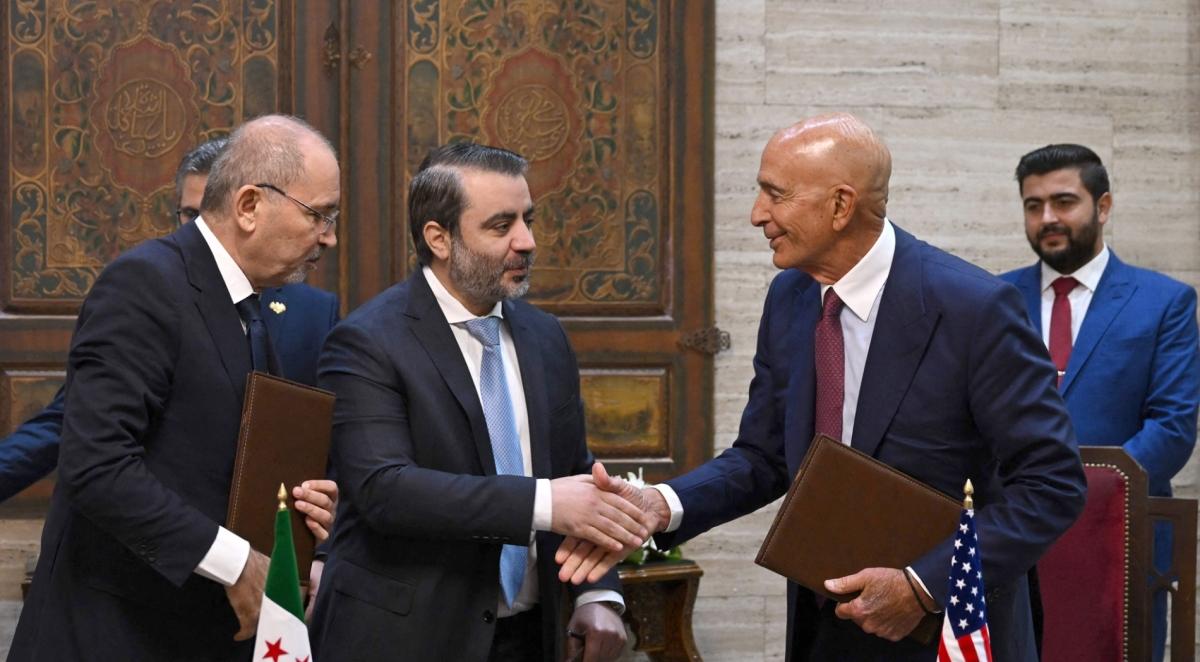
The Syrian Foreign Ministry confirmed that efforts were being made "to transfer the partnerships and understandings that were made out of necessity with temporary bodies (referring to the SDF) to Damascus," announcing on November 7, a “shift” in the U.S. stance towards "direct dealings with the central Syrian government" ahead of Trump's meeting with al-Sharaa. Then, on November 18, al-Shaibani outlined the Syrian government's strategy for handling the SDF issue, which centers on finding a respectable way for the U.S. to give up on it. He suggested that the SDF be integrated into the Syrian state framework under Washington's supervision, concurrently with Damascus joining the international coalition against ISIS, without addressing the more significant national and political aspects of the integration process. Given that the demands of the Druze and Alawites for federalism are similar to those of the Kurds, Abdi expressed his disapproval of al-Shaibani's strategy and al-Sharaa's meeting with al-Jarba on November 23, by highlighting the need to include representatives of these groups in any future SDF meetings with the Syrian government. In an oblique reply to al-Shaibani, he brought up the true problem with al-Sharaa's government, which is its attempt to seize weapons from the SDF prior to reaching a consensus on the nation's constitutional and political course. Despite the military deal agreed between the two sides through U.S. mediation last October, he disclosed that the constitution and the form of government in Syria—centralized or decentralized—remain major difficulties. He underlined that without political agreement on the constitution, a full deal is not possible.
Fidan quickly reverted to his typical hardline stance, emphasizing that his country would not permit the continuation of an environment that threatens its national security from Syria, labeling "the current structure of the SDF as a direct threat to Turkey's security," and demanding the removal of current threats east of the Euphrates River, despite the flexibility that typified the Turkish position following the Washington meetings.
Al-Sharaa's visit to Washington, in summary, resulted in Syria's political alignment with the international coalition against ISIS and the start of negotiations for its participation in Operation Inherent Resolve. The Syrian Foreign Ministry and U.S. authorities swiftly refuted the prospect that Washington would send troops to a military airbase south of Damascus. Additionally, al-Sharaa weakened the position of the Syrian Democratic Forces (SDF), which purports to represent the Arab tribes east of the Euphrates, by using his trip to Washington to facilitate al-Jarba's arrival to Damascus. As a result, the leadership of the SDF knew that al-Sharaa had effectively surrounded them at their strongest point—their partner, the United States.
It is impossible to ignore the significance of al-Sharaa's visit to Washington, but the Syrian interim president has not yet demonstrated any concrete readiness to move toward genuine national reconciliation or genuine dialogue, whether with the SDF or the Druze and Alawites. Since he is surrounded by Israeli surveillance, pressure from the Trump administration to form a "more representative government," and demands from some members of Congress to link the termination of the Caesar Act to obtaining strict pledges from the Syrian administration regarding the rights of minorities, it is more likely that his thinking is shifting toward taking advantage of the visit's outcomes in his conflict with his internal opponents and tightening the siege on them more and more, but cautiously.
(votes: 1, rating: 5) |
(1 vote) |
The West is trying to lay the groundwork for gaining leverage over the current authorities in Damascus
Postponing War, Not Building Peace: Limits of Syrian-Israeli Security DealThe deal may pause Syria-Israel tensions, but core issues like Golan, sovereignty and trust are still missing
Negotiation Dynamics: Rojava's Path Towards Integration with SyriaSetting Up the Damascus-Rojava Negotiations


