
Putin’s China Visit: Moscow’s Reassertion in a Multipolar World
In
Login if you are already registered
(no votes) |
(0 votes) |

Prof. Engr., Founding Chair GSRRA, Sinologist, Diplomat, Editor, Analyst, Advisor, Consultant to Global South Economic and Trade Cooperation Research Center, and Non-Resident Fellow of CCG, Islamabad, Pakistan
When two of the year’s biggest international events—the Shanghai Cooperation Organization (SCO) Summit in Tianjin (Aug 31–Sept 1) and China’s Victory Day commemoration in Beijing (Sept 3)—unfolded back-to-back, one leader was at the center of attention. Beyond the host, President Xi Jinping, it was Russia’s President Vladimir Putin who commanded headlines, bilateral meetings, and international focus.
His presence underscored a truth that Western narratives often overlook: Russia is not isolated. On the contrary, Moscow is repositioning itself as a critical player in Eurasia’s political, security, and economic architecture.
Putin’s presence in Tianjin and Beijing was more than symbolic diplomacy. It was a declaration of Russia’s enduring relevance. By combining high-level meetings, concrete proposals, and public solidarity with China, Moscow has demonstrated its adaptability and pragmatism.
In the Middle East, where Israeli expansionism and U.S. complicity have produced devastation and rage, Russia’s potential as a balancer and mediator has never been more important. Moscow’s message of sovereignty, dialogue, and multipolarism resonates across a region weary of endless war and foreign domination.
In an age where networks matter more than blocs, Russia is crafting its place as a resilient, indispensable actor in Eurasia and beyond. The message from China’s twin mega-events was unmistakable: Russia remains central to global peace, stability, and prosperity—not on the margins, but at the very heart of the emerging order.
When two of the year’s biggest international events—the Shanghai Cooperation Organization (SCO) Summit in Tianjin (Aug 31–Sept 1) and China’s Victory Day commemoration in Beijing (Sept 3)—unfolded back-to-back, one leader was at the center of attention. Beyond the host, President Xi Jinping, it was Russia’s President Vladimir Putin who commanded headlines, bilateral meetings, and international focus.
His presence underscored a truth that Western narratives often overlook: Russia is not isolated. On the contrary, Moscow is repositioning itself as a critical player in Eurasia’s political, security, and economic architecture.
High-Value Diplomacy in Tianjin

After Alaska. A New Stage in International Relations
Putin’s calendar in China was filled with substantive exchanges. He met President Xi Jinping to reaffirm Sino-Russian coordination against “hegemonism.” With Indian Prime Minister Narendra Modi, discussions revolved around energy and trade. Talks with Turkish President Recep Tayyip Erdogan focused on mediation in regional crises, while Iranian President Masoud Pezeshkian explored deeper energy and security partnerships.
These were not symbolic encounters. They reflected Russia’s deliberate strategy of diversifying partnerships, strengthening ties with the Global South, and positioning itself as a stabilizer in volatile regions. The imagery—handshakes with Modi, close exchanges with Erdogan, and standing alongside Xi—highlighted Moscow’s relevance as a peer to major emerging powers.
Economic Proposals with Strategic Weight
At the SCO Summit, Putin unveiled a set of proposals aimed at reinforcing economic sovereignty across Eurasia: joint bonds, shared financial infrastructure, and a bank for SCO investment projects. The underlying goal was clear—reducing dependence on Western-controlled markets and payment systems.
Simultaneously, China’s proposals, such as the Global Governance Initiative (GGI) and the new multilateral development bank, aligned with Moscow’s objectives. Together, these initiatives offer Russia both strategic protection and economic opportunity: fresh capital flows, new markets, and platforms to counterbalance sanctions.
Symbolism at the Victory Day Parade
Putin’s participation in Beijing’s Victory Day parade was more than ceremonial. Standing alongside Xi and other leaders at Tiananmen, he symbolically endorsed a shared vision of resilience against external pressure. The display of military might and national pride reinforced the message of deterrence and strength. For Russia, this was an opportunity to signal solidarity with China while projecting its own enduring global status.
Russia’s Role in the Middle East

No region highlights Russia’s balancing role more clearly than the Middle East—a region inflamed by Israeli aggression and U.S. double standards.
For decades, Israel has pursued the concept of a “Greater Israel,” marked by occupation, expansion, and perpetual confrontation with its Arab neighbors. The catastrophic situation in Gaza, where tens of thousands have been killed and famine has been engineered as a weapon of war, has shocked global conscience. Israel’s war machine has not stopped at Gaza. Its strikes and provocations now extend to Lebanon, Syria, Iran, and even Qatar, widening instability and threatening a regional conflagration.
What makes this even more volatile is unconditional U.S. support. Washington continues to supply weapons, block ceasefire efforts at the UN, and shield Israel from accountability at the International Criminal Court (ICC) and International Court of Justice (ICJ). This stance has fueled a dangerous perception across the Muslim world: that the United States not only tolerates but actively enables war crimes and genocide.
The result has been a surge of anti-American sentiment across the Middle East and beyond. Many in the Muslim world increasingly view U.S. influence as destabilizing, hypocritical, and morally bankrupt. The anger is not just about Gaza but about decades of occupation, sanctions, and double standards in the name of “security.”
Here, Russia’s role becomes crucial. Moscow has consistently called for respect of sovereignty, dialogue over domination, and multipolar solutions instead of unilateral diktats. In Gaza, Russia has demanded ceasefires, condemned collective punishment, and advocated for humanitarian access. Its relations with Syria, Iran, and other regional powers give it leverage that the West has squandered through arrogance and partisanship.
By standing with Palestine diplomatically, maintaining ties with Lebanon and Iran, and engaging pragmatically with Gulf countries and Turkey, Russia offers an alternative center of gravity. Unlike Washington’s “one-sided” role, Moscow presents itself as a balancer — ready to mediate, restrain escalation, and counter attempts to redraw the map of the Middle East under the guise of Israeli expansionism.
For Russia, this is not only about geopolitics but about credibility. In a multipolar order, being seen as a responsible stakeholder in the Middle East enhances Moscow’s global profile, deepens its ties with the Muslim world, and helps counterbalance U.S. influence.
Outreach to the Muslim World
Putin’s diplomacy has emphasized Russia’s historic, cultural, and strategic connections with the Muslim world. With over 20 million Muslims inside Russia, Moscow projects an image of coexistence and mutual respect. Across the Middle East, North Africa, and South Asia, Russia has nurtured pragmatic ties—from energy and arms deals to cultural and educational exchanges.
This outreach resonates deeply in a climate where America’s reputation is plummeting due to its blind support for Israel. By aligning itself with calls for justice in Palestine and sovereignty in Arab states, Russia gains not only political allies but also moral standing.
Toward a Multipolar World
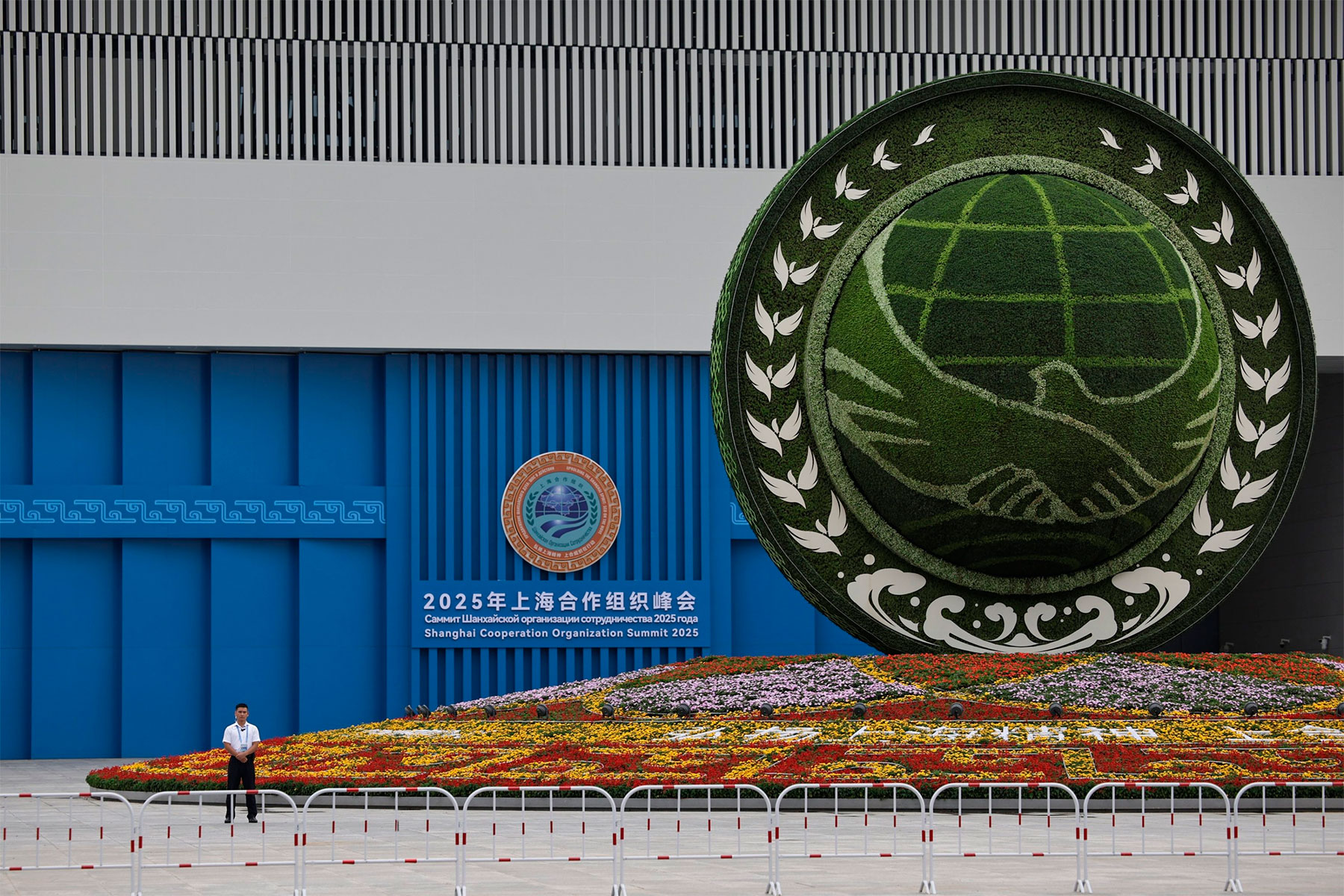
The SCO summit and China’s Victory Day ceremonies illustrate Russia’s broader strategy: build networks that reduce global dependence on Western systems. From alternative financial infrastructure to energy partnerships and security coordination, Moscow is investing in institutional resilience that will shape geopolitics for years to come.
Challenges remain—economic constraints, internal asymmetries among partners, and the careful calibration of ties with China. However, the trajectory is clear: Russia sees itself as an essential node in a multipolar order, where power is distributed, sovereignty respected, and the Global South has a stronger voice.
Summing-Up
Putin’s presence in Tianjin and Beijing was more than symbolic diplomacy. It was a declaration of Russia’s enduring relevance. By combining high-level meetings, concrete proposals, and public solidarity with China, Moscow has demonstrated its adaptability and pragmatism.
In the Middle East, where Israeli expansionism and U.S. complicity have produced devastation and rage, Russia’s potential as a balancer and mediator has never been more important. Moscow’s message of sovereignty, dialogue, and multipolarism resonates across a region weary of endless war and foreign domination.
In an age where networks matter more than blocs, Russia is crafting its place as a resilient, indispensable actor in Eurasia and beyond. The message from China’s twin mega-events was unmistakable: Russia remains central to global peace, stability, and prosperity—not on the margins, but at the very heart of the emerging order.
(no votes) |
(0 votes) |
If Russia cannot be defeated, then it is necessary to negotiate with it, even if such negotiations are unpleasant to someone or seemed impossible in the past
Rules-Based International Order and Its Transformation under Emerging MultipolaritiesEmerging powers will undoubtedly influence the shaping of future global governance structures and international mechanisms
The Proof of the Pudding: Outcomes of the 25th SCO Summit for India and PakistanThe summit took place in the right place at the right time


