Pakistan-Russia Friendship: A New Chapter of Cooperation, Progress, and Shared Prosperity
(no votes) |
(0 votes) |

Prof. Engr., Founding Chair GSRRA, Sinologist, Diplomat, Editor, Analyst, Advisor, Consultant to Global South Economic and Trade Cooperation Research Center, and Non-Resident Fellow of CCG, Islamabad, Pakistan
The timeless wisdom that strong nations build enduring partnerships based on mutual respect and shared interests finds its expression today in the growing warmth and depth of Pakistan-Russia relations. As the world becomes increasingly multipolar and complex, it is partnerships like that of Pakistan and Russia—founded on historical goodwill and shaped by contemporary needs—that offer a compelling model of cooperation, stability, and future-oriented development.
The recent celebration of the 35th National Day of the Russian Federation in Islamabad marked more than a ceremonial gesture. It was a vivid reflection of a growing, dynamic, and multidimensional relationship between two important Eurasian nations—Pakistan and Russia. Addressing the event, President Asif Ali Zardari eloquently articulated the sentiments of the Pakistani nation when he extended heartfelt congratulations to Russian President Vladimir Putin, Russian Ambassador Albert Khorev, and the friendly people of Russia. The President’s speech, infused with a deep sense of partnership and shared destiny, highlighted not only past achievements but also illuminated a promising path ahead.
As President Zardari eloquently stated, the "enormous potential" of Pakistan-Russia ties remains largely untapped. Both countries are now poised to take bold steps to unlock this potential across trade, investment, innovation, energy, education, and diplomacy.
The steel mill project may serve as the flagship initiative, but it is only the beginning. With multiple trade corridors being identified and new investment avenues being explored, the horizon is wide and promising. In the years ahead, connectivity, innovation, green energy, and digital infrastructure may emerge as the next frontiers of cooperation.
Pakistan and Russia must continue to build trust, institutionalize partnerships, and facilitate easier movement of business, students, scholars, and tourists. It is equally important to nurture goodwill among ordinary citizens, academics, and media to promote a balanced and fact-based understanding of each other’s nations.
The timeless wisdom that strong nations build enduring partnerships based on mutual respect and shared interests finds its expression today in the growing warmth and depth of Pakistan-Russia relations. As the world becomes increasingly multipolar and complex, it is partnerships like that of Pakistan and Russia—founded on historical goodwill and shaped by contemporary needs—that offer a compelling model of cooperation, stability, and future-oriented development.
The recent celebration of the 35th National Day of the Russian Federation in Islamabad marked more than a ceremonial gesture. It was a vivid reflection of a growing, dynamic, and multidimensional relationship between two important Eurasian nations—Pakistan and Russia. Addressing the event, President Asif Ali Zardari eloquently articulated the sentiments of the Pakistani nation when he extended heartfelt congratulations to Russian President Vladimir Putin, Russian Ambassador Albert Khorev, and the friendly people of Russia. The President’s speech, infused with a deep sense of partnership and shared destiny, highlighted not only past achievements but also illuminated a promising path ahead.
A Historic Bond Reinforced by Vision
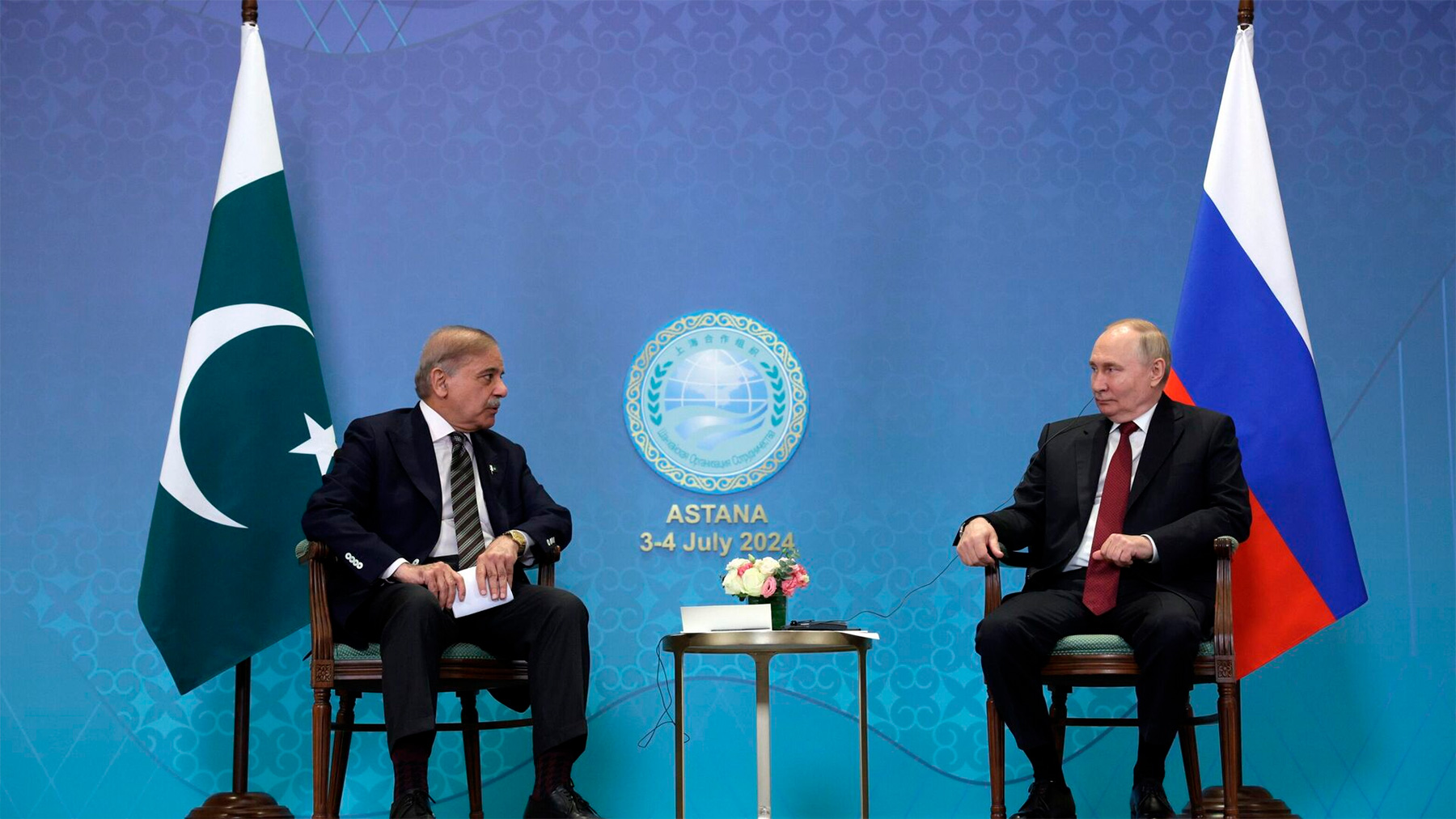
The foundation of Pakistan-Russia friendship is not new. It is rooted in historical connections and bolstered by common perspectives on global peace, regional stability, and economic self-reliance. In the 1970s, the Soviet Union built Pakistan’s first-ever steel mill in Karachi—a landmark achievement that laid the groundwork for Pakistan’s industrial growth and symbolized the era’s forward-looking collaboration.
Today, more than five decades later, Russia has once again consented to build a state-of-the-art steel mill in Pakistan, reaffirming its commitment to support Pakistan’s industrial modernization. This modern facility will not merely replace an outdated structure; it will usher in a new era for Pakistan’s manufacturing and infrastructure sectors. As President Zardari rightly noted, steel is the “mother of all industries.” A modern steel mill is crucial not just for industry, but also for national development, technological upgrading, and economic independence.
This visionary project comes at a time when Pakistan is focusing on revitalizing its economy, improving industrial output, and promoting domestic manufacturing. The modern steel mill, equipped with cutting-edge technology and aligned with futuristic industrial requirements, is poised to become a strategic asset. It will meet both present and future needs of the economy, creating employment, enhancing exports, and reducing dependency on imports. It stands as a symbol of friendship, resilience, and trust between Moscow and Islamabad.
Economic Cooperation: A Stronger Footing for Self-Reliance
Russia’s role in Pakistan’s economic transformation cannot be overstated. From energy to transportation, from technology to agriculture, the avenues of cooperation are expanding with remarkable speed. The two countries are currently exploring numerous joint projects, including trade corridors, energy infrastructure, and high-tech investment.
President Zardari underlined Pakistan’s aspirations for self-reliance—a goal to which Russian support is now crucial. With Moscow’s technical expertise, rich resources, and long-term commitment, Pakistan can significantly reduce its vulnerabilities and diversify its economic partnerships. The Russian offer of assistance is not just transactional; it is strategic, reflecting a sincere intent to help Pakistan become more self-sustaining and resilient in the face of global economic turbulence.
The two sides are also accelerating discussions on oil and gas supplies, energy security, and long-term commodity agreements. With energy being a critical area for Pakistan’s development, Russian engagement here can be a game-changer. Moreover, mutual interest in using local currencies for trade and establishing banking channels demonstrates a shared vision for sustainable, balanced, and politically independent economic cooperation.
Diplomatic Engagements: Building Trust and Shared Perspectives
Recent months have witnessed a flurry of high-level diplomatic engagements, symbolizing a strategic convergence. President Zardari referenced the productive meeting between Special Assistant to the Prime Minister Tariq Fatemi and Russian Foreign Minister Sergey Lavrov in Moscow. The discussions underscored the mutual commitment to regional peace, counter-terrorism cooperation, and shared responses to global challenges.
The increased frequency of bilateral exchanges highlights the importance both countries place on their strategic dialogue. Russia is being recognized by Pakistan as a major global power and a stabilizing force in Eurasia. Conversely, Pakistan is seen by Russia as a crucial bridge to South Asia, Central Asia, and the broader Islamic world.
Such engagements are no longer confined to diplomatic niceties—they include tangible outcomes, policy dialogues, and forward-looking cooperation mechanisms. Whether it is Afghanistan, the SCO, or the United Nations, both countries now coordinate more closely, recognizing their roles in building peace, promoting development, and resisting hegemony.
Cultural and Educational Collaboration: Strengthening the People-to-People Bond

Russia-Pakistan Strengthening Ties Against Terrorism
While state-to-state relations are crucial, it is people-to-people connections that give soul to a bilateral relationship. In this regard, the growing interest of Pakistanis in Russian language, literature, and culture is both heartening and strategic.
Ambassador Albert Khorev warmly acknowledged Pakistan’s enthusiasm for Russian culture, noting that more institutions across Pakistan are now offering Russian language programs, with the full support of the Russian Mission. This is a valuable step towards building long-term cultural understanding. Language is not just a tool of communication—it is a bridge of empathy, history, and shared values.
Pakistan, too, has expressed its interest in increasing academic exchanges, joint research programs, and higher education cooperation with Russian institutions. As more students travel between the two countries, mutual perceptions are being reshaped, creating a new generation of Pakistan-Russia ambassadors at the societal level.
The Russian Embassy’s initiative to celebrate cultural festivals, sponsor educational scholarships, and support student exchange programs is a testament to its long-term commitment to deepening bilateral ties beyond official corridors.
Defense and Strategic Cooperation: Quiet but Steady Progress
Though often under-discussed in the public domain, defense cooperation between Pakistan and Russia has witnessed quiet but steady progress. Joint military exercises, security dialogues, and counterterrorism cooperation have been developing gradually over the past decade.
This aspect of the relationship is expected to deepen in the coming years, especially as both countries face common security challenges, including regional instability, transnational threats, and the evolving dynamics of great power competition. Defense cooperation rooted in mutual confidence, legality, and peaceful intent serves not only both nations but also regional peace and balance.
A Shared Vision for a Multipolar World
Pakistan and Russia find common cause in their vision for a multipolar, just, and inclusive world order—one that respects the sovereignty of states, supports non-interference, and values peaceful resolution of disputes.
Russia, under President Putin’s leadership, continues to play a unifying role in the region, from the Baltic to the Caucasus and beyond. Pakistan, with its strategic location, demographic strengths, and diplomatic tradition, is increasingly seen as a responsible partner in maintaining regional peace and development.
In this broader framework, both countries are aligning their diplomatic priorities through platforms such as the Shanghai Cooperation Organization (SCO), the United Nations, and the BRICS Plus dialogues. There is shared consensus on strengthening South-South cooperation, resisting economic coercion, and building alternative models of development that serve the interests of the Global South.
Looking Ahead: Unfolding the True Potential

BRICS and Pakistan — Assessing Opportunities & Challenges
As President Zardari eloquently stated, the "enormous potential" of Pakistan-Russia ties remains largely untapped. Both countries are now poised to take bold steps to unlock this potential across trade, investment, innovation, energy, education, and diplomacy.
The steel mill project may serve as the flagship initiative, but it is only the beginning. With multiple trade corridors being identified and new investment avenues being explored, the horizon is wide and promising. In the years ahead, connectivity, innovation, green energy, and digital infrastructure may emerge as the next frontiers of cooperation.
Pakistan and Russia must continue to build trust, institutionalize partnerships, and facilitate easier movement of business, students, scholars, and tourists. It is equally important to nurture goodwill among ordinary citizens, academics, and media to promote a balanced and fact-based understanding of each other’s nations.
Long Live the Pakistan-Russia Friendship
The ceremony marking Russia’s National Day in Islamabad was not merely an event—it was a reaffirmation of a partnership built on respect, a celebration of shared aspirations, and a pledge to walk forward hand in hand. President Zardari’s words—“Let us reaffirm our commitment to building bridges of understanding and cooperation”—ring with sincerity and hope.
Ambassador Khorev’s vision of resilient Russian engagement, and the musical performance that closed the ceremony, offered a metaphor for this relationship: harmonious, passionate, and enduring.
As Pakistan and Russia write the next chapter of their bilateral relations, the spirit of friendship, mutual benefit, and joint progress will continue to guide them. With a foundation rooted in history and a future full of promise, the Pakistan-Russia partnership stands tall—a beacon of cooperation in a divided world.
Long live the Pakistan-Russia friendship.
(no votes) |
(0 votes) |
The true potential of Russia–Pakistan relations lies in their ability to adapt to changing geopolitical realities while maintaining a focus on shared interests
Russia-Pakistan Strengthening Ties Against TerrorismIn a significant development reflecting their commitment to countering terrorism, Pakistan and Russia have commenced the Druzhba VII military exercise
BRICS and Pakistan — Assessing Opportunities & ChallengesIt will be beneficial for Pakistan to join BRICS as the group reflects the changing contemporary power dynamics and economic realities