
Chaos Creeps up on Russia from the South
In
Login if you are already registered

Ph.D., Director General of Center for Study of Integration Prospects, Editor-in-Chief, RuBaltic.Ru
Since the start of the Ukrainian crisis, many Russian experts believed that the events in Donbass were the first stage of the crisis and that destabilization, backed by our “western partners,” would spill across the border into Russia.
The events of the past weeks indeed show that the chaos is moving closer to the Russian border, but the main risks stemming from socioeconomic, political and religious problems come mainly from the South.
Suffice it to look at the chronology of recent events.
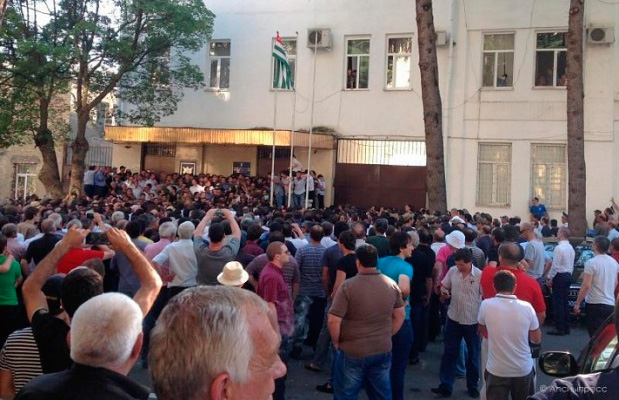
Abkhazia
July 5: an opposition rally in the capital of Abkhazia grows into unrest and an attempt to seize the Ministry of Internal Affairs building. The protesters demanded Minister of Internal Affairs Leonid Dzhapshba to resign and to postpone the referendum on an early election of the President until the autumn (basically a referendum on the resignation of the current head of state, Raul Khajimba). The first demand was met, but the referendum, held in June, failed because of low turnout.
REUTERS/Alkis Konstantinidis
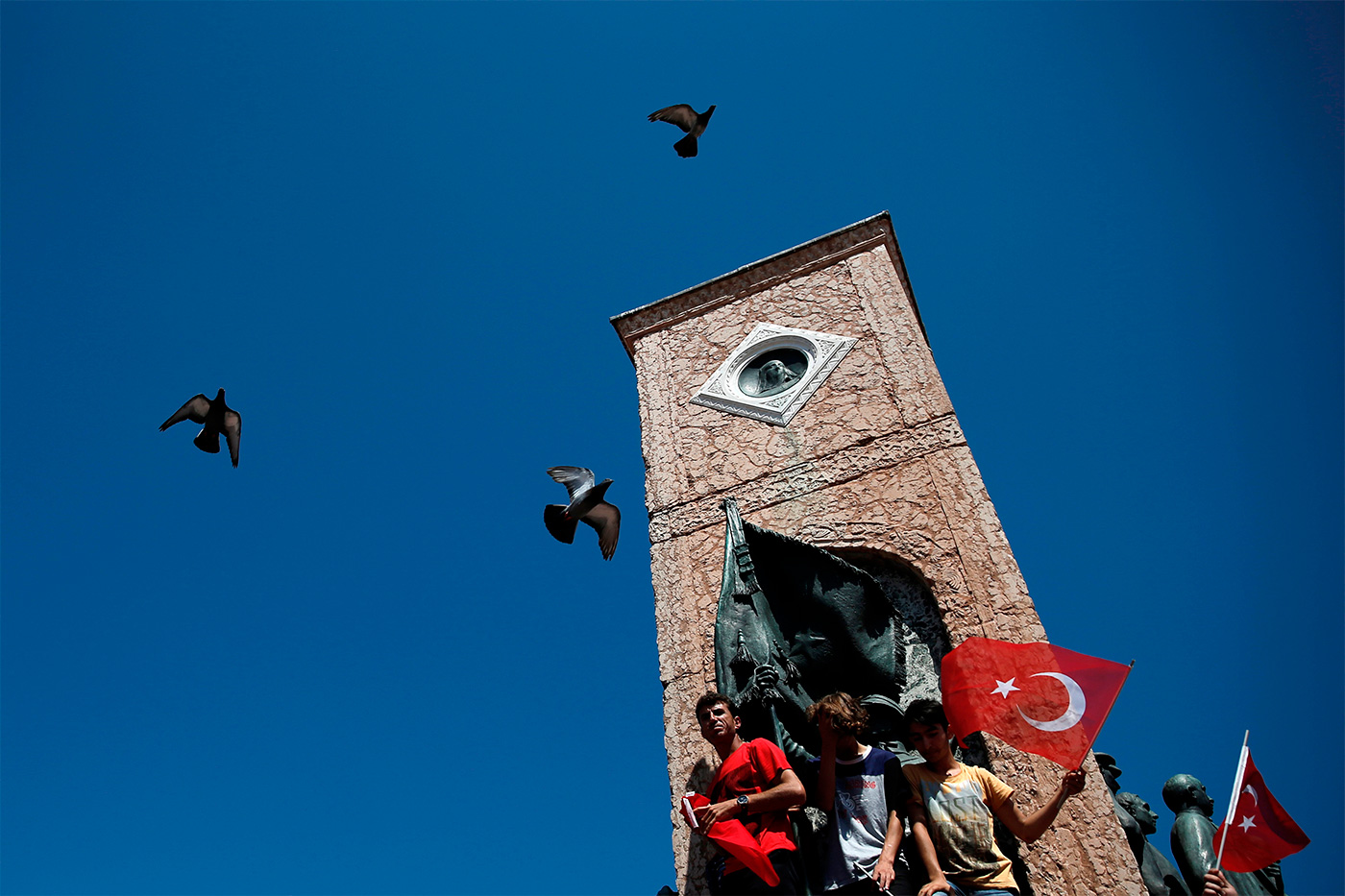
Turkey
On the night of July 16: part of Turkey’s military command attempt a government coup, declaring that power in the country had been taken over by the General Staff and that the country’s leaders had been detained. By morning, Turkish intelligence announces that the military coup had failed.
Reuters/Melik Baghdasaryan
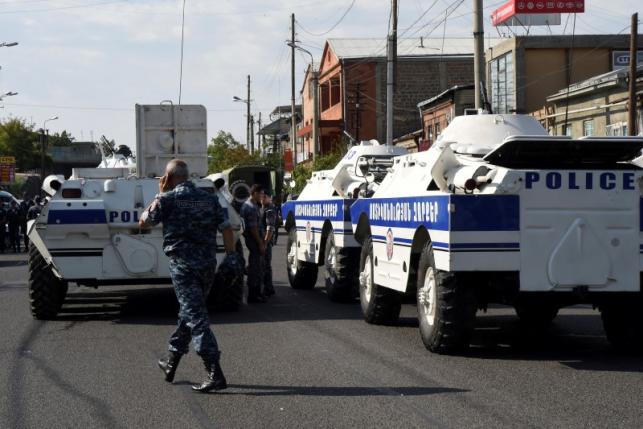
Armenia
July, 17: a radical opposition group penetrates the grounds of an Armenian police patrol service regiment and takes the people there hostage. The raiders turned out to be the supporters of a representative of Jirair Sefilian, leader of the Founding Parliament opposition group, who is accused of organizing a criminal group. The representative had been arrested a month earlier. The raid was aimed at “changing the situation in Armenia” through “an armed uprising.” The attempt failed.

Kazakhstan
July, 18: five people are killed and eight are wounded in a shootout in Almaty. The authorities call it a terrorist attack. The incident happened a month after the Aktobe terrorist attack where weapons stores and a military unit were attacked with the loss of 20 lives.
True, in spite of the incidents in Kazakhstan, Central Asian countries have so far managed to keep the internal situation under control. The South Caucasus, which has several frozen conflicts, poses a more serious threat. Unrests in Abkhazia are less explosive, since the Russia factor diminishes the chances of the Georgia–Abkhazia and Georgia–Ossetia conflicts intensifying. The relative peace in Karabakh is very fragile, especially after the flare-up in April. On the one hand, the balance of forces in this conflict may be upset by the political change inside Turkey caused by the abortive military coup there. “The four-day war” on April 1–5, 2016 could hardly have occurred without the conflict with Ankara escalating somewhat. On the other hand, the political instability in Armenia may be a catalyst for unfreezing the conflict. If instability inside the country reaches a serious level, Azerbaijan will be tempted to try and solve the Karabakh issue by force. Russia would be drawn into settling another hot conflict close to its borders.
Of course, the above-mentioned events are not part of a conspiracy or an instance of the “domino effect.” But this is what makes the situation difficult. Each of the crisis situations can easily be explained post factum and each has objective prerequisites. For Abkhazia, protest actions that lead to reshuffles in the top echelons of power are all in a day’s work. Suffice it to recall that the current president came to power on the wave of protests that forced the previous President of Abkhazia, Alexander Ankvab, to resign. Turkey is no stranger to military coups. Besides, President of Turkey Recep Erdogan has been relentlessly limiting the influence of the army’s top brass since his time as prime minister in the 2000s. And the worsening of Ankara’s relations with one-time foreign policy partners and the virtual civil war in the east of the country naturally did not strengthen the President’s position. In the case of Armenia, we should keep the high protest potential of society there in mind – this much was witnessed last year during demonstrations over the lifting of electricity rates. Although the forces in charge of the unrest in Yerevan on July 17 were comparatively marginal, destabilization in the country is a distinct possibility. Finally, the events in Kazakhstan indicate the broader problem of rising Islamic extremism, aggravated by the challenges that Kazakhstan’s special services face in building an effective counter-terrorist system in the wake of the terrorist attacks in Aktobe.
In short, just as Chekhov put it, the rifles that had been hanging on the wall have gone off. The problem is that such rifles are hanging in profusion all over the post-Soviet space and, judging from the events of the past weeks, they have started going off at random. It is becoming more and more difficult to predict the crisis situations near Russian borders. No one can guarantee that the next problem spot in the coming weeks will not be in Tajikistan, where stability is threatened not only by one of the worst socioeconomic situations in the post-Soviet space, but also by the policy of squeezing Islamist socio-political forces out of public politics and, of course, the proximity of the permanently strife-ridden Afghanistan. The situation in the Caucasus may deteriorate, for example, as a result of the Georgian parliamentary election campaign which kicked off on June 8. There are many possible threats. The question is how to react to them. Under the circumstances, the Russian expert community should concentrate on analysing various crisis scenarios in the post-Soviet space to prevent the mounting chaos.
(no votes) |
(0 votes) |


