Lula’s European Tour
In
Login if you are already registered
(no votes) |
(0 votes) |

Program Coordinator and Website Editor at the Russian International Affairs Council
From April 16 to 21, 2026, Luiz Inácio Lula da Silva undertook a European tour, visiting Spain, Germany, and Portugal. Against the backdrop of continued pressure from the Donald Trump administration, these high-level meetings signal a shared intention to strengthen ties and ensure greater predictability in economic relations, effectively bypassing destabilizing unilateral measures.
It is likely that when, at the end of the twentieth century, Fernando Henrique Cardoso spoke of building a new multilateral system of fair and balanced trade, he did not envision the future that has since emerged. Nevertheless, Lula’s administration continues to pursue the pragmatic foreign policy course laid down by its predecessors. European countries, serving as a kind of “safeguard,” enable the Latin American state not only to diversify its economic ties but also to depoliticize its external economic strategy amid the fragmentation of the global economy. At the same time, one cannot overlook the risks of perpetuating the existing model of relations, in which Brazil fails to obtain the promised technologies and remains primarily a supplier of raw materials.
In Lisbon, Lula stated: “We want to maintain relations with China, the United States, Russia, and France. We want to maintain relations with everyone without favoring any one partner.” The results of the Brazilian leader’s tour do not carry negative signals for Moscow in the context of Russia–Brazil relations. However, if the signed declarations translate into a tangible expansion of economic ties, especially in strategically important sectors, they could complicate the competitive environment for Russian businesses in the Brazilian market. At the same time, excessive alignment with Europe would be no more beneficial for Brazil than overdependence on the United States, China, or any other major power. Itamaraty’s pragmatism—which is likely to persist regardless of the election outcome—remains a long-term guarantee of Brazil’s multi-vector foreign policy and its constructive relations with Moscow.
From April 16 to 21, 2026, Luiz Inácio Lula da Silva undertook a European tour, visiting Spain, Germany, and Portugal. Against the backdrop of continued pressure from the Donald Trump administration, these high-level meetings signal a shared intention to strengthen ties and ensure greater predictability in economic relations, effectively bypassing destabilizing unilateral measures.
Specifically, in a joint declaration following intergovernmental consultations, Brasília and Berlin reaffirmed their strategic partnership, based on shared values of democracy, freedom, inclusivity, and solidarity, as well as an unwavering commitment to multilateralism, international law, and free, rules-based trade. In addition, the two countries called for tangible progress toward resolving the Iranian crisis. In doing so, Brazil and Germany signaled, at least rhetorically, a certain political distancing from the United States.
In his talks with Pedro Sánchez and Luís Montenegro, Lula called for a return to multilateralism. The Brazilian leader criticized protectionist measures introduced by certain actors—likely alluding to the United States—and spoke in defense of democracy, international arbitration, and human rights.
Lula’s visits were not limited to signaling solidarity and condemning the war in the Middle East. On May 1, the European Union–MERCOSUR agreement entered into force: now more than 5,000 Brazilian goods will be exported to EU countries duty-free, while in the opposite direction roughly 1,000 European goods—about 10.7% of total EU exports to Brazil—will benefit from similar conditions. Liberalization for most European goods, however, will be phased in over ten years, with tariffs eliminated on 4,423 product categories, covering 44.1% of the total volume included in the agreement. This development created a favorable backdrop for the Brazilian president’s European tour: Lula was able to present imminent trade liberalization as a settled matter, allowing him to focus on advancing new initiatives.
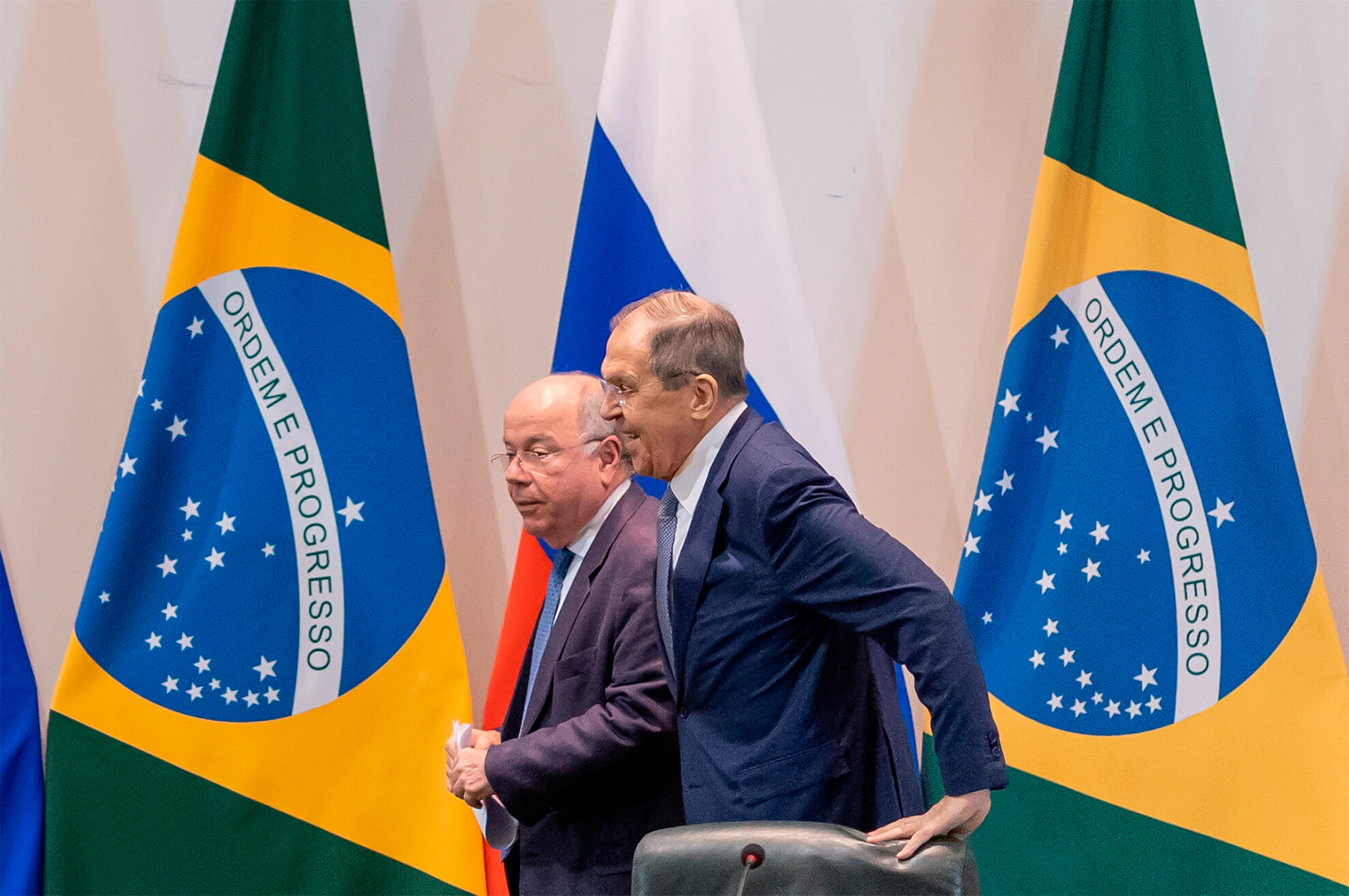
Agreements Reached
Beyond the usual “for everything good and against everything bad” rhetoric, joint declarations were signed with Germany and Spain. The meeting between Lula and Friedrich Merz produced a more concrete set of initiatives. The package of documents signed in Hanover on April 20, 2026, includes 13 items. Two relate to defense and security, covering cooperation in military procurement and the joint construction of Tamandaré-class frigates. Three focus on technology, ranging from critical minerals to quantum computing and artificial intelligence. Five address the climate agenda, including direct German funding of Brazil’s national climate fund, Fundo Clima. The remaining items cover support for startups, maritime research, and the CO2Image space mission. At the same time, these are declarations of intent that do not require ratification and do not create legally binding obligations. They reflect political will to cooperate across a number of areas and may serve as a catalyst for businesses and government agencies to move forward with concrete projects.
In particular, the Tamandaré-class frigate program, launched in 2020, has officially entered a new phase: on April 24, 2026, Embraer, Brazil’s Ministry of Defense, and the German firm ThyssenKrupp Marine Systems (TKMS) signed a memorandum on the construction of a second batch of four vessels. The lead frigate, F200 Tamandaré, has already entered service. The program supports approximately 23,000 jobs (including employment among suppliers and related industries) and represents not merely a military initiative but an industrial project—one that involves technology transfer and is geared toward exports.
Particular attention should be paid to the third point—scientific and technological cooperation in the field of critical minerals. Its significance lies less in extraction volumes than in its technological dimension. According to the declaration, Germany will assist Brazil with geological exploration, processing, and environmental standards. In return, the Latin American country offers access to deposits of niobium, graphite, and lithium, in line with its strategic framework—the Plano Nacional de Mineração 2050 (PNM 2050). Among other objectives, the plan aims to increase domestic mineral processing rather than simply exporting raw ore, thereby reducing external dependence. It also emphasizes that maintaining trade relations heavily concentrated on the export or import of a limited range of mineral commodities increases the vulnerability of Brazil’s mining sector—particularly in the current geopolitical environment marked by armed conflicts, supply disruptions, and the growing adoption of protectionist measures. In this context, Germany, with its advanced processing technologies and strong environmental standards, emerges as a natural partner for the industrialization of Brazil’s mining sector.
Notably, Germany—unlike Brazil—is a participant in the U.S.-led Mineral Security Partnership (MSP), a grouping of 13 countries aimed at building critical mineral supply chains that bypass China. This creates a competitive environment: while Germany is signing agreements with Brazil, U.S.-backed MSP projects are advancing in Africa, Australia, and Canada, drawing investment toward themselves.
The key risk for Brazil is falling into a technological trap. A declaration on scientific and technological cooperation does not guarantee the actual transfer of processing technologies. In practice, such agreements in the mining sector often face serious implementation obstacles. Brazil’s history offers multiple examples where foreign partners gained access to exploration and extraction, while the country remained locked into a raw-materials model. This structural pattern is commonly referred to as “neo-extractivism.” If Berlin helps Brasília build facilities for lithium refining or rare earth processing, the cooperation could indeed be considered mutually beneficial. However, if it remains limited to joint research, Brazil will continue to act as a supplier of raw materials rather than becoming part of the technological value chain.
Notably, Brazil’s diversification strategy is shaped not only by the U.S. factor but also by China. In certain sectors, dependence on China has reached critical levels. In 1990, China accounted for just 2% of Brazilian iron ore imports. By 2024, that share had risen to 66.6%, and in 2025 it reached 67.5%. At the same time, iron ore itself accounted for 8.3% of Brazil’s total exports in 2025. In other words, more than two-thirds of a key export commodity is directed to a single country. Constant maneuvering between major mineral buyers thus remains the only way for Brazil to secure the most favorable terms.
Three days before the meeting in Hanover, the first-ever bilateral summit in the history of Spain–Brazil relations took place. The resulting 41-point final declaration covers a wide range of areas—from the defense of democracy in the face of “authoritarian trends” to reform of the United Nations Security Council to enhance Latin American representation. On critical minerals, Spain’s position is articulated even more forcefully than Germany’s: the focus is not merely on cooperation, but on “adding value, developing intermediate and final stages of value chains, and building technological capabilities in producing countries.” In addition, a memorandum was signed on the compatibility of payment systems and the use of LATIBEX as a platform for Brazilian companies to access the European market. Spain also joined the Amazon Police Cooperation Center, a move that can be seen as a practical step in combating drug trafficking.
However, behind these formulations lies an industrial base that is not comparable to that of Germany: Spain lacks both globally competitive manufacturers of mineral processing equipment and a developed defense industry. As a result, Spanish pledges to “develop intermediate and final stages of value chains” remain largely declaratory—whereas Germany is at least in a position to offer concrete technologies and contracts.

The Inevitable US Factor
It is symbolic that Lula’s trip coincided with a diplomatic scandal on the other side of the Atlantic: the United States demanded the expulsion of Brazilian federal police investigator Marcelo Iva de Carvalho, who had been working in Miami, accusing him of attempting to “manipulate the immigration system to circumvent official extradition requests.” The incident is linked to the case of former lawmaker Alexandre Ramagem, who was sentenced by Brazil’s Supreme Court to 16 years in prison for participating in a conspiracy and fled to the United States in 2025. U.S. authorities are examining whether Brazil attempted to use cooperation with U.S. Immigration and Customs Enforcement (ICE) to detain Ramagem on immigration grounds, bypassing the State Department, which is responsible for extradition procedures. In response, Lula stated: “If there was abuse by the U.S. against our police officer, we will do the same to their officer in Brazil,” adding that he would not tolerate interference in the country’s internal affairs.
This unfolded against the backdrop of a meeting between Lula and Trump that has effectively been postponed indefinitely. On January 26, 2026, the two leaders held a phone call to discuss “Operation Absolute Resolve” in Venezuela, agreeing to meet in the first week of March—but by the end of April, the meeting had yet to take place.
The migration issue—intensified in the Western Hemisphere as a result of ICE policies under the administration of Donald Trump—is not the only stumbling block in bilateral relations between Washington, D.C. and Brasília. The White House has also launched a pressure campaign aimed at reducing Brazil’s engagement within BRICS and, by extension, countering its rapprochement with China and Russia. In 2025, this pressure took the form of interference in Brazil’s domestic affairs—most notably the imposition of 40% tariffs on several hundred categories of Brazilian exports, following accusations of politically motivated prosecution of Jair Bolsonaro. This episode vividly illustrates the extent to which economic relations have been politicized by the U.S. leadership, particularly in the Brazilian case.
By a ruling of the Supreme Court of the United States on February 20, 2026, most of the increased tariffs were struck down, though some remained in place—most notably the 50% duties on steel and aluminum imports introduced in March 2025 under Section 232. By mid-2025, Brazil’s steel exports to the United States had declined by 17%. In response, Brasília began introducing retaliatory measures, following the example of the European Commission, which proposed reforming safeguard mechanisms for steel imports—including a 47% reduction in duty-free quotas and the imposition of a 50% tariff on volumes exceeding those quotas. In October 2025, the South American country further expanded and extended a series of anti-dumping duties, covering virtually all major categories of flat-rolled steel products.
The United States, increasingly reliant on Brazilian natural resources—not least due to rising chip costs and the growing demand for data center construction—continues to exert pressure. Officials in Washington, D.C. have openly stated that they view Brazil’s strategic minerals as a “bargaining chip” in negotiations over reducing the 50% tariffs.
The cumulative effect of these restrictive measures has led to a sharp decline in Brazil’s exports to the United States. According to Brazilian statistics, exports to the U.S. fell by 20.3% in February 2026—from 3.17 billion USD a year earlier to 2.52 billion USD. U.S. exports to Brazil also declined, though more modestly, by 5.32%, from 4.07 billion USD to 3.86 billion USD.
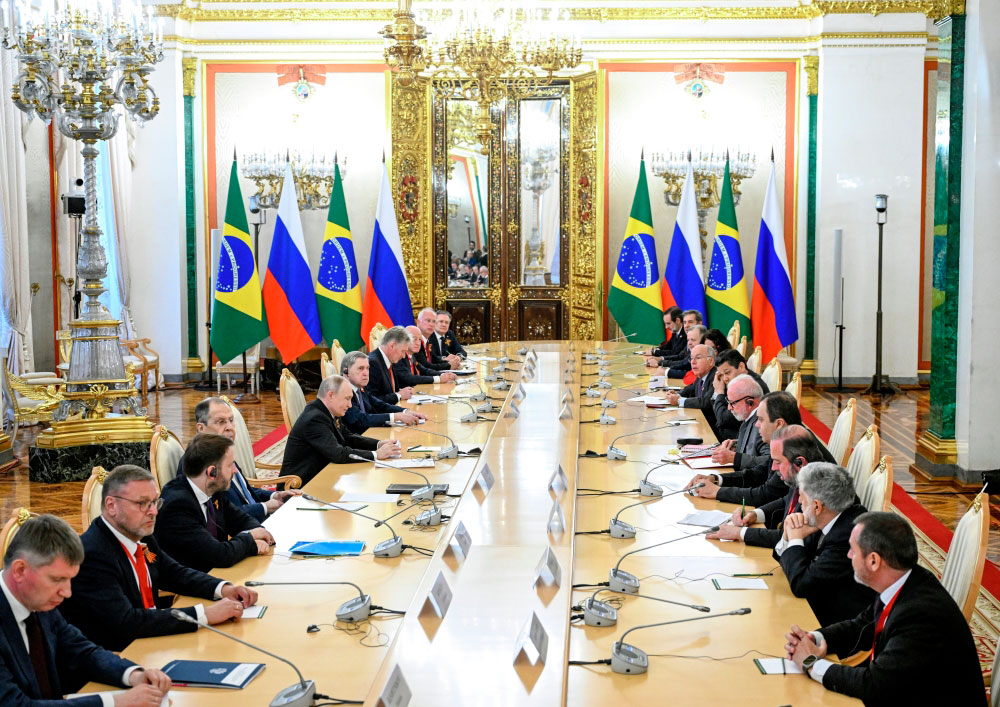
“Long Time No See!”: Why Lula da Silva Visited Moscow Twice in Just One Week
Drivers of Diversification
According to the Fundacão Getulio Vargas, the protectionist policies of Trump forced Brazil to rapidly reorient its exports: the decline in shipments to the United States was offset by a 31.5% increase in exports to China and a 32.6% rise to Argentina over the last five months of 2025. It is telling that the intensification of U.S. regional policy in the Western Hemisphere—with a pronounced coercive dimension (often described as the “Donroe Doctrine”)—aimed at curbing Chinese influence, has, at least in the short term, contributed to an increase in trade flows from Latin America’s largest economy to China. The Argentine vector, in turn, points to the strengthening of regional supply chains within MERCOSUR, despite current political differences between the two governments: trade continues to grow even as Lula advocates for the establishment of a Palestinian state, while Javier Milei once again pays a visit to Israel.
At the same time, it would be an oversimplification to claim that Trump is “pushing Brazil into the arms” of other actors. Historically, United States–Brazil relations have resembled a pendulum, swinging between tension and rapprochement—though even periods of closer ties have rarely been free of pragmatic calculation. The constructive nationalism of Getúlio Vargas—which prioritized long-term goals over short-term interests (for example, supporting an anti-communist resolution that paved the way for the U.S. intervention in Guatemala in 1954)—as well as his maneuvering between Washington, D.C. and Berlin on the eve of World War II, left a lasting imprint on Brazil’s external strategy.
Brazil’s foreign policy tradition—from Baron of Rio Branco to Getúlio Vargas, Fernando Henrique Cardoso (who, together with scholar Hélio Jaguaribe, articulated the need to engage with the “three pillars”—Russia, China, and India), and Lula—has been built around the search for a formula to achieve greater autonomy and influence on the international stage. Within Itamaraty, the lesson has long been internalized that, regardless of the degree of closeness with Washington, D.C., continuous diversification of partners, both political and economic, forms the foundation of a strategy aimed at preserving foreign policy autonomy. In the current context of turbulence and the erosion of the previous world order, Brazil’s leadership continues to hedge its risks.
Despite the enduring “North–South” framing in Brazil’s political and academic discourse, under current conditions the European Union and its member states are emerging as an alternative pole for Brazil’s exports, helping reduce dependence on the United States and prevent a similar dependence from forming on China. Russia plays a comparable role for Brasília. However, due to objective constraints—primarily sanctions—the full trade potential between the two has not been realized and remains significantly below Brazil’s trade volumes with European countries.
Although the “Trump 2.0” era has introduced a degree of novelty into global politics, Brazil is far from using European partners to mitigate U.S. pressure for the first time. For example, in 1974 the U.S. Atomic Energy Commission banned the supply of nuclear fuel to Brazil, threatening to undermine its independence in this area entirely. However, in 1975, Brazil concluded an agreement with Germany on the supply of eight reactors, effectively neutralizing Washington’s leverage. Subsequently, the United States imposed an arms embargo on the Latin American country under the pretext of human rights violations, terminating the 1952 agreement and thereby bringing an end to the “special” military relationship.
Elections 2026 Drive Foreign Policy Activism
Ahead of the October general elections in Brazil, it is indeed crucial for Lula to demonstrate his ability to engage with all key external actors. His political experience may prove to be an advantage over the relative “political youth” of Flávio Bolsonaro. At the same time, a comparison of polling data as of April 2026 suggests that no clear picture has yet emerged that could reliably predict the outcome of the vote. According to AtlasIntel, Lula would win in a second round with 47.6%, while Flávio Bolsonaro would receive 46%. BTG Pactual/Nexus offers a similar projection—46% for Lula versus 45% for Flávio. By contrast, Pesquisa Quaest forecasts a victory for Flávio Bolsonaro with 42%, and a loss for Lula at 40%.
The most tangible outcome with which Lula likely returned home is the prospect of new jobs generated by the next phase of the Tamandaré frigate program. For the Workers' Party electorate, the resolution of social issues, particularly unemployment, is paramount. In February 2026, the unemployment rate stood at 5.8%, continuing its gradual decline during Lula’s third term.
Lula’s diplomatic activism in Europe is unfolding against the backdrop of a record inflow of foreign capital into Brazil. In less than four months of 2026, foreign investors injected 64.4 billion reais into the Brazilian stock market—more than double the total for all of 2025 (25.5 billion). According to the Central Bank, net inflows (including equities, funds, and debt instruments) between March 2025 and March 2026 reached $28.4 billion. JPMorgan Chase described the capital inflow as extraordinary. Among the key drivers is Brazil’s geopolitical neutrality, combined with the scale of its domestic market, particularly against the backdrop of turmoil in the Middle East.
For Lula, economic optimism and international breakthroughs are becoming key arguments in his favor. The European agreements are turning into a kind of electoral asset—though it remains unclear whether voters will still recall them once the official campaign gets underway.
***
It is likely that when, at the end of the twentieth century, Fernando Henrique Cardoso spoke of building a new multilateral system of fair and balanced trade, he did not envision the future that has since emerged. Nevertheless, the administration of Luiz Inácio Lula da Silva continues to pursue the pragmatic foreign policy course laid down by its predecessors. European countries, serving as a kind of “safeguard,” enable the Latin American state not only to diversify its economic ties but also to depoliticize its external economic strategy amid the fragmentation of the global economy. At the same time, one cannot overlook the risks of perpetuating the existing model of relations, in which Brazil fails to obtain the promised technologies and remains primarily a supplier of raw materials.
In Lisbon, Lula stated: “We want to maintain relations with China, the United States, Russia, and France. We want to maintain relations with everyone without favoring any one partner.” The results of the Brazilian leader’s tour do not carry negative signals for Moscow in the context of Russia–Brazil relations. However, if the signed declarations translate into a tangible expansion of economic ties, especially in strategically important sectors, they could complicate the competitive environment for Russian businesses in the Brazilian market. At the same time, excessive alignment with Europe would be no more beneficial for Brazil than overdependence on the United States, China, or any other major power. Itamaraty’s pragmatism—which is likely to persist regardless of the election outcome—remains a long-term guarantee of Brazil’s multi-vector foreign policy and its constructive relations with Moscow.
(no votes) |
(0 votes) |
Policy Brief # 58 / 2025
“Long Time No See!”: Why Lula da Silva Visited Moscow Twice in Just One WeekThe issues on the agenda for Brazil and Russia are strategic for both sides, political coordination, and involve the potential sharing of sensitive technologies
OECD Unable, BRICS Unwilling: Can the International Development Assistance System Change?What “new donors” bring to the table and whether their role in international development assistance is expected to grow