
The EU, Like “NATO 3.0,” Will Remain Our Adversaries
In
Login if you are already registered
(votes: 1, rating: 5) |
(1 vote) |

President of the Russian International Affairs Council
For the first time since 1945, the most pressing military threat to Russia is coming from Europe—European states themselves. This represents the most significant military-political shift for Russia since the victory in the Great Patriotic War.
It is unlikely that Europeans are preparing for a new military campaign against Moscow, following in the footsteps of Napoleon and Hitler. Their medium-term goal is to bleed Russia dry through comprehensive and expanding support for the Kyiv regime, and in the long run, to tie down Russian forces for a long time in a permanent and protracted “neither war nor peace” standoff with Bandera’s Ukraine. Furthermore, by ramping up sanctions and military pressure on Moscow, Europe will seek to undermine Russia’s domestic political stability. The ultimate goal of our former “partners” appears to be to split the Russian Federation into externally controlled components and turn them into semi-colonies of the European Union. The threat is quite serious. To counter this threat, it is crucial to first and foremost strengthen the homefront.
The next most important factor is our readiness to strike the enemy directly. In this case, we are not talking about Ukraine, but about those for whom Ukraine is merely a tool in the fight against Russia. The participation of several European states in the war against Russia has long given Moscow the moral right to respond directly, rather than through Ukraine. Now, Europeans apparently believe they have found in long-range drones a “wonder weapon” capable of disrupting Russia’s rear. In response, the Russian Ministry of Defense published a list in April of the addresses of companies in European countries where such drones are manufactured. This is a warning shot across the political bow. Warnings, however, are effective only if they are followed by action. A reckless European strategy of “a thousand cuts” in the context of “extreme restraint” on Russia’s part could pave the way to disaster for Europe. To avoid having to go down this path, it is useful to demonstrate to Europe through our actions that we mean business.
The hypothetical prospects for Russian policy toward Europe lie exclusively in the realm of bilateral relations. The EU, like “NATO 3.0,” will remain our adversaries.
As paradoxical as it may sound, Russia’s relations with Europe have changed radically over the past 15 years, and ultimately for the better. At the turn of the last century, we grew phenomenally close to Europe, but as a result, Russians have come to better appreciate the value of our own sovereignty and independence. The three-century period during which Europe served as a model, mentor, and primary export and import market for our country has come to an end. The “European choice” is no longer relevant for Russia, which now defines itself as a “state-civilization.” Of course, Russians do not reject anything useful or positive that our interaction with Europe has given us, but we remember it all. The main thing is that we are following our own path, rather than participating in a race to follow a leader.
For political Europe, on the contrary, hostility toward Russia—as the “Other”—has been and remains a constant. The European elite fears of Russia has always been mixed with an arrogant and dismissive attitude toward it. French, German, English, Polish, Baltic, and Finnish attitudes toward Russia is historically typical. We should proceed with the assumption that the Russophobic stance of the current ruling elites of the European Union will persist for the foreseeable future. This stance can change only in the event of a change in elites.
It is not Russia’s job to change the leadership of other countries. What matters to us is to strengthen the stability of our own homefront, achieve the objectives of the Special Military Operation, and prevent European provocateurs from unleashing a major war. If we do this, Russia will occupy a strong position vis-à-vis Europe and thwart our adversaries’ plans. In the long term, this, in turn, will pave the way for establishing pragmatic relations with at least some states based on the principles of good-neighborliness. Geography, unlike politics, cannot be changed.
For the first time since 1945, the most pressing military threat to Russia is coming from Europe—European states themselves. This represents the most significant military-political shift for Russia since the victory in the Great Patriotic War.
The reconciliation between Russia and Germany, one of the most significant political achievements of the second half of the twentieth century, has not merely been undone. Germany is steadily moving along a path of militarization on the eve of a new war with Russia. France, which during the previous period of confrontation was a privileged partner of Moscow in the West, is conducting military exercises that simulate nuclear strikes on Russian territory. The notorious “Englishwoman,” the United Kingdom, is not just “stirring up trouble,” but is actively participating in Ukraine’s sabotage operations, including those targeting Russia's strategic arsenal. There is no need to even mention the Poles, Balts, and Finns.
It is unlikely that Europeans are preparing for a new military campaign against Moscow, following in the footsteps of Napoleon and Hitler. Their medium-term goal is to bleed Russia dry through comprehensive and expanding support for the Kyiv regime, and in the long run, to tie down Russian forces for a long time in a permanent and protracted “neither war nor peace” standoff with Bandera’s Ukraine. Furthermore, by ramping up sanctions and military pressure on Moscow, Europe will seek to undermine Russia’s domestic political stability. The ultimate goal of our former “partners” appears to be to split the Russian Federation into externally controlled components and turn them into semi-colonies of the European Union. The threat is quite serious.
To counter this threat, it is crucial to first and foremost strengthen the homefront. Major wars—and Russia and Europe have long been embroiled in an armed conflict (initiated by Europe, not by us)—are won or lost primarily depending on the degree of internal stability of the parties involved. The strength of the homefront—socio-political, economic-financial, ideological, and spiritual—is a critically important factor on which the outcome of the conflict depends. In this regard, we must all understand that the war is not being fought “somewhere out there,” but everywhere: on the home front, no less than on the front lines.
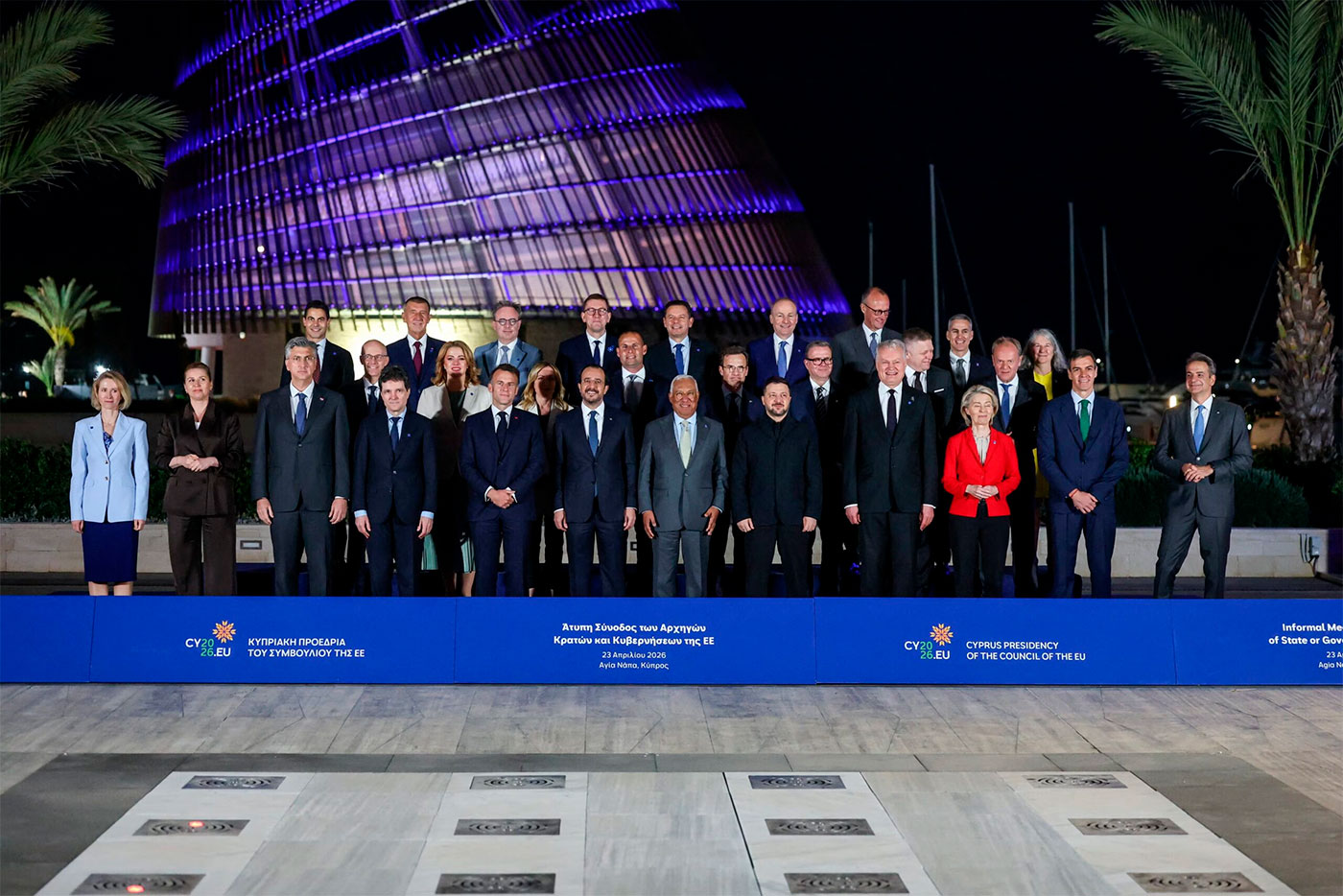
The next most important factor is our readiness to strike the enemy directly. In this case, we are not talking about Ukraine, but about those for whom Ukraine is merely a tool in the fight against Russia. The participation of several European states in the war against Russia has long given Moscow the moral right to respond directly, rather than through Ukraine. Now, Europeans apparently believe they have found in long-range drones a “wonder weapon” capable of disrupting Russia’s rear. In response, the Russian Ministry of Defense published a list in April of the addresses of companies in European countries where such drones are manufactured. This is a warning shot across the political bow.
Warnings, however, are effective only if they are followed by action. If no action follows, and warnings are merely issued repeatedly, the enemy feels a sense of impunity and grows bolder. Eventually, a line will be crossed, at which point Russia will face a choice: surrender to the enemy or deliver a crushing blow against them. If we do not consider surrender, then we will be left with only one option—delivering powerful (in extreme cases, nuclear) strikes against the enemy’s logistical, military-industrial, and military-political targets. Thus, a reckless European strategy of “a thousand cuts” in the context of “extreme restraint” on Russia’s part could pave the way to disaster for Europe. To avoid having to go down this path, it is useful to demonstrate to Europe through our actions that we mean business.
Another factor is our alliances and partnerships. The Europeans took a risky step by including several Chinese companies in the 20th anti-Russian sanctions package. This is an important reminder to Beijing that Europe is “reorienting” itself not only toward the idea of confronting Russia, but also toward confronting other “authoritarian regimes,” first and foremost China. The logic of a new world war, in which Russia and China have de facto already found themselves on the same side, demands a new quality of relations between Moscow and Beijing. There is reason to believe that such an understanding is now emerging among our strategic partners as well.
There are also some opportunities for us in transatlantic relations. There are clear differences in priorities and approaches between the U.S. and EU global strategies, including regarding the course and outcome of the Ukrainian crisis. However, President Trump has so far failed to persuade the Europeans to support the U.S. peace plan for Ukraine, but the opposite has not happened either—Trump has not returned to Joe Biden’s “war path.” The emerging contradictions within what until recently appeared to be a monolithic collective West, as well as the realignment of priorities and resources in Washington’s foreign policy, may for the first time in several years create certain opportunities for Russian diplomacy. There is no need to try to “drive a wedge” between them, but it is necessary to take advantage of the results of this erosion.

There are also opportunities in the realm of domestic politics within individual EU member states. Russia cannot directly influence the domestic political dynamics of these countries, but such dynamics exist and are evolving independently of Russia—and not only in Central Europe and the Balkans. Of course, we should avoid indulging fantasies about Macron’s possible successor in France or the composition of the future ruling coalition in Germany. We should also avoid speculating whether European right-wing or left-wing forces are more advantageous to Russia. Instead, we need to closely monitor the changing situation and be ready to capitalize on potential shifts. In any case, the hypothetical prospects for Russian policy toward Europe lie exclusively in the realm of bilateral relations. The EU, like “NATO 3.0,” will remain our adversaries.
***
As paradoxical as it may sound, Russia’s relations with Europe have changed radically over the past 15 years, and ultimately for the better. At the turn of the last century, we grew phenomenally close to Europe, but as a result, Russians have come to better appreciate the value of our own sovereignty and independence. The three-century period during which Europe served as a model, mentor, and primary export and import market for our country has come to an end. The “European choice” is no longer relevant for Russia, which now defines itself as a “state-civilization.” Of course, Russians do not reject anything useful or positive that our interaction with Europe has given us, but we remember it all. The main thing is that we are following our own path, rather than participating in a race to follow a leader.
For political Europe, on the contrary, hostility toward Russia—as the “Other”—has been and remains a constant. The European elite fears of Russia has always been mixed with an arrogant and dismissive attitude toward it. French, German, English, Polish, Baltic, and Finnish attitudes toward Russia is historically typical. We should proceed with the assumption that the Russophobic stance of the current ruling elites of the European Union will persist for the foreseeable future. This stance can change only in the event of a change in elites.
It is not Russia’s job to change the leadership of other countries. What matters to us is to strengthen the stability of our own homefront, achieve the objectives of the Special Military Operation, and prevent European provocateurs from unleashing a major war. If we do this, Russia will occupy a strong position vis-à-vis Europe and thwart our adversaries’ plans. In the long term, this, in turn, will pave the way for establishing pragmatic relations with at least some states based on the principles of good-neighborliness. Geography, unlike politics, cannot be changed.
(votes: 1, rating: 5) |
(1 vote) |
Dmitriy Trenin: Russia and China could form the core of a new type of coalition, better equipped to counter hegemonic powers and to bring closer a more balanced and equitable world order
EU’s Twentieth Sanctions Package: Controversial in Adoption, Limited in EffectThe twentieth package of EU sanctions against Russia has proven the most controversial in the entire history of Brussels’ restrictive measures


