
The Anatomy of the Information Blockade against Russia
In
Login if you are already registered
(votes: 1, rating: 5) |
(1 vote) |

Diplomatic Academy of the Russian Foreign Ministry
Western elites have built a system of barriers using the full arsenal of modern control technologies—yet each breach increases the strain on the entire structure. Contemporary hybrid conflicts have fundamentally transformed the nature of interstate confrontation, turning the information domain into the primary battleground for the minds and hearts of billions. When we analyze the dynamics of the largest information standoff in recent years, we observe a qualitative shift: from competition among narratives within a shared informational space to the monopolization of the very right to interpret reality itself.
A qualitatively new instrument has emerged in the arsenal of information warfare—one that does not operate within the logic of competing ideas but instead eliminates the very possibility of such competition by constructing a controlled informational space. An information blockade is far broader than the classical notion of censorship; it is a comprehensive system of multi-level barriers (legal, technical, and socio-psychological) designed to impose high costs on accessing alternative information and to create negative associations with the very act of consuming it.
After February 24, 2022, the European Union constructed a system of legal restrictions on access to Russian information sources. Behind the legal mechanisms of the blockade stands an extensive institutional infrastructure that turns the fight against “disinformation” into a system of total monitoring of the information environment. The very concept of “disinformation” undergoes a significant semantic inversion. The mere act of citing Russian officials or documents is classified as “disseminating disinformation,” regardless of context. The underlying logic is that the circulation of narratives originating from Russian sources, even for the purpose of refuting them, contributes to their amplification and should therefore be minimized. As a result, the European information space has shifted from a “free marketplace of ideas” to a model of “managed truth,” and pluralism of opinion, long considered a foundation of democracy, is being redefined as a threat to democracy.
The socio-psychological component is implemented through information oversaturation—a “flooding” technique in which a massive volume of uniform content creates the illusion of informational richness despite its actual substantive uniformity. It also operates through the systematic introduction of negative semantic associations linked to Russia into public discourse, whereby any mention of Russia is accompanied by discrediting epithets (“authoritarian,” “aggressive”), and Russian initiatives are preemptively interpreted as “destabilizing,” regardless of their actual substance.
The very totality of legal restrictions reveals their weakness: the need for constant expansion of prohibitive mechanisms indicates the inability of the Western narrative to compete in an open information market. The reduction of semantic complexity in discourse, the simplification of argumentation, and the substitution of factual analysis with emotional judgments have led to the degradation of public discussion of international issues.
The “collective West” possesses an enormous media infrastructure and functions as a well-oiled conveyor for producing meaning, supported by substantial budgets. A small number of corporations (Meta, Google, X) control information flows for billions of people, making decisions on blocking or promoting content from centralized management hubs. This centralization, initially ensuring the efficient dissemination of a unified narrative, has turned into a serious vulnerability.
The information blockade has created a situation of accumulated pressure, comparable to a hydraulic structure holding back a powerful current. Western elites have built a system of barriers using the full arsenal of modern control technologies, but each breach increases the strain on the entire structure. The legal capsule with which the European Union has encased its information space reflects not strength but the fundamental weakness of the Western narrative, which is unable to compete under conditions of free exchange of information. The theoretical model underlying the information blockade—intended to protect the social cohesion of Western societies—has, in practice, turned into a mechanism for isolating their own citizens from reality.
Contemporary hybrid conflicts have fundamentally transformed the nature of confrontation between states, turning the information space into the main battleground for the minds and hearts of billions. Analyzing the dynamics of the largest information confrontation of recent years, a clash of quantity and quality becomes increasingly visible, where technologies for shaping mass consciousness collide with the fundamental human need for truth.
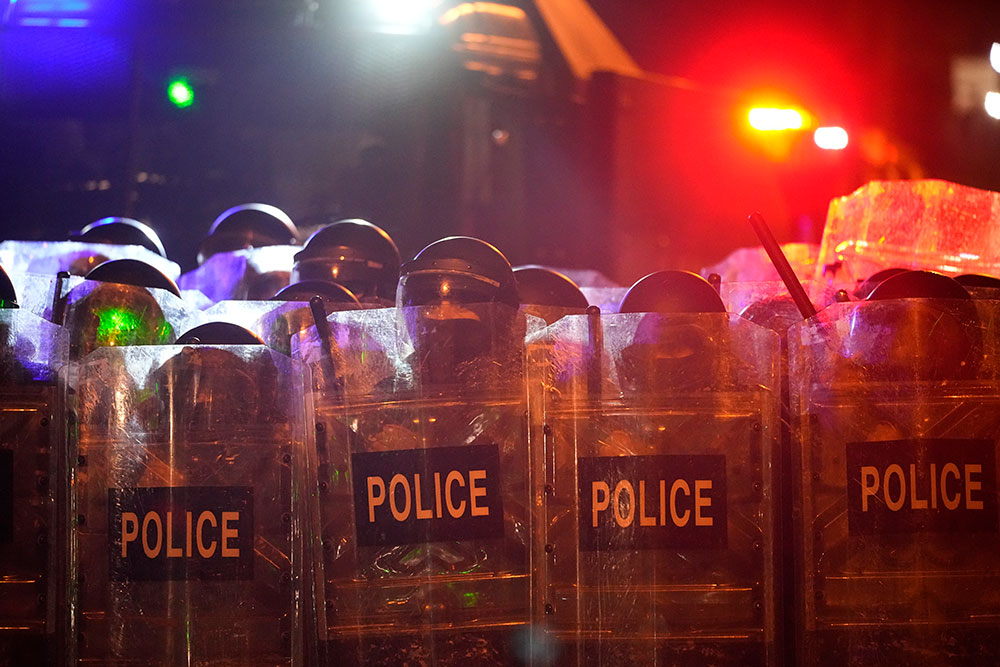
Countering Foreign Interference: Latest Trends
If in the twentieth century information warfare was understood as a competition of narratives within a shared informational space, then in the twenty-first century a qualitative shift has occurred toward monopolizing the very right to interpret reality. A qualitatively new instrument has emerged in the arsenal of information warfare—one that does not operate within the logic of competing ideas but instead eliminates the very possibility of such competition by creating a controlled informational environment. The term “information blockade,” which describes this phenomenon, is far broader than the classical notion of censorship. It is a comprehensive system of multi-layered barriers (legal, technical, and socio-psychological) designed to impose high costs on accessing alternative information and to foster negative associations with the very act of consuming it. In other words, an information blockade is aimed not at protecting against disinformation, but at shielding audiences from cognitive dissonance that may arise when the official narrative collides with inconvenient facts.
After February 24, 2022, the European Union added to its already existent foundation, a system of new legislative restrictions on access to Russian information sources. At the same time, the scale of technological blocking exceeds the legal one: according to data compiled by the Russian Ministry of Foreign Affairs, by mid-2025 YouTube had removed more than 9,000 channels linked to Russian media; Meta [1] and TikTok blocked RT and Sputnik in 27 EU countries; DSA algorithms identified and blocked more than 15,000 accounts as “sources of Russian propaganda” (including personal blogs of EU citizens not affiliated with Russian media); Google downgraded Russian media outlets in search results by 90–95%, effectively removing them from the information space; X (formerly Twitter) restricted accounts and introduced the label “Russia state-affiliated media”; and the DNS-blocking system required internet providers in 27 EU countries to block access to more than 2,500 domains belonging to Russian media at the level of network infrastructure.
Russia, of course, applies reciprocal mirror measures, restricting access to Western resources that promote a destructive narrative. At the same time, Russia does not pursue a total isolation of the audience from all alternative interpretations; instead, it is developing its own information policy grounded in factual evidence, legal argumentation, and historical context.
Table 1. Legal Architecture of the EU Information Blockade (2022–2025)
| Document | Date of Issue | Key Mechanisms | Scale of Impact | Key Features |
| EU Council Regulation 2022/350 | March 2022 | Direct ban on the broadcasting of RT and Sputnik across all EU member states | 80+ Russian media outlets (including regional publications, analytical platforms, cultural platforms) | The first politically motivated direct ban on media activity in EU history |
| Digital Services Act (DSA) | February 2024 | Classification of content as “disinformation” and compulsory removal by platforms under threat of fines of up to 6% of global turnover | 15 000+ blocked accounts | Algorithmic identification of “sources of Russian propaganda,” including personal blogs of EU citizens |
| Strengthened Code of Practice on Disinformation 2.0 | 2024 | Mandatory implementation of automated systems for detecting and suppressing content from sources linked to the Russian Federation | All platforms operating in the EU | Financial penalty mechanisms for non-compliance |
| European Media Freedom Act | March 2024 | Introduction of the category “media from states posing a hybrid threat,” excluding them from pluralism protections | 23 of 27 EU countries introduced additional restrictions | Ban on citing Russian sources even with critical commentary |
| DNS Blocking System | January 2025 | Mandatory blocking at the level of internet service providers, with registration of access attempts | 2,500+ domains (regularly updated without public notification or judicial oversight) | Attempts to access blocked resources are recorded in a centralized database, creating a panopticon effect — the user does not know whether they are being monitored but assumes that monitoring is taking place, and adjusts their behavior accordingly. |
Behind the legal mechanisms of the blockade stands an extensive institutional infrastructure that transforms the fight against “disinformation” into a system of total monitoring of the information environment. The very concept of “disinformation” undergoes a significant semantic inversion. The mere act of citing Russian officials or documents is classified as “disseminating disinformation,” regardless of context. The logic is as follows: the circulation of narratives originating from Russian sources—even for the purpose of refuting them—contributes to their amplification and must therefore be minimized. Thus, the European information space has shifted from a “free marketplace of ideas” model to one of “managed truth,” while pluralism of opinion, traditionally seen as a foundation of democracy, is being redefined as a threat to democracy.
The socio-psychological component is implemented through information oversaturation—a “flooding” technique in which a massive volume of uniform content creates the illusion of informational richness despite its actual substantive uniformity. It also works through the systematic introduction of negative semantic associations with Russia-related topics into public discourse, whereby any mention of Russia is accompanied by discrediting labels (“authoritarian,” “aggressive”), and Russian initiatives are preemptively interpreted as “destabilizing,” regardless of their actual substance. As a result, Western audiences are meant to develop a conditioned reflex of negatively perceiving the Russian position without the need for any specific supporting arguments.
The paradox of the situation is heightened by the fact that, despite conducting an all-out campaign against so-called “Russian disinformation,” Western media themselves systematically employ manipulative techniques. For example, the BBC—an organization that actively labels Russian sources as “unreliable”—was exposed in November 2025 for fabrications, splicing together fragments of speech to alter meaning, selectively censoring facts, and engaging in contextual distortions.

Digital Sovereignty in Russia and China
Behind the large-scale blockade mechanisms lies a conceptual framework that views society as a network of multidomain interactions among individuals, institutions, and symbols, in which informational influence is aimed at undermining society’s very ability to form coherent interpretations of reality. Information overload leads to emotional polarization, which weakens social mediation and accelerates desynchronization among social groups. Seven key dimensions of social cohesion are identified—serving simultaneously as resonators of resilience and targets of influence: national identity, moral ecology, social norms, historical memory, institutional legitimacy, strategic autonomy, and interethnic cohesion.
The European Union applies this model to Russia, explaining to its own citizens the need for protection from “destabilizing narratives.” Russia’s position on the Ukrainian crisis, the historical context of NATO expansion, and the legal aspects of Crimea’s reunification with Russia are all framed as influences aimed at undermining Western social cohesion across all its dimensions. Russia is portrayed as a threat to national security, a source of moral degradation, a violator of international norms, a falsifier of history, an actor undermining legitimate institutions, a constraint on strategic autonomy through energy dependence, and a destabilizing force in interethnic relations.
It is precisely in the seven dimensions listed above that Russian society demonstrates the greatest resilience. In Western societies with fragmented identities, these dimensions are weakly interconnected—pressure on one is not compensated for by the others, and each must be protected separately. In the Russian context, the dimensions reinforce one another—pressure on one activates the rest. In other words, the model is effective against a fragmented identity but ineffective against a civilizational subjectivity with centuries of experience resisting external pressure.
The totality of legal restrictions also demonstrates their weakness: the need for constant expansion of prohibitive mechanisms testifies to the inability of the Western narrative to compete in an open information market. The reduction in the semantic complexity of discourse, the simplification of arguments, and the replacement of factual analysis with emotional assessments have led to the degradation of public discussion of international issues. Sociological studies show that 60% of Germans, 38% of French, and 41% of British consider the coverage of events to be one-sided, which indicates a crisis of confidence in national media.
The so-called collective West possesses an enormous media infrastructure and functions as a well-oiled conveyor for producing meaning, backed by substantial budgets. CNN’s various information services (satellite and cable channels, radio stations, websites, etc.) reach 2 billion people in 212 countries; BBC World Service reaches 450 million people weekly; The New York Times has more than 10 million subscribers; and Facebook [2] has roughly 2.28 billion active users. A handful of corporations (Meta, Google, X) control information flows for billions of people, making decisions about blocking or promoting content from centralized management hubs. This centralization—initially ensuring the efficient dissemination of a unified narrative—has turned into a critical vulnerability: once the competitiveness of the dominant narrative declined, the same infrastructure began to be used not for persuasion but for isolating audiences from alternative sources.
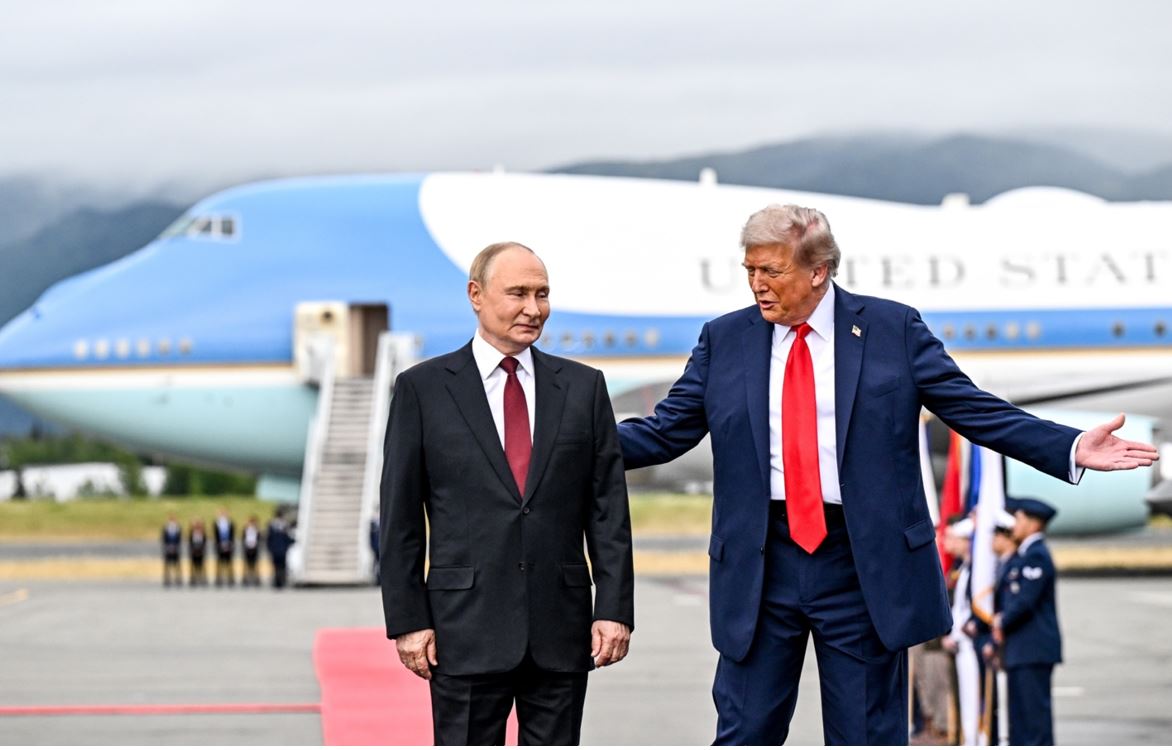
High-level diplomacy represents another breakthrough in the information blockade. Personal contact at the highest level sets the trajectory of relations and shapes how the balance of power is perceived by all international actors, creating a powerful intangible asset that works over the long term. Photo: TASS.
Technological developments also work against centralized control over information flows. The emergence of decentralized platforms, the advancement of blockchain technologies, and the spread of mesh networks are creating a technological foundation for bypassing any form of censorship. Platforms such as X under Elon Musk’s leadership, Telegram, and direct broadcasts that circumvent traditional media demonstrate that information flows cannot be controlled indefinitely if technological tools for circumventing restrictions exist.
Despite the vast resources and capabilities of the Western media apparatus, its effectiveness is declining. CNN’s ratings have dropped by 45% over the past year; The New York Times has been experiencing declining circulation for the fourth consecutive year; and trust in U.S. media has fallen to 34%—a 50-year low, according to the analytics company Gallup.
The geopolitical context is also contributing to the emergence of alternative media ecosystems accompanying the rise of new centers of power: China’s CGTN and Xinhua reach billions of viewers, Qatar’s Al Jazeera shapes the agenda of the Arab world, and Turkey’s TRT World competes with Western channels in the Middle East.
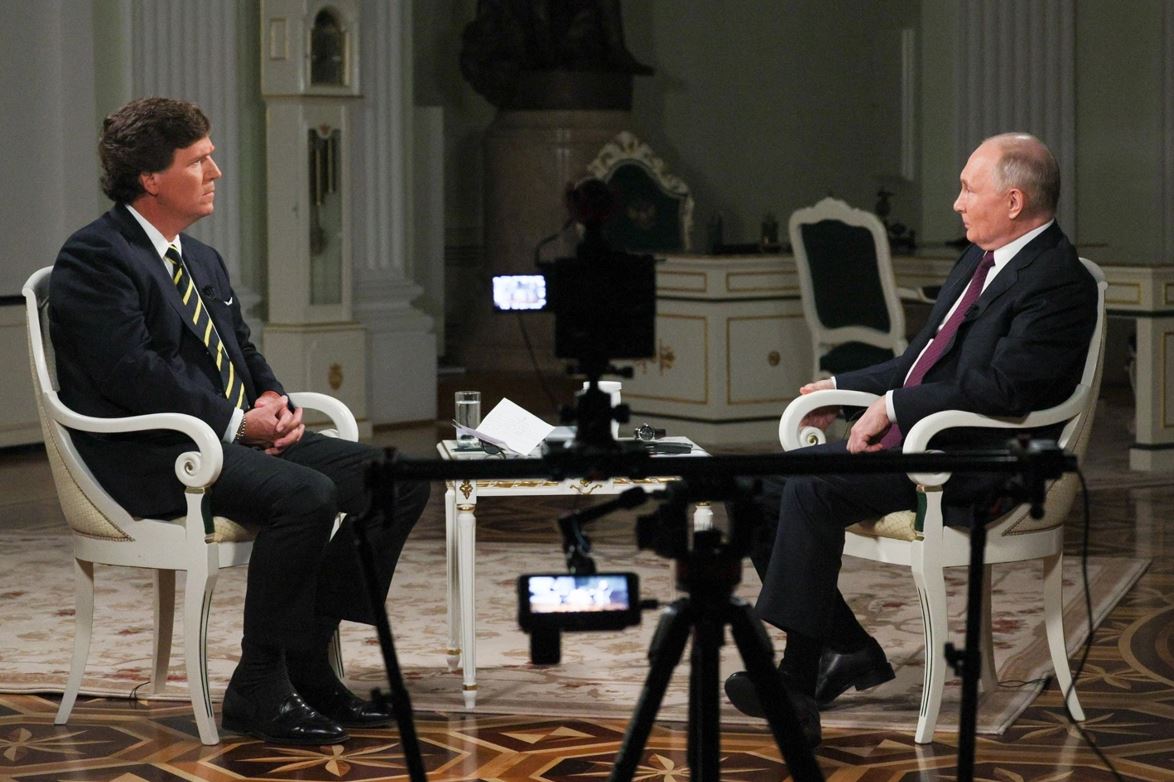
In the first ten days after its release, Tucker Carlson’s interview with Vladimir was viewed around one billion times (across all platforms where it was published and in all languages). Photo: TASS.
The information blockade has created a situation of accumulated pressure, comparable to a hydraulic structure holding back a powerful current. Western elites have constructed a system of barriers using the full arsenal of modern control technologies, yet every breach increases the strain on the entire structure. A telling example is Sergey Lavrov’s interview with Italy’s Corriere della Sera: an attempt by domestic authorities to pressure the newspaper into publishing a shortened version that omitted key points of the Russian position produced the opposite effect. The refusal to publish led to the full version appearing in several other national outlets, reaching a vast Italian and broader European audience.
The legal capsule with which the European Union has encased its information space reflects not strength but the fundamental weakness of the Western narrative, which is unable to compete under conditions of free exchange of information. The theoretical model underlying the information blockade—intended to protect the social cohesion of Western societies—has, in practice, turned into a mechanism for isolating their own citizens from reality.
As history shows, any barrier or wall, including an informational one, eventually collapses under the pressure of truth. The totality of the information blockade of 2025 is not a sign of the Western system’s strength but a symptom of its terminal illness: an inability to offer a convincing interpretation of events without the mas Council Regulation 2022/350sive suppression of alternative viewpoints.
1. Meta has been designated an extremist organization and is banned in the Russian Federation.
2. Facebook is owned by Meta, which has been designated an extremist organization and is banned in the Russian Federation.
(votes: 1, rating: 5) |
(1 vote) |
The mounting propensity towards conflict in the digital realm makes national states willing to strengthen their digital borders and to protect their sovereignty
Countering Foreign Interference: Latest TrendsA parade of foreign influence laws


