
Russia and Vietnam in the “New Era”: Results of the XIV National Congress of the Communist Party of Vietnam and Opportunities for Geopolitical Maneuvering in the East
In
Login if you are already registered
(votes: 1, rating: 5) |
(1 vote) |

Doctor of Economics, Professor, Chief Research Fellow at the Center for World Politics and Strategic Analysis, Institute of China and Contemporary Asia of the Russian Academy of Sciences (RAS); Head of the Center for Russia’s Strategy in Asia, Institute of Economics of RAS

Senior Research Fellow at the Center for the Study of Vietnam and ASEAN, Institute of China and Contemporary Asia of RAS
Amid the erosion of the old-world order and the emergence of new, competing power centers, the Asia-Pacific region has also entered a phase of transformation. For Russia, whose post-2022 pivot to the East has become inevitable, the outcomes of the XIV Congress of the Communist Party of Vietnam (CPV) represent a significant factor shaping Russia’s presence in East Asia. The coming decade in the region will clearly be defined by U.S.-China strategic rivalry and ASEAN’s pursuit for “strategic autonomy.” Vietnam may emerge as one of Russia’s key “anchors” in the Asia-Pacific and its key institutions. Today and in the years ahead, Vietnam is not just a historical ally but a dynamic “hub” through which Moscow can access Southeast Asian markets, navigating sanctions-related constraints through BRICS mechanisms and newly emerging payment infrastructures. The secret to success lies in the development of a new economic model of interaction.
The XIV Party Congress in Vietnam marks the beginning of the “New Era – The Era of the Nation’s Rise.” Hanoi has declared its goal of building a high-tech, digital version of socialism. The re-election of To Lam has cemented a course towards strict domestic discipline—embodied in the “Blazing Furnace” anti-corruption campaign—and ambitious economic growth. In Western discourse, the Congress is described as a “point of no return,” signaling Vietnam’s transition from a “world factory” to a “high-tech power” and sending a clear message about its aspiration to transform into a regional superpower.
At the same time, the West, while expressing concern over the consolidation of “hard-liners” in power, is guided by pragmatism and seeks to keep the Socialist Republic of Vietnam (SRV) in its orbit: U.S. hi-tech companies continue to expand production, accepting the stability of the country’s leadership. Beijing views Vietnam as a competitor for investment but welcomes the preservation of the socialist system, which prevents Hanoi from entering formal military alliances with the West. For Russia, the challenge of maintaining and strengthening ties with a traditional partner lies in the need for a paradigm shift: from “selling resources” to “integration into development.”
For Moscow, the results of the XIV CPV Congress present both opportunities and stringent requirements regarding the quality of cooperation. For the Kremlin, Vietnam can become the main “advocate” in ASEAN and a key BRICS+ partner in the Asian-Pacific region. The traditional model of cooperation (oil and resources in exchange for goods) is outdated, and new growth points are needed. In 2026, Russia has a unique chance to become the main technology donor for the Vietnamese market. If Moscow provides Vietnam with nuclear power, cybersecurity, and food stability, Hanoi’s “bamboo diplomacy” will lean towards its northern partner, regardless of any storms in the Pacific.
Amid the erosion of the old-world order and the emergence of new, competing power centers, the Asia-Pacific region has also entered a phase of transformation. For Russia, whose post-2022 pivot to the East has become inevitable, the outcomes of the XIV Congress of the Communist Party of Vietnam (CPV) represent a significant factor shaping Russia’s presence in East Asia. The coming decade in the region will clearly be defined by U.S.-China strategic rivalry and ASEAN’s pursuit for “strategic autonomy.” Vietnam may emerge as one of Russia’s key “anchors” in the Asia-Pacific and its key institutions. Today and in the years ahead, Vietnam is not just a historical ally but a dynamic “hub” through which Moscow can access Southeast Asian markets, navigating sanctions-related constraints through BRICS mechanisms and newly emerging payment infrastructures. The secret to success lies in the development of a new economic model of interaction.
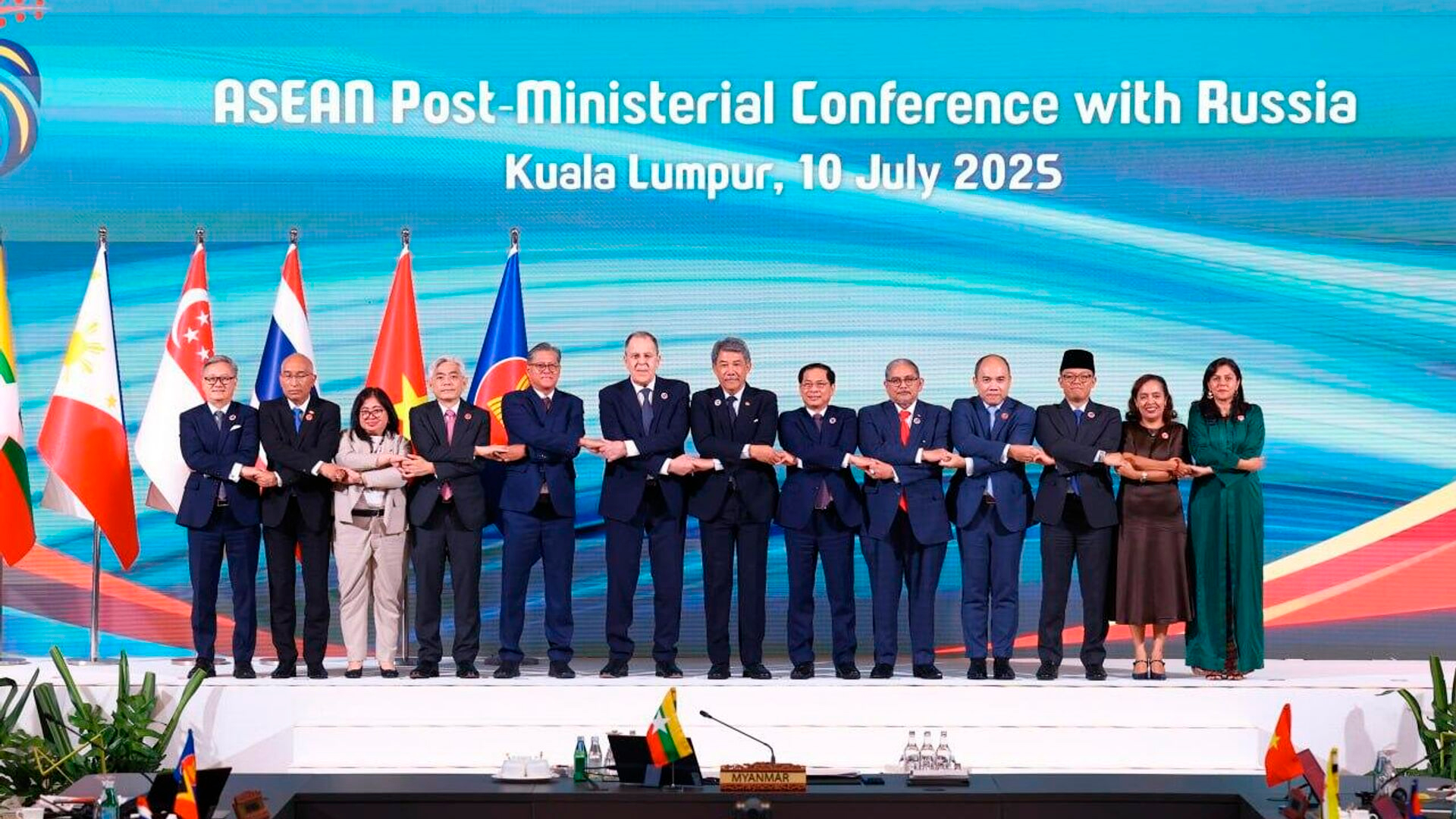
The World Majority and ASEAN: Ideational Convergence or Tension?
The XIV Party Congress in Vietnam marks the beginning of the “New Era – The Era of the Nation’s Rise.” Hanoi has declared its goal of building a high-tech, digital version of socialism. The re-election of To Lam has cemented a course towards strict domestic discipline—embodied in the “Blazing Furnace” anti-corruption campaign—and ambitious economic growth. In Western discourse, the Congress is described as a “point of no return,” signaling Vietnam’s transition from a “world factory” to a “high-tech power” and sending a clear message about its aspiration to transform into a regional superpower.
At the same time, the West, while expressing concern over the consolidation of “hard-liners” in power, is guided by pragmatism and seeks to keep the Socialist Republic of Vietnam (SRV) in its orbit: U.S. hi-tech companies continue to expand production, accepting the stability of the country’s leadership. Beijing views Vietnam as a competitor for investment but welcomes the preservation of the socialist system, which prevents Hanoi from entering formal military alliances with the West. For Russia, the challenge of maintaining and strengthening ties with a traditional partner lies in the need for a paradigm shift: from “selling resources” to “integration into development.”
The outcomes of the SRV’s development in the period following the previous Party Congress indicate that, despite an challenging external environment, the country’s leadership has succeeded in carrying out renewal, reorganization, and streamlining of both the organizational apparatus and the administrative-territorial structure. According to the Congress documents, Vietnam is now tasked with shifting from an extensive development model to an intensive, high-technology-driven model. This shift is formulated as a “renewal of development thinking: science and technology, innovation and digital transformation are identified as the central driving forces; a modern institutional system and high-quality human resources as the foundation; green, sustainable and efficient development, closed-loop economy and adaptation to climate change as mandatory requirements; resource efficiency and productivity as a measure of the quality of economic growth.” Emphasis is placed on “developing action programs as well as mechanisms for verification, oversight, and performance evaluation,” with data, indicators, and public feedback regarded as an essential basis for policy adjustment and accountability.
The Congress defined “Twelve priority areas, six key tasks, and three strategic breakthroughs,” indicating a critical shift in Hanoi’s economic philosophy. The key parameters of Vietnam’s new strategy for the next five years focus on achieving annual GDP growth rates of over 10 percent (growth reached 8 percent in 2025)—an ambitious target that will depend in no small measure on global economic conditions—and on a transition from “administration” to “service provision” through comprehensive digitalization. By 2030, the intended outcome is the transformation of the SRV into a developing country with a modern industrial base and upper-middle-income status (USD 8,500 per capita).
The first step is an institutional breakthrough. Institutional maturity is evident; the proposition that institutions are “a breakthrough of breakthroughs” indicates that Vietnam has realized the risks associated with the “middle-income trap.” This entails a transition from rigid state administration to a “facilitating state” model. The announced dismantling of the “ask–give” model (bureaucratic paternalism) sends a clear signal of a shift toward a transparent market environment. At the same time, the primary role is to be relegated to the “grassroots” level: the current situation—where “it is hot at the top and cold at the bottom,” “much is said but little is done,” and “political decisions are correct but slowly implemented” is no longer acceptable.
Both theoretically and practically, the principle of combining planning and the market is of key importance: “the public sector retains a leading role in ensuring macroeconomic stability, maintaining key balances, setting strategic guidelines, and providing directional leadership. The private sector is one of the most important drivers of the economy; it is necessary to create a favorable business environment, guarantee property rights and freedom of entrepreneurship, encourage the strengthening of domestic enterprises and their international competitiveness, and promote the incorporation of knowledge and technology into production and business.”
Second, a “dual transition” is planned—toward a “knowledge economy, digital economy, green economy, circular economy.” References to the knowledge economy and the circular economy reflect Vietnam’s ambition to integrate into new global value chains. Vietnam intends to pursue growth not through cheap labor, but through increases in total factor productivity. The task has been set to “advance a comprehensive national digital transformation, first and foremost by improving digital infrastructure and digital data; building digital government, a digital economy, a digital society, and a digital citizen; ensuring cybersecurity and data security; expanding the adoption and diffusion of digital skills; and narrowing the digital divide.”
Beyond Bipolarity: Russia as a Safety Valve in Southeast Asia
The third step envisages a new model of urbanization: the creation of “special new-generation zones” and international financial centers (for example, in Ho Chi Minh City) points to plans to transform the country into a regional service and logistics hub similar to Singapore or Hong Kong. The social sphere has not been overlooked either: the objective is to build a “healthy, disciplined, civilized, secure, and developing Vietnamese society.” Strengthening national unity is described as the “key of keys,” for which party-building has been proclaimed a central task.
Proactive responses to external challenges are subordinated to the task of maintaining peace and stability on the basis of sovereignty. Vietnam’s foreign policy after the Congress remains “bamboo-like” (flexible yet resilient). It should be borne in mind that, in the case of confrontation between Washington and Moscow, it would be difficult for Vietnam to maintain the status quo—for example, in the sphere of military-technical cooperation. Vietnam does not wish to “choose sides.” However, if Russian participation in projects on the South China Sea shelf were to trigger a sharp deterioration in relations with Beijing or sanctions pressure from Washington, Hanoi could resort to a “delaying” strategy in bilateral initiatives. Some analysts even point to the possibility of a “quiet” drift by Hanoi toward India or Israel as alternative suppliers of security-related technologies.
For Moscow, the results of the XIV CPV Congress present both opportunities and stringent requirements regarding the quality of cooperation. For the Kremlin, Vietnam can become the main “advocate” in ASEAN and a key BRICS+ partner in the Asian-Pacific region. The traditional model of cooperation (oil and resources in exchange for goods) is outdated, and new growth points are needed. In 2026, Russia has a unique chance to become the main technology donor for the Vietnamese market. If Moscow provides Vietnam with nuclear power, cybersecurity, and food stability, Hanoi’s “bamboo diplomacy” will lean towards its northern partner, regardless of any storms in the Pacific.
To Lam’s leadership, focused on “digital sovereignty” and a “strong state,” is ideologically close to Russia’s current policy. This will facilitate dialogue on security and cyber defense. Vietnam is heading for accelerated growth driven by high technologies and will seek participation in the digital economy and green transition. Vietnam is also likely to step up its role as a BRICS partner, which could serve as a bridge for cooperation with Russian that circumvents Western restrictions.
The decisions adopted at the Congress point to the emergence of new points of convergence in Russian–Vietnamese cooperation. For Moscow, the most critical point is the emphasis on “technological autonomy”: Vietnam no longer seeks to remain merely an assembly line but requires access to critical technologies that Russia is willing to share. To remain a relevant partner, Moscow must offer Vietnam:
- Technology transfer (not merely the sale of products, but the transfer of technologies)
- Localization of production within Vietnam
- Integration into digital and green projects
Vietnam has announced a decisive commitment to an “energy transition.” For Russia, this is a chance to reenter Hanoi’s nuclear agenda. Russia’s experience in the construction of nuclear power plants—particularly small capacity reactors—and LNG, fit well into Vietnam’s strategy of a “safe and systemic green transformation.” In December 2025, the country’s first nuclear power project, Ninh Thuan-1, was officially relaunched. Russia, represented by Rosatom, is considered a frontrunner due to its offer of Generation III+ reactors (VVER-1200) and the possibility of localizing nuclear fuel production. For remote provinces and industrial clusters, Vietnam is also considering Russian floating and land-based small-capacity nuclear power plants. Zarubezhneft and Novatek are exploring the establishment of energy hubs in Vietnam that would combine gas-fired generation with renewable energy sources (RES).
In the “new era,” the key requirement for a partner is no longer merely the supply of products, but the transfer of competencies and the provision of technological sovereignty. To retain their positions, Russian companies will need to adhere to three principles: localization (the establishment of joint ventures), training (the inclusion of an educational component in every major contract), and compliance with standards. The year 2026 has been designated the Year of Russian–Vietnamese Scientific and Educational Cooperation, making it an optimal moment to launch joint scientific and technological centers in Hanoi and Ho Chi Minh City.
The provisions on “comprehensive digital transformation” and “data security” imply a vast market for Russian IT giants. Vietnam aims to bring the share of the digital economy to 30 percent of GDP by 2030. For Russia, this creates opportunities in the “critical software” market. Russia can offer solutions in digital government and the protection of critical infrastructure that would provide Hanoi with the much-desired “digital sovereignty,” particularly considering the risks of growing dependence on either the U.S. or China.

Could Small Modular Reactors Soon Power Data Centers?
The pandemic and Vietnam’s aging population have elevated biotechnology to a national security priority. There are prospects for expanding technology transfer in vaccine development, oncology and nuclear medicine, as well as in genetics and breeding. Given demographic trends, nuclear medicine appears particularly promising—an area in which Russia possesses advanced capabilities. Cooperation could involve the establishment of modern nuclear medicine centers, based on Russian technologies and a previously supplied research reactor, focused on early diagnosis and treatment of oncological and cardiovascular diseases, in line with the growing needs of Vietnam’s healthcare system.
Significant opportunities are also emerging in the field of education. Training of Vietnamese specialists in Russia should shift from a predominant focus on the fundamental sciences toward applied IT disciplines, bioengineering, and the management of innovation ecosystems. The joint Russian–Vietnamese Tropical Center could serve as a platform for implementing the “circular economy” and environmental security agenda highlighted at the Congress.
However, there are also potential “bottlenecks,” mainly the problem surrounding sanctions. Secondary sanctions and the risk of losing access to US and EU markets compel Vietnamese (even state-owned) banks to be extremely cautious about transactions with Russia. Vietnam’s aspiration, in line with the Congress decisions, to become an “international financial center” requires an impeccable reputation of its financial system, and the perceived “toxicity” of transactions with Russia may be viewed in Hanoi as a constraint on national development.
Given the SRV’s desire to establish “high tech standards consistent with global standards,” Russia will need to actively harmonize its technical regulations with those of Vietnam (and through them with international standards). Vietnam is building its “digital economy” as part of global value chains. If Russian technologies (for example, in the fields of smart cities or energy management) remain isolated, Hanoi may opt for Western or Chinese alternatives to ensure “interdepartmental data connectivity,” creating a risk that Russian projects could turn into “technological enclaves” that are difficult to scale across Vietnam, let alone the wider region.
Russia, where state corporations dominate foreign trade, should learn to work with Vietnamese medium and large private business (Vingroup, Sovico, etc.). However, it remains unclear how business culture will evolve amid a likely “tightening of screws”; there is a risk of “decision-making paralysis” at the local level. Now officials are afraid to make decisions that can be challenged in the fight against corruption (“Burning Furnace”). Russian companies may find it difficult to adapt to the new transparency and accountability requirements, and they need to take into account three key changes: the digitalization of procedures, the abolition of certain licensing requirements, and the strengthening of anti-corruption oversight.
(votes: 1, rating: 5) |
(1 vote) |
Working Paper No. 83 / 2024
Could Small Modular Reactors Soon Power Data Centers?Interview with the Project Director at Rosatom Energy Projects JSC
The World Majority and ASEAN: Ideational Convergence or Tension?Substantively, the notion of a “global majority” could be reinterpreted through the lens of a “partnership of sustainable diversity”—an idea that underscores not numerical predominance, but the intrinsic value of diversity and equal mutual interaction
Beyond Bipolarity: Russia as a Safety Valve in Southeast AsiaUltimately, the future of the Eurasian project in Southeast Asia will be defined by the quality of Russia’s engagement with the World Majority


