Multipolar World: From Ideology to Implementation
In
Login if you are already registered

President of the Russian International Affairs Council
Since the second half of the 1990s, the “struggle for a multipolar world” has been a central pillar of Russia’s foreign policy. This notion has been repeatedly reiterated ever since. Yet, in reality, this “struggle” has already been won. The multipolar world is already a fact—and has been for more than a decade. Its emergence signifies that the era of unipolarity—when U.S. hegemony went largely unchallenged—has come to an end. The poles of this “new world” have taken shape. At the global level, these include a China, that “has risen,” a Russia that has restored its sovereignty, a rapidly growing India, and—perhaps—a Europe that has recently become more active. At the regional level, several states across the world play similar roles: Brazil in Latin America, Turkey and Iran in the Middle East, Indonesia in Southeast Asia, and South Africa in Africa.
Thus, the world is already multipolar; the key question now concerns the order within this world. It is precisely over this issue that a fierce struggle is unfolding—effectively a functional equivalent of a world war.
Multipolarity in the contemporary world is something of a mixed bag. In the contest over the future world order, two key actors stand out: the United States and China. Washington’s actions are directed both at bolstering its own position and at maximally weakening its greatest rival. Covert operations by the CIA and the U.S. Department of Defense in Venezuela, two U.S. wars against Iran, the economic weakening of Europe, attempts by Donald Trump to “take over” Greenland and to strike a deal with Moscow—all of this, at the end of the day, is aimed at denying Beijing access to resources and markets, as well as isolating it politically by undermining the strategic partnership between the People's Republic of China and Russia.
Thus, one possible scenario for the new world order could be a new—this time U.S.-China—bipolarity. Hypothetically, a new bipolarity might be accepted—albeit reluctantly—by the United States, in the hope that such a “draw” would eventually pave the way for victory, as it did in the U.S.–Soviet rivalry. It could also be seen as an acceptable interim outcome in China, which traditionally “plays the long game.” However, such an arrangement is unlikely to be seen as desirable by other countries, especially major powers such as Russia and India, and possibly Europe as well.
Even if a new, full-scale bipolarity does not materialize, the United States and China will remain as the world’s two leading powers for some time to come. There will be no sharp bloc division, but spheres of influence will form around Washington and Beijing. This poses a clear challenge for states seeking to uphold their sovereignty and strategic autonomy, including Russia.
Russian foreign policy philosophy and tradition gravitate toward the concept of a concert of great powers as the optimal model of global governance. At the current stage of development, this “concert” model has taken the form of a community of civilizations. Russia has officially proclaimed itself a “civilization-state.” A civilization-state is understood as a fully-fledged, sovereign manifestation of humanity. Russian authors typically identify China, India, and the United States as other civilization-states. At present, this constitutes a complete list of great powers. Other major civilizations—Islamic, African, and Latin American—span multiple states and do not have a single universally recognized representative.
In the Russian worldview, civilization-states interact by balancing one another, competing and cooperating on the basis of their own interests while adhering to shared values rooted in their traditions. Roles within the international system are distributed accordingly: great powers assume responsibility for maintaining order, while middle and smaller states cooperate and benefit from that order. In principle, such a model could be implemented within a fundamentally reformed United Nations—one that is more representative in civilizational terms at the level of the Security Council and whose institutional apparatus is no longer dominated by representatives of Western countries.
Russia is not the largest among the world’s leading powers. Nevertheless, it possesses numerous vital and even unique resources. There is no need to reiterate the well-known facts about Russia’s various capabilities and arsenals. Suffice it to say that Russia is, in fact, a “civilization of civilizations,” and in the context of the current era of civilizational pluralism, this allows it to understand its partners around the world better than others and to serve not only as a guardian of global balance but also as a global mediator. It is now necessary to begin preparing for this position and the future role to come.
Since the second half of the 1990s, the “struggle for a multipolar world” has been a central pillar of Russia’s foreign policy. This notion has been repeatedly reiterated ever since. Yet, in reality, this “struggle” has already been won. The multipolar world is already a fact—and has been for more than a decade. Its emergence signifies that the era of unipolarity—when U.S. hegemony went largely unchallenged—has come to an end. The poles of this “new world” have taken shape. At the global level, these include a China, that “has risen,” a Russia that has restored its sovereignty, a rapidly growing India, and—perhaps—a Europe that has recently become more active. At the regional level, several states across the world play similar roles: Brazil in Latin America, Turkey and Iran in the Middle East, Indonesia in Southeast Asia, and South Africa in Africa.
Thus, the world is already multipolar; the key question now concerns the order within this world. It is precisely over this issue that a fierce struggle is unfolding—effectively a functional equivalent of a world war. Under Donald Trump, the United States shifted from the image of a benevolent hegemon and liberal globalist to that of a hardline “master” of the world, acting at its own discretion and from a position of brute force. In an effort not necessarily to restore full hegemony, but at least to salvage its slipping primacy, Washington has launched a broad counteroffensive directed simultaneously at allies (Europe), adversaries (Russia, Iran, China), as well as a number of “rogue” states (such as Venezuela and Cuba).
A World War analogy can even be extended here. The First and Second World Wars of the twentieth century contributed enormously to the growth of America’s economic, political, and military power. The Cold War (an unrealized Third World War) established the United States as the dominant power across the capitalist world, while the collapse of the Soviet Union paved the way to the United States’ unchallenged global hegemony. However, America reached the peak of its power relatively quickly—already at the turn of the century. Today, Pax Americana is clearly entering a period of decline, and this decline is far from peaceful.
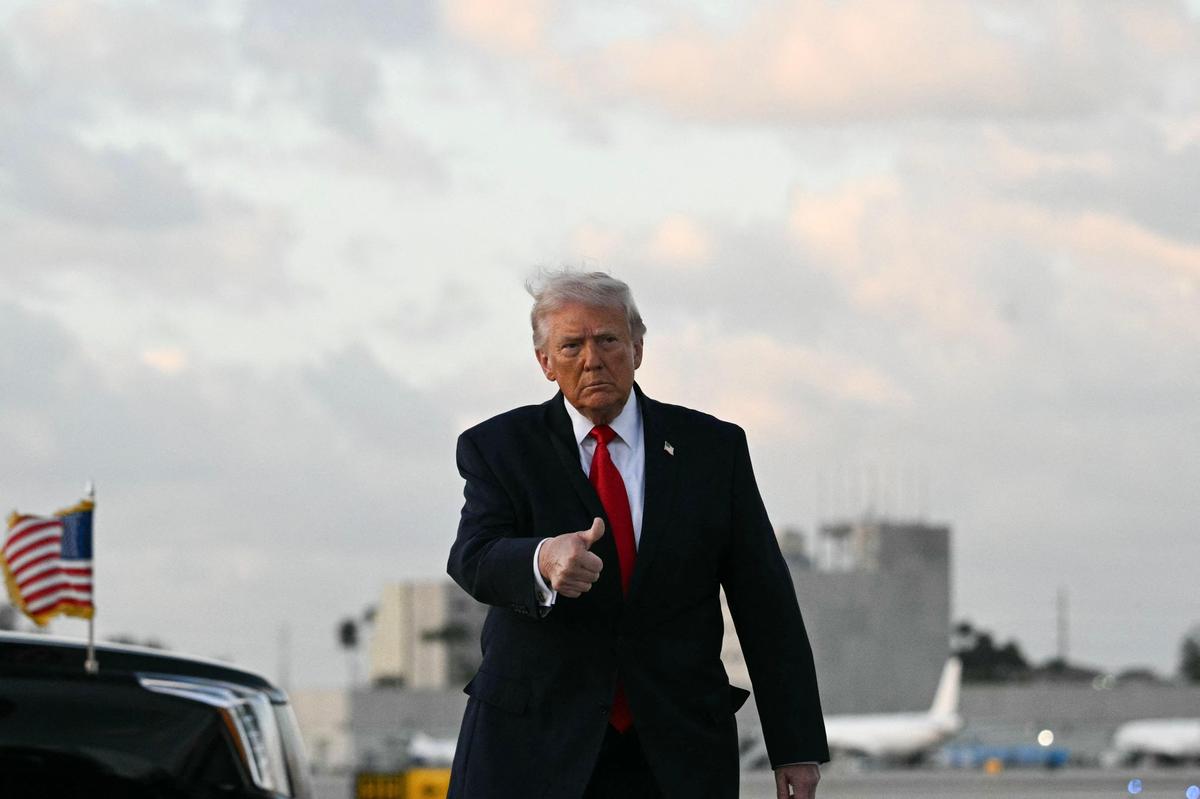
U.S. Hegemony Crisis Reaching a Stage of Strategic Disarray
The notion that the shift in the world order is an objective process is only partially true. The objective nature of these changes does not preclude the subjective desire of the retreating hegemon to turn the tide in its favor. The American ruling elite is resisting tenaciously and ruthlessly—toward both rivals and allies alike. Ceding primacy and settling for second place, letting China take the lead, is inconceivable for the U.S. Ahead lies a prolonged confrontation—a “long war” involving most, if not all, major powers, as well as many middle and smaller states. In many ways, it resembles a kind of Twenty-First Century Thirty Years’ War.
Multipolarity in the contemporary world is something of a mixed bag. In the contest over the future world order, two key actors stand out: the United States and China. Washington’s actions are directed both at bolstering its own position and at maximally weakening its greatest rival. Covert operations by the CIA and the U.S. Department of Defense in Venezuela, two U.S. wars against Iran, the economic weakening of Europe, attempts by Donald Trump to “take over” Greenland and to strike a deal with Moscow—all of this, at the end of the day, is aimed at denying Beijing access to resources and markets, as well as isolating it politically by undermining the strategic partnership between the People's Republic of China and Russia.
Hostile actions, however, tend to provoke resistance from opponents, and it is unlikely that the Americans will be able to reverse prevailing trends in a way that sidelines its rivals, as happened with the British Empire, the German Reich, and the Soviet Union. The defining feature of Trump’s foreign policy—its cynical frankness—erodes the disingenuous yet appealing, image of a “benevolent” America, cast as protector and benefactor, that was forged at the end of the World War II and cultivated over subsequent decades. Today, not only Russians, Chinese, and Iranians, but also Indians, Arabs, Europeans, Japanese, Latin Americans, and many others increasingly perceive the United States as self-interested, unpredictable, and often hostile. As a result, the system of U.S. alliances—one of Washington’s most valuable foreign policy assets—has begun to wobble.
It would, of course, be a mistake to go to the opposite extreme and assume that America’s days at the top of the world are numbered. The United States still possesses formidable financial, technological, and military resources, and is likely to retain its status as a superpower for decades to come. Moreover, it will have no successor as a global hegemon: Pax Americana will not give way to Pax Sinica. Even if Beijing succeeds in pulling ahead in advanced technologies and in constructing a comprehensive system of international trade centered on China, this alone will not suffice for global leadership.
In fact, the notion of leadership is largely absent from Chinese foreign policy philosophy and practice. The global initiatives put forward by Xi Jinping—including those in the realm of global governance—reflect a vision of a future world united by a shared destiny and guided by the principles of multilateralism and inclusive participation by all states. China’s initial conception of the future world order was clearly globalist and reformist in nature. Russian proposals, and especially Beijing’s actions in recent years, have been labeled as “revolutionary,” which, coming from Chinese communists, was by no means intended as a compliment. Practice, however, remains the ultimate test of truth.

In contemporary Chinese ideology, the emphasis on multipolarity has largely receded: the issue is considered settled. Instead, China advances a set of principles, norms, and rules for global coexistence. These principles are broadly consonant with Russian approaches. Naturally, it follows that the world’s leading economy—today in terms of GDP measured at purchasing power parity, and tomorrow in absolute terms—will rightfully claim a central—or, if one prefers, a pivotal—role in the future international order, thereby justifying its self-designation.
Thus, one possible scenario for the new world order could be a new—this time U.S.-China—bipolarity. Many countries, particularly in Southeast Asia, are already preparing for this scenario by balancing between the two giants. They are economically tied to China through trade, while maintaining close political and military ties with the United States. Such an intermediate, “hedging” position is inherently unstable and is unlikely to withstand the test of a serious crisis in U.S.-China relations, the likelihood of which is growing.
An acute crisis, provided the parties are able to emerge from it and establish a relatively stable equilibrium, could lead—if not to the formation of opposing blocs as in the Cold War—then at least to mutually recognized spheres of influence among the superpowers. A similar outcome is already being driven by the competition between technological platforms, in which the United States and China are the main players, far ahead of the rest of the world.
Hypothetically, a new bipolarity might be accepted—albeit reluctantly—by the United States, in the hope that such a “draw” would eventually pave the way for victory, as it did in the U.S.–Soviet rivalry. It could also be seen as an acceptable interim outcome in China, which traditionally “plays the long game.” However, such an arrangement is unlikely to be seen as desirable by other countries, especially major powers such as Russia and India, and possibly Europe as well.
More importantly, in the first half of the twenty-first century—unlike in the latter half of the twentieth—Washington is unlikely to prioritize the interests of its global empire or risk the very existence of the United States to defend distant “imperial peripheries.” Trump is not an aberration, but a concentrated expression of a broader trend: great-power nationalism is displacing global imperialism within the United States. Thus, “America First” effectively amounts to “Home Alone.”
Even if a new, full-scale bipolarity does not materialize, the United States and China will remain as the world’s two leading powers for some time to come. There will be no sharp bloc division, but spheres of influence will form around Washington and Beijing. This poses a clear challenge for states seeking to uphold their sovereignty and strategic autonomy, including Russia.
Russian foreign policy philosophy and tradition gravitate toward the concept of a concert of great powers as the optimal model of global governance. The Holy Alliance, established at the Congress of Vienna, the meetings of the Big Three in 1943–1945, and the Yalta and Potsdam agreements, as well as the “P5” of permanent members of the United Nations Security Council, which, under the United Nations Charter, bear “primary responsibility” for the maintenance of international peace and security, serve for as examples of equal cooperation among the major powers—necessarily including Russia—on the basis of mutual recognition and consideration of each other’s interests.
At the current stage of development, this “concert” model has taken the form of a community of civilizations. Russia has officially proclaimed itself a “civilization-state.” A civilization-state is understood as a fully-fledged, sovereign manifestation of humanity. Russian authors typically identify China, India, and the United States as other civilization-states. At present, this constitutes a complete list of great powers. Other major civilizations—Islamic, African, and Latin American—span multiple states and do not have a single universally recognized representative.
In the Russian worldview, civilization-states interact by balancing one another, competing and cooperating on the basis of their own interests while adhering to shared values rooted in their traditions. Roles within the international system are distributed accordingly: great powers assume responsibility for maintaining order, while middle and smaller states cooperate and benefit from that order. In principle, such a model could be implemented within a fundamentally reformed United Nations—one that is more representative in civilizational terms at the level of the Security Council and whose institutional apparatus is no longer dominated by representatives of Western countries.
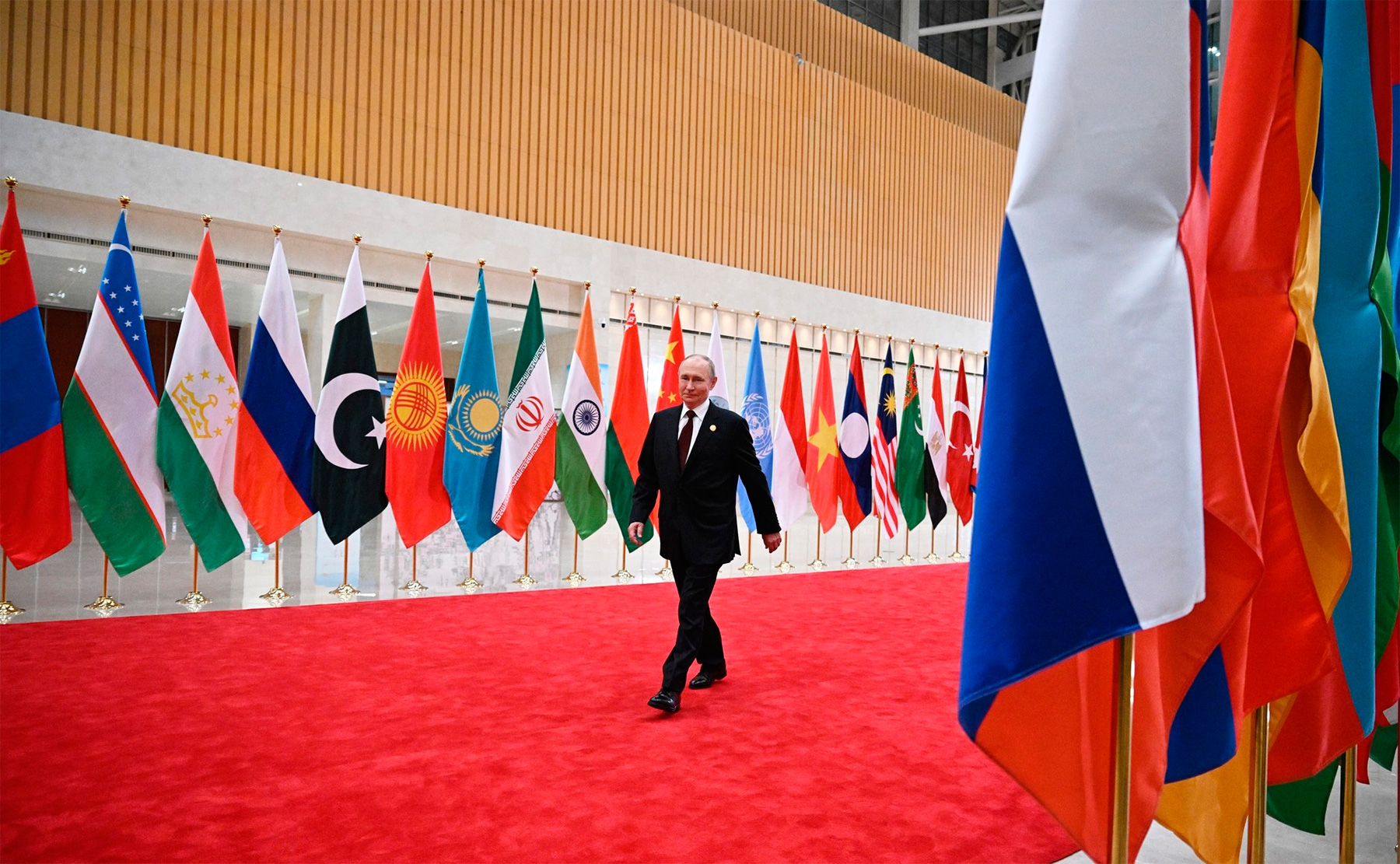
Some elements of the future world order are already being implemented and tested within organizations and forums of the Global Majority, established with Russia playing a leading role. At the global level, this is BRICS; at the continental Eurasian level, it is the Shanghai Cooperation Organization (SCO). Unlike Western formats such as the G7 and NATO, these frameworks do not have a hegemon—despite China’s obvious economic power or Russia’s nuclear arsenal.
Within frameworks such as BRICS, the SCO, as well as the EAEU and CSTO, principles of international security proposed by Russia and Belarus for the foundation of a Eurasian security architecture are being put to the test. These include the indivisibility of the security of the system’s members, respect for sovereignty, and recognition of the diversity of development models and political systems, among others. Admittedly, the road from declarations to reality, ideology to implementation, is a difficult one. In 2025, SCO members India and Pakistan were involved in a brief war, and in 2026, BRICS members Iran and the UAE found themselves on opposite sides of the front lines in the war waged by the United States and Israel against Iran.
Russia is not the largest among the world’s leading powers. Nevertheless, it possesses numerous vital and even unique resources. There is no need to reiterate the well-known facts about Russia’s various capabilities and arsenals. Suffice it to say that Russia is, in fact, a “civilization of civilizations,” and in the context of the current era of civilizational pluralism, this allows it to understand its partners around the world better than others and to serve not only as a guardian of global balance but also as a global mediator. It is now necessary to begin preparing for this position and the future role to come.
(votes: 1, rating: 5) |
(1 vote) |