
Five ‘What to Do’ for the European Union
In
Login if you are already registered
(votes: 1, rating: 5) |
(1 vote) |

Ph.D. in Political Science, Director General of the Russian International Affairs Council, RIAC member
Rarely in the history of the European Union has it faced challenges comparable to the ones it faces today. Since the end of the Cold War, the EU has been on the rise. Its membership has expanded quantitatively and qualitatively. Pan-European institutions and European law have been strengthened. Diplomacy and security policy have been taking shape. The EU has gradually become more like a confederation or a federation. However, it has lacked the centralised security structures to truly become a full-fledged state or even a super-state—primarily the armed forces.
The EU has remained a junior partner of NATO and part of the Euro-Atlantic security architecture, where the US has played a leading role. However, the question of the EU's strategic autonomy has gradually departed from purely theoretical considerations. While maintaining its role as an economic giant, Brussels has long remained a political dwarf. The Ukraine conflict has become a powerful political stimulus for expanding political opportunities, although the preconditions for such a dynamic existed earlier. Similar incentives are emerging in other areas as well. The European Union has been forced to provide immediate answers to the eternal question of "what to do," playing on several chessboards at once.
It appears that the issue of internal transformation, taking into account external challenges, remains paramount for the EU. The logic of relations with China allows for no changes for now. However, here too, the prospect of intense competition over technological security remains under the rug. This will likely require more stringent regulatory measures. Political consolidation was required in relations with Ukraine, and it has the potential to gain more ground if necessary, seeking additional reserves. In relations with Russia, even clearer demands for increased levels of control have come to the fore. The change in the procedure for applying sanctions against Russia's sovereign assets is symptomatic. Now, it will be more difficult for individual countries, such as Hungary or Slovakia, to use their veto power in EU Council votes with regards to this issue. Finally, the US manoeuvres raise a fundamental question: how do Europeans ensure their own security? For now, NATO remains an ironclad structure. But NATO's mere existence is unlikely to block deeper defence cooperation within the EU. Brussels has incentives to play a more significant role in NATO, and in the long run, the alliance itself could become a US-EU pair, rather than a conglomerate of European allies centred on the US.
Resolving security issues will inevitably require the EU to become increasingly centralised and directive in its decisions, and thus, to reduce the effective sovereignty of its member states. The big question is whether the EU itself and its member states are ready for such a scenario, especially given the disparity in their potential and capabilities. Could the Franco-German tandem, for example, serve as the framework for such centralisation? Does Brussels have the resources and legitimacy to align member states around a unified and firm political line? Is Greece, for example, ready, and what is Estonia ready for? Will it be possible to controllingly package their approaches into a single policy line where defence and specific military risks, including the risk of a clash with a nuclear power, are at stake, not just in words but in deeds? To simplify the question even further, is the European Union ready to devolve from a confederation/federation into a de facto empire? The unification of disparate states for military-political purposes will sooner or later raise the question of an imperial component, despite the seeming impossibility of such a development, if judged through the eyes of the post-Cold War era. Moreover, beyond the US, Russia, Ukraine, and China, there are other areas of common policy. Such a structural evolution could have a far greater impact on relations with other centres of power than situational issues. "What to do with the EU" could become a fundamental question for other participants in international relations.
Rarely in the history of the European Union has it faced challenges comparable to the ones it faces today. Since the end of the Cold War, the EU has been on the rise. Its membership has expanded quantitatively and qualitatively. Pan-European institutions and European law have been strengthened. Diplomacy and security policy have been taking shape. The EU has gradually become more like a confederation or a federation. However, it has lacked the centralised security structures to truly become a full-fledged state or even a super-state—primarily the armed forces.
The EU has remained a junior partner of NATO and part of the Euro-Atlantic security architecture, where the US has played a leading role. However, the question of the EU's strategic autonomy has gradually departed from purely theoretical considerations. While maintaining its role as an economic giant, Brussels has long remained a political dwarf. The Ukraine conflict has become a powerful political stimulus for expanding political opportunities, although the preconditions for such a dynamic existed earlier. Similar incentives are emerging in other areas as well. The European Union has been forced to provide immediate answers to the eternal question of "what to do," playing on several chessboards at once.
What to do with the United States?
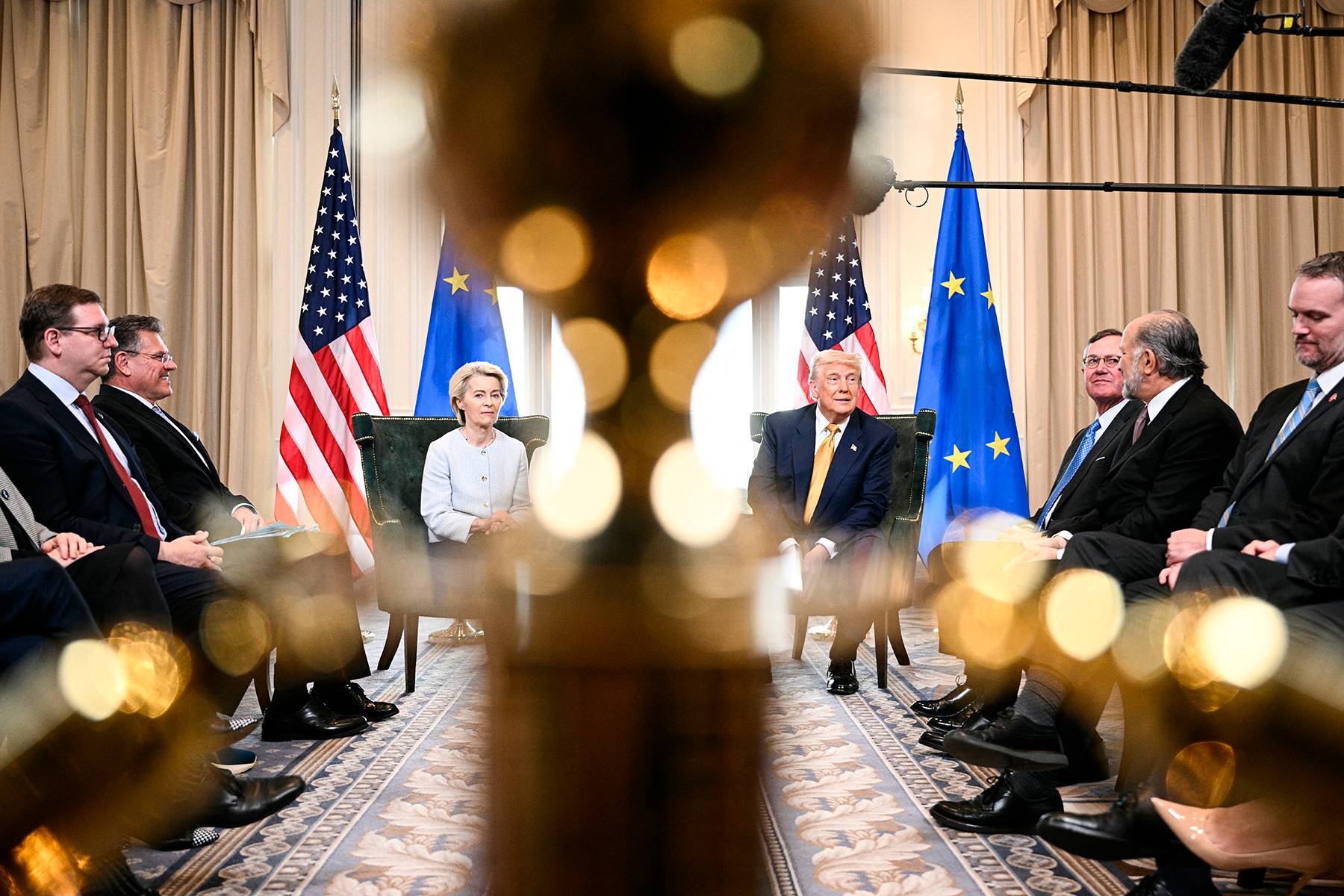
Has a Transatlantic Split Occurred?
A year ago, such a question would have rarely occurred to anyone. Brussels and Washington were closely aligned on the issue of containing Russia. There was also common ground on the issue of growing competition with China. The level of economic ties remained high. Military-political integration has been revived. NATO has welcomed two new EU members—Finland and Sweden. Surprises were expected from Donald Trump. But the experience of his first term still served as an indicator of their predictability. Moreover, the European allies themselves had been moving toward Trump's demands during his previous term—increased defence spending,energy purchases from the US, a rejection of Russian raw materials and so on. However, the US president has exceeded expectations, disconcerting the EU on several fronts. These include a special position on Ukraine, territorial ambitions for Greenland (formally part of Denmark, a member of the EU and NATO), a trade war affecting EU countries, criticism of the Old World in doctrinal documents and speeches by senior officials, as well as an overt policy of force. A close ally and key guarantor of security has, in a matter of months, transformed into a cold, calculating, and unpredictable player.
The EU's actions regarding the American issue have so far revealed a wait-and-see tactic. In the medium term, the plan is to "outlast" Trump. His term will expire in three years. With that, a shift in foreign policy can be expected from the new administration. That is, if the Democrats come to power. In the short term, the plan is to avoid angering the American leader, to play on his personality traits (praising his achievements, avoiding criticism), to concede on certain issues, or to present as concessions what is inevitable. These include arms and energy purchases from the US and a trade balance adjustment in Washington's favour.
The Greenland issue could be resolved using the same logic. The US military has de facto controlled the island for decades. Moreover, the United States formally remains an ally of Denmark and other EU countries. Why not concede? Especially if the procedure is carried out democratically.
Of course, the Danish king or prime minister is unlikely to be kidnapped by American special forces, and they are unlikely to face charges in a US federal court. But Denmark risks being outvoted in the democratic process.
The EU's perception of Donald Trump could be compared to the perception of the Russian Emperor Paul I among the Russian aristocracy and nobility. Paul was renowned for his eccentricity and was extremely unpopular. He fell victim to an inevitable conspiracy by his inner circle. But the expectation that problems with the United States will be resolved after a change of leadership, similar to the case in Russian history, rests on a fragile foundation. Unlike the Russian emperor, who became a lone figure on the throne, the American president is backed by a vibrant and young team, widespread support, and a consistent ideology. Donald Trump's departure is unlikely to resolve the EU's American problem. Moreover, his young successors could cling to their ally with an even tighter grip.
What to do with Russia?
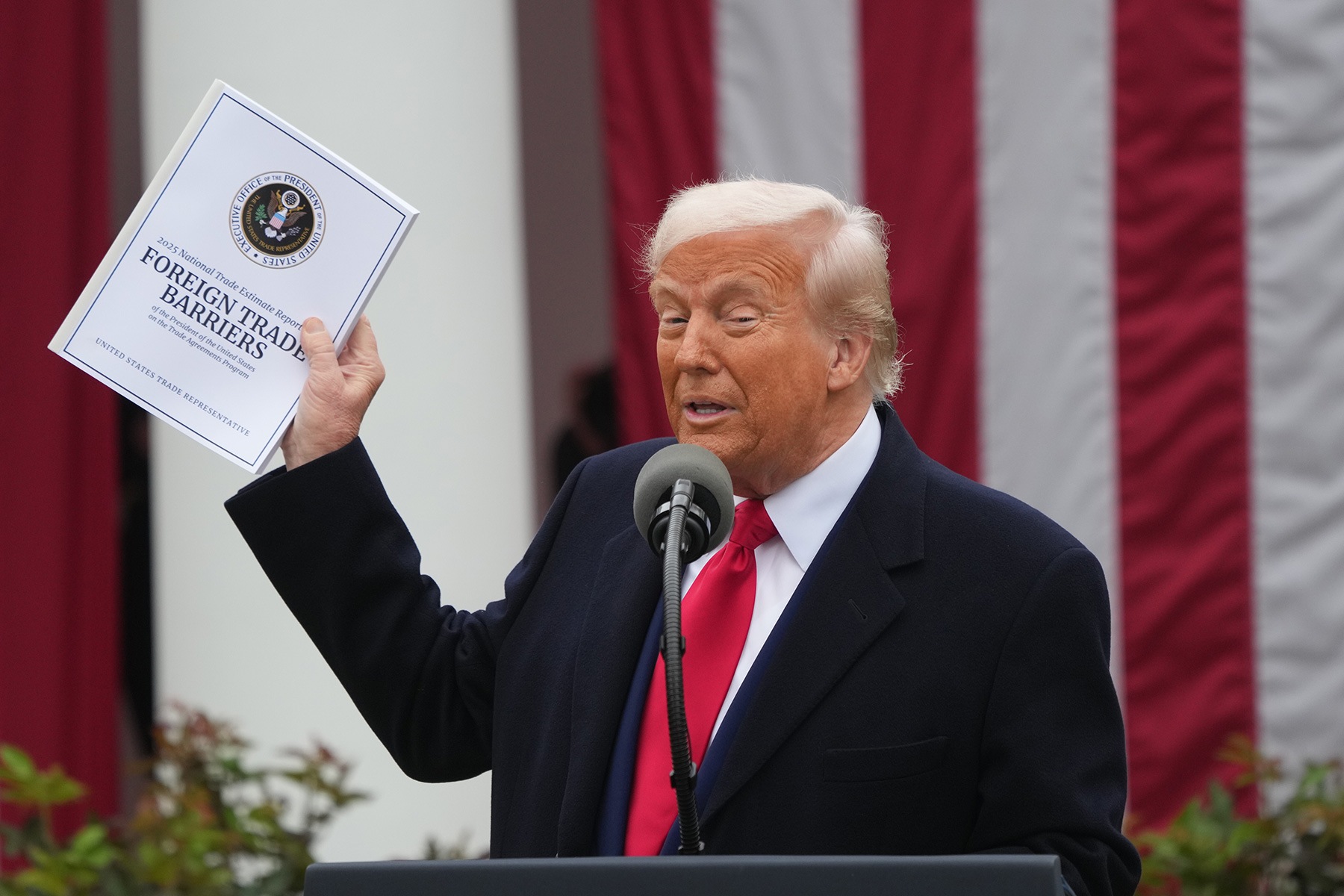
Can U.S. New Tariffs Trigger Structural Changes in Global Economy?
In EU political rhetoric, Russia occupies the position of its most important and dangerous adversary. This approach took hold after February 2022, but had been brewing since the events in Crimea in 2014. Compared to the United States, maintaining a confrontational approach to Russia in a semantic sense is easier, as the identity structures of both sides already contain established, centuries-old patterns of mutual perception as a "significant other." (Neumann, I. (1999) Uses of the Other: "The East" in European Identity Formation. University of Minnesota Press.) With regard to the United States, such patterns have either not yet been developed or have been lost.
The EU's approach to Russia over the past four years has been characterised by a fairly active policy of containment. This includes the consistent severing of trade and economic ties, even at the cost of economic damage to itself; large-scale military and political support for Ukraine; remilitarisation and the restoration of the military-industrial complex; and attempts to influence third countries in their trade with Russia, not to mention information and ideological warfare. The problem for the EU is that the results have largely been negative. Yes, Brussels is doing its part to keep Ukraine afloat. Yes, Russia has suffered economic damage. Yes, defence spending is rising and the military-industrial complex is slowly recovering. Yes, third countries are wary of secondary sanctions. Yes, the information machine is working.
But Russia hasn't gone anywhere. Its economy has been reoriented toward other areas, and its market for EU companies has been lost. Hostilities with Ukraine continue. Russia's military-industrial complex has been deployed, and its nuclear potential makes any Yugoslavia- or Libya-style solutions futile. Russia has its own financial and informational network, which has become more difficult, or significantly more difficult to influence.
The good news for the European Union is that Moscow is unlikely to be planning military expansion against the EU countries themselves. War with them makes neither political nor practical sense for Russia, although the issue of responding to hypothetical military aggression by NATO or individual member states against Russia is likely to be addressed. Moscow cannot harm the Union with trade wars, and it simply lacks the desire to seriously fight for public opinion support. Ultra-conservative forces may at first glance seem convenient for Russia. But experience shows that conservatives and populists in power are hardly helpful in close foreign policy circles. Poland is a paragon of traditional values, but it is at the forefront of Russia's adversaries.
In other words, Russia is a convenient foe. It can be fought through Ukraine and pinned on it the answer to the question of "who is to blame?" But at the same time, doing all this is relatively safe for the Europeans. The tactic toward Russia is loud and wait-and-see. Loud in terms of rhetoric. Wait-and-see in the hope that the Russian side will not withstand and collapse. Fortunately, there are many who support the theory of Russia's imminent decline. The problem for the EU is that not only Donald Trump, but also Vladimir Putin differs from the aforementioned Emperor Paul I. While Brussels hopes for the fatal blow with the snuffbox, Russia lives its own life. Apparently, Washington was the first to realise this.
What shall be done with Ukraine?
US-EU Economic and Political Conflict in the Second Trump Era
The answer to the Ukraine question is also seemingly simple: support Kiev by all means possible. In the short term, the practical policy here is more or less clear: continue financial and military support for Ukraine in order to restore it and prevent military defeat. In the medium term, there is greater uncertainty. The key issue is resources. The confiscation of Russian sovereign assets is still theoretically possible. But even if Brussels bears the full costs of such confiscation, it will not fundamentally solve the problem. The EU faces the prospect of becoming the main donor to a large and warring state with a very specific political system. The benefits of its integration into the EU are ambiguous. Furthermore, the problem of security guarantees and the material backing of such guarantees remains. Unlike the US, the EU is unlikely to be able to demand that Kiev repay its debts through enslaving agreements and then quickly distance itself from the problem.
Regarding the Ukrainian issue, the EU may try to leave things as they are, while simultaneously awaiting a change of power in the US and potential problems in Russia. Brussels apparently has sufficient resources to keep Kiev afloat for a couple of years. The EU is likely prepared to accept further material losses for the sake of political principles, just as it did when it severed economic ties with Russia.
At the same time, an agreement on Ukraine would also be in the EU's interests. Yes, Kiev is losing territory, but Ukraine remains a fairly large state. It will inevitably remain within the EU's political and economic orbit. An end to hostilities with a ceasefire along the line of contact would likely be more acceptable to the EU than the large-scale, legally binding agreement Moscow is insisting on. If US policy changes and problems escalate in Russia, a ceasefire would be more convenient for a new round of the Ukraine conflict. However, experience shows that even such agreements can be violated, so a binding agreement in itself is not a major problem for Brussels. It is important for the EU that Ukrainian losses in the negotiations are minimised, and that security guarantees do not expose the EU to the threat of military escalation directly with Russia.
In answering the question of what to do with Ukraine, the EU will likely have to acknowledge the "realities on the ground."
If the US continues to distance itself from the Ukraine issue, and the Russian army continues to advance, delaying such recognition will increasingly devalue Brussels's course. However, a willingness to adhere to this course at any cost cannot be ruled out.
What to do with China?
Compared to the United States, Russia, and Ukraine, China hardly poses a pressing problem for the EU. China remains a major trading partner and market. Secondary sanctions against Chinese companies for their cooperation with Russia have not yet led to complications. On the Taiwan issue, the EU has avoided taking a leading role in anti-China mobilisation. Attempts by individual member states (such as Lithuania) to assert themselves on the Taiwan issue have not found much support in Brussels, and Chinese sanctions have further dampened their efforts. The EU has generally supported the long-standing US policy of curbing China's global economic projects and Beijing's high-tech capabilities. But in reality, there is no rush to undermine the foundation of economic cooperation with China in the western part of Eurasia. Within China itself, there is a countermovement. They don't generalise the US and EU into a single West and, apparently, proceed from the idea that the interests of Washington and Brussels differ. This means that relations with the EU are not identical to relations with the US. The complexities of transatlantic relations are likely to contribute to a situational rapprochement between the EU and China. In the political sphere, this is unlikely to be excessive, but rivalry is still a long way off. Anti-Chinese voices in the EU are likely to become quieter in the near future, despite Beijing's active cooperation with Moscow.
China, with its predictable political course in the current turbulent conditions, is becoming an attractive partner for the EU. There are no immediate threats from it, but the benefits are more than sufficient. It's possible that Donald Trump will pressure the EU to adopt a more coordinated course toward China. Brussels could use such demands as a trump card. However, EU diplomacy will be unable to influence Russian-Chinese relations, and the conflict with Russia will be secondary in answering the question "what to do with China."
What to do with the EU?

It appears that the issue of internal transformation, taking into account external challenges, remains paramount for the EU. The logic of relations with China allows for no changes for now. However, here too, the prospect of intense competition over technological security remains under the rug. This will likely require more stringent regulatory measures. Political consolidation was required in relations with Ukraine, and it has the potential to gain more ground if necessary, seeking additional reserves. In relations with Russia, even clearer demands for increased levels of control have come to the fore. The change in the procedure for applying sanctions against Russia's sovereign assets is symptomatic. Now, it will be more difficult for individual countries, such as Hungary or Slovakia, to use their veto power in EU Council votes with regards to this issue. Finally, the US manoeuvres raise a fundamental question: how do Europeans ensure their own security? For now, NATO remains an ironclad structure. But NATO's mere existence is unlikely to block deeper defence cooperation within the EU. Brussels has incentives to play a more significant role in NATO, and in the long run, the alliance itself could become a US-EU pair, rather than a conglomerate of European allies centred on the US.
Resolving security issues will inevitably require the EU to become increasingly centralised and directive in its decisions, and thus, to reduce the effective sovereignty of its member states. The big question is whether the EU itself and its member states are ready for such a scenario, especially given the disparity in their potential and capabilities. Could the Franco-German tandem, for example, serve as the framework for such centralisation? Does Brussels have the resources and legitimacy to align member states around a unified and firm political line? Is Greece, for example, ready, and what is Estonia ready for? Will it be possible to controllingly package their approaches into a single policy line where defence and specific military risks, including the risk of a clash with a nuclear power, are at stake, not just in words but in deeds? To simplify the question even further, is the European Union ready to devolve from a confederation/federation into a de facto empire? The unification of disparate states for military-political purposes will sooner or later raise the question of an imperial component, despite the seeming impossibility of such a development, if judged through the eyes of the post-Cold War era. Moreover, beyond the US, Russia, Ukraine, and China, there are other areas of common policy. Such a structural evolution could have a far greater impact on relations with other centres of power than situational issues. "What to do with the EU" could become a fundamental question for other participants in international relations.
First published in the Valdai Discussion Club.
(votes: 1, rating: 5) |
(1 vote) |
The Unbearable Weight of Euro Atlanticism
War and Peace: Where Is the World Headed?The international community cannot simply allow events to unfold according to the “law of the jungle”
Escalation of EU Energy Sanctions: The Eighteenth and Nineteenth PackagesThe economic competition between “bullets and armour” continues
Has a Transatlantic Split Occurred?It seems that European allies will be hoping for a change of US administration in the near future


