
Russia and India: Relying on Themselves and Each Other
In
Login if you are already registered
(votes: 1, rating: 5) |
(1 vote) |

Ph.D. in Political Science, Director General of the Russian International Affairs Council, RIAC member

Chairman of the Board of the Foundation for Development and Support of the Valdai Discussion Club
Self-sufficiency in Russian-Indian relations has become commonplace over the nearly eighty years of their history. Both countries are major players in global politics. It is difficult for outside players to influence their political trajectory. This was the case during the Cold War, when the USSR contributed to the strengthening of the Indian state. It was the same after the Cold War, during Russia’s most difficult years, when cooperation with India helped overcome a protracted economic crisis. The next stress test began in 2022, amid a severe setback in relations between Russia and the “collective West”. Contrary to expectations of a collapse in Russian-Indian trade due to the risk of secondary sanctions, India’s role in Russian foreign economic relations has increased manifold. It is noteworthy that the declarations of the summits of the two countries’ leaders have focused on specific economic objectives and hardly touched on political abstractions.
Russia and India, however, are unlikely to remain immune to major shifts in global politics. These shifts are currently emanating from the North American continent. US foreign policy no longer generates risks so much as uncertainty. With risks, at least the possible options are clear. But uncertainty obscures even these.
Despite this uncertainty, Russia and India are doing well. In an increasingly chaotic world, both countries appear as independent, capable, and responsible players.
Russia and India will have to rely on themselves and their time-tested bilateral relations, as well as on the continued development of associations such as BRICS and the SCO. Both countries can do much together to address security challenges in Eurasia and beyond. They will likely have to exercise strategic patience again—a quality they both possess in abundance.
Self-sufficiency in Russian-Indian relations has become commonplace over the nearly eighty years of their history. Both countries are major players in global politics. It is difficult for outside players to influence their political trajectory. This was the case during the Cold War, when the USSR contributed to the strengthening of the Indian state. It was the same after the Cold War, during Russia’s most difficult years, when cooperation with India helped overcome a protracted economic crisis. The next stress test began in 2022, amid a severe setback in relations between Russia and the “collective West”. Contrary to expectations of a collapse in Russian-Indian trade due to the risk of secondary sanctions, India’s role in Russian foreign economic relations has increased manifold. It is noteworthy that the declarations of the summits of the two countries’ leaders have focused on specific economic objectives and hardly touched on political abstractions.
Russia and India, however, are unlikely to remain immune to major shifts in global politics. These shifts are currently emanating from the North American continent. The traditional image of the United States as the most conservative player in international relations, interested in preserving a “rules-based world”, is rapidly being eroded by the United States itself. Just yesterday, Washington consistently promoted free trade; today, it is waging a trade war with dozens of countries—allies and adversaries alike. Yesterday, the United States championed the coalition game, carefully orchestrating alliances around its foreign policy initiatives. Today, it acts harshly even toward its closest NATO partners. Yesterday, the United States spearheaded globalisation; today, it acknowledges its retreat. Yesterday, America was the leader of the democratic world against autocracies. Today, power and profit, not values, are paramount. US foreign policy no longer generates risks so much as uncertainty. With risks, at least the possible options are clear. But uncertainty obscures even these.
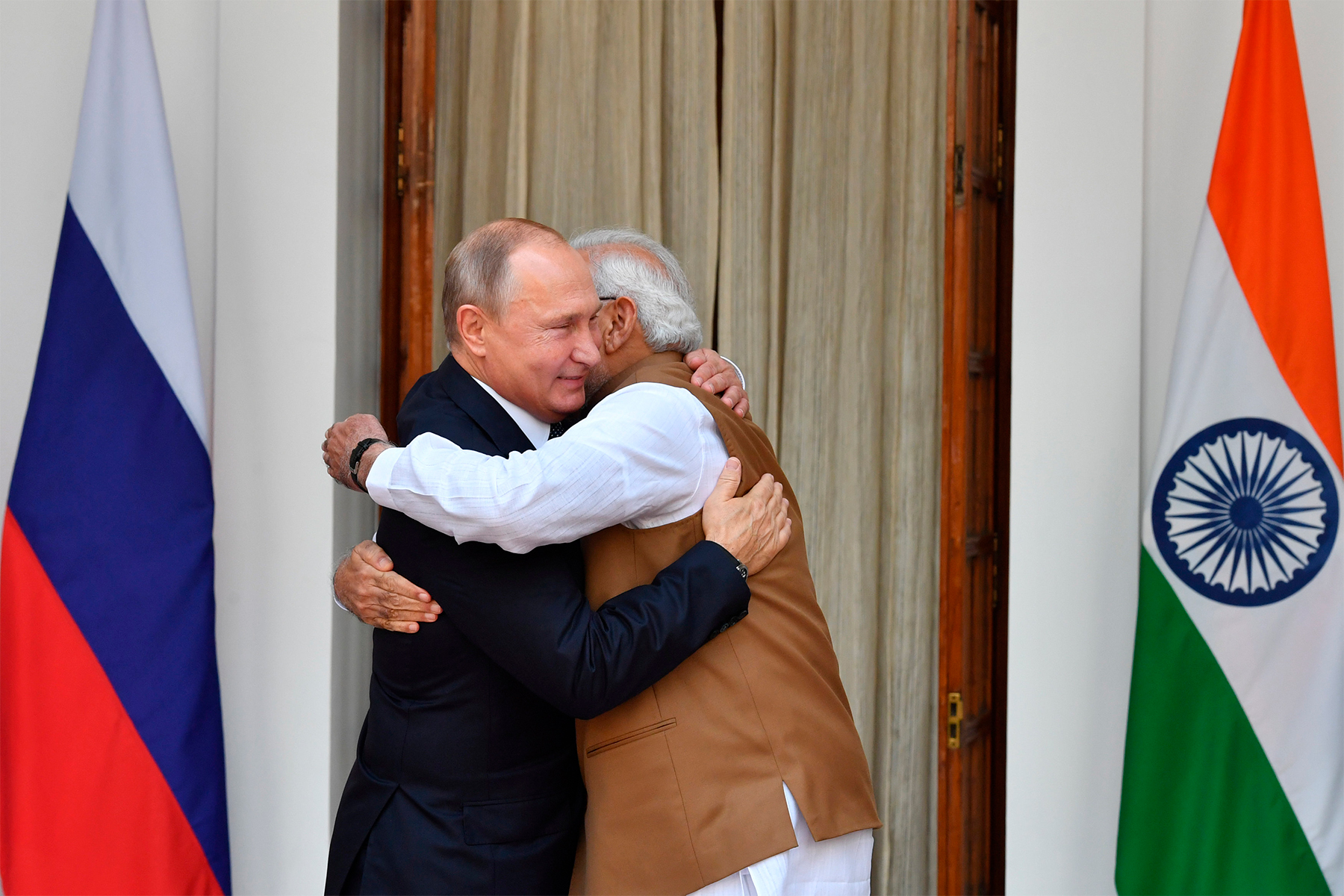
Russia and India: Key Areas of Cooperation
Despite this uncertainty, Russia and India are doing well. The long and painstaking work invested by both countries over the years in consistently strengthening their sovereignty is paying off. Both states have built independent financial systems. The digitalisation of all spheres of life is actively underway, based on their own software and platforms. Their armed forces have been modernised. In areas where self-reliance is impossible or impractical, they have achieved a profound diversification of suppliers and partners. Russia and India have accomplished this without collusion or opposition to anyone. They were and remain very different in their social structures and economic makeup. However, the result is similar. In an increasingly chaotic world, both countries appear as independent, capable, and responsible players.
An important consequence of the changes in American policy is the looming prospect of a resolution to the Ukraine crisis. The Trump administration assumes that Russia is unlikely to back down from its fundamental interests. Therefore, negotiations and compromise are the only alternative. Thirty years ago, India demonstrated similar tenacity in pursuing its nuclear programme. It had to be accepted as a fait accompli, despite US sanctions. If the Ukraine negotiations lead to peace, Russian-Indian relations will enjoy a more favourable external environment. However, the conditions that have developed since 2022, which have spurred trade between India and Russia, are unlikely to disappear overnight. The rivalry between Russia and the West will persist, and with it, various economic sanctions will remain a long-term factor. Their scope is so vast that exhausting them quickly is simply impossible. Moreover, the sustainability of any agreements raises significant questions. For example, it is unclear how US policy will change in the event of a new administration.
Ultimately, Russia and India will have to rely on themselves and their time-tested bilateral relations, as well as on the continued development of associations such as BRICS and the SCO. Both countries can do much together to address security challenges in Eurasia and beyond. They will likely have to exercise strategic patience again—a quality they both possess in abundance.
First published in the Valdai Discussion Club.
(votes: 1, rating: 5) |
(1 vote) |
No matter how turbulent global politics becomes in the coming decades, New Delhi is convinced that Moscow will remain a reliable and valuable partner
Putin’s Visit to New Delhi Signals a Sustained Partnership in EurasiaCentral Asia presents a key opportunity for India and Russia to deepen their collaboration, particularly in energy, security, and transportation, with the region serving as a critical nexus for expanding regional connectivity and enhancing economic and logistical ties between the two countries
President Putin’s India Visit: 25 Years of India-Russia Strategic PartnershipNo clear-cut global order is in sight in the near term, but India-Russia ties are suited for any kind of world order that eventually develops


