
Debates on Dynamite
In
Login if you are already registered
(votes: 3, rating: 4.67) |
(3 votes) |

Junior Research Fellow at the Center for International Security, Primakov National Research Institute of World Economy and International Relations
Autumn is usually a busy season in the nuclear sphere, and 2025 was no exception. In October, NATO held its Steadfast Noon nuclear exercises, followed by the U.S. Global Thunder drills and Russia’s strategic nuclear forces exercises. Developments did not end there: against the backdrop of these exercises, Russia announced tests of the Burevestnik nuclear-powered cruise missile and the Poseidon nuclear-powered torpedo, as well as the planned deployment of the new Sarmat ICBM. Meanwhile, the U.S. was given an ambiguous directive from Donald Trump on October 30 “to start testing our Nuclear Weapons on an equal basis.” Yet despite the scale of both the exercises and the announcements, these developments amount to little more than routine measures aimed at maintaining nuclear deterrence.
Since Ukraine launched its first major counteroffensives in the autumn of 2022, Russia has seen lively debates over the nature and logic of deterrence. These discussions have produced a wide range of expert opinions—both on the very concept of deterrence and on the ways in which Russia’s strategic arsenal might be employed to “intimidate” Moscow’s adversaries among the so-called “global minority” states.
The most justified use of nuclear weapons can only be in the case of retaliation. However, this very formulation may weaken nuclear deterrence, as it effectively “unties the hands” of the adversary, allowing it to pursue any course of action at the “sub-threshold” level, including the use of the most severe conventional methods of warfare. To avoid such an implication, it is worth defining a threshold beyond which the use of nuclear weapons—although still not the “most justified” option—would nevertheless become necessary.
Assuming that this threshold is the direct onset of hostilities between nuclear-armed states, it is important to note—given the number of historical precedents—that such hostilities must constitute more than brief flare-ups of a smoldering conflict, sporadic border clashes, or isolated incidents. Under conditions of active hostilities, restoring deterrence through the use of nuclear weapons would likely become justified if the adversary sought to achieve operational-level superiority or higher. Together, these factors may reasonably be viewed as grounds for “pushing the button,” though at initially not through a first strike meant to inflict maximum damage, but rather by signaling.
Such reasoning is largely valid when viewed through the lens of the primary achievement of nuclear deterrence throughout the entire nuclear era—the absence of armed conflict between major rivals in the international system. Consequently, if such a war were to break out, avoiding the use of nuclear weapons would be difficult not only due to the inherent risk of uncontrolled escalation, but also because nuclear capabilities would be regarded as the final instrument for preventing a global war if clear conditions emerged indicating its impending inevitability.
In the fall of 2025, alongside the nuclear-deterrence developments mentioned at the outset, a certain public stir was caused by Kathryn Bigelow’s film House of Dynamite. The film depicts a scenario involving a nuclear attack on the United States and the procedures followed by the relevant agencies in responding to it. Although the narrative contains a number of significant inaccuracies that render the plot detached from real-world practice, the film’s central message, articulated in the opening credits, is not without merit: “At the end of the Cold War, nuclear powers agreed that the world would be better without nuclear weapons. That era has ended.”
The nuclear factor has once again started to play a significant role in international relations. Given the circumstances under which it has been reactivated, one may note that the world today, to some extent, is reliving the anxieties of the 1950s and 1960s, when the arms control system was only beginning to take shape and the political elites of nuclear-armed states were still internalizing the logic of deterrence while balancing on the brink of war. In this context, the current debates within the Russian strategic community are extremely important, because by formulating new arguments in favor of improving nuclear deterrence, scholars can contribute not only to theoretical development but also to the maintenance of international peace.
Autumn is usually a busy season in the nuclear sphere, and 2025 was no exception. In October, NATO held its Steadfast Noon nuclear exercises, followed by the U.S. Global Thunder drills and Russia’s strategic nuclear forces exercises. Developments did not end there: against the backdrop of these exercises, Russia announced tests of the Burevestnik nuclear-powered cruise missile and the Poseidon nuclear-powered torpedo, as well as the planned deployment of the new Sarmat ICBM. Meanwhile, the U.S. was given an ambiguous directive from Donald Trump on October 30 “to start testing our Nuclear Weapons on an equal basis.” Yet despite the scale of both the exercises and the announcements, these developments amount to little more than routine measures aimed at maintaining nuclear deterrence.
Since Ukraine launched its first major counteroffensives in the autumn of 2022, Russia has seen lively debates over the nature and logic of deterrence. These discussions have produced a wide range of expert opinions—both on the very concept of deterrence and on the ways in which Russia’s strategic arsenal might be employed to “intimidate” Moscow’s adversaries among the so-called “global minority” states.

Nuclear Disarmament. The End of History?
Does Nuclear Deterrence Work?
By raising this question, Russian defense thinkers effectively began shaping the modern contours of the discourse surrounding it. The search for a definitive answer continues. This is hardly surprising, given the recent Tomahawk “saber-rattling” across the ocean, which echoes earlier cycles of Western-driven escalation—the delivery of tanks to Ukraine, ATACMS and Storm Shadow/SCALP-EG missiles, F-16 fighter jets, and so on.
It is likely that, in order to prevent Moscow from viewing these steps as a direct provocation and from moving beyond “sub-threshold” behavior, the transfer of weapons was often arranged through a gradual widening of the “Overton window.” The possibility of deliveries was first floated in the public information space, then subjected to multi-stage consultations among allies within the Western bloc, and only after that carried out in practice. In the end, however, the weapons reached Kyiv and were used on the battlefield regardless, increasing the extent of NATO’s involvement in the conflict and reinforcing arguments within the Russian expert community for shifting from a strategy of nuclear deterrence to a policy of nuclear “intimidation.”
This kind of dynamic would seem to call into question the very effectiveness of deterrence. However, before drawing any definitive conclusions, it is necessary to turn to the nature of this phenomenon. As Robert Jervis noted, “nuclear weapons have only two—albeit very serious—consequences. First, they make a direct attack by either side on the other extremely unlikely [referring to states possessing nuclear weapons—author’s note]; second, they guarantee unimaginable destruction in the event such an attack occurs.[1] This formulation captures the essence of nuclear deterrence and helps clarify the circumstances in which it is appropriate to raise the question of its effectiveness.
The essential point of the “consequences” of nuclear weapons is that deterrence is relevant primarily to the higher rungs of the escalation ladder and is largely inapplicable at lower levels, where escalation toward a nuclear confrontation lacks any strategic logic. Glenn Snyder once described this as the “stability–instability paradox.” Consequently, in today’s context, the proxy war waged by the United States and its allies against Russia is not a “bug” but a “feature” of nuclear deterrence.
This paradox is confirmed not only in theory but also in historical practice. At a minimum, the Vietnam and Afghan conflicts of the bipolar era constituted proxy wars in which one nuclear superpower confronted the other indirectly; yet they were never interpreted as a failure of nuclear deterrence.
Consequently, nuclear weapons cannot be used to eliminate instability at lower levels of escalation, because such instability is inherent to nuclear deterrence itself. It is impossible to compel Washington, London, Brussels, or other unfriendly actors to abandon their support for Kyiv—whether through arms deliveries, operational coordination on the battlefield, or other forms of assistance—because the threat of a nuclear strike would not be credible, given the absence of any rational justification for initiating a nuclear war.
However, does this mean that any use of nuclear weapons would inevitably lead to nuclear war? According to K. Bogdanov, a demonstrative, or “signaling,” use of nuclear weapons constitutes a limited form of combat employment intended to convey resolve to end conflict on terms favorable to oneself. In other words, it is “a practical attempt to reestablish nuclear deterrence at a new level after deterrence has failed, when other means have been subjectively exhausted and when escalating to inflicting unacceptable damage on the adversary is not justified by the logic or scale of the conflict.”[2] Bogdanov concludes that such signaling use may take the form of single nuclear strikes against uninhabited areas on land or at sea, as well as against secondary military facilities located outside densely populated areas and hosting small garrisons or none at all.[3]
Applying the scenario of signaling to the Russia–NATO confrontation in the context of the special military operation produces ambiguous conclusions. On the one hand, detonating nuclear warheads in neutral waters near the borders of the United States and/or EU member states would send a clear signal to NATO that the stakes in the Ukrainian conflict had risen dramatically. Given the sharp divergence in how Kyiv is perceived—by the Russian leadership, which treats developments there as an existential security issue (and is therefore willing to conduct direct military operations on its territory), and by Western states, for whom Ukraine is largely a tool for constraining Moscow (and thus a matter for indirect involvement)—the West might indeed choose to step back. Under such a scenario, however, it is more than likely that the West would respond with its own signaling use of nuclear weapons to show that it is not intimidated and that “two can play this game.” However, the resulting international tension would be so acute that Western elites might conclude that the subsequent risks are unjustifiable—risks that, given the noted divergence in perceptions, the Kremlin would be more willing to accept.
On the other hand, this line of reasoning reflects a rational-actor model in which one’s own worldview is projected onto the opponent. Its main flaw is that the adversary may be guided by something entirely unpredictable. In such a case, controlled escalation—which, according to some calculations, is supposed to bring the conflict to an end on conditions favorable to it—becomes highly unlikely.
Further support for this argument comes from the results of Thomas Schelling’s 1983 command-and-staff exercise Proud Prophet, which explored the concept of “escalation for de-escalation” through the signaling use of nuclear weapons: “In the exercise, the Soviet team interpreted the U.S. ‘de-escalatory’ strike as the opening move of a large-scale attack and responded with a massive launch-on-warning strike, to which the U.S. team answered with a retaliatory strike. The outcome was total catastrophe: according to facilitator estimates, roughly 500 million people across the Northern Hemisphere were killed within the first 24 hours.”[4]
The most justified use of nuclear weapons can only be in the case of retaliation. However, this very formulation may weaken nuclear deterrence, as it effectively “unties the hands” of the adversary, allowing it to pursue any course of action at the “sub-threshold” level, including the use of the most severe conventional methods of warfare. To avoid such an implication, it is worth defining a threshold beyond which the use of nuclear weapons—although still not the “most justified” option—would nevertheless become necessary. It is important not merely to refer to the relevant strategic documents of various states, that would amount to a formality, as even detailed documents cannot account for every possible circumstance. Any conclusion must rest on the internal logic of nuclear deterrence itself.
Assuming that this threshold is the direct onset of hostilities between nuclear-armed states, it is important to note, given the number of historical precedents—the Indo-Pakistani conflicts, the Soviet–Chinese clashes of the late 1960s, or even the downing of a U.S. U-2 reconnaissance aircraft by a Soviet air-defense system at the height of the Cuban Missile Crisis)—that such hostilities must constitute more than brief flare-ups of a smoldering conflict, sporadic border clashes, or isolated incidents. Under conditions of active hostilities, restoring deterrence through the use of nuclear weapons would likely become justified if the adversary sought to achieve operational-level superiority or higher—that is, if, in the midst of an ongoing war, it undertook actions even loosely analogous to the U.S. Operation El Dorado Canyon in 1986 or the U.S.–British Operation Desert Fox in 1998, in which key infrastructure targets in Libya and Iraq, respectively, were destroyed, or if it attempted to impose a no-fly zone. Together, these factors may reasonably be viewed as grounds for “pushing the button,” though at initially not through a first strike meant to inflict maximum damage, but rather by signaling.
Such reasoning is largely valid when viewed in terms of the main achievement of deterrence throughout the nuclear era: the absence of war between major rivals in the international arena. Therefore, if such a war were to break out, it would be difficult to avoid the use of nuclear weapons not only because escalation would be impossible to control, but also because nuclear weapons would be relied upon as the final means of preventing a global war, should conditions emerge that point to its imminent outbreak.
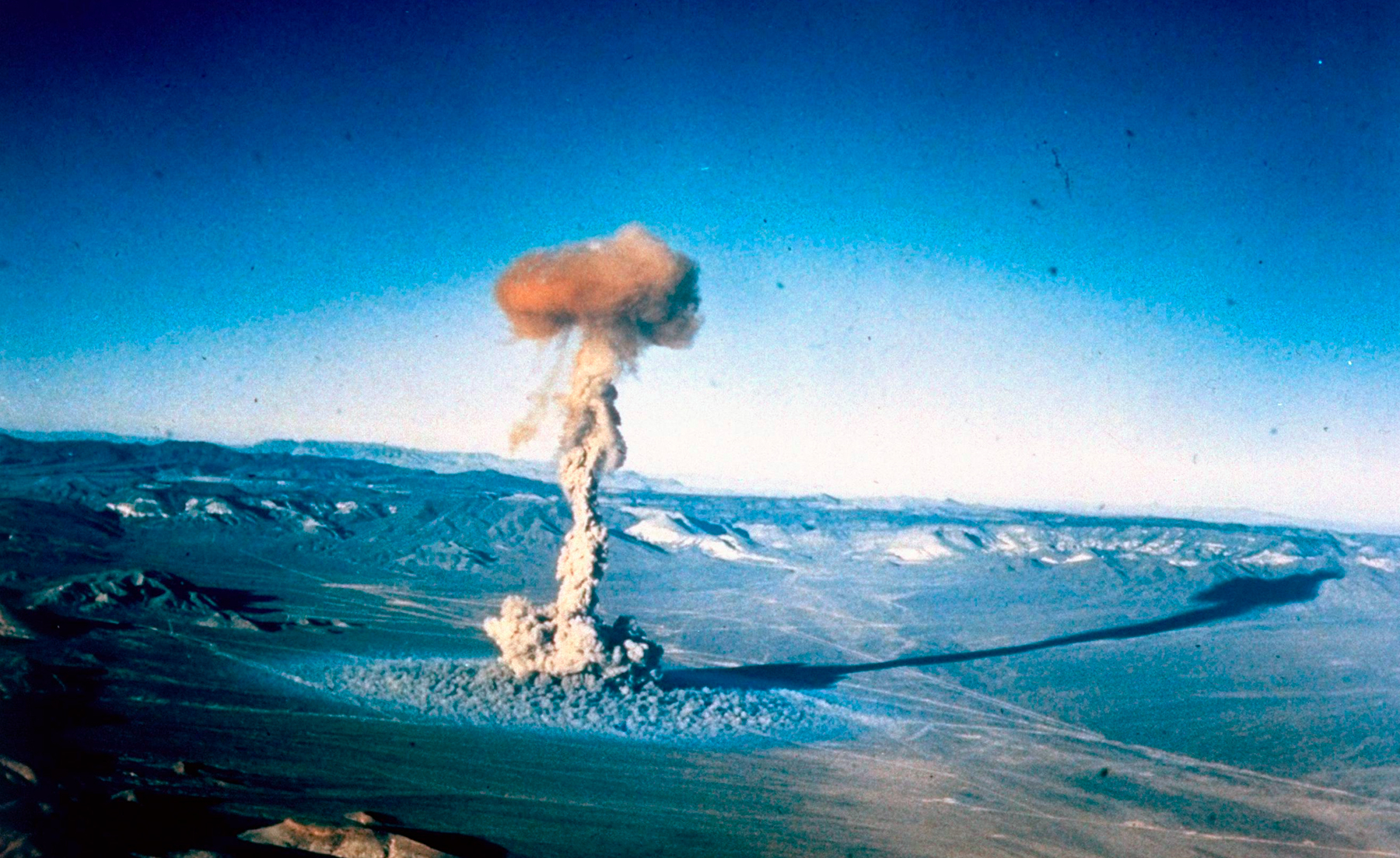
Nuclear Boomerang
Limited Tactical Success
Continuing the analysis in the context of the special military operation, public discourse contains not only arguments concerning the strategic logic of employing nuclear weapons, but also those related to operational and military considerations. When ground forces encounter a positional deadlock along the front line, can tactical nuclear weapons (TNW) become a means of overcoming it?
After the liberation of Pokrovsk, the Russian Armed Forces will, sooner or later, face the task of overcoming the most fortified positions of the Ukrainian Armed Forces in Donbas along the Sloviansk–Kramatorsk defensive line (SKOL). This is “a defensive line with a large number of strongpoints and long-term firing positions,” whose key element is a “kill zone” in which any movement is neutralized by swarms of UAVs.
At the current rate of the Russian advance, wearing down the SKOL will constitute an exceptionally complex operational challenge. To avoid spending substantial time on minimal territorial gains and to reduce casualties, it might seem logical to suppress the enemy’s heavily fortified defensive positions by conducting several low-yield nuclear strikes against them. In fact, accomplishing this would likely require far smaller yields than the U.S. bombs on Hiroshima (“Little Boy,” roughly 15 kilotons) and Nagasaki (“Fat Man,” roughly 20 kilotons), since the targets are smaller and there is no need to achieve the kind of political effect sought at the end of World War II. Warheads with yields of only a few kilotons—or even less than one kiloton—would suffice, allowing the radiological consequences to be kept to a minimum. This is crucial both for anyone in the target area, and for the Russian soldiers who would later be deployed there, to secure control of the territory.
Incidentally, it is worth recalling that during the Cold War, ground forces in both the USSR and the United States took part in exercises that exposed troops to the conditions of a nuclear blast. For example, at the Totsk test range in 1954, soldiers were ordered to move directly through the epicenter of a detonation with a yield of roughly 40 kilotons.
Returning to situation in Ukraine, it can be concluded that, under the outlined scenario, the use of tactical nuclear weapons would almost certainly bring about the near-instant collapse of Ukrainian defensive positions in Donbas and deprive Ukrainian forces of much of their capacity for further resistance. However, an even more consequential outcome would be falling into the “Clausewitzian trap” of letting war dictate policy. In this context, the costs of employing tactical nuclear weapons would, to a significant extent, “wipe out” the political gains achieved by the special military operation.
This argument—intuitively understood by all due to the nuclear taboo—means that any state that employs even non-strategic nuclear weapons will face extraordinary foreign-policy consequences. The nonproliferation regime would suffer severe damage; the state in question would incur major diplomatic losses as it confronted international condemnation and forfeited the goodwill of many governments. This, in turn, would generate numerous obstacles during the phase of consolidating military gains at the end of the campaign. The list of negative consequences could be extended further, but the conclusion is already evident: when deciding on the use of nuclear weapons, including tactical ones, military-operational logic alone is insufficient. Otherwise, there is a substantial risk that battlefield gains will be lost at the very moment they are poised to yield political outcomes.
It is important to note that Russia’s top military-political leadership took this into account at the very start of the special military operation and had no intention of falling into the “Clausewitz trap.” This is evident, for example, in the exchange between President Vladimir Putin and Sergei Karaganov—the international relations scholar who initiated the debate on nuclear deterrence—at the St. Petersburg International Economic Forum in June 2024. At that time, the Russian leader remarked: “When we see what the Russian character is—what the character of a Russian citizen truly is—when we understand it and rely on it, then we do not need any nuclear weapons to achieve a final victory.” It is therefore logical that neither the use of tactical nuclear weapons nor a shift toward nuclear “intimidation” has been under consideration, even as the present campaign has taken on a protracted nature.
However, none of this diminishes the importance of the present discussion. First, everything can change in an instant, given the instability inherent in contemporary international relations. The arguments outlined here may therefore still be needed by policymakers should they one day face the dilemma of whether to “push the button” or refrain. Second—and somewhat paradoxically—these debates concern far more than nuclear deterrence alone.
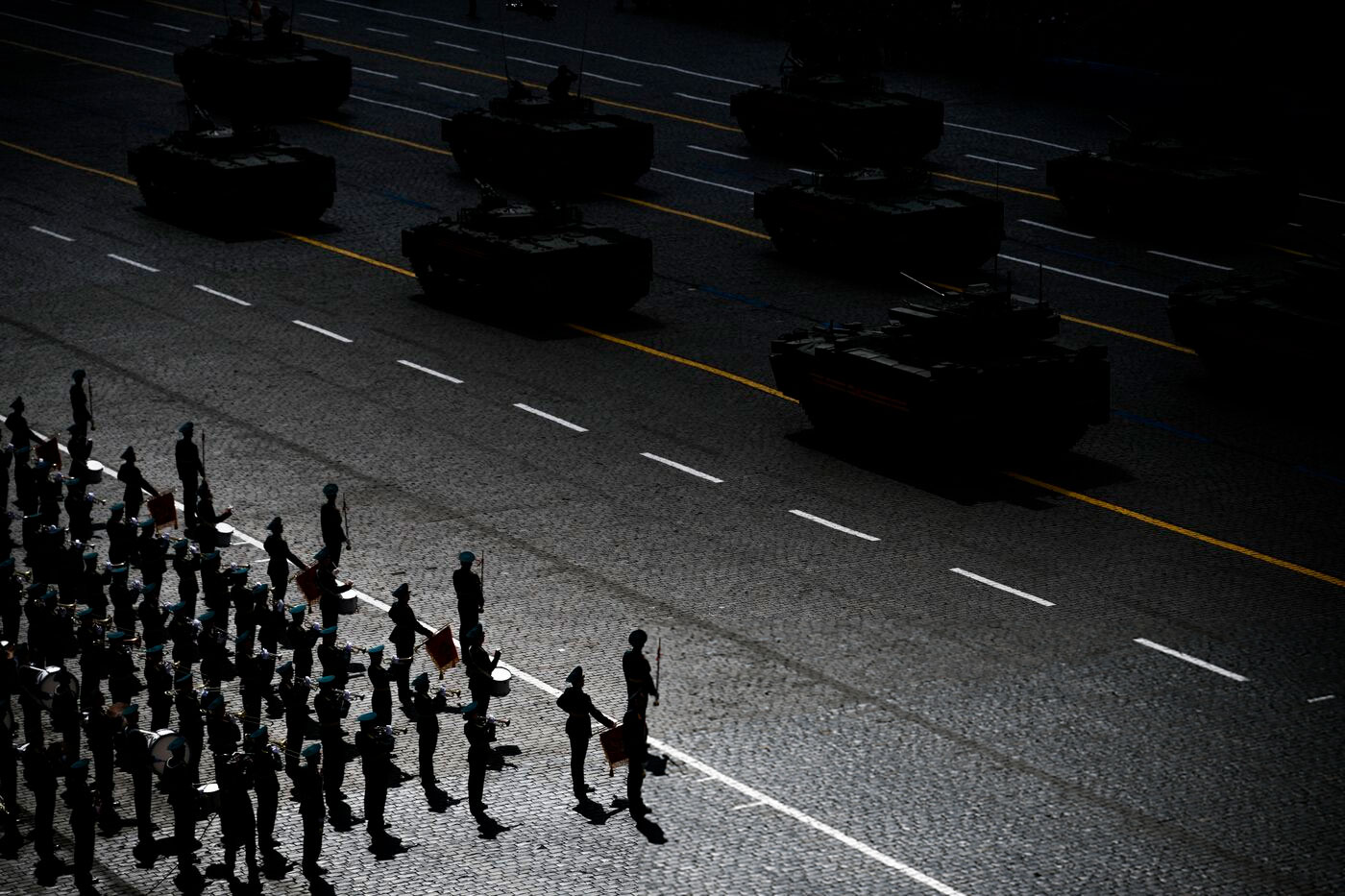
Can Nuclear Weapons Help Avert a Russia-NATO War?
Should We Take Our Own Cities Hostage?
Forty years ago, it was possible to assert with confidence that the world still operated under a stable Yalta–Potsdam order. Over the past three decades, however, debates have intensified not only about the nature of the contemporary international order but even about the continued relevance of the Westphalian system. A number of scholars note that, at present, the only thing that can be stated with certainty is that a new world order is in the process of emerging.[5]
Historically, this process has manifested itself, among other ways, in the revision of the principles underlying international relations. One such principle today is the nuclear taboo. Although, like all other principles, it is to a large extent a conceptual construct, it has proven unique because—unlike most others—it rests on a specific fear shared by virtually everyone. Terms such as “missile strike,” “war,” and other military notions associated with violence have become so familiar that, unfortunately, they do not always evoke the instinctive shock one might expect from the average person. But once the attribute “nuclear” is added, the perception of these concepts takes on a far more alarming character. Consequently, the psychological factor gives the nuclear taboo a degree of resilience unmatched by other principles, suggesting that it is less susceptible to revision and thus makes the use of nuclear weapons unlikely. Yet the psychological factor is far from the only one that plays a significant role here.
Like other international principles, the nuclear taboo rests on a foundation of institutions designed to uphold it—namely, to prevent, or at the very least make exceedingly unlikely, the use of nuclear weapons. These institutions take the form of a system of international treaties governing nuclear arms control. However, as Alexei Arbatov notes, “today its three main pillars are under threat: First, the extended term of New START expires in February 2026, and negotiating a new treaty in the remaining time is virtually impossible. Second, pressure is growing within both the United States and Russia to withdraw from the Comprehensive Nuclear-Test-Ban Treaty. Third, the collapse of these two central pillars of the arms-control regime will bring down the Treaty on the Non-Proliferation of Nuclear Weapons (NPT).”[6]
Given the instability of contemporary international relations and the weakening of nuclear arms control, it is possible to conclude that the system institutionally underpinning the nuclear taboo is deteriorating. This does not mean that humanity will begin using nuclear weapons everywhere as early as tomorrow; however, the number of arguments against their use in a moment critical to a state’s survival is steadily diminishing. It is difficult to argue for restraint on the grounds of nonproliferation when two nuclear-armed states—the United States and Israel—carry out strikes against Iran, which formally declares that it has no intention of developing nuclear weapons, yet possesses the capabilities necessary to cease being a “threshold” state, especially if doing so becomes essential for the survival of the Islamic Republic. Likewise, condemnation from the international community—whose double standards have repeatedly been on display in recent years—would hardly carry moral authority. Diplomacy, although it would indeed face significant challenges in consolidating military gains after the fact, could nonetheless quite reasonably point to the reckless manner in which Western states, through their military assistance to Kyiv, have tested the limits of nuclear deterrence.
The longer these trends in the international system and arms control persist, the more compelling the logic of such arguments will become—arguments that gradually erode the boundaries of the nuclear taboo. Naturally, this dynamic concerns far more than just Russia; it is simply that, among all nuclear-armed states, Russia now finds itself involved in the most acute conflict. As a result, Russian experts are being forced to define the new contours of deterrence theory more intensively than others. However, for Moscow, only that portion of the current debate which pertains directly to Ukraine carries truly significant weight.
The special military operation has become a watershed moment not only in Russia’s foreign-policy posture but also within the country itself. Its impact on Russian civil society spans a wide spectrum. What is important to note here is the emergence of a distinct line of national thinking shaped by the question: if Russia has placed such high stakes on the Ukrainian issue, what significance does Ukraine hold for the country? A central part of the answer lies not in the military-political argument that Ukraine serves as a buffer between Russia and NATO, but rather in the fact that Russians have returned to understanding the Ukrainian question through the lens of history and their own national interests.
In other words, for many Russian citizens, the “end of history” came to a definitive close on February 24, 2022. At that moment, they again saw themselves as part of a historical process and ceased to believe in the validity of Western dogmas, asserting that international relations should be viewed exclusively through the lens of liberal theory. In the Ukrainian context, this has meant a return to viewing Ukraine as the cradle of Russian civilization. Consequently, Russia must struggle to shape Kyiv’s political trajectory so that it reflects, at a minimum, a friendly orientation toward Moscow.
It is difficult, from a historical perspective, to separate Russia and Ukraine into two clearly distinct state entities, given the depth of their political, economic, cultural, religious, and ethnic interconnectedness—not to mention the fact that Russian statehood originated in Kyiv, and that for most of its history this city was part of historical Russia. Here is where the key conclusion relevant to this debate emerges.
Russia’s understanding of Ukraine must, by definition, impose certain constraints on the approaches it adopts toward this country. This does not, incidentally, exclude the use of military methods in general, since it is widely accepted that even within their own states, governments may employ force to maintain order. However, it is important to note that no one uses nuclear weapons against their own people. Ukraine is a separate state—one in which Nazi ideology plays a significant role and enjoys considerable support among parts of the population—so referring to anyone there as “one’s own” is not always accurate. Yet this does not negate the cultural closeness between the two countries and their peoples, nor should it foreclose the prospect that the remaining part of Ukraine, beyond the four new regions that have joined the Russian Federation, might ultimately find itself in a closer political alignment with Russia.
Such an argument renders any case for the use of nuclear weapons in Ukraine essentially apolitical, even in a context where the nuclear taboo is eroding. Given how brutally a modern state can wage war—as evidenced by Israel’s latest campaign in the Gaza Strip—it is reasonable to assume that the Russian leadership, by conducting the special military operation in a comparatively limited format, shares the core logic of this argument. However, considering the likelihood that fully addressing the Ukrainian “challenge” may prove lengthy or even extend beyond the chronological boundaries of the special military operation itself, this argument may become decisive in future scenarios involving a high degree of escalation.
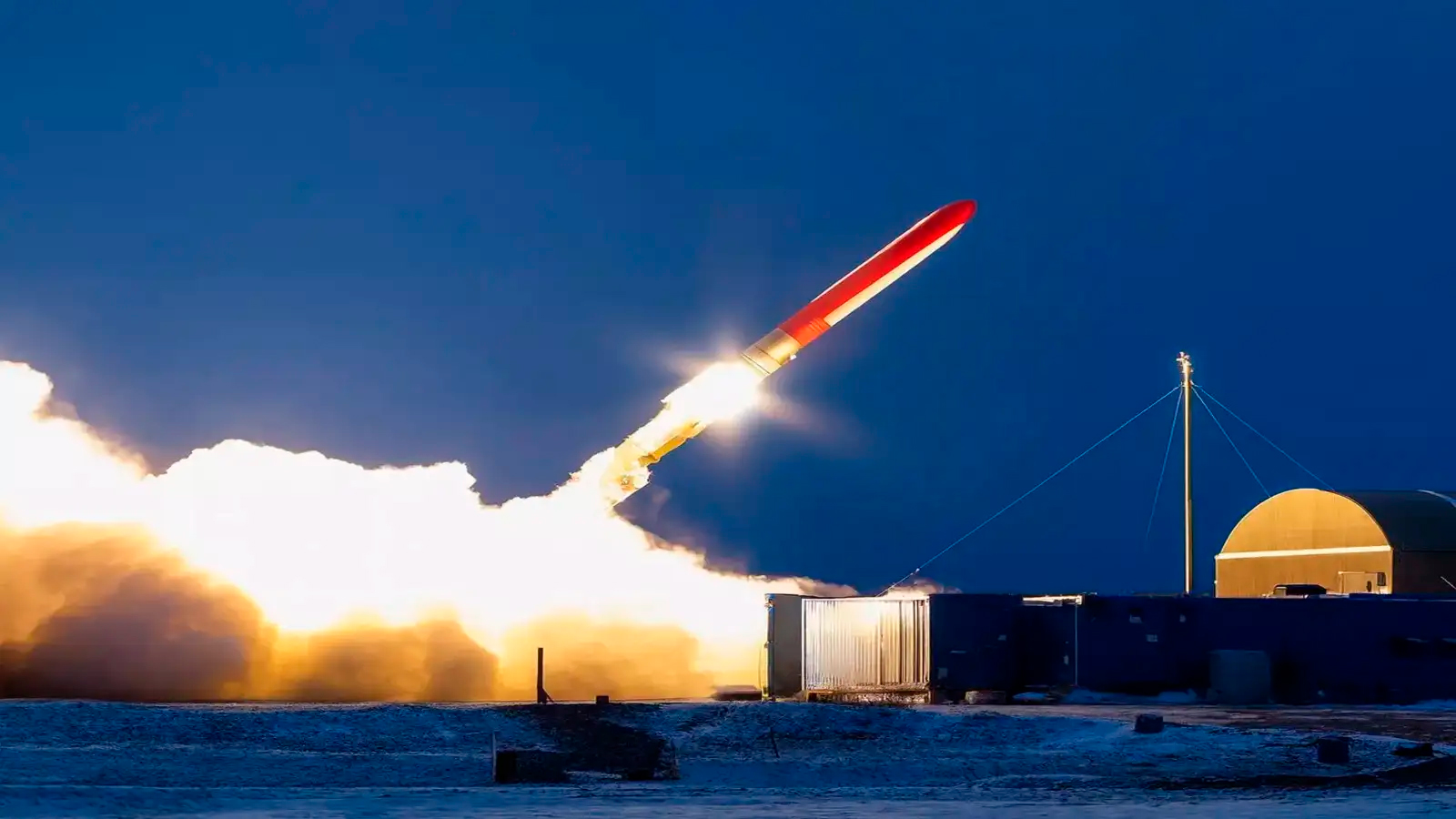
What We Know About the “Burevestnik” Missile and the “Poseidon” Mega-Torpedo
***
In the fall of 2025, alongside the nuclear-deterrence developments mentioned at the outset, a certain public stir was caused by Kathryn Bigelow’s film House of Dynamite. The film depicts a scenario involving a nuclear attack on the United States and the procedures followed by the relevant agencies in responding to it. Although the narrative contains a number of significant inaccuracies that render the plot detached from real-world practice, the film’s central message, articulated in the opening credits, is not without merit: “At the end of the Cold War global powers reached the consensus that the world would be better off with fewer nuclear weapons. That era is now over.”
The nuclear factor has once again begun to play a significant role in international relations. Given the circumstances under which it has been reactivated, current developments evoke the anxieties of the 1950s and 1960s, when the arms-control system was only beginning to take shape and the political elites of nuclear-armed states were still internalizing the logic of deterrence while balancing on the brink of war. In this context, the ongoing debates within the Russian strategic community are particularly significant, as the formulation of new arguments in support of strengthening nuclear deterrence contributes not only to theoretical advancement but also to the maintenance of international peace.
1. Jervis, R. The Meaning of the Nuclear Revolution: Statecraft and the Prospect of Armageddon (Trans. from English into Russ. by T. Ovannisyan. Moscow: Center for Analysis of Strategies and Technologies, 2024. 33. P.
2. Bogdanov, K. V. The Signaling Component in Strategies of Limited Nuclear Use // World Economy and International Relations, 2022 V. 66, I. 5. Pp. 5–13. https://doi.org/10.20542/0131-2227-2022-66-5-5-13.
3. Ibid., P. 8.
4. Ibid., P. 7.
5. Shakleina, T. A., and A. A. Baykov, eds. Megatrends: Key Trajectories in the Evolution of the World Order in the 21st Century. 3rd ed., revised and expanded. Moscow: Aspekt Press, 2022. 520 p.
6. Arbatov A. G. The Nuclear Boomerang. There Are No Eternal Allies or Permanent Enemies, but Only Nuclear Weapons Are Eternal and Permanent. Polis. Political Studies. 2025. No. 5. P. 37.
(votes: 3, rating: 4.67) |
(3 votes) |
Restarting the architecture of missile and nuclear arms control in a Russian-American or broader format appears highly improbable
Can Nuclear Weapons Help Avert a Russia-NATO War?The possibility of a return to extreme-era dynamics cannot be dismissed
Nuclear BoomerangThere Are Neither Eternal Allies, Nor Perpetual Enemies, But Only Nuclear Arms Are Eternal and Perpetual
War and Peace: Where Is the World Headed?The international community cannot simply allow events to unfold according to the “law of the jungle”
What We Know About the “Burevestnik” Missile and the “Poseidon” Mega-TorpedoBurevestnik (as is Poseidon) is a means of neutralizing prospective—conditionally “day-after-tomorrow”—enemy air- and missile-defense capabilities over the medium to long term


