
What Does the Easing of Sanctions Mean for Syria?
In
Login if you are already registered
(votes: 4, rating: 5) |
(4 votes) |

Ph.D. in Political studies, Middle East expert and Russian foreign policy analyst, MA Global Public Policy, Hubert H. Humphrey School of Public Affairs, University of Minnesota
It has been six months since the Hayat Tahrir al-Sham group led by Abu Mohammad al-Julani (now known as Ahmed al-Sharaa) seized power in Syria. Shortly before that, half a world away, Donald Trump had won the U.S. presidential election, and all eyes turned to see what his foreign policy would look like. Nobody was watching more closely than Syria’s new authorities, who were well aware that their future and the future of Syria would largely depend on Trump’s stance toward the country.
Meanwhile, after six months in power, despite some efforts, the new Syrian leadership has failed to fundamentally address the country’s core socio-economic problems: disarm and reintegrate armed groups into a unified army, reassert effective control over borders and weapons, ensure internal security for all—including minorities—and launch a truly inclusive political transition process. Of course, all of these goals are extremely difficult to achieve, given that external actors play a key role in them. This is why the developments of recent weeks, especially the steps taken by the U.S., are very important for Syria and the region.
The sanctions relief from the U.S. and the EU is intended, first of all, to help the new Syrian authorities address the challenges they face: the dire socio-economic situation in the country; energy problems; reforming and restructuring the armed forces; rebuilding the infrastructure; combating radical Islamists, foreign fighters and ISIS; regaining control over the whole country, etc. Second, it is meant to help cement the political standing of Damascus, and specifically that of al-Sharaa, in the country in order to facilitate a democratic transition process over the coming years, insofar as possible. Third, it sends a message to all who need to know that sanctions can be removed if the “right people” come to power and if they act in a certain way. Fourth, such sanctions relief is essentially a tool of influence and pressure and points directly to the relationship between lifting or relaxing sanctions and the behavior of their target.
The process of lifting restrictions on Syria will primarily open a financial and economic road to this nation for regional countries that have a direct and long-standing interest in stabilizing the situation there. As for the U.S. and the EU, it seems that neither is ready to go all-in on Syria, preferring a step-by-step approach while waiting to see how the new leadership in Damascus will perform in the coming months. This indicates both the West’s declining interest in the region and the growing agency and role of regional actors.
That said, it is worth mentioning that the amount of Western or Gulf funds invested in Syria is unlikely to affect the quality of internal governance, the implementation of reforms or the inclusiveness of the transition period. Of course, by gradually rolling back sanctions, the West is trying to lay the groundwork for gaining leverage over the current authorities in Damascus. But will the West be ready for the moment when this leverage no longer works?
It has been six months since the Hayat Tahrir al-Sham [1] group led by Abu Mohammad al-Julani (now known as Ahmed al-Sharaa) seized power in Syria. Shortly before that, half a world away, Donald Trump had won the U.S. presidential election, and all eyes turned to see what his foreign policy would look like. Nobody was watching more closely than Syria’s new authorities, who were well aware that their future and the future of Syria would largely depend on Trump’s stance toward the country.
Meanwhile, after six months in power, despite some efforts, the new Syrian leadership has failed to fundamentally address the country’s core socio-economic problems: disarm and reintegrate armed groups into a unified army, reassert effective control over borders and weapons, ensure internal security for all—including minorities—and launch a truly inclusive political transition process. Of course, all of these goals are extremely difficult to achieve, given that external actors play a key role in them. This is why the developments of recent weeks, especially the steps taken by the United States, are very important for Syria and the region. In this article, we will examine what the easing of U.S. sanctions could mean for Damascus, the Middle East and Russia.
U.S. sanctions relief

On May 13, during his Middle East tour, U.S. President Donald Trump announced the intention to start lifting all sanctions on Syria—a surprise move, particularly since there was no consensus on the issue even within the presidential administration. For both Damascus and other regional players, however, this announcement was a very welcome decision from Washington.
Later, on May 23, the Office of Foreign Assets Control (OFAC) of the U.S. Department of the Treasury issued Syria General License (GL) 25, initiating the process of sanctions relief in line with Trump’s announcement. Specifically, it authorized all transactions with Syria and the Syrian government that would otherwise be prohibited under the Syrian Sanctions Regulations, effectively easing existing sanctions. It is worth noting that since January 6, 2025, General License 24 had already been in force for a period of six months, allowing certain previously prohibited transactions with the Syrian government and the central bank. GL 25 essentially broadened the scope of sanctions relief that had begun in the final days of the Joe Biden administration. In addition to GL 25, the U.S. Department of State waived the Caesar Act sanctions for 180 days, which was intended to encourage foreign partners, U.S. allies and regional actors to begin economic and financial engagement with the new authorities in Syria. However, the temporary six-month suspension indicates a step-by-step approach to lifting restrictions.
Even so, the easing of sanctions is neither simple nor straightforward.
First, many sanctions have been imposed on Syria since 1979, including both presidential executive orders and congressionally approved legislation. This makes the complete removal of sanctions a complex and slow process, as some measures will require approval by Congress.
Second, not all restrictions have been rolled back. Moreover, the Trump administration can quite easily and quickly reimpose them. Rather than completely repealing the underlying sanctions legislation, OFAC issued a General License. This means that if the new Syrian authorities do not succeed in expelling foreign militants, combating terrorism and protecting religious and ethnic minorities, OFAC can simply revoke GL 25, bringing the old restrictions back into effect. In the same way, the State Department may choose not to renew the 180-day waiver of the Caesar Act. It is clear that the U.S. will be monitoring developments in Syria and the progress of the new authorities. Thus, GL 25 and the Ceasar Act waiver should be seen not just as a gesture of goodwill from Trump but as means for the U.S. to exert leverage over Syria’s new leadership.
Third, the sanctions relief comes with significant strings attached. Trump expects the new Syrian authorities to take steps that are quite problematic for them. For example, during a surprise meeting with Syria’s new president on May 14, the U.S. leader urged him to normalize relations with Israel (potentially by joining the Abraham Accords or striking a new deal). This is a particularly difficult move, as it is likely to provoke a backlash from radicals within HTS and even among ordinary Syrians, potentially leading to a new escalation in the country.
Trump has also called for removing foreign fighters and terrorists from the ranks of the Syrian military. This request is also problematic because Julani is still relying on them and continues promoting them within the new army. In addition, expelling foreign militants and radicals could cause resentment and retaliation on their part against Julani and his supporters. This puts the new Syrian leadership in a precarious position. Having come to power as radical Islamists and terrorists, they have begun using a different set of tools to ensure their political survival—namely, lifting U.S. sanctions as their top priority and receiving financial and economic aid from abroad. To achieve this, they must abandon the very forces that brought them to power in Syria, and the solution to this problem is only a matter of time.
In addition, the White House has called on Damascus to take control of the ISIS detainee camp al-Hol, which is under the control of Syrian Kurds, and to integrate the Syrian Democratic Forces (SDF) of the Democratic Autonomous Administration of North and East Syria (DAANES) into the ranks of the new Syrian army. This issue is also far from simple to resolve. Nearly three months after the agreement was reached between the Syrian Kurds and Damascus on March 10, progress in its practical implementation has been almost nonexistent.
Apart from preserving their military formations (as their only security guarantee besides the US presence in the region), the Kurds seek administrative decentralization, a form of local governance that should be enshrined in the country’s constitution, granting them the right to manage their own affairs within the framework of the state. So far, Damascus has been unwilling to meet this demand, fearing excessive decentralization and the fragmentation of the country.
Although Western observers report both sides’ commitment to the agreement and even note some progress, the Kurds themselves remain highly skeptical of it.
What does sanctions relief mean for Syria?
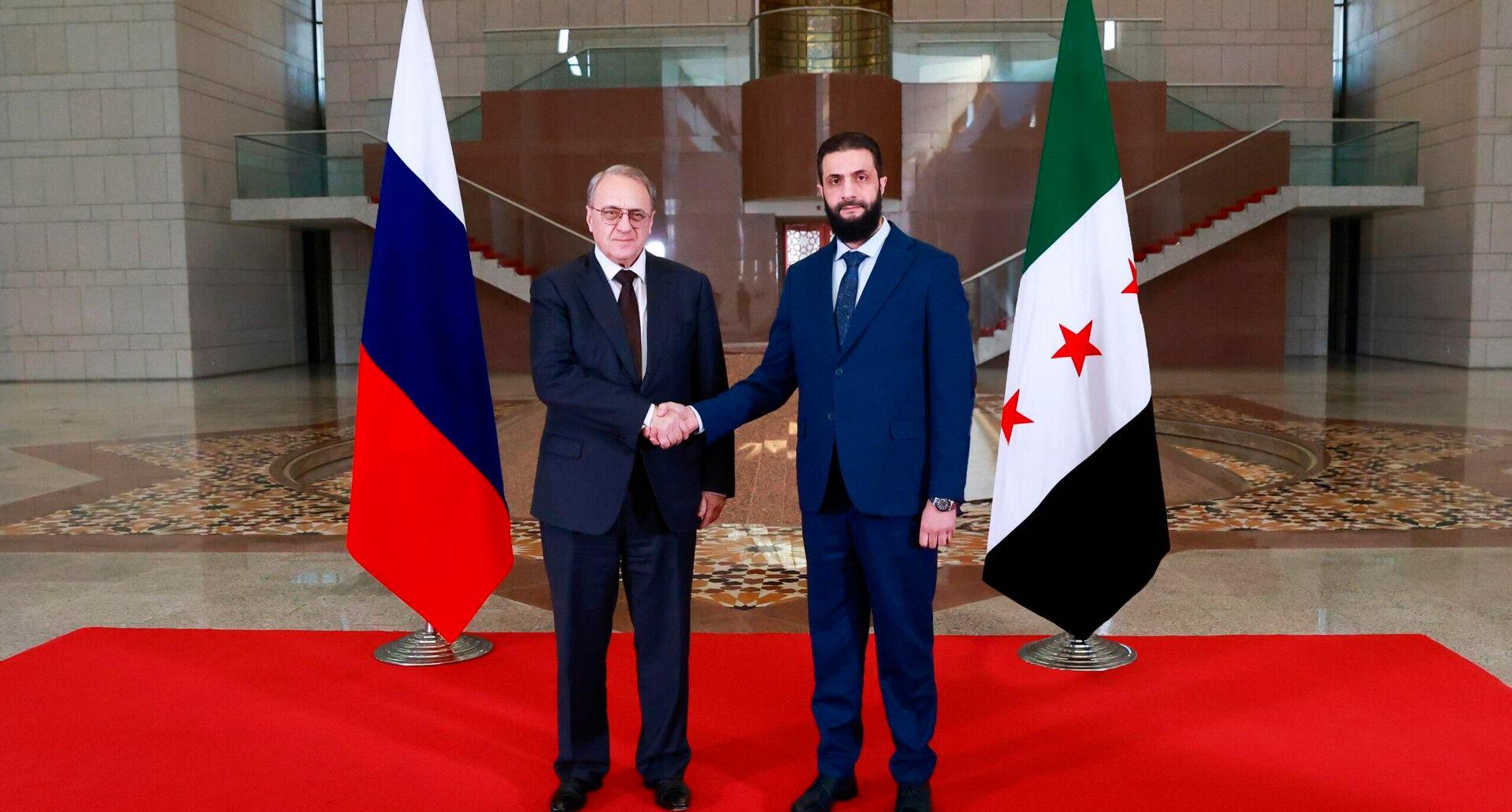
What Lies Ahead for Syria: A Russian Perspective
Here is what Trump’s plan to lift sanctions on Syria could entail:
First, the sanctions relief will lend more legitimacy to the new Syrian authorities and boost their public support. Syrians have been waiting for the lifting of sanctions for years. They expect improvements in the humanitarian and socio-economic situation, which has only been deteriorating since 2020, and the start of their country’s full-scale reconstruction. Trump’s decision offers them hope, and that, in turn, strengthens their support for the new Syrian leadership.
Second, radical Islamist forces in Syria view al-Sharaa’s engagement with the West as a threat to their prospects in Syria and beyond. From their perspective, he is betraying “revolutionary” and “Islamist” values, “selling” them for political and economic gains from the West. It is important to note that in his recent fatwa, Salafi ideologue Abu Muhammad al-Maqdisi condemned Syria's interim president Ahmed al-Sharaa (as well as those who are backing him) as an infidel for “refusing to implement Islamic law and choosing man-made laws.” In addition, ISIS [2] recently called on HTS fighters who are disillusioned with the new government’s policies to defect. The main threat to such forces is that al-Sharaa could eventually outlaw and eliminate them in exchange for full recognition and economic assistance from the West.
At the same time, the internal “jihadist opposition” to the authorities that has emerged in Syria could have some impact on national stability, given that the government still does not control all territory or hold a monopoly on weapons/violence. As mentioned earlier, the hypothetical Syrian–Israeli normalization serves as a strong case against al-Sharaa and a source of frustration for hardliners in the country, which is a problem for the government.
Third, Julani continues to strengthen his political standing. His meeting with the U.S. president on May 14 has further boosted his image regionally and globally. The U.S. endorsement in the form of the meeting with Julani gives him leverage over his most radical peers and allows him to sideline them one after another. Financial, economic and military assistance from the West and the Gulf states, which Damascus will receive sooner rather than later, will enable him to act much bolder and tougher against the most extreme opponents, including radical Islamists, without fear of losing public support. In other words, the more al-Sharaa is recognized internationally, the more public support he wins at home, allowing him to undermine the radicals’ claims about his illegitimacy and stop relying on them as a tool to control the situation in his country.
Fourth, Trump’s announcement will spur economic aid and investment from the Gulf states and the European Union to Syria. After the U.S. issued GL 25 on May 23, the EU followed suit and decided to lift economic sanctions on Syria on May 28. That said, the EU will also monitor developments on the ground with regard to human rights and the events that took place in Syria’s coastal region in March. It is worth noting that all potential donors and investors will be watching the situation closely and refrain from making large-scale financial commitments right away. A step-by-step approach is more probable.
Fifth, a gradual improvement of the humanitarian and economic situation will eventually lead to a large-scale return of Syrian refugees to the country (according to UN data, there are still around 4.5 million Syrian refugees outside the country and some 7.5 million internally displaced people inside Syria). On the one hand, this will increase the socio-economic burden on the Syrian state, potentially creating space for opposition and radical ideologies. On the other hand, it may help the authorities increase public support and tap into a broader labor force to rebuild the country and its economy. However, a recent UN report on Syria says that “social cohesion in Syria remains fragile due to deep-seated ethnic tensions, prolonged displacement, and the complex dynamics of the returns of IDP and refugees.” The conflict has exacerbated divisions among ethnic and sectarian groups, while the recent changes in the political environment have fueled grievances over political representation and inclusion, land ownership, access to resources and security control. This is why it is so important for the Syrian leadership to secure sufficient funds and tools as soon as possible to create a sustainable environment for national reconstruction.
What lies ahead for the region?
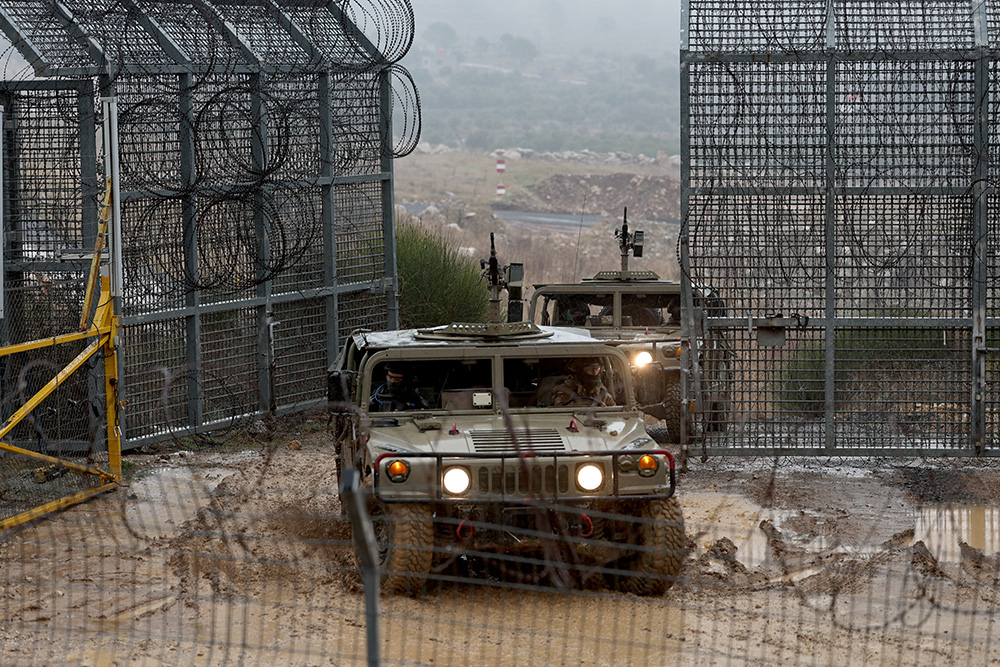
Is Israel Repeating Iran's Mistakes in Syria?
First, GCC countries, especially Qatar, Saudi Arabia and the UAE, will become more active in Syria. Riyadh and Abu Dhabi will attempt to counterbalance Turkish and Qatari influence in Syria through increased investments, economic projects and support for the incumbent authorities. Regional economic initiatives that aim to link neighboring countries are likely to return to the agenda and be implemented. For example, restarting the Arab Gas Pipeline, which runs from Egypt through Jordan and Syria to Lebanon, could improve the power supply situation in Syria and Lebanon.
Second, the mass return of Syrian refugees to their homeland will reduce the socio-economic burden on regional countries, especially Turkey, Lebanon and Jordan, where many of them still reside.
Third, more investment from the EU will flow into Syria, which will accelerate its recovery and help the bloc regain its economic foothold in the country. Syria’s economic revival will, in turn, have a positive effect on Lebanon as well.
Fourth, there is a possibility of potential Syrian–Israeli talks on normalization. Both sides have already engaged in direct contact in recent weeks and are discussing security issues. However, it is worth mentioning that indirect contacts between Syria’s new authorities and Israel began back in December 2024. The key question is how Julani’s potential opponents may exploit this development and whether Israeli–Syrian normalization (or even talks about it) could have a destabilizing effect on Syria and the region.
What prospects open up for Russia?
First, Moscow had no major economic interests or assets in Syria. At the same time, GL 25 does not authorize transactions that benefit Russia, Iran or North Korea (or those related to the transfer or provision of goods, technology, software, funds, financing or services to or from these nations), which limits Moscow’s ability to provide economic assistance to Syria. If the U.S. finally lifted all restrictions on Syria’s relations with Russia, Moscow would be able to sign contracts with Damascus in defense (including maintenance of Soviet/Russian military equipment), industrial recovery (of Soviet/Russian infrastructure facilities), agriculture and education.
Second, it is also important to point out that since neither Trump’s plan to lift sanctions on Syria nor the EU’s plan includes any condition regarding the withdrawal of Russian military bases from Syria (at least none that has been made public), Moscow has a better chance of negotiating more favorable terms for keeping its military facilities in the country.
***
It is fair to say that the sanctions relief from the U.S. and the EU is intended, first of all, to help the new Syrian authorities address the challenges they face: the dire socio-economic situation in the country; energy problems; reforming and restructuring the armed forces; rebuilding the infrastructure; combating radical Islamists, foreign fighters and ISIS; regaining control over the whole country, etc. Second, it is meant to help cement the political standing of Damascus, and specifically that of al-Sharaa, in the country in order to facilitate a democratic transition process over the coming years, insofar as possible. Third, it sends a message to all who need to know that sanctions can be removed if the “right people” come to power and if they act in a certain way. Fourth, such sanctions relief is essentially a tool of influence and pressure and points directly to the relationship between lifting or relaxing sanctions and the behavior of their target.
The process of lifting restrictions on Syria will primarily open a financial and economic road to this nation for regional countries that have a direct and long-standing interest in stabilizing the situation there. As for the U.S. and the EU, it seems that neither is ready to go all-in on Syria, preferring a step-by-step approach while waiting to see how the new leadership in Damascus will perform in the coming months. This indicates both the West’s declining interest in the region and the growing agency and role of regional actors.
That said, it is worth mentioning that the amount of Western or Gulf funds invested in Syria is unlikely to affect the quality of internal governance, the implementation of reforms or the inclusiveness of the transition period. Of course, by gradually rolling back sanctions, the West is trying to lay the groundwork for gaining leverage over the current authorities in Damascus. But will the West be ready for the moment when this leverage no longer works?
1. The organization is designated terrorist and banned in Russia.
2. The organization is designated terrorist and banned in Russia.
(votes: 4, rating: 5) |
(4 votes) |
The new Syrian authorities cannot simply cut ties with Moscow. They know well that Russia can be helpful in many pragmatic ways, including counterbalancing other actors, e.g. Turkey, the U.S. and the Gulf states
Is Israel Repeating Iran's Mistakes in Syria?Israel risks repeating Iran's mistakes by opening a new front in Syria while having conflicts in multiple fronts
Extra-Regional Actors in the Middle EastReport No. 99 / 2025


