
The Middle East Escalation: a View From Moscow
(votes: 1, rating: 5) |
(1 vote) |

Ph.D. in History, Expert of the Valdai Discussion Club
In the early morning of June 24 US President Donald Trump announced a ceasefire between Israel and Iran after twelve days of intense airstrikes. The United States itself actively participated in this escalation cycle by hitting three major Iranian nuclear facilities at Fordow, Natanz and Isfahan on June 22. Though the American leader claimed that the US actions inflicted irreparable damage on the Iranian nuclear program, this statement was later challenged by the US military intelligence: according to leaks from Pentagon, the US hits resulted only in marginal damage to the nuclear capabilities of the Islamic Republic with the enrichment centrifuges remaining mostly untouched. In any case, Iran struck back, firing missiles on June 23 at the largest US airbase in the Middle East, Al Udeid in Qatar. Moreover, already after public acceptance of the truce, both Iran and Israel continued to exchange fire and to make belligerent statements accusing each other of aggressive intentions.
In sum, it is too early to conclude that the “12-Day War”, as Trump called this escalation cycle, is indeed over. Though Israel leaders argue that they accomplished the mission of eliminating both the nuclear and the ballistic treat to their country for a very long time, it remains very hard to accurately assess the damage to the Iranian underground facilities. The exact location of 400 kilograms of enriched uranium that, according to IAEA experts, Iran has at its possession, is also unknown. Skeptics argue that the “12-Day War” will only motivate the Iranian leadership to accelerate its efforts with the ultimate goal of acquiring nuclear warheads and appropriate delivery means. In any case, a ceasefire reached on June 24 does not mean stable and lasting peace, profound disagreements between Iran and its Western adversaries are still in place, which suggests that another exchange of strikes might follow before too long.
The crisis also contains many risks and potential costs for Moscow. The fact is that Russia has not succeeded in preventing massive direct Israeli air strikes against a state, with which it signed less than five months ago the Comprehensive Strategic Partnership Treaty. Though the Treaty does not oblige Moscow to automatically come to its partner’s rescue in case of a third party aggression (like it is the case, for instance, with the similar agreement between Russia and DPRK), the Iranian side might be disappointed with a rather cautious reaction of Moscow to the Israeli and US actions. This disappointment, if it exists, may cast a shadow on the future of Russian-Iranian relations and also raise doubts among other Kremlin’s strategic partners in the credibility of such arrangements with the Russian side.
Strategically, Russia has little to gain and a lot to lose in case the crisis goes deeper. Further escalation would demonstrate the impotence of the United Nations Security Council incapable or reaching consensus among its permanent members on how to stop the Israeli strikes. It would also render misplaced Russia’s proposals regarding building a collective security system in the Middle East. The Russia-Israel relations would likely deteriorate even further. A major disruption of the global energy trade may trigger a global economic slowdown or even a recession that is clearly not in Russia’s strategic interests.
Keeping limitations in mind, one can speculate that in dealing with the ongoing crisis Moscow will focus mostly on diplomatic tools such as raising the issue of the Israeli and US strikes in the United Nations Security Council and at other representative forums like BRICS and SCO. Vladimir Putin may also use his personal contacts with Donald Trump to warn the latter about potentially counterproductive effects of a deeper US involvement in the Iran-Israel conflict, which sets a new dangerous precedent for direct American hi-end military actions against the Islamic Republic unseen since the US outrageous assassination of the Iranian General Quasem Soleimani in Baghdad in early January of 2020. These diplomatic efforts by Moscow will undoubtedly have more impact if they are coordinated with similar initiatives coming from other non-Western capitals, especially from Beijing.
Another likely dimension of Russia’s assistance to Iran may be further advancement of economic cooperation with the Islamic Republic, including the peaceful use of nuclear energy field. The Russian State Agency on Atomic Energy (RosAtom) has stated that it intends to build another nuclear power plant in Iran. At this point it is critically important to convince Tehran not to leave the Nuclear Non-Proliferation Treaty (NPT) and to maintain working relations with IAEA inspectors.
One should note that in response to the recent Israeli attacks and the US bombing, Iran’s parliament has already launched discussions about possible pulling out of the NPT, and the Iranian envoy to the IAEA, Reza Najafi, said the strikes had delivered an “irreparable blow” to the treaty. However, it is not too late trying to convince the Iranian leadership that in terms of long-term strategic interests of the Islamic Republic it would be better not to rush into decisions that would have many negative implications for Iran, as well as for the Middle East region at large. The Kremlin can make this pitch—a final decision to exit the NPT would have to be made by Iran’s Supreme National Security Council and Supreme Leader Ali Khamenei, with whom Vladimir Putin has good personal relations.
In the early morning of June 24 US President Donald Trump announced a ceasefire between Israel and Iran after twelve days of intense airstrikes. The United States itself actively participated in this escalation cycle by hitting three major Iranian nuclear facilities at Fordow, Natanz and Isfahan on June 22. Though the American leader claimed that the US actions inflicted irreparable damage on the Iranian nuclear program, this statement was later challenged by the US military intelligence: according to leaks from Pentagon, the US hits resulted only in marginal damage to the nuclear capabilities of the Islamic Republic with the enrichment centrifuges remaining mostly untouched. In any case, Iran struck back, firing missiles on June 23 at the largest US airbase in the Middle East, Al Udeid in Qatar. Moreover, already after public acceptance of the truce, both Iran and Israel continued to exchange fire and to make belligerent statements accusing each other of aggressive intentions.

No Peace, Just Pause: Iran and Israel's Fragile Standoff
In sum, it is too early to conclude that the “12-Day War”, as Trump called this escalation cycle, is indeed over. Though Israel leaders argue that they accomplished the mission of eliminating both the nuclear and the ballistic treat to their country for a very long time, it remains very hard to accurately assess the damage to the Iranian underground facilities. The exact location of 400 kilograms of enriched uranium that, according to IAEA experts, Iran has at its possession, is also unknown. Skeptics argue that the “12-Day War” will only motivate the Iranian leadership to accelerate its efforts with the ultimate goal of acquiring nuclear warheads and appropriate delivery means. In any case, a ceasefire reached on June 24 does not mean stable and lasting peace, profound disagreements between Iran and its Western adversaries are still in place, which suggests that another exchange of strikes might follow before too long.
Leaving aside all humanitarian considerations and taking a purely cynical position, one could argue that Russia could benefit from the new cycle of the Middle East escalation at least in three different ways. First, any such escalation almost automatically leads to a rise in global hydrocarbon prices, which is quite important for Russia as a major exporter of crude oil and natural gas. The longer the ongoing conflict lasts for, the higher is the demand for Russia’s oil: by June 19, its average price reached USD 69 per barrel compared to it lowest USD 47 per barrel on April 9. If Tehran at some point goes as far as to close the Strait of Hormuz, he Russian energy revenues will go through the roof.
Second, as it has already been explicitly demonstrated by the previous escalation in the Gaza Strip, any Middle East crisis inevitably distracts Moscow’s geopolitical opponents’ attention from the Russian-Ukrainian conflict forcing them to reconsider some of their strategic priorities and, maybe, even to partially redirect flows of military assistance from Ukraine to Israel. Moreover, the new cycle of escalation inevitably generates more tensions and disagreements between the United States and its European allies, which under the current circumstances also plays into Moscow’s hands.
Third, at least in theory Russia could try to play the role of mediator or a facilitator between the conflicting sides, assisting in deescalating, if not resolving the crisis. By acquiring such a role, Moscow could get back to the front-stage of the Middle East politics and restore its regional influence that was put under question after the sudden and avalanche fall of the Bashar al-Assad regime in Syria in December of 2024. Though the Kremlin condemned the Israeli strikes against Iran, it nevertheless managed to preserve its working relations with the Jewish state (it should be noted, however, that so far Israel is reluctant to accept any third party mediation of the conflict).

Double Check
Nevertheless, the crisis also contains many risks and potential costs for Moscow. The fact is that Russia has not succeeded in preventing massive direct Israeli air strikes against a state, with which it signed less than five months ago the Comprehensive Strategic Partnership Treaty. Though the Treaty does not oblige Moscow to automatically come to its partner’s rescue in case of a third party aggression (like it is the case, for instance, with the similar agreement between Russia and DPRK), the Iranian side might be disappointed with a rather cautious reaction of Moscow to the Israeli and US actions. This disappointment, if it exists, may cast a shadow on the future of Russian-Iranian relations and also raise doubts among other Kremlin’s strategic partners in the credibility of such arrangements with the Russian side.
Moreover, the escalation generates additional complications within the uneasy dialogue between the Kremlin and the White House. Vladimir Putin was explicitly critical of the Israeli strikes of June 13, while Donald Trump not only endorsed these actions, but even joined them by hitting Iranian nuclear facilities in the early morning of June 22. The US President did not react positively to the idea of Moscow mediating the conflict, suggesting that Putin should rather focus on sorting out his problems with Ukraine. It seems clear that looking from Washington, Moscow appears to be a part of the problem in, not a part of the solution to the ongoing Middle East crisis. On the other hand, if the Israeli-Iranian ceasefire is going to last and is regarded in the world as a success story, Trump will definitely pressure the Russian leadership to follow this example and to accept a similar unconditional ceasefire with Ukraine.
Strategically, Russia has little to gain and a lot to lose in case the crisis goes deeper. Further escalation would demonstrate the impotence of the United Nations Security Council incapable or reaching consensus among its permanent members on how to stop the Israeli strikes. It would also render misplaced Russia’s proposals regarding building a collective security system in the Middle East. The Russia-Israel relations would likely deteriorate even further. A major disruption of the global energy trade may trigger a global economic slowdown or even a recession that is clearly not in Russia’s strategic interests.
One cannot rule out that the ultimate intention of the Israeli leadership is not only to block the Iranian nuclear and ballistic programs or to change the Iranian “regional behavior”, but rather a political regime change in Tehran. Prime Minister Benjamin Netanyahu was quite explicit about this intention in his address to the Israeli people on June 14. Such a prospect should be considered to be the most dangerous strategic threat to the Kremlin, since any plausible alternative to the existing Iranian political system is very likely to be less friendly to Moscow ad more inclined to working with Russia’s geopolitical opponents.
Furthermore, if Israel and the United States were to succeed in “deconstructing” the Islamic Republic as it exists today, the result of such deconstruction would be not a regime change, but rather a disintegration of the Iranian statehood. One can imagine the rise of ethnic and regional separatism, massive infiltration of political extremists from abroad (e.g. from Syria and Lebanon), deep humanitarian crisis, millions of cross-border refugees and forced migrants and other manifestations of a typical “failed state”.

Iran-U.S. Relations: From Escalation to Dialogue?
The damage inflicted by this scenario to the Russian Federation would not be limited only to terminating or postponing many joint economic projects, putting on hold plans for the North-South economic corridor, or questioning further Iran’s participation to such multilateral bodies as BRICS and SCO. It may well include dangerous decline of political and social stability in paces like Afghanistan, the post-soviet Central Asia and South Caucasus. Needless to say, this is not a very bright prospect for decision-makers in the Kremlin.
Fortunately for Russia and other Iran’s international partners, this scenario looks highly unlikely—at least for the time being. If the Iranian political system were to disintegrate, that would happen as a result of deepening contradictions and sharpening conflicts within the national political establishment like it was the case with the Soviet Union back in 1991, not as the result of a growing outside pressure—be it from Israel or the United States. The history of the Islamic Republic demonstrates a remarkable resilience and an impressive sustainability even under the most challenging circumstances. The margin of safety enjoyed by most political institutions established in early 1979 remains quite broad. Of course, Iran will continue to change, but an increase of the outside pressure, especially coming from Israel, the United States or any other “unfriendly country”, is likely to generate centripetal rather than centrifugal motions within the Iranian society.
So, what could Moscow do under the current circumstances? President Putin stated that some time ago Russia had offered the Islamic Republic extensive cooperation in air defense, but Tehran had demonstrated little enthusiasm. Indeed, in early 2000s Iran bought from Russia S-200 and S-300 air defence systems, which it later modernized and localized to meet specific national needs. In 2023 there were Russian-Iranian negotiations regarding more advanced S-400, but in the end of the day in Tehran they decided to rely on home-made Bavar-373. The resent Israeli and US air strikes revealed a number of loopholes in the Iranian air defence capabilities that could be closed by the latest S-500 (Prometheus) Russia-made air defence system capable of intercepting practically all types of air targets, including even the most modern hyper-sonic missiles.
If Iran were to acquire S-500 together with accompanying weapons (like, or instance, Su-35 fighters), that would be a game changer in the Iran-Israel standoff - Israel would be in no position to conduct its air raids against the Islamic Republic with impunity or with very limited losses. However, it is clear that any sophisticated military hardware deliveries to Iran would require a lot of time needed for deployment, personnel training, integrating new weapons into the overall national defence infrastructure and so on. One can guess that intense consultations on further military-technical cooperation between Moscow and Tehran are underway, but even if this cooperation is going to be upgraded, this coming upgrade is not likely to significantly help Iran on the battlefield in the immediate future.
At the same time, the Kremlin is not ready to completely break up with Israel. In Russia, the general public and the political leadership are very critical of recent Israeli actions, but the Jewish state remains an important partner, given the size of the Russian-speaking Diaspora and the breadth of economic, cultural and social ties between the two nations. Israel has never joined anti-Russian economic sanctions imposed by the United States and the European Union. Besides, breaking up with Israel would deprive the Kremlin from its ability to play a balancing role in the Middle East region by maintaining constructive relations with all the sides in the numerous regional conflicts.
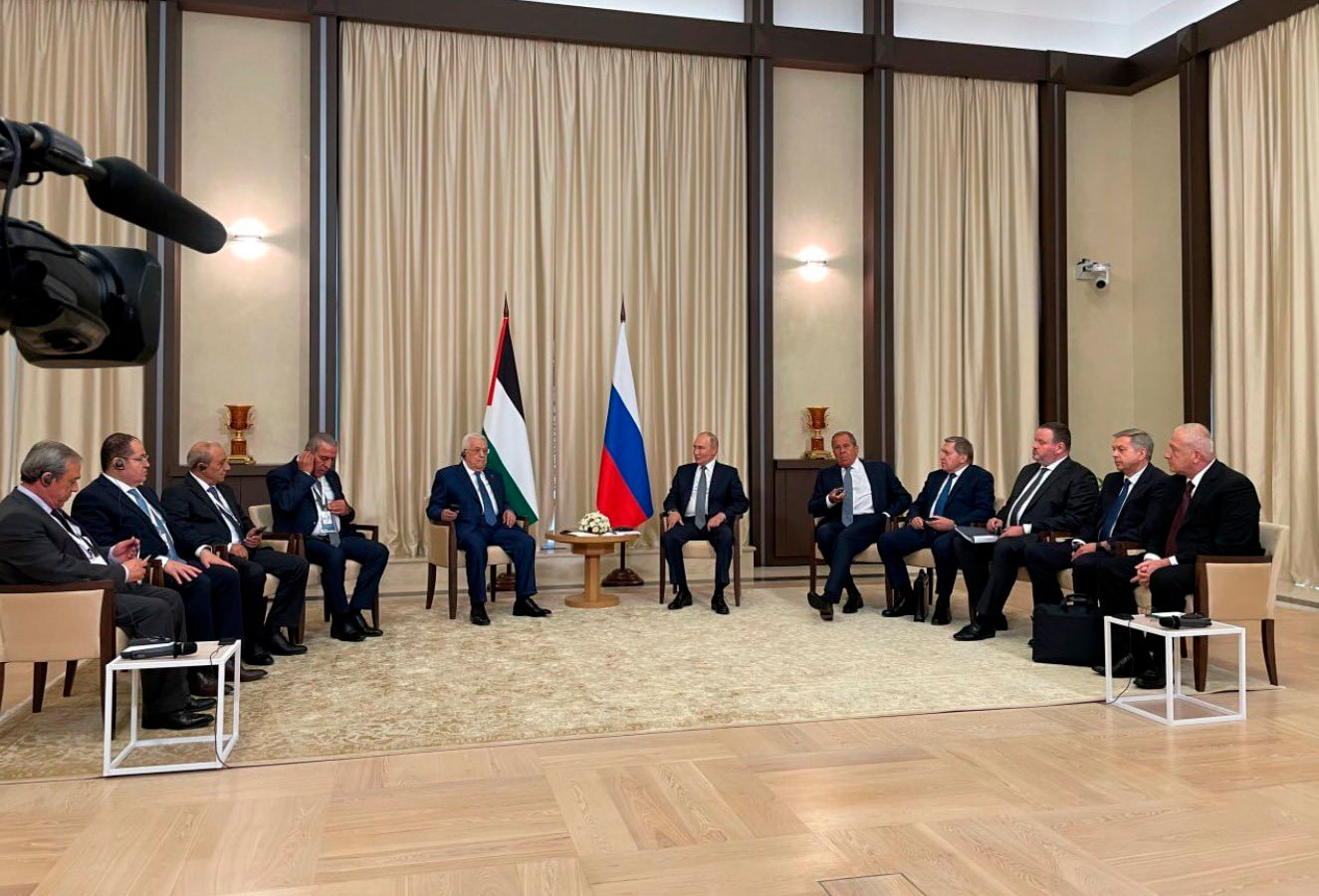
Middle East in the New Trump Era: Russia’s Foreign Policy Dilemmas
Keeping these limitations in mind, one can speculate that in dealing with the ongoing crisis Moscow will focus mostly on diplomatic tools such as raising the issue of the Israeli and US strikes in the United Nations Security Council and at other representative forums like BRICS and SCO. Vladimir Putin may also use his personal contacts with Donald Trump to warn the latter about potentially counterproductive effects of a deeper US involvement in the Iran-Israel conflict, which sets a new dangerous precedent for direct American hi-end military actions against the Islamic Republic unseen since the US outrageous assassination of the Iranian General Quasem Soleimani in Baghdad in early January of 2020. These diplomatic efforts by Moscow will undoubtedly have more impact if they are coordinated with similar initiatives coming from other non-Western capitals, especially from Beijing.
Another likely dimension of Russia’s assistance to Iran may be further advancement of economic cooperation with the Islamic Republic, including the peaceful use of nuclear energy field. The Russian State Agency on Atomic Energy (RosAtom) has stated that it intends to build another nuclear power plant in Iran. At this point it is critically important to convince Tehran not to leave the Nuclear Non-Proliferation Treaty (NPT) and to maintain working relations with IAEA inspectors.
One should note that in response to the recent Israeli attacks and the US bombing, Iran’s parliament has already launched discussions about possible pulling out of the NPT, and the Iranian envoy to the IAEA, Reza Najafi, said the strikes had delivered an “irreparable blow” to the treaty. However, it is not too late trying to convince the Iranian leadership that in terms of long-term strategic interests of the Islamic Republic it would be better not to rush into decisions that would have many negative implications for Iran, as well as for the Middle East region at large. The Kremlin can make this pitch—a final decision to exit the NPT would have to be made by Iran’s Supreme National Security Council and Supreme Leader Ali Khamenei, with whom Vladimir Putin has good personal relations.
First published in the Guancha.cn.
(votes: 1, rating: 5) |
(1 vote) |
Will Russia continue its “business as usual” aimed at maintaining the existing status-quo or will it be forced to review and to revise its positions towards Israel, Palestinians, Iran and its main partners in the Arab world?
Iran-U.S. Relations: From Escalation to Dialogue?The situation around Iran has reached a critical juncture
Double CheckThe recent U.S. strikes on Iran’s nuclear infrastructure mark a notable recalibration of Washington’s Middle East policy
No Peace, Just Pause: Iran and Israel's Fragile StandoffA moment of “mutual deterrence” within a fragile balance


