
Sanctions Against Allies and Partners: That Happens as Well
In
Login if you are already registered
(votes: 1, rating: 5) |
(1 vote) |

Ph.D. in Political Science, Director General of the Russian International Affairs Council, RIAC member
One of the hallmarks of Donald Trump’s foreign policy has been the active use of tariffs against allies, partners, and adversaries. Here, US Presidential Executive Order 14257 of April 2, 2025 became the key legal and doctrinal document. It proclaimed the goal of balancing US trade and eliminating the trade deficit. However, tariffs have also begun to be actively used for political purposes, utilized as economic sanctions. Moreover, the targets are not so much US adversaries as allies and partners—pressure on India to abandon Russian oil is one example.
Donald Trump’s statements following his phone conversation with Indian Prime Minister Narendra Modi on February 2, 2025 caused quite a stir. The American side announced its intention to eliminate the 25% Russia-related tariffs and reduce the remaining tariffs to 18%. Replacement oil supplies from Venezuela to India are expected. India has not yet officially announced a ban on oil imports from Russia. It is also important that Delhi has made reciprocal moves on tariffs. They could be reduced to zero, provided that India commits to purchasing US goods worth $500 billion.
If India does indeed agree to a long-term, significant reduction in its imports of Russian oil, the US will view this as a success yielded by the actions it undertook. It may be more motivated to take similar measures against other countries or in connection with other sanctions targets, such as Cuba. The key objective of sanctions—influencing the “behaviour” of the target country—is shifting to the “behaviour” of third countries. The target countries themselves are adapting to new challenges. The arms race in trade and finance continues.
One of the hallmarks of Donald Trump’s foreign policy has been the active use of tariffs against allies, partners, and adversaries. Here, US Presidential Executive Order 14257 of April 2, 2025 became the key legal and doctrinal document. It proclaimed the goal of balancing US trade and eliminating the trade deficit. However, tariffs have also begun to be actively used for political purposes, utilized as economic sanctions. Moreover, the targets are not so much US adversaries as allies and partners—pressure on India to abandon Russian oil is one example.
Sanctions against allies are hardly a new phenomenon. The US has been actively utilizing both restrictive measures and the threat of using them. Washington resorted to this threat, for example, during the Suez Crisis of 1956-1957, exerting pressure on Britain and France. In the 1970s, as part of American diplomacy came the threat of suspending aid, nuclear cooperation, and US Export-Import Bank operations against South Korea due to its plans to develop nuclear weapons. Sanctions were used on a fairly large scale against Turkey in the recent past for a variety of reasons, including actions against opposition politicians, Turkish operations in Syria during the civil war, and the purchase of Russian air defence systems. Sanctions against allies typically did not go far and were primarily intended as signals. Allies made concessions out of fear of losing important benefits from their relationship with the US: military and economic aid programs, access to the American market, loans, expertise, and goods.
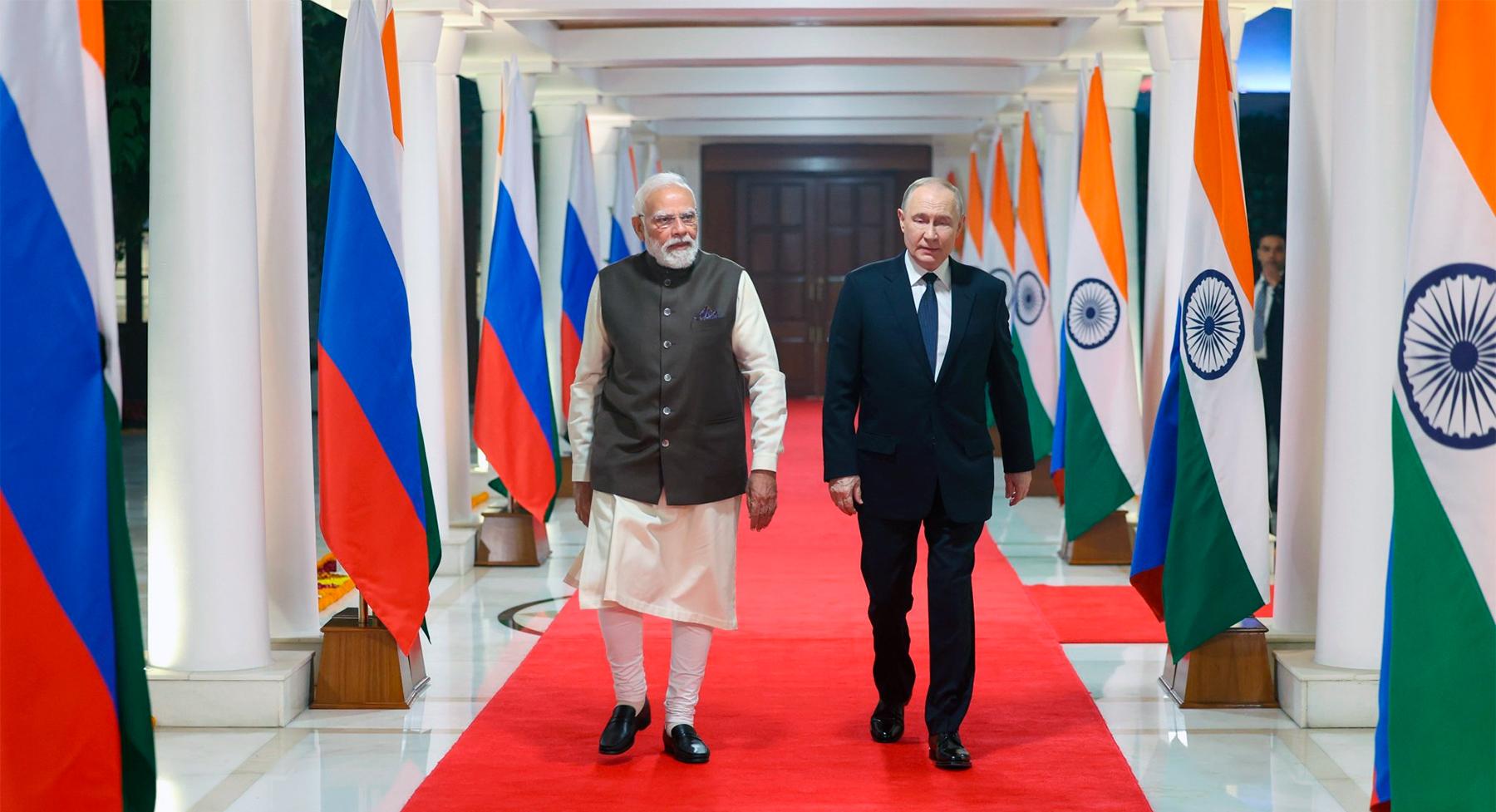
Russia and India: Relying on Themselves and Each Other
As finance grew increasingly globalized and American banks became more central to global financial transactions, the US Treasury and Justice Departments actively used administrative and criminal investigations against individuals from allied and third countries who worked with sanctioned states—Iran, North Korea, Syria, Russia, and others. US authorities extended their jurisdiction to transactions involving American banks, directly or indirectly, even if the transaction took place outside the US. This also applied to violations of US export controls. Part of the legal doctrine became the principle of “the law follows the goods”—meaning that the presence of US goods in a third country, subject to US export control violations, led to the risk of coercive measures by US agencies against individuals and companies in those countries. It cannot be said that there was an excessive number of such administrative and criminal cases. But they did cause a stir. And the majority of them concerned companies from allied countries—the UK, EU countries, Japan, and Turkey. Banks suffered particularly, paying over $8 billion in fines to the US Treasury alone. Among the criminal cases, the most high-profile was the US Department of Justice’s investigation into Turkey’s Halk Bank for the alleged circumvention of US sanctions against Iran.
Along with administrative and criminal investigations, Washington also used secondary blocking sanctions. These involved adding companies or individuals working with sanctioned jurisdictions or individuals to a blacklist. This tool allowed for the use of extraterritorial measures when there was no direct or indirect connection with US jurisdiction—for example, when there were no settlements in US dollars, no US goods or individuals involved in the transaction, etc. Of course, US secondary sanctions may not be formally recognised in other jurisdictions. However, those countries for whom the US market, banks, or goods are important preferred not to question the recognition or rejection of such measures. Large businesses generally comply with US regulations, fearing secondary sanctions. Meanwhile, US allies and partners do not prevent Washington from adding individuals and companies from their jurisdictions to US sanctions lists. For example, since February 2022, the US has applied secondary financial sanctions for ties to Russia against nearly a thousand companies in a wide variety of jurisdictions, from EU countries to post-Soviet states. The largest number of these companies are located in China, the UAE, Turkey, and India. In all cases, secondary sanctions have not caused any noticeable diplomatic complications in these countries’ relations with the US. Moreover, the EU and UK themselves are actively developing the practice of applying secondary sanctions in relation to Russia.
During Trump’s second term, tariffs have become a more prominent part of the foreign policy toolkit. It is telling that they are featured extensively in the 2025 US National Security Strategy, while sanctions are barely mentioned. Sanctions continue to be applied in practice, but tariffs have acquired a new political meaning. Using them against some US adversaries is pointless. Iran, for example, is under all-encompassing economic restrictions, so tariffs will make no difference. The same applies to Russia. When it comes to the tariff race with China, its origins were both economic and political. Beijing managed to balance the US tariff offensive with counter-tariffs and export controls on rare earth metals. But they are actively used against dozens of other countries, including in the form of “secondary tariffs”—that is, duties for certain types of cooperation with sanctioned countries.

An Anti-Sanctions Alliance Is Taking Shape
So far, the most notable precedent for secondary tariffs is the introduction of an additional 25% duty on Indian goods on top of the existing 25% tariff. The increase on August 6, 2025, was triggered by Indian oil imports from Russia. At the same time, the EU banned the import of petroleum products from third countries produced from Russian oil and imposed secondary sanctions against oil refineries in India. Delhi was slow to comply with American demands to stop purchases from Russia, despite reports of a reduction in imports in early 2026.
Donald Trump’s statements following his phone conversation with Indian Prime Minister Narendra Modi on February 2, 2025 caused quite a stir. The American side announced its intention to eliminate the 25% Russia-related tariffs and reduce the remaining tariffs to 18%. Replacement oil supplies from Venezuela to India are expected. India has not yet officially announced a ban on oil imports from Russia. It is also important that Delhi has made reciprocal moves on tariffs. They could be reduced to zero, provided that India commits to purchasing US goods worth $500 billion.
If India does indeed agree to a long-term, significant reduction in its imports of Russian oil, the US will view this as a success yielded by the actions it undertook. It may be more motivated to take similar measures against other countries or in connection with other sanctions targets, such as Cuba. The key objective of sanctions—influencing the “behaviour” of the target country—is shifting to the “behaviour” of third countries. The target countries themselves are adapting to new challenges. The arms race in trade and finance continues.
First published in the Valdai Discussion Club.
(votes: 1, rating: 5) |
(1 vote) |
The need is now ripe to develop an international, legally binding instrument aimed at jointly countering unilateral restrictions
Russia and India: Relying on Themselves and Each OtherRussia and India will likely have to exercise strategic patience again—a quality they both possess in abundance


