
Pressed by Sanctions: Western Coercion and the Future of Russian–Serbian Relations
In
Login if you are already registered
(votes: 2, rating: 4.5) |
(2 votes) |

Program Manager at the Russian International Affairs Council
Belgrade’s reluctant move to comply with American sanctions and force Russia out of its energy industry exposes the real limits of national sovereignty in a world where the United States is asserting its will with increasing disregard for established norms and rules.
The fate of the Serbian company Naftna Industrija Srbije (NIS) already turned into an extremely complex political puzzle last year, in 2025. The crisis surrounding Serbia’s key energy asset—accounting for up to 5% of GDP and around a tenth of budget revenues—demonstrated that it is impossible to manoeuvre indefinitely amid the global confrontation between great powers. Taking into account the events of 2025, statements by American politicians, the shutdown of the Pančevo refinery and the deal to sell the Russian majority stake, it is now possible to speak of a fundamental transformation in Serbia’s energy security model.
For the region, the story of NIS will become a precedent illustrating just how far external forces are willing to go in matters of property redistribution and the struggle for influence. To all countries of South-Eastern Europe, it serves as something of a signal that any strategic partnership contradicting Washington’s course can be severed by means as far-reaching and illegal. Nor should the backdrop in the form of the unprecedented events unfolding in Venezuela be ignored. Future prospects for Russia’s political and economic influence in the region will now depend less on ownership of key assets and more on its ability to offer Serbia benefits that outweigh the costs of Western pressure and countermeasures. NIS has become the first such painful precedent, but it is unlikely to be the last challenge in the ongoing series of trials facing Russian–Serbian relations.
Belgrade’s reluctant move to comply with American sanctions and force Russia out of its energy industry exposes the real limits of national sovereignty in a world where the United States is asserting its will with increasing disregard for established norms and rules.
The fate of the Serbian company Naftna Industrija Srbije (NIS) already turned into an extremely complex political puzzle last year, in 2025. The crisis surrounding Serbia’s key energy asset—accounting for up to 5% of GDP and around a tenth of budget revenues—demonstrated that it is impossible to manoeuvre indefinitely amid the global confrontation between great powers. Taking into account the events of 2025, statements by American politicians, the shutdown of the Pančevo refinery and the deal to sell the Russian majority stake, it is now possible to speak of a fundamental transformation in Serbia’s energy security model.

Good Old America: Sanctions, Threats and Coercion
In January 2025, the administration of former US President Joe Biden imposed sanctions on the Serbian oil company NIS, justifying the decision by the presence of Russian capital in its ownership structure. Indeed, a controlling stake of 56.15% did belong to Gazprom Neft and affiliated entities; however, Serbia—which owned less than 30% of the company—remained quite comfortable with this arrangement. Since its establishment in 1991, NIS has been of strategic importance to the country. Sanctions pressure on a company that operates the country’s only oil refinery in Pančevo and an extensive network of filling stations could not but affect Serbia’s economic stability.
The looming energy crisis forced Belgrade to take active steps. Aware of Serbia’s vulnerable position, the United States granted NIS waivers seven times, while insisting on the urgent sale of the Russian stake—by the end of 2025, however, it proved impossible to reach further compromises. In October 2025, the sanctions came into force, blocking the company’s access to international financial operations and logistics chains. The most severe consequence came in the form of an inability to purchase crude oil for processing. By early December 2025, NIS was forced to completely shut down the Pančevo refinery due to a lack of feedstock, creating the threat of fuel shortages across the country. A short-term reprieve came at the end of December 2025, when NIS received a temporary licence from the US Office of Foreign Assets Control (OFAC), allowing oil supplies to resume via the Croatian JANAF pipeline. Simultaneously, the process of a forced sale of the Russian shareholders’ stake was launched. According to Western media, Hungary’s MOL and the Emirati company ADNOC became the main contenders. Serbia, in turn, earmarked €1.4 billion in the state budget in the event of temporary nationalisation becoming a necessity, and announced plans to increase its stake to 35% in order to strengthen control over the energy sector.
Those events served as yet another vivid example of the United States using extraterritorial sanctions as a tool of geopolitical coercion. Serbia was presented with an ultimatum: either sever ties with Russian capital or face the collapse of a key economic sector. Belgrade’s choice in favour of selling the assets was effectively predetermined—as even a temporary blocking of operations quickly paralysed the refinery, demonstrating the critical vulnerability of national sovereignty under such pressure. Nevertheless, President Aleksandar Vučić still retains some room for manoeuvre. The fact that MOL and ADNOC in particular are being considered as potential buyers suggests that certain calculations of political nature may be present. The first option, one implying partnership with Hungary, would make it possible to formally satisfy US demands while maintaining relations with the EU country most friendly towards Moscow. The second option implies seeking alternative economic centres and diversifying investment policy, which would soften the perception of capitulation in the face of the collective West and help prevent the establishment of external control over the country’s economy.
The likely completion of the asset sale in early 2026 will allow Serbia to lift the sanctions and minimise damage, but it will not restore the former stability. NIS will find itself under fundamentally different conditions and will face the need to reorganise its production system—either integrating into the Central European sector alongside MOL or adapting to ADNOC’s logistics and standards. For Serbia and the wider region, this precedent has clearly outlined the limits of sovereignty for small states amidst hybrid confrontation between global centres of power. It was expected that assets with significant Russian capital involvement could become targets of forced redistribution, but other countries will now be compelled to assess the risks of strategic partnership with Moscow with twice as much scrutiny.
Thus, the NIS crisis has not resolved the fundamental contradiction between Serbia’s multi-vector foreign policy and Western pressure; rather, it has shifted it into a new, more complex phase, requiring Belgrade to accelerate the diversification of both energy sources and economic partnerships.
Vučić’s Strategy: Capitulation to Washington’s Demands or Loyalty to National Interests?
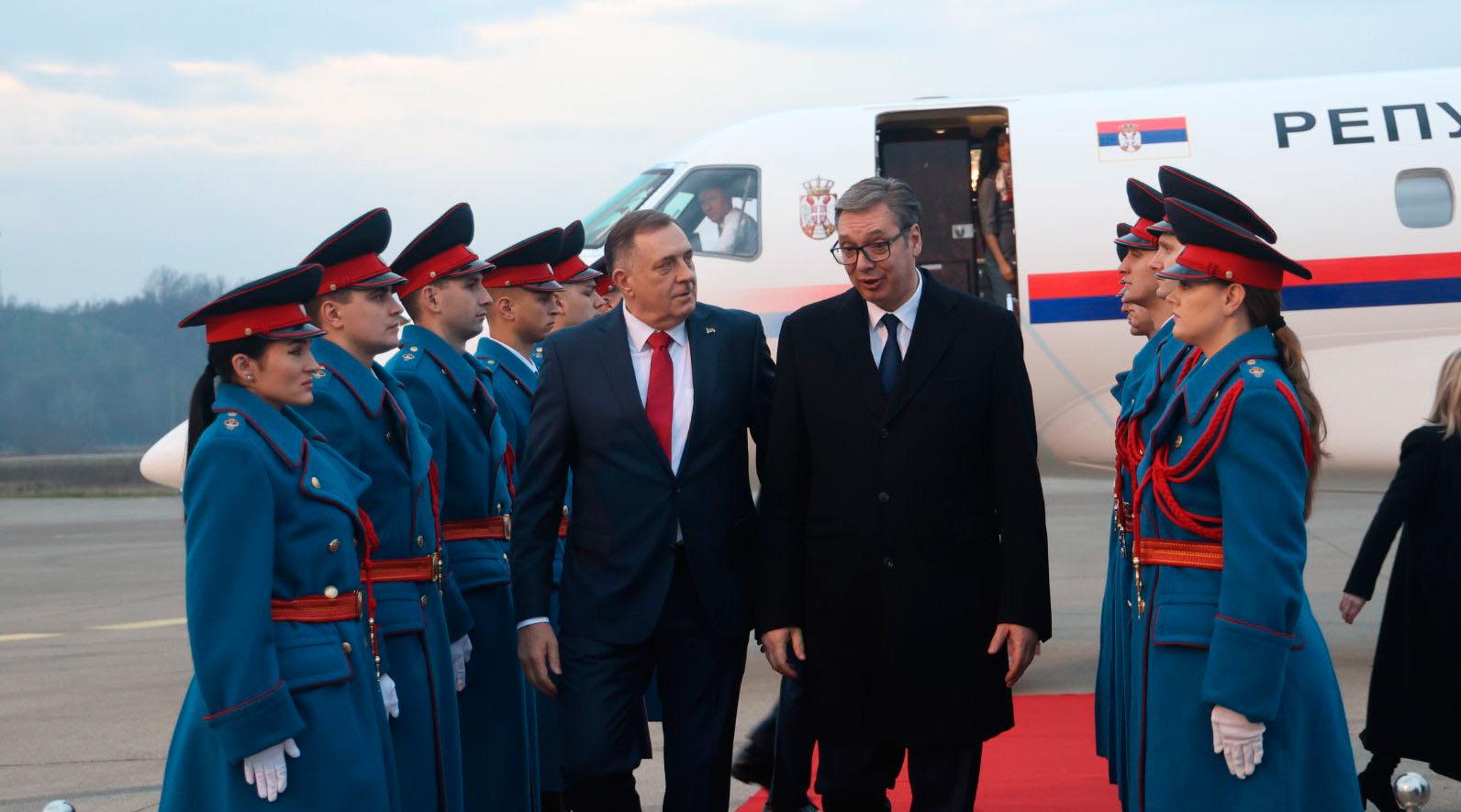
Throughout the crisis surrounding NIS, Serbian President Aleksandar Vučić’s hand was forced to pursue a policy of pragmatism. His strategy was aimed at softening the blow to the economy while preserving room for political manoeuvre. The significant amount of time bought through continuous negotiations with Washington is what became the key achievement of his diplomacy. Belgrade not only secured several extensions, but even in the aftermath of the sanctions being enacted has managed to obtain a temporary licence allowing the company to operate until the end of March 2026. It proved possible to avoid a total fuel shortage, although the urgent sale of the Russian stake had to be organised. At the same time, Serbia prepared for the worst-case scenario. €1.4 billion was set aside in the state budget in case a rescue of NIS would require its temporary nationalisation. This step likely turned into a strong bargaining chip at the negotiations table, demonstrating Belgrade’s readiness to take the situation under its control.
The Future of the Russian Presence in Serbia: “We Are Not Going Anywhere”
Negotiations between Moscow and Belgrade in late 2025 and early 2026 appeared highly contradictory. The Russian side appealed to the legal framework, pointing out the existence of an intergovernmental agreement prohibiting the nationalisation of assets. Foreign Minister Sergey Lavrov called for “courageous decisions”, hoping for a certain degree of solidarity in resisting US pressure. In reality, however, for Belgrade the threat represented by the country’s only refinery shutting down and the risk of secondary sanctions against the entire financial system outweighed any prior agreements. Statements by Aleksandar Vučić about his readiness to pay a “fair price”, but to “take matters into his own hands” in the event of inaction by the Russian side, made it clear that Serbia’s overriding priority was to ensure the uninterrupted operation of critical infrastructure at any cost. The strength of legal guarantees comes into question when an opponent utilizes levers with a capacity to paralyse the economy of a sovereign state and alter the regional balance of power.
That said, the sale of NIS assets does not imply Russia’s total exclusion from Serbia. It is becoming necessary to accept that under current geopolitical conditions it would be unsafe for Moscow to invest directly in the economies and industries of states that may be subjected to external pressure. The very model of Russia’s presence in the region is likely to undergo transformation: the notion of direct control over key industrial sectors is increasingly unrealistic, but more flexible forms of influence over specific economic segments remain within the realm of possibility.
First and foremost, Serbia’s dependence on Russian gas should not be overlooked. Negotiations on a new long-term gas supply contract remain a key element of bilateral cooperation. As no viable alternative to Russian gas is expected to emerge in the medium term, Moscow will retain a powerful tool of economic influence in the region. Nor should the potential for diversifying cooperation be forgotten. Bilateral partnership can develop relatively safely in sectors less vulnerable to sanctions, such as agriculture, pharmaceuticals, infrastructure projects and IT[MG1] . Political capital serves as another important Russian asset in Serbia. In light of events that took place, Moscow is likely to work more actively with public opinion, supporting pro-Russian political forces and friendly cultural initiatives. The aggressive economic policies of the West, which have inflicted serious damage on the country, will allow Russia to position itself as a counterweight that is defending Serbian sovereignty.
Eurasian Security in the Balkans: Possibilities and Opportunities
Future Prospects for NIS and What Lies Ahead for Serbia
The sale of the Russian stake in NIS will, of course, clear the company of sanctions-related risks, but it will also lead to the emergence of new strategic challenges. The future of NIS will now depend not only on Serbian management and state policy, but also on the decisions of the new majority owner. Whoever acquires the Russian shareholders’ stake, NIS is likely to face profound restructuring. The main operational problem—vulnerability of supply chains—will not disappear. The company remains dependent on the single JANAF oil pipeline in Croatia, which, as we witnessed, effectively renders the entire country hostage to the geopolitical interests of other states. Diversifying logistics would require enormous investment—for which a new investor may simply lack sufficient motivation. In the long term, NIS will have to face the necessity of investing in new areas of development and modernise production; however, if a foreign shareholder views the company merely as a source of profit, Serbia’s energy industry may once again find itself under threat.
For the region, the story of NIS will become a precedent illustrating just how far external forces are willing to go in matters of property redistribution and the struggle for influence. To all countries of South-Eastern Europe, it serves as something of a signal that any strategic partnership contradicting Washington’s course can be severed by means as far-reaching and illegal. Nor should the backdrop in the form of the unprecedented events unfolding in Venezuela be ignored. Future prospects for Russia’s political and economic influence in the region will now depend less on ownership of key assets and more on its ability to offer Serbia benefits that outweigh the costs of Western pressure and countermeasures. NIS has become the first such painful precedent, but it is unlikely to be the last challenge in the ongoing series of trials facing Russian–Serbian relations.
First published in the Valdai Discussion Club.
(votes: 2, rating: 4.5) |
(2 votes) |
Working Paper No.77 / 2023
Eurasian Security in the Balkans: Possibilities and OpportunitiesPerhaps, one option for the real content of the concept of Eurasian security will be the proposal of solutions for regional nodes of contradictions.
Brothers Forever: Russian–Serbian Economic Partnership Amid Geopolitical TurbulenceBehind closed doors: diplomatic protocol or a friendly conversation?


