
Why does Russia need a new framework agreement with the EU? What should it be like?
In
Login if you are already registered
(no votes) |
(0 votes) |
On the eve of the Russia-EU summit in Brussels, RIAC Director General Andrey Kortunov together with RIAC experts - Alexander Tevdoi-Burmuli (MGIMO-University), Sergey Utkin (RAS) and Nikolay Kaveshnikov (Institute of Europe, RAS) - analyze the need for signing a New Basic Agreement (NBA) between Russia and the EU.
Alexander Tevdoi-Burmuli, PhD, Department of European Integration at MGIMO-University; RIAC Expert
There is essentially a formal reason for developing and signing a new agreement with the EU: the earlier, 1994, Partnership and Cooperation Agreement (PCA) is due to expire. A new agreement should become, at the very least, an indicator of progressive evolution of the bilateral relations, while the lack of the new framework agreement today is perceived as a sign of trouble.
In addition, the new framework agreement could propose or renew the strategic aims for cooperation and partnership between Russia and the EU, since the 1994 PCA has already outlived its purpose, both morally and “physically”. During that time Russia acceded to the WTO, had a period of a fairly impressive economic growth, strengthened significantly its foreign policy stance, and all that should be, in this or some other way, reflected in the new framework agreement.
But this type of agreement can be meaningful only if Russia and the EU see strategic prospects for their relations, as well as agree on their substance. Meanwhile, however, it is exactly in that dimension that bilateral relations look particularly vulnerable. The competing Eurasian and European integration projects push Moscow and Brussels to the edge of a geopolitical conflict, and deprive Russian-EU integration initiatives – from a free-trade zone to a visa-free regime – of any serious prospect. The energy cooperation, which, by virtue of its scope, could have become an anchor and a driver of bilateral cooperation, has been permanently generating mutual scares of “dependence” and “discrimination”, turning into an area of enduring tension.

There is a growing value divide between the EU and Russia, reducing the already low chance of the parties to find a common strategic interest.
Apparently, bearing that in mind, Russia was suggesting to Brussels that they should choose the format of a framework political document for the future agreement, which would become the legal basis for future negotiations in those areas which the parties might consider promising. However, at the end of the day, they opted for the European choice of an “encyclopedic agreement” in order to regulate the entire gamut of relations that Russia and the EU have maintained so far, and to offer a long-term strategic perspective.
At the moment, this option appears hardly feasible, the fact supported by six years of ongoing negotiations. By comparison, the effective PCA was agreed upon in just slightly over two years.
With that in view, what should serve as the pillars of a new framework agreement? Obviously, in the absence of strategic consensus, the new framework agreement should focus on the pragmatic aspects of bilateral collaboration, i.e. issues of industrial dialogue, easing access to markets, political cooperation in areas of common interest (cross-border crime, etc.). This area of sector-specific cooperation has already acquired its own momentum and, given a proper legislative support (including that of the framework agreement), is quite capable of laying the basis for a strategic leap sometime in the future, if and when the conditions are right for it.
Sergey Utkin, PhD, Head of the Strategic Assessments Unit at the Case Study Centre of the Russian Academy of Sciences

Debates around the new EU-Russia framework agreement, which was expected to replace the existing Partnership and Cooperation Agreement (PCA) between Russia and the EU, have been going on for years already. It made sense when the original term of the PCA was drawing to an end in 2007: in 2005, the road maps fixed the concepts of “common spaces” for Russia and the EU; in 2006, the parties arrived at an agreement to simplify visa procedures, and this positive momentum could have been capitalised on in the new agreement. However, there is hardly anything positive in the current Russia-EU relations. Neither party is disposed to pursue further rapprochement. Even if the text is signed, its ratification may take years. I am convinced therefore that today is not the time to sign an agreement which, because of the political setup, will be either meaningless or destructive.
However, the political situation can change, and one day Russia and the EU (or the Eurasian Economic Union and the EU in economic matters) will demonstrate readiness to take a step towards each other. Should it happen, the parties may again go back to this idea of a new framework agreement. There will be no need to rediscover America to make it substantive. Its economic dimension will require setting up a free trade zone, unifying standards in order to facilitate industrial cooperation, and arriving at a common understanding over the energy market rules. Politically, it may implement the key idea of the 2010 Meseberg Memorandum, creating an EU-Russia Political and Security Committee empowered to take decisions and making Russia’s and the EU’s efforts in the international arena more coordinated.
Deferring the new framework agreement to a more distant future should not be interpreted as procrastination. Many of the currently pertinent issues between Russia and the EU can and must be resolved outside the framework of a comprehensive treaty. To be more specific, within three years and with fully operational biometrics at the borders, it is quite realistic to expect movement towards a visa-free regime for short-term travels, and that alone would seriously help EU-Russia relations, bringing the people, if not the governments, closer together.
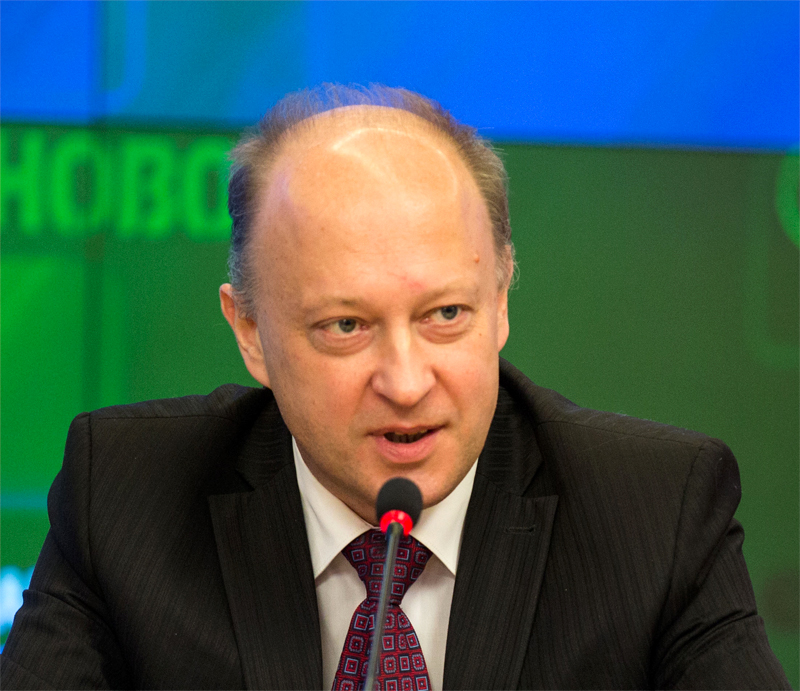
Andrey Kortunov, PhD, RIAC Director General
As the history of relations between Moscow and Brussels suggests, both parties can live without a framework agreement. The term of the initial document signed by Russia and the European Union two decades ago, has long expired; the new framework agreement has been negotiated since 2008, with deadlines repeatedly postponed: but the absence of an agreement, however, does not mean the end of cooperation. Still, the framework agreement is an important political document reflecting the understanding between the parties as to which way they want their relations to evolve. The framework agreement should also set the priorities and fix the practical objectives for the near future and in a longer term. The new EU-Russia framework agreement should obviously be a step towards a Eurasian free trade area. It is also obvious that the parties should proceed from the common WTO rules to which Russia has finally adhered to. The rest is less obvious, however. How detailed and particular should the new framework agreement be? Are the parties prepared to use the WTO rules as a basis and overlay them with their own, additional level of rules, standards and procedures? Will the new framework agreement have a political bloc, and if so, what could it be like, given the significant differences in the positions of the parties on many fundamental political issues? One wants to hope that in 2014 all these questions will be answered in a way that will suit both parties. However, it may be a bit premature to make any optimistic predictions as to the time when the new framework agreement will be signed.
Nikolay Kaveshnikov, PhD, Head of Department of European Integration at MGIMO-University, Leading Research Fellow at the RAS Institute of Europe

Signed back in 1994, the current Russia-EU Partnership and Cooperation Agreement is irreparably obsolete, because Russia has already built the basics of market economy and effective statehood, while the European Union has considerably enlarged its membership, has grown into a powerful political actor and initiated a number of new integration projects. The concept of strategic partnership and four common spaces has made the bilateral relationship more intensive, while the world has also changed giving rise to new challenges that could be efficiently handled with only through mutual cooperation.
The New Basic Agreement (NBA) has been planned as a brief document covering the overall package of economic and political relations. The new agreement’s structure is to reflect the four common spaces built by Russia and the EU, i.e. economy; external security; freedom, security and justice; science and education. The NBA should also reject any kind of asymmetric political conditionality, and, if needed, could be augmented with sectoral agreements for detailed regulation of certain cooperation areas.
There are two key points to be specified by the NBA. The first one is the new WTO-based regime for trade and investment interaction providing for progressive elimination of non-tariff barriers, primarily in investing and regulatory cooperation to facilitate trade and commerce. The other one includes the modernization of goals, principles and mechanisms in foreign policy cooperation, among other things, in order to establish an effective basis for interaction in crisis management.
Kirill Entin, Associate Professor of the Department of World Economy and Politics, Research Fellow at the Center for Comprehensive European and International Studies, Higher School of Economic
When Russia and the EU started negotiating the new basic agreement in 2008, the Partnership and Cooperation Agreement (PCA) was already obsolete, unable to reflect the realities due to the transformation of the Russian economy and deepening European integration. After the four common spaces were established and the roadmaps together with the Partnership for Modernization project emerged, the cooperation moved its base to other documents, sometimes legally invalid and offering insufficient guarantees for business community.
Although the PCA potential is largely unrealized – suffice to remember its FTA provision – it has laid the institutional foundation for cooperation between Moscow and Brussels.
It would be naïve to believe that a new basic agreement is a magic wand that can put an end to differences between Russia and the EU in energy, foreign policy or the post-Soviet space issues. Nevertheless, it could become the initial step to drive the relationship out of the crisis or stagnation. To a great extent, it should depend on the document's substance to cover the following key points:
Firstly, the new basic agreement should not be limited to declaration of achievements but rather set the pace by new ambitious goals like a common innovative space and a common labor market.
Secondly, a successful relationship requires a better institutional partnership, which means advancing the trend to depoliticization of the dialogue by cutting the number of summits to once a year and strengthening the Permanent Partnership Council through its regular meetings and establishment of committees to draw up decisions.
Thirdly, as seen from the PCA practice, norms may become effective only if their implementation does not depend on politics or adoption of additional acts. To this end, the new agreement should be based on directly applicable norms with clear-cut obligations of the parties toward elimination of barriers and discrimination.
Finally, the heart of the matter is in the economy. The FTA-plus scheme seems to be a perfect scenario, however, it requires a modus vivendi to couple the EU and Russian integration projects.
(no votes) |
(0 votes) |


