
“The Global Anti-Fascist War”: Memory of the Second World War in Non-Western Countries
In
Login if you are already registered
(votes: 2, rating: 5) |
(2 votes) |

RIAC Publishing Editor
If we are to follow Karl Jaspers, the Axial Age in human history fell roughly between the eighth and second centuries BCE—during these six centuries, all the major religious and philosophical teachings emerged, and they largely shaped the present parameters of world civilizations. By drawing a small analogy, the Second World War (WWII) can be described as the Axial Age for the international system currently in operation—institutions established by the victorious powers are still functioning (although no longer in the form in which they were originally envisioned), and any changes on the political map of the world or deeper transformations of the world order are, to a significant extent, connected with challenges to the outcomes of what we hope was the last world war.
In this context, it is interesting to observe changes in the realm of public memory—specifically, how both the victors and the defeated are altering their attitudes toward the events and outcomes of the Second World War.
Our understanding, as descendants of the frontline generations that defeated Nazism in Europe, remains in many respects shaped by a Eurocentric perspective. School curricula, commemorative practices, and public ceremonies predominantly narrate the course of military operations and the “aftershocks” of the war in Europe, while largely overlooking non-Western contexts. Yet across Asia and Africa, distinct narratives of the Second World War have taken shape—narratives that, if not always central, nonetheless constitute significant components of national historical self-understanding.
Non-Western states are developing their own perspectives on the Second World War, embedding in their national narratives the experience of either direct or indirect involvement in the conflict. It is important to note, however, a crucial point: the elaboration and promotion of these distinct historical interpretations by non-Western countries need not conflict with the memories of the same events held by other nations and peoples. A vivid example is the cooperation between Russia and China in preserving the historical memory of the Second World War. It is conceivable that mutual respect and recognition of each country’s particular perspective on shared historical episodes could offer a model for the peaceful resolution of many memory-related disputes—at least in the near or more distant future.
If we are to believe Karl Jaspers, the Axial Age in human history fell roughly between 800 and 200 BCE—a six-century period during which all major religious and philosophical doctrines emerged, laying much of the groundwork for the world’s present-day civilizations. By analogy, one could call the Second World War an Axial Age for the contemporary system of international relations: the institutions established by the victorious powers are still functioning (even if no longer in their original form), and any changes on the political map or deeper transformations of the world order are largely tied to contestations of the outcomes of what we hope was the last world war. In this context, it is fascinating to observe the shifts unfolding within the realm of public memory—how victors and vanquished alike are renegotiating their relationship to the events and outcomes of the Second World War.
Our collective consciousness, as heirs to the frontline generations that defeated Nazism in Europe, remains largely Eurocentric: school textbooks, commemorative practices, and public ceremonies focus primarily on the fighting and the “echoes of the war” in Europe, leaving non-Western countries largely outside the frame. Yet across Asia and Africa, distinct narratives of the Second World War have taken shape—narratives that, while not always central, nonetheless constitute important elements of their national biographies.
China and the DPRK: The Great Victory
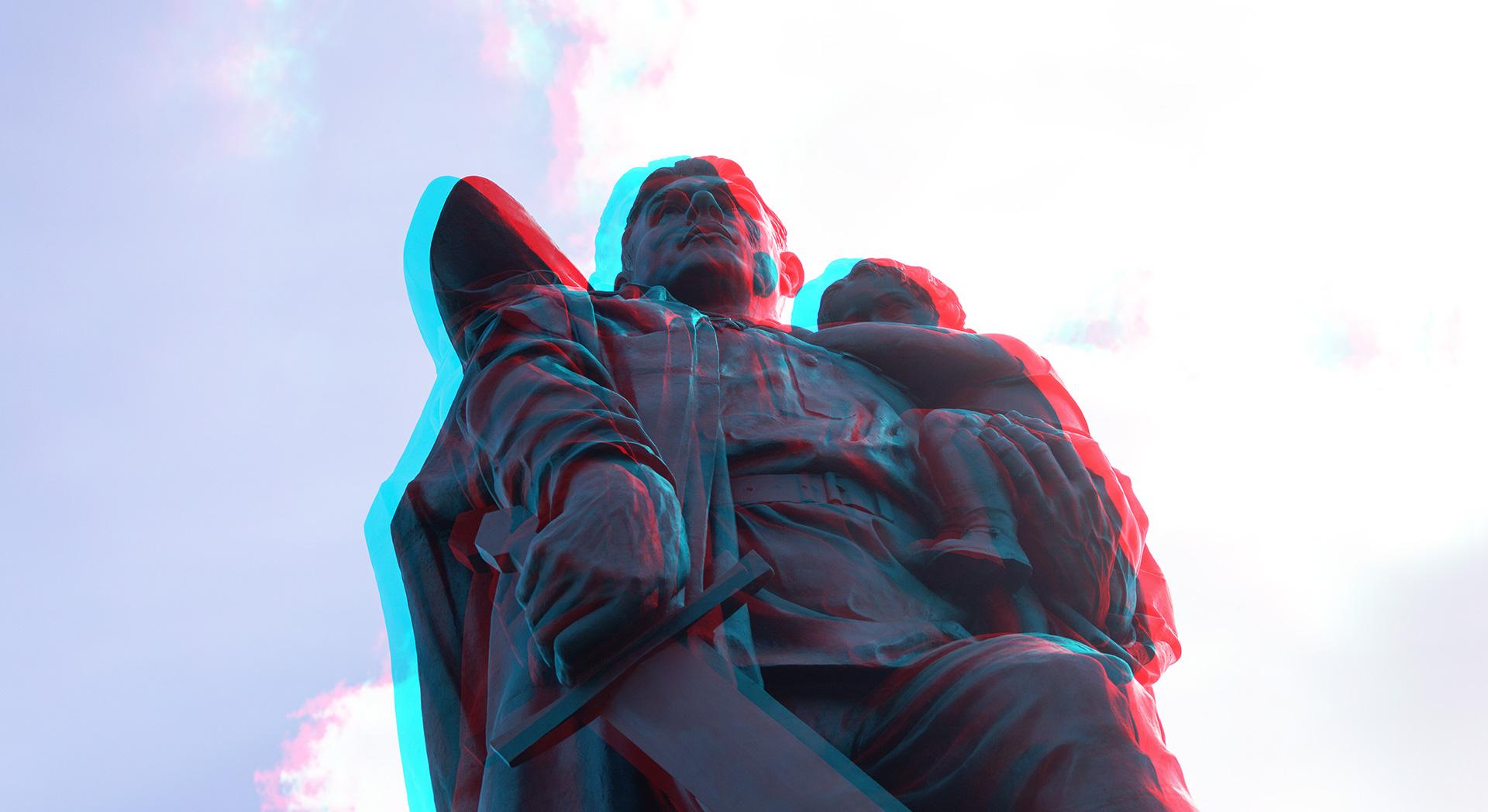
A triumphalist narrative of the Second World War has taken shape in both China and the DPRK, where the defeat of Japanese militarism is presented as a watershed moment in national history and, unquestionably, a source of pride. At the same time, for their domestic audiences, each country promotes the idea of its own decisive contribution to victory, somewhat downplaying the roles of others.
In contemporary Chinese historiography, two terms are used to describe the events of the Second World War: the “War of Resistance of the Chinese People Against Japanese Aggression” and the “World Anti-Fascist War.” Notably, China dates the beginning of the war to 1931—the “Manchurian Incident” and the start of Japan’s occupation of Manchuria. This serves as the basis for asserting that the “brutal struggle [against Japanese militarism] laid the foundation for the Allies’ eventual victory.”
The narrative of China’s decisive role in the defeat of Japan is reinforced by remembrance of the country’s losses: the authorities claim 35 million dead, and the national calendar includes a Memorial Day for the Victims of the Nanjing Massacre (observed on 13 December). The importance of foreign assistance is, of course, acknowledged; for example, Beijing frequently highlights the Soviet Union’s contribution to the defeat of Japan. Yet the prevailing interpretation suggests that by August 1945 (when the USSR entered the war against Japan), China had already delivered a decisive blow to the Japanese army, having severely exhausted its forces. Nevertheless, numerous monuments to Soviet soldiers who crushed the Kwantung Army remain preserved throughout Manchuria.
Victory in the war against Japan also became a key event underpinning the legitimacy of the Communist Party’s leading role in the country’s development. In this narrative, the CCP is presented as the principal organizer of the victory that brought an end to the “century of humiliation”—the term used to describe the period of China’s semi-colonial subjugation beginning with the Opium Wars of the mid-19th century. The triumphant conclusion of the “War of Resistance Against Japan” also serves as a reminder that the Guomindang was unable to withstand the aggressor on its own, and that the weakness of its leadership predetermined its defeat in the civil war, which ultimately led to the proclamation of the PRC.
In North Korea’s triumphalist narrative, central emphasis is likewise placed on the “national” forces—the communist partisans led by Kim Il-sung—even though Korean troops did not in fact participate in the actual combat operations. Victory over Japan, the Soviet role in which has been alternately downplayed and cautiously acknowledged in official historiography, also became one of the key pillars of the regime’s legitimacy, together, of course, with victory in the Korean War (1950–1953).
India and the African States: Decolonization
War and Peace: Where Is the World Headed?
The Second World War served as an important catalyst for the emergence of national consciousness in countries that were, at the time, under colonial rule by European powers. Thus, the Indian narrative of the Second World War does not center on combat operations (in which Indians participated on both sides of the conflict) or on the victors, but rather on individual figures and events that ultimately led to the country's independence from Great Britain.
A political party’s affiliation plays a major role in shaping India’s approach to history. Thus, when the Indian National Congress (INC) was in power, primary attention was devoted to Jawaharlal Nehru—one of the INC’s leaders, a prominent participant in the civil disobedience campaign, and the first prime minister of independent India. After the Bharatiya Janata Party (BJP) came to power, the main historical protagonists became Vallabhbhai Patel, a leading figure of the INC’s right wing, and Subhas Chandra Bose, the leader of the Indian National Army who fought against the British on Japan’s side. An important clarification: the focus on S. Ch. Bose does not imply support for the agenda or actions of the Axis powers—only an emphasis on Bose’s pursuit of India’s independence. The paradox of Indians fighting against other Indians on the battlefields of the Second World War is explained with the notion that “they were all fighting for India.”
India’s position on the international stage is more clear-cut. While still under British colonial rule, the country became one of the founding members of the United Nations. India also underscores its substantial contribution to Japan’s defeat in Southeast Asia. On these grounds, New Delhi seeks a permanent seat on the UN Security Council as a state that regards itself as one of the victors of the war.
For many North African countries, the Second World War remains a major historical milestone—a prelude to independence or to a prolonged anti-colonial struggle. Their territories became battlegrounds where British and American forces sought to break German and Italian resistance. This experience is reflected in contemporary commemorative practices across parts of the Maghreb. In Egypt, for example, particular emphasis is placed on the El Alamein memorial, the site of one of the pivotal battles in North Africa. However, the primary historical focus of these countries remains on what followed the war—namely, their own struggles for independence.
For sub-Saharan African countries, Ethiopia’s experience became an important symbol of resistance to colonialism: it mounted fierce opposition to European powers, was only reluctantly subdued by the Italians, and by 1941 was liberated through the combined efforts of local forces and European allies. African participation in the conflict on the side of the colonial metropoles helped strengthen emerging national consciousness, even though the war itself was largely perceived as “someone else’s conflict.”
Iran and Turkey: An Uncomfortable Past
In Iran’s historical memory, the country’s involvement in the Second World War occupies an inherently ambiguous place. The war is viewed negatively, shaped by the trauma of Iran’s semi-colonial status in the nineteenth century, when the country was divided into spheres of influence between Russia and Great Britain. The entry of Soviet and British troops into Iran in 1941 (Operation Countenance) and their presence there until 1946 evoke, in the Iranian consciousness, direct parallels with that colonial past. By contrast, a different armed conflict—the Iran–Iraq War of 1980–1988, during which the newly formed Islamic Republic managed to endure—is remembered as a moment of national pride.
Colonial-era trauma continues to shape both Iran’s perception of its role in the Second World War and its attitude toward the Allied victory, which is not commemorated in the country. In recent years, however, Iran’s official discourse has increasingly emphasized the decisive role of the Soviet Union in defeating Nazism—a trend that reflects Tehran’s desire to strengthen its strategic partnership with Moscow. Iran also highlights its contribution as the “bridge of victory,” underscoring the importance of the “Trans-Persian Corridor,” which linked the Persian Gulf to the Soviet Union and was extensively used by Britain and the United States to deliver military and humanitarian supplies to the USSR.
In Turkey, the memory of the Second World War remains a subject of political contention. During the war, Ankara pursued a “policy of maneuvering” between the opposing sides and declared war on Germany only in February 1945—a move that secured Turkey an invitation to the San Francisco Conference and the status of a founding member of the United Nations. The country mobilized its armed forces, and the Turkish government calculated that the economic losses resulting from full involvement in the conflict would in any case exceed the costs associated with avoiding direct military operations on Turkish territory.
The Justice and Development Party (AKP) of Recep Tayyip Erdoğan has been openly critical of the leadership of wartime Turkey under İsmet İnönü, a close associate and successor of the Republic’s founder, Mustafa Kemal Atatürk. Another narrative promoted by official Ankara—aimed at placing Turkey within the broader pantheon of wartime victors (and diverting attention from the country’s documented cooperation with Nazi Germany)—focuses on assistance provided to Jews during the Holocaust. Each year, Turkey commemorates the sinking of the Struma off its coast, a ship carrying more than 750 Jewish refugees from Romania to Palestine. This is the only commemorative event in Turkey directly connected to the Second World War.
Japan: Reinterpreting Defeat
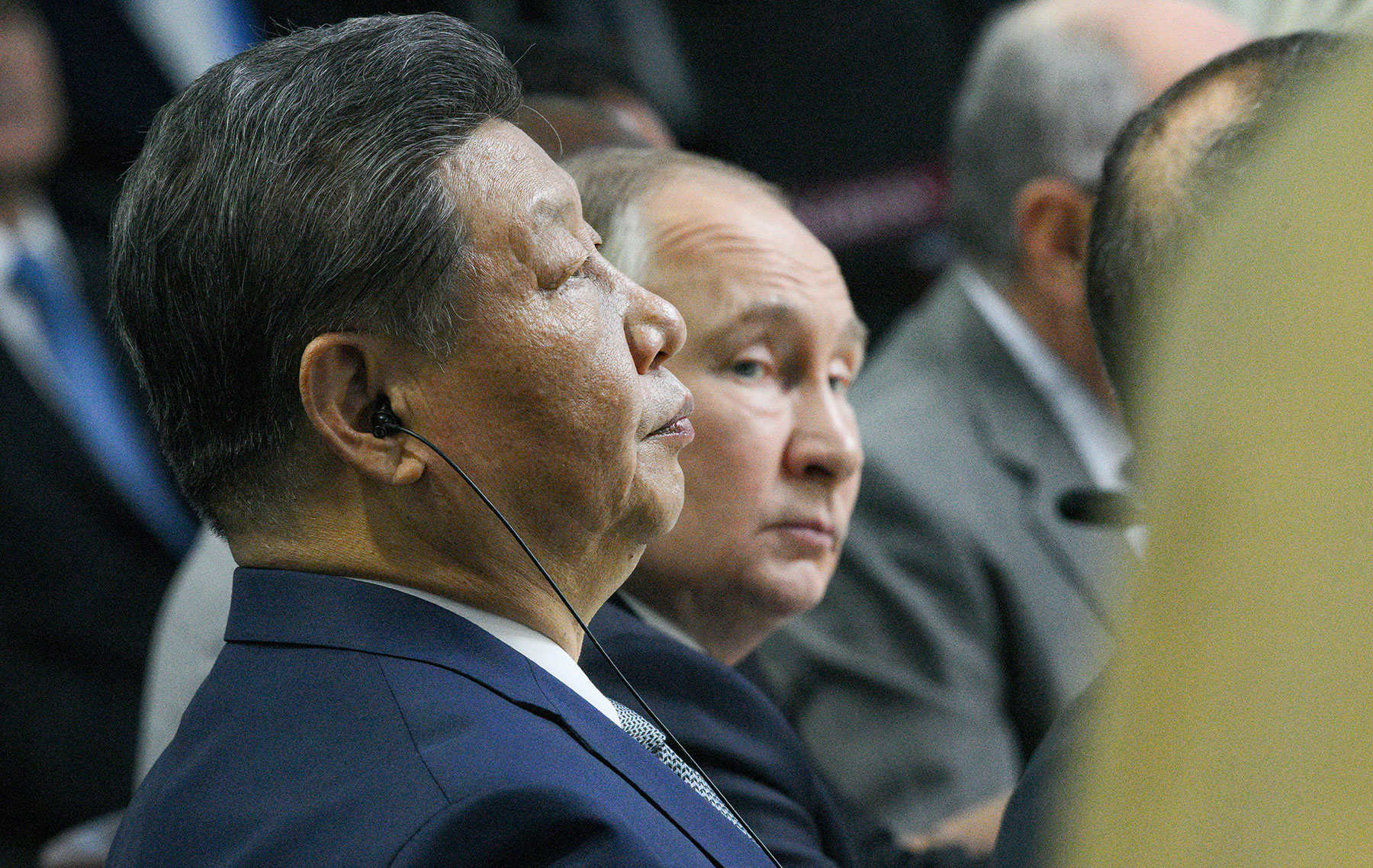
President Xi Comes to Town
In contemporary Japan, which waged war in the Pacific theatre, public debate persists over how to confront this difficult chapter of the national past. The complexity stems from Japan’s dual status: it was both an aggressor—whose brutality toward civilians in occupied territories at times exceeded even the crimes of the Nazis—and a victim, having suffered the only atomic bombings in world history at the hands of the United States. Consequently, in Japan’s national narrative, the memory of the tragedy of Hiroshima and Nagasaki has increasingly come to overshadow recollections of imperial Japan’s aggression and the wartime atrocities committed by its armed forces.
The direction of Japan’s reinterpretation of its role in the Second World War in public discourse has tended toward softening and retouching certain problematic episodes, such as wartime crimes committed in China or Korea. Official rhetoric emphasises the need to “discard ‘masochistic’ and ‘unpatriotic’ approaches to the past.” Yet such efforts continue to face consistent resistance from the opposition and from segments of Japanese civil society.
Another dimension of Japan’s reckoning with this legacy involves Tokyo’s efforts to confront its difficult past through dialogue with Beijing and Seoul. Bilateral commissions established in the 2000s to address historical disputes did carry out sustained work, yet their activities have so far failed to produce any meaningful breakthroughs.
“Axial Time”: Instead of a Conclusion
However varied different countries’ attitudes toward the events and outcomes of the Second World War may be, it is clear that this vast conflict—which claimed tens of millions of lives—continues to occupy a significant place in their historical memory. This alone gives us grounds to view the Second World War as an “axial time.” A “non-Western” perspective on the war, one that focuses on military operations and their consequences outside Europe, is valuable in its own right, as it allows us to understand the conflict as truly global in scope. At the same time, moving beyond a Eurocentric lens opens new horizons for interpreting the bloodiest war in human history.
Non-Western countries are developing their own perspectives on the Second World War, reflecting in their national narratives the experience of either direct or indirect participation in the conflict. It is important to note, however, one crucial point: the development and promotion of a distinctly non-Western view of history does not necessarily conflict with how other nations and peoples remember the same events. A vivid example is the cooperation between Russia and China in preserving historical memory of the Second World War. It is possible that mutual respect and recognition of each country’s particular perspective on shared historical episodes could serve as a model for the peaceful resolution of many historical disputes—at least in the near or more distant future.
(votes: 2, rating: 5) |
(2 votes) |
President Xi Jinping's official visit to Moscow symbolizes not only the stability of Sino-Russian relations, but also their development and enhancement
War and Peace: Where Is the World Headed?The international community cannot simply allow events to unfold according to the “law of the jungle”


