
Sanctions, Foreign Trade Policy and National Interests: A Reassessment for Germany
(votes: 7, rating: 5) |
(7 votes) |

Ph.D., Human Rights Policy Spokesperson of the AfD Parliamentary Group in the German Bundestag

Economist, MIWI — Institute for Market Integration and Economic Policy
Germany is actively participating in Western sanctions against around 30 countries. These sanctions do not serve Germany’s national interest but instead follow geopolitical directives issued by the United States and Brussels.
Western sanctions are imposing significant economic costs on Germany. Prior to the Ukraine conflict, the Ifo Institute calculated losses amounting to 0.2% of the GDP (roughly €200 per household). New estimates by the MIWI Institute place the sanction-induced economic damages on the German economy at 2.5% of the GDP (approximately €2,500 per household).
German sanctions have also led to severe economic losses in countries of asylum-seeker origin. Particularly affected are Syria (0.2% of the GDP), Iran (0.3%), Afghanistan (0.8%), Eritrea (1.7%), Somalia (1.8%), and Libya (2%). Economic hardship has increased migratory pressure from these countries. Lifting German sanctions could reduce migratory pressure from these asylum-origin countries by approximately 0.5%, which corresponds to a reduction of about 600 asylum seekers in Germany per year.
The federal government should reject sanctions that harm Germany’s national interests, while at the same time pursue a foreign trade policy that protects German economic and technological leadership. Sanctions should be retained only as a last resort in defending national economic and security policy interests. This should be done with care: Germany’s foreign trade ratio (83% of the GDP) makes it more vulnerable to sanctions and countersanctions than the United States (25%). The U.S. benefits from its large domestic market and the global role of the U.S. dollar.
Strategic sectors must be clearly defined based on 1) substitutability and 2) relevance to the overall economy and national defence capacity, in order to justify state trade policy measures.
Autarky is inefficient; what is needed instead is a smart import and export strategy based on comparative advantage. Berlin should seek to reduce dependence on individual countries for strategic goods through diversification measures. A concentration tariff could help avoid monopolistic supplier positions and promote alternative sourcing. Capacity markets and strategic contracts could ensure supply security in the event of geopolitical crises. To maintain technological leadership, horizontal locational conditions need be improved: taxation, regulation, energy supply, and skilled labour. Local-content criteria could provide incentives for increased domestic production in Germany and the European Union.
Export dependencies, especially on the United States, should be reduced, and alternative sales markets opened. Free trade agreements can help minimize economic risks from trade conflicts.
Germany is one of the largest providers of international development aid (2022: over €34 billion). A reassessment of Germany’s development policy is necessary to evaluate its effectiveness and its utility for national interests. Development aid should be strategically deployed to reduce immigration by linking it to clear conditions:
- Education, especially for women, lowers birth rates and thereby migration pressure.
- Financial aid should only be granted to countries that agree to take back rejected asylum seekers. Countries that refuse repatriation should be excluded from receiving aid.
- Remigration agreements, modelled on the UK’s deal with Rwanda, could facilitate the deportation of rejected asylum seekers.
Right-wing political forces in Germany, such as the AfD, seek a fundamental reform of the EU, but aim to preserve the single market, customs union, and free trade. Germany should aim to negotiate from a position of strength and make use of its market power. The German domestic market could be used as leverage in regard to Central European states. Germany contributes 51% of net EU transfers the threat of reducing this could serve as a bargaining tool. Net transfer recipients such as Croatia, Greece, Bulgaria, and Latvia would be particularly affected. For major EU countries like France, Italy, and Spain, Germany could consider leveraging its Target-2 claims.
Summary and Policy Recommendations
Germany is actively participating in Western sanctions against around 30 countries. These sanctions do not serve Germany’s national interest but instead follow geopolitical directives issued by the United States and Brussels.
Western sanctions are imposing significant economic costs on Germany. Prior to the Ukraine conflict, the Ifo Institute calculated losses amounting to 0.2% of the GDP (roughly €200 per household). New estimates by the MIWI Institute place the sanction-induced economic damages on the German economy at 2.5% of the GDP (approximately €2,500 per household).
German sanctions have also led to severe economic losses in countries of asylum-seeker origin. Particularly affected are Syria (0.2% of the GDP), Iran (0.3%), Afghanistan (0.8%), Eritrea (1.7%), Somalia (1.8%), and Libya (2%). Economic hardship has increased migratory pressure from these countries. Lifting German sanctions could reduce migratory pressure from these asylum-origin countries by approximately 0.5%, which corresponds to a reduction of about 600 asylum seekers in Germany per year.
The federal government should reject sanctions that harm Germany’s national interests, while at the same time pursue a foreign trade policy that protects German economic and technological leadership. Sanctions should be retained only as a last resort in defending national economic and security policy interests. This should be done with care: Germany’s foreign trade ratio (83% of the GDP) makes it more vulnerable to sanctions and countersanctions than the United States (25%). The U.S. benefits from its large domestic market and the global role of the U.S. dollar.
Strategic sectors must be clearly defined based on 1) substitutability and 2) relevance to the overall economy and national defence capacity, in order to justify state trade policy measures.
Autarky is inefficient; what is needed instead is a smart import and export strategy based on comparative advantage. Berlin should seek to reduce dependence on individual countries for strategic goods through diversification measures. A concentration tariff could help avoid monopolistic supplier positions and promote alternative sourcing. Capacity markets and strategic contracts could ensure supply security in the event of geopolitical crises. To maintain technological leadership, horizontal locational conditions need be improved: taxation, regulation, energy supply, and skilled labour. Local-content criteria could provide incentives for increased domestic production in Germany and the European Union.
Export dependencies, especially on the United States, should be reduced, and alternative sales markets opened. Free trade agreements can help minimize economic risks from trade conflicts.
Germany is one of the largest providers of international development aid (2022: over €34 billion). A reassessment of Germany’s development policy is necessary to evaluate its effectiveness and its utility for national interests. Development aid should be strategically deployed to reduce immigration by linking it to clear conditions:
- Education, especially for women, lowers birth rates and thereby migration pressure.
- Financial aid should only be granted to countries that agree to take back rejected asylum seekers. Countries that refuse repatriation should be excluded from receiving aid.
- Remigration agreements, modelled on the UK’s deal with Rwanda, could facilitate the deportation of rejected asylum seekers.
Right-wing political forces in Germany, such as the AfD, seek a fundamental reform of the EU, but aim to preserve the single market, customs union, and free trade. Germany should aim to negotiate from a position of strength and make use of its market power. The German domestic market could be used as leverage in regard to Central European states. Germany contributes 51% of net EU transfers—the threat of reducing this could serve as a bargaining tool. Net transfer recipients such as Croatia, Greece, Bulgaria, and Latvia would be particularly affected. For major EU countries like France, Italy, and Spain, Germany could consider leveraging its Target-2 claims.
Sanctions in History: A Central Instrument of Power Politics
Sanctions are not a modern invention; they have accompanied human history since its beginnings. They are as old as taxation, which was already documented in the tax records of the ancient Sumer. For millennia, states and political actors have used sanctions as tools of economic and political influence.
One of the earliest known examples is the Megarian Decree of 432 BC, when Athens imposed a trade embargo on the city of Megara. This embargo was a key factor in the outbreak of the Peloponnesian War between Athens and Sparta. The Roman Empire also deliberately employed economic coercion, such as during the First and Second Punic Wars against Carthage. In antiquity, maritime embargoes were particularly popular, as ports were easier to control than expansive land borders.
Another example of targeted sanctions was Rome’s export ban on wine and vases to Germania following the Battle of the Teutoburg Forest in 9 AD. Rome sought to weaken the economic and military capabilities of the Germanic tribes. Similarly, Emperor Marcus Aurelius imposed sanctions on the Marcomanni between 166 and 180 AD. However, the Germanic peoples themselves also employed economic pressure: in 1368, the Hanseatic League enforced an embargo against Denmark to protect its trade interests.
Sanctions have also had far-reaching geopolitical consequences. After the conquest of Constantinople in 1453, the Ottoman Empire blocked European trade routes along the Silk Road. This act was a major catalyst for European maritime exploration, including the voyages of Christopher Columbus—a decisive impetus for the discovery of the Americas.
During the Napoleonic Wars, the Continental System was introduced as an economic embargo against Britain. This embargo, decreed by Napoleon, was intended to isolate Britain economically and weaken its war capabilities. However, enforcing these sanctions led to severe political repercussions: Russian Tsar Paul I, a supporter of the blockade, was assassinated, and his successor Tsar Alexander I withdrew Russia from the system.
These historical examples illustrate that sanctions are not a footnote in world history, but one of the most crucial instruments of economic and foreign policy. Whether as economic leverage or strategic weapon, sanctions have repeatedly shaped the course of global events—and continue to do so today.
Types of Sanctions: An Overview of Instruments of Influence
From Sanctions to Prosperity: How Normalizing Relations with Russia Would Boost Germany’s Economy
Sanctions represent a versatile tool of international politics and can be classified into numerous categories. These categories reflect the various goals and strategies pursued through the imposition of sanctions. The most important types of sanctions include:
Foreign Policy Sanctions
Foreign policy sanctions are intended to exert pressure on a state in order to achieve specific foreign policy objectives. A common form of these sanctions is diplomatic sanctions, which may involve measures such as the expulsion of diplomats or the severance of diplomatic relations. These sanctions aim to influence a country’s political negotiations and induce changes in its behaviour.
Security Policy Sanctions
Security policy sanctions focus on safeguarding one’s own defensive capabilities or weakening the military capacity of an adversary. Military sanctions include restrictions on military cooperation and the trade of weapons or military equipment. The goal of these sanctions is to reduce the military strength of a hostile state and thereby ensure national security.
Economic Policy Sanctions
Economic sanctions aim either to promote the imposing state’s economy or to damage the economy of another country. A frequent measure in this area is trade sanctions, which limit or prohibit the movement of goods between countries. These may target specific goods or involve broad trade embargoes. In addition, financial and banking sanctions play a significant role. These restrict a country’s access to international financial markets and banking systems, potentially causing severe economic disruption. The objective is to impair a country’s economic capabilities and thereby force political concessions.
Technological Sanctions
Technological sanctions have gained increasing importance in recent times. They pertain particularly to the export of advanced technologies that can be used for both civilian and military purposes—so-called dual-use goods. These sanctions are intended to limit a country’s access to advanced technologies that could be of military value. Such measures are particularly relevant in geopolitically sensitive sectors such as aerospace, defence industries, and information technology.
Individual Sanctions
Individual sanctions do not target entire countries but rather specific individuals—especially oligarchs, political decision-makers, or other influential figures. These sanctions may include travel bans, asset freezes, or other restrictive measures. They are a targeted means of constraining the operational capacity of individuals in positions of power and incentivizing specific political behaviours.
Scientific Analysis of Sanctions
The academic study of sanctions has grown significantly in recent years. A noteworthy initiative for the systematic collection of sanctions data is the Global Sanctions Database, established by Bulgarian-American economist Yoto Yotov. [1] This database records all sanctions imposed worldwide and categorizes them by type—such as trade, finance, or travel. The aim of the Global Sanctions Database is to analyse the economic and political effects of sanctions and thereby provide a robust foundation for evaluating their effectiveness. The project is also supported by Gabriel Felbermayr, a distinguished economic researcher from Austria.
Germany’s Participation in Western Sanctions: Double Standards and Geopolitical Dependence
Germany actively participates in Western sanctions against roughly 30 countries, yet these measures are not enacted in the national interest of the German peoples, contrary to official claims. Rather, the federal government operates as part of a broader geopolitical game, essentially directed by the United States and the EU bureaucracy.
Among the sanctioned nations are Iran, Russia, and North Korea, as well as countries such as Syria, Afghanistan, Somalia, and Eritrea—important countries of origin for illegal migration and asylum seekers to Germany. Syria, in particular, which was previously subjected to harsh sanctions, stands as a stark example of Western policy’s double standards. The primary objective of these sanctions was “regime change,” specifically the overthrow of the legitimate Assad government. From the perspective of the transatlantic elite, these sanctions were deemed successful when the Syrian government was eventually replaced by an Al-Qaeda Islamist leader—one who proved loyal to NATO. Following this political shift, many of the sanctions were largely lifted in February 2025. The sole remaining measure was an arms re-export embargo, intended to minimize weapons proliferation to non-Western-aligned states.
Germany’s foreign policy double standards become especially apparent in its lenient stance toward countries like Saudi Arabia. In 2018, a weapons export ban was imposed on the kingdom, but this was lifted in 2024 again to avoid straining ties with Riad. Similarly, in Nigeria—where Christians are killed monthly by Islamist terror groups—the German government, like the EU, has remained inactive and imposed no sanctions.
This selective sanction policy exposes the true agenda behind Western measures: it is less about values or human rights and more about geopolitical interests and the maintenance of an international order governed by a small, globalist elite. Germany has positioned itself as a loyal partner to this elite, without defending its own national interests—in fact, actively undermining them.
The Cost of Western Sanctions for Germany
The economic cost of Western sanctions for Germany is considerable and can be substantiated by various studies and analyses. Prior to the Ukraine conflict, the Ifo Institute estimated that sanctions cost Germany 0.2% of its GDP—equivalent to about €200 per household. Of this amount, 0.16% was attributed solely to sanctions related to Crimea, making it a significant contributor to overall costs.
Remarkably, the most recent comprehensive analysis of the Russia sanctions did not come from any legacy German research institute—raising questions about transparency and possible suppression of information. New calculations conducted by Dr. Rainer Rothfuss and the author for the MIWI Institute reveal that the costs of the post-February 2022 Russia sanctions have now risen to 2.5% of the GDP, amounting to approximately €2,500 per household annually. These figures illustrate the severe economic impact of the sanctions on the German population.
Diverging Effects of German Sanctions on Target Countries

EU Sanctions: Signal Package
Western sanctions—especially those against Russia—have clearly failed in achieving their original aim: halting Russian intervention in Ukraine. As of December 2024, Ukraine continued to lose territory despite the sanctions, while Russia gained ground. This development has been confirmed by Austrian military expert Colonel Markus Reisner. Meanwhile, Russia managed to sustain economic growth despite sanctions: between 2019 and the end of 2024, Russia’s GDP per capita rose by 6.3%, whereas German GDP per capita declined by 1.1% over the same period. Real wages followed a similar pattern: in Germany, they were still 4% below 2019 levels in 2024, while in Russia, they had increased by an impressive 52%. Furthermore, in 2024, Russia generated €117.3 billion in oil and gas revenues—a 13.5% increase compared to 2021.
While Russia managed to hold its ground economically, German sanctions significantly contributed to economic losses in other targeted states—many of which are countries of origin for asylum seekers to Germany. German sanctions imposed economic burdens particularly on nations such as Syria (0.2% of GDP), Iran (0.3%), Afghanistan (0.8%), Eritrea (1.7%), Somalia (1.8%), and Libya (2%). These burdens have intensified emigration pressure from these regions.
Studies from the Kiel Institute for the World Economy show that increased GDP per capita growth in developing countries can significantly reduce emigration pressure to OECD states. A 1% increase in GDP growth could reduce migration pressure by 0.5 to 1 percent. Thus, sanctions not only damage the economies of these countries but also contribute to rising migration flows into Western nations—especially Germany.
Ending Germany’s participation in Western sanctions could reduce emigration pressure from these asylum-source countries by approximately 0.5 percent. Given the 120,000 asylum applicants from these countries in 2024, this would translate to a reduction of around 600 asylum seekers. Such a measure could not only ease the burden on Germany’s social system but also strengthen public safety on German streets.
Sanctions as an Instrument of Foreign Trade Policy
The German government should employ sanctions could as part of a new foreign trade strategy—but not to serve foreign globalist agendas, as is currently the case. Rather, such measures should be implemented to safeguard Germany’s own—national—interests.
Strategic Sectors: Substitutability and Relevance
A key consideration in this approach is the definition of “strategic sectors.” These should be clearly delineated, as they are not only vital for the basic needs of the population—such as food, energy, and water—but also, in the case of high technologies, communications infrastructure, and defence equipment, crucial for the long-term preservation of Germany’s economic and national security sovereignty.
Caution must be exercised to prevent lobbyists from abusing the label “strategically relevant” to have a wide range of their products classified as such—products that ultimately possess no strategic significance, such as wind turbines. A precise delimitation is essential to correctly assess strategic importance and, where necessary, implement targeted state measures.
The increasing multipolarity and bloc formation in global trade require a nuanced assessment when deploying trade instruments such as sanctions or tariffs. Economists like Gabriel Felbermayr recommend two essential criteria: the substitutability and relevance of a good. Substitutability assesses whether affected goods can be replaced by other sources in the short term, while relevance refers to the good’s importance to the national economy. [2]
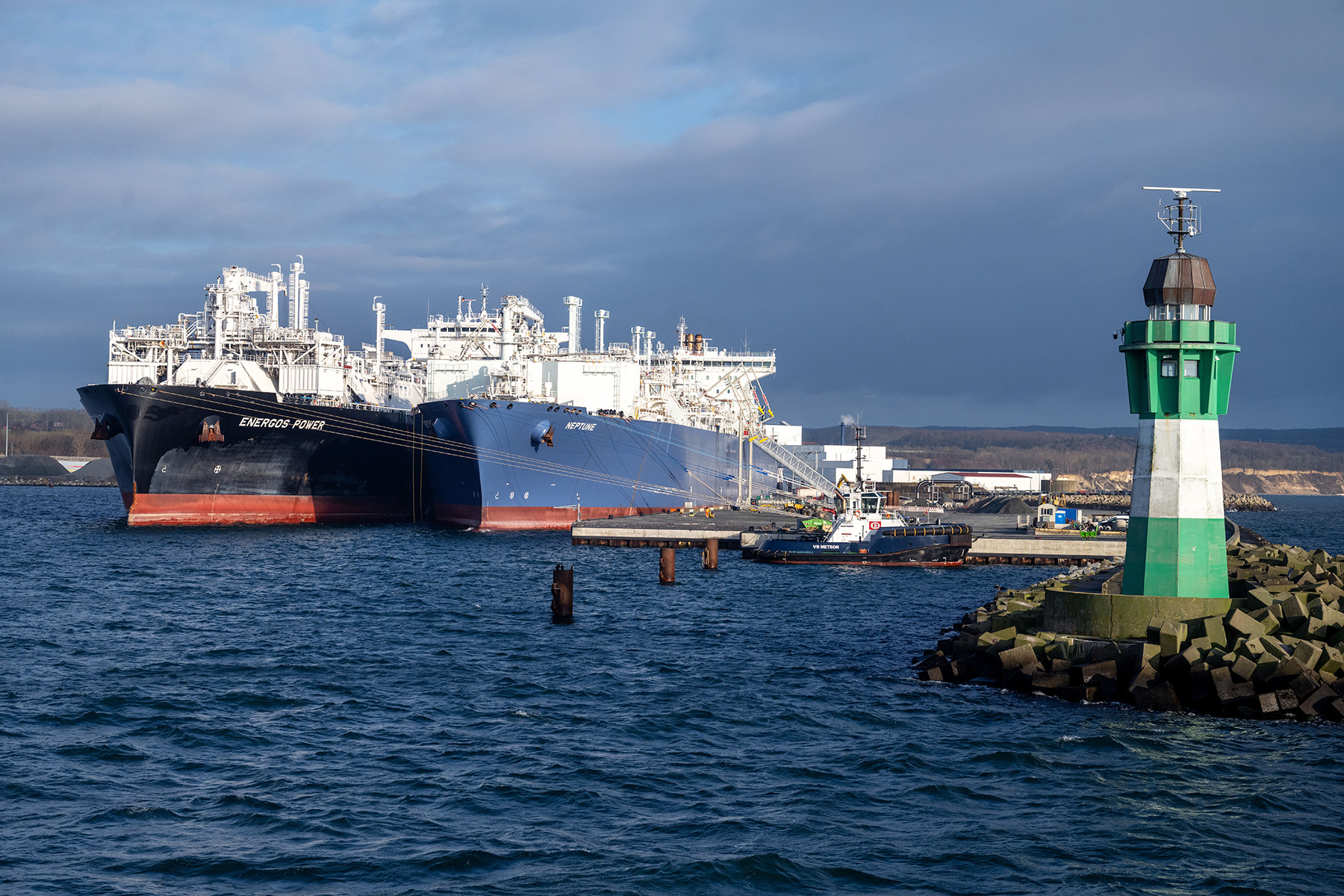
One example of the first case is Russia’s response to Western sanctions, particularly financial sanctions. Russia was compelled to reduce gas deliveries to Europe. [3] For Germany—especially for its industries, which had benefited for over five decades from affordable Russian gas—this posed a severe economic burden. Gas supplies could not be replaced in the short term, resulting in significant macroeconomic costs. Simultaneously, the relevance of gas for the German economy remains high, as it is a foundation for many industrial sectors. A notable aspect of this crisis is the double standard of German politicians. While approximately 42% of gas imports came from Russia in 2021, around 45% now originates from the United States in the form of liquefied natural gas (LNG)—a shift that has been met with little critical scrutiny by the established parties. A national-minded government should address this dependency, not only on Russia but also on the United States and should pursue a pragmatic strategy of energy import diversification.
Another example concerns solar panels from China. In the 2000s, Germany attempted to build its own solar cell industry, but domestic production disadvantages and China’s comparative advantages led to the industry’s relocation there. Should China halt solar panel exports to Germany, a short-term replacement would be difficult. However, this sector is not of critical importance to the German economy. Therefore, industrial and trade policy measures against China in this area would not be justified.
A further critical case is the import of rare earth elements, for which Germany relies on China for 95% of supply. If China were to cease exporting these resources, the consequences for the German economy could be as dramatic as those of the COVID-19 crisis, with a projected GDP decline of 4–5%. Substitutability of these raw materials is extremely limited in the short to medium term, as alternative supply sources either do not yet exist or are not fully developed. The relevance of rare earths to the national economy is high, given their indispensable role in key technologies such as electromobility and high-tech industries. This dependency on China in such a crucial sector must be critically assessed and reduced through strategic diversification.
Sanctions and trade policy measures should serve as targeted instruments for the preservation of German interests—but only if they are based on a careful assessment of the substitutability and relevance of strategic goods. On the one hand, Germany ought to protect itself against potential sanctions and embargoes by focusing on diversifying its supply chains and reducing dependence on individual countries. On the other hand, Germany could also employ various foreign trade pressure instruments to safeguard its national interests and strengthen its position in international negotiations. Through a pragmatic foreign trade policy, Berlin could promote national resilience while using targeted sanctions or trade strategies to defend Germany’s interests on the global stage.
Diversification Instead of Autarky
Although few seriously advocate for the notion of economic autarky, it still must be emphatically discouraged. Comparative advantage is a foundational principle of international division of labour, one that is not only theoretically established in economic science but also empirically and historically verified. These advantages, arising from differing specialisations and resource endowments across countries and regions, have developed over centuries. Germany is a leading export nation in the field of machinery and high technology, yet it possesses only limited domestic raw materials. Its most significant production factor is a highly skilled workforce. Thus, it would be neither efficient nor cost-effective to produce everything domestically. Rather, the diversification of imports is essential to securing both technological leadership and long-term access to strategic goods.
Diversification of Imports
The German government ought to ensure, on the import side of strategic goods and services, that Germany does not become too dependent on individual countries or markets, in order to safeguard national security and economic sovereignty. Particular attention must be paid to the current strong reliance on a few key suppliers—such as China—which must be reduced.
One possible approach to diversification could be the introduction of a concentration tariff. If a single country accounts for more than 25% of Germany’s imports of a specific strategic good—such as rare earth elements—this tariff could be triggered. It would not apply to the first 25% of imports but only to the quantity exceeding that threshold. This way, the market share of the dominant exporter would be curtailed, while other countries would find it easier to increase their share of exports of that strategic good to Germany. This measure would help reduce import dependency in critical sectors and simultaneously encourage greater market diversity.
Another instrument for ensuring supply in times of crisis could be the creation of capacity markets or capacity contracts. Should geopolitical tensions begin to intensify, it would be conceivable for the German government to conclude agreements with domestic and European companies. These firms would commit to providing strategic goods in the event of an emergency. In the event of non-fulfilment of these contractual obligations, heavy penalties would apply. Such measures could help secure the supply of strategic goods should imports from countries with which Germany experiences foreign policy tensions be interrupted. [4]
Securing Technological Leadership
In addition to instruments aimed at securing supply chains, Germany’s technological leadership must also be safeguarded. This cannot be achieved solely through bureaucratic measures or by shielding specific sectors. Rather, the conditions for doing business must be improved in order to maintain Germany’s attractiveness as a hub of innovation. This includes lowering the tax burden, removing bureaucratic obstacles, promoting a technology-neutral energy policy, and ensuring the domestic availability of skilled labour.
The introduction of local content criteria could represent another step toward encouraging domestic production. These criteria could be applied when allocating subsidies or tax incentives and would help retain essential production capacities within Germany and the European Union. A compelling example of such an approach is the U.S. Inflation Reduction Act, which incentivises companies to invest within the United States through tax credits. A similar strategy could be effectively adopted in the EU to strengthen technological innovation and local production.
Diversification of Exports
In addition to diversifying imports, dependency on export markets must also be reduced. One example is Germany’s reliance on the United States as a sales market, particularly in the automotive sector. Should the U.S. impose tariffs of 25% on German cars, German companies would be compelled to seek alternative markets, such as China, Russia, Asia, or Latin America. The proven means of securing such markets is through free trade zones. The federal government should continue pursuing these strategies and further strengthen bilateral trade relations.
Sanctions as a Threatening Instrument

The EU Steps Up the Fight Against Sanctions Evasion
Sanctions are a controversial tool in foreign trade policy. A study by the Kiel Institute for the World Economy (IfW Kiel), in cooperation with the Global Sanctions Database, has shown that fewer than half of all sanctions are actually successful. This is primarily because sanctions are effective only as long as they serve as a credible threat. U.S. President Donald Trump understood this principle in his role as a dealmaker, using sanctions as a threat while always leaving open the option of de-escalation by offering more advantageous terms to the sanctioned parties after an initial confrontation.
This “deal-making” approach may also be worthwhile from a German perspective. Germany possesses a domestic market of roughly 84 million consumers, compared to 330 million in the United States and 450 million in the European Union. Large internal markets make the threat of blocking access a powerful lever—one that, in a globalised world, forms a key element of foreign trade policy.
On the Effectiveness of Extraterritorial Sanctions
Extraterritorial sanctions—particularly those imposed by the United States against companies engaging in business with sanctioned states such as Iran or Russia—are a central component of U.S. geopolitical economic policy. An analysis by Ivan Timofeev for the Russian International Affairs Council shows that between 2010–2019 over 90% of companies affected by U.S. sanctions were European, while only 3% originated in the U.S. itself. This underscores that it is primarily Europe that bears the economic brunt of U.S. sanctions, while the U.S. economy remains largely unaffected.
Russia was able to circumvent earlier sanctions from 2022 to a large extent by conducting trade through third countries such as China, India, the United Arab Emirates, and Central Asian states. However, later targeted sanctions—against Russia’s shadow fleet, shipping companies, ports, insurance firms, and banks operating in third countries—have proven more effective. In particular, restrictions on financial and insurance services for sanctioned actors have increased the pressure on Russia. The effectiveness of these measures stems from the dominance of Western markets: as long as the U.S. and the EU possess the largest and most attractive sales and financial markets, the threat of losing access to them remains a potent deterrent for companies in third countries. It is precisely this mechanism that makes extraterritorial sanctions so enforceable.
Development Aid as a Lever for an Effective Remigration Policy
Germany ranks among the largest donors of international development aid. In 2022 alone, German contributions amounted to over 34 billion euros. These funds often flow to countries that are no longer economically dependent on external assistance—such as China and India, both of which possess advanced technologies and space programmes. The well-known libertarian economist and presidential candidate Ron Paul once remarked: “Foreign aid is taking tax money from poor people in rich countries and giving it to rich people in poor countries.” [5] In other words, development aid is fundamentally ineffective and serves either to redistribute wealth to government-affiliated NGOs at best—or, at worst, to authoritative leaders who simply move the funds to their Swiss bank accounts. In light of this, a comprehensive reassessment of Germany’s development policy is necessary, especially regarding its effectiveness and its value in advancing national interests.
Development Aid with Strategic Purpose
Development aid should not be allocated indiscriminately or without clear objectives. A common criticism is that funds are directed toward projects with no long-term benefit, such as bicycle paths in Peru or dubious initiatives like “feminist dance workshops.” A targeted development policy, by contrast, must create strategic advantages for Germany.
A meaningful approach would be to focus on infrastructure projects. Roads, railways, schools, universities, and hospitals are essential components of economic development and can improve local living conditions. China provides a telling example with its Belt and Road Initiative: by investing in local infrastructure and ensuring stakeholder guarantees, the country not only generates economic benefits for itself but also influences political and economic structures in recipient nations. According to estimates by the Kiel Institute for the World Economy (IfW Kiel), increased investment in so-called “late impact” projects can raise a country’s gross national product by up to 1.5%, thereby reducing migration pressures.
Development Aid as a Tool to Reduce Migration
Germany should strategically deploy development aid to reduce and manage migratory flows. One approach would be to make aid conditional on measurable outcomes. For example, support could be granted only if recipient countries actively contribute to curbing migration. A key factor here is education, particularly for women. Studies indicate that improved female education correlates with lower birth rates. Given the average fertility rate of 4.3 children per woman in Africa compared to 1.3 in Germany, targeted educational initiatives for women could reduce migratory pressures over the long term.
Another criterion for granting development aid should be the willingness of recipient countries to repatriate rejected asylum seekers. Nations that refuse to take back their own citizens should be excluded from German aid payments.
Additionally, remigration agreements could be concluded with third countries to facilitate the return of rejected asylum applicants. The British model involving Rwanda could serve as an example, wherein migrants are first transferred to a third country before a decision is made on their final residency status.
Leveraging Market Power: Sanctions and Fiscal Pressure as Instruments for EU Reform
Right-wing political forces in Germany, such as the AfD, seek a fundamental reform of the European Union. In this concept, the internal market, the customs union, and the four fundamental freedoms—the free movement of goods, services, labour, and capital—are to be preserved. Likewise, free trade agreements with third countries and research cooperation are to be continued. At the same time, however, the AfD calls for the abolition of the euro, the EU’s industrial policy, excessive bureaucracy, climate policy, and Germany’s net financial transfers to the EU. According to this view, these measures are causing immense harm to the German economy.
To enforce a reform of the EU, Germany would have to negotiate from a position of strength and fully recognise its market power. A decisive factor lies in the importance of German consumer demand for services and intermediary goods from several Central European member states such as Hungary, the Czech Republic, Austria, Poland, Slovakia, and Slovenia. In these countries, exports to Germany play a vital economic role. Consequently, the German domestic market could be used as a lever to secure support for EU reform.
Another effective instrument is Germany’s disproportionately high financial contribution to the EU budget. Currently, Germany accounts for 51% of total net transfers. Among the largest net recipients are Southern and Eastern European countries such as Croatia, Greece, Bulgaria, and Latvia. Berlin could threaten to halt these payments entirely—as a form of sanctions—and then offer a phased or milder reduction as a bargaining chip to secure reforms within the EU.
The situation is more complex with large EU member states such as France, Italy, and Spain. In these cases, the question arises as to whether the Bundesbank’s substantial Target-2 claims against these countries could be deployed as a pressure mechanism. This would require a detailed assessment of whether, and to what extent, such a strategy could be enforced both economically and politically.
A Sanctions Policy Guided by National Interest: Leveraging Market Power, Avoiding Dependencies
The German government should act solely in the interest of Germany, while strictly adhering to international law. It should therefore reject all sanctions that harm German national interests—particularly from an economic, migration-related, or security perspective. In this light, it would be appropriate to lift all sanctions, especially those imposed on Russia.
At the same time, Germany must be aware of its own economic dependencies. Germany’s trade-to-GDP ratio stands at approximately 83%, while that of the United States is only about 25%. This enables the U.S. to enforce sanctions more easily, as it is less reliant on international trade. Additional factors that bolster the resilience of the U.S. economy include the size of its domestic market and the “exorbitant privilege” of the U.S. dollar as the global reserve and trade currency.
This implies that Germany’s sanctions policy must be extremely cautious and always guided by national interest. On the one hand, Germany must protect itself from excessive dependencies—through broader diversification of trade relations and a targeted reshoring of production to German territory. This can be supported by concentration tariffs and fiscal incentives for domestic localisation.
On the other hand, economic pressure instruments should be deployed strategically to achieve national objectives. Chief among these is the reduction of development aid as leverage for implementing a consistent remigration policy. Likewise, Germany can use its market power to push through EU reform by employing its net financial transfers to the EU as a negotiating tool.
1. Felbermayr G. et al. (2020). The global sanctions data base. European Economic Review.
2. Felbermayr G., Braml M. (2024). Der Freihandel hat fertig: Wie die neue Welt(un)ordnung unseren Wohlstand gefährdet. Wien.
3. For more, see: DW (2022). G7 Rejects Russia’s Demand for Gas Payment in Rubles. URL: https://www.dw.com/en/g7-rejects-russias-demand-for-gas-payment-in-rubles/a-61282564; Wettengel J. (2022). Germany Can Do Without Russian Gas in 2024, Oil and Coal End 2022 – Econ Min. Clean Energy Wire URL: https://www.cleanenergywire.org/news/germany-can-do-without-russian-gas-2024-oil-and-coal-end-2022-econ-min
4. Both ideas first proposed by: Felbermayr G., Braml M. (2024). Der Freihandel hat fertig: Wie die neue Welt(un)ordnung unseren Wohlstand gefährdet.Wien.
5. Paul R. (2007). A Foreign Policy of Freedom: Peace, Commerce, and Honest Friendship. Lake Jackson.
(votes: 7, rating: 5) |
(7 votes) |
The What If: Normalize Relations, Improve Trade and Welfare for Germany
EU Sanctions: Signal PackageThe prospect of these measures influencing Moscow’s political decisions remains negligible
What Does the Easing of Sanctions Mean for Syria?The West is trying to lay the groundwork for gaining leverage over the current authorities in Damascus


