
President Putin’s India Visit: 25 Years of India-Russia Strategic Partnership
In
Login if you are already registered
(votes: 6, rating: 5) |
(6 votes) |

Ph.D., Senior Research Fellow, NatStrat, India
As the India–Russia Strategic Partnership marks its 25th year, Russian President Vladimir Putin visited India for the 23rd Annual Summit—his 10th visit to New Delhi. Countries around the world watched closely, as the visit came at a moment when global geopolitics may well be on the verge of significant change, for better or for worse.
Along with former Indian Prime Minister Atal Bihari Vajpayee, it was President Putin who laid down the foundation for a stronger India-Russia relationship as the two leaders signed a strategic partnership on October 3, 2000, in New Delhi. This was India’s second strategic partnership (the first was with France) which consolidated the legacy of a strong and friendly relationship between India and the former Soviet Union.
There must have been a sense of déjà vu in Indian and Russian foreign policy circles around President Putin’s recent visit. Both countries experienced the height of U.S. hegemony in 2000, a trend now under question in 2025. In addition, the year 2000 marked a highpoint in the U.S. unipolar world order structure, but now, multipolarity is increasingly taking over the liberal international order. U.S. President Donald Trump himself is one of the leading critics of liberal internationalism and there are some in the U.S. who would even describe the country as a civilizational state. This is clearly visible in President Trump’s recent National Security Strategy as well.
The Trump administration has shaken up the international economic and geopolitical system. No clear-cut global order is in sight in the near term, but India-Russia ties are suited for any kind of world order that eventually develops. India does not share a border with Russia, nor is there a history of conflict between them. Such trusted ties will reinvent themselves and endure in coming years, although it may or may not be as robust as its heydays.
As the India–Russia Strategic Partnership marks its 25th year, Russian President Vladimir Putin visited India for the 23rd Annual Summit—his 10th visit to New Delhi. Countries around the world watched closely, as the visit came at a moment when global geopolitics may well be on the verge of significant change, for better or for worse.
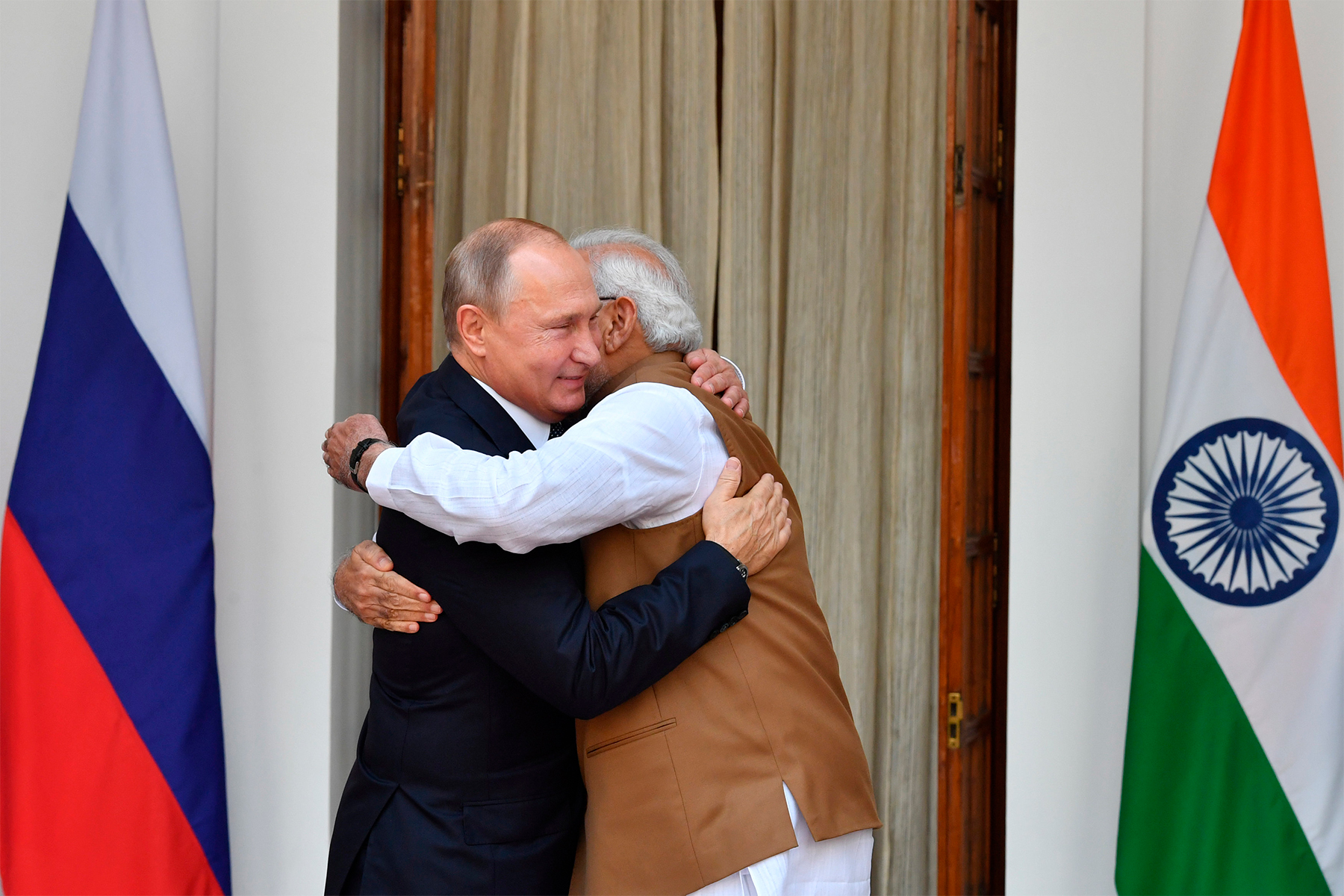
Russia and India: Key Areas of Cooperation
Along with former Indian Prime Minister Atal Bihari Vajpayee, it was President Putin who laid down the foundation for a stronger India-Russia relationship as the two leaders signed a strategic partnership on October 3, 2000, in New Delhi. This was India’s second strategic partnership (the first was with France) which consolidated the legacy of a strong and friendly relationship between India and the former Soviet Union.
There must have been a sense of déjà vu in Indian and Russian foreign policy circles around President Putin’s recent visit. Both countries experienced the height of U.S. hegemony in 2000, a trend now under question in 2025. In addition, the year 2000 marked a highpoint in the U.S. unipolar world order structure, but now, multipolarity is increasingly taking over the liberal international order. U.S. President Donald Trump himself is one of the leading critics of liberal internationalism and there are some in the U.S. who would even describe the country as a civilizational state. This is clearly visible in President Trump’s recent National Security Strategy as well.
Beginning with President Putin’s tenure in 1999, Russia took a Eurasian turn in its foreign policy, a constant since then. The Russia–India relationship is the only one classified under a particular designation: the Special and Privileged Strategic Partnership (SPSP). This status revolves around respect for each other’s core national interests and a belief that the strength and growth of one partner is the growth of the other as well. This partnership is strongly supported by mechanisms like Annual Summits, joint commissions, regular ministerial meetings, and the 2+2 dialogue.
In the last two and half decades, India went on to cultivate a close strategic partnership with the U.S., beginning with the announcement of the Indo-U.S. nuclear deal in 2005. Since then, New Delhi has tried to keep strategic proximity with the U.S. and Russia to deal with its strategic challenges. However, this effort became difficult after the major breakdown in Russia’s relations with the West following the start of the 2022 conflict in Ukraine.
The India-Russia strategic partnership has withstood many geopolitical storms in the last 25 years, but the Russia-Ukraine conflict has brought “third party” pressure that seeks to disrupt this relationship. The Trump administration has imposed additional 25 percent tariffs on India for buying Russian oil, while Washington supposedly continues to buy Russian uranium, palladium and fertilizers. Ironically, India-U.S. ties were alleviated to a “Comprehensive Global Strategic Partnership” under the first Trump administration in 2020. However, Trump’s second administration has resulted in the highest tariffs in the world being imposed on India.
Summit Signals

There are four key signals emerging from the 23rd India-Russia summit.
First, the summit reaffirmed “continuity, trust and mutual respect” in Russia-India bilateral relations from both the sides, despite external pressure to disrupt them. India’s Foreign Minister, S. Jaishankar described India-Russia ties as “steadiest” in the world. Another important political figure, Dr. Shashi Tharoor, chairman of the Parliamentary committee on External Affairs framed President Putin’s India visit as “India’s exercise of its strategic autonomy in a fractured world.”
At the same time, there was no unnecessary attempt to make a show out of the summit as both countries are currently negotiating their areas of interest (India—trade, Russia—Ukraine) with the U.S. European countries have not broken their bonds with the Trump administration, despite its unpredictable behavior. However, it is surprising that there are expectations (in Washington and Brussels) that India should give up one of its best relationships in the history of independent India.
Second, the two sides agreed to broaden their economic relationship as this will be the focus area in developing their bilateral ties. The adopted “Program for the Development of Strategic Areas of India–Russia Economic Cooperation till 2030” has been a step in the right direction. This initiative was launched during PM Modi’s Moscow visit in July 2024. To reach the $100 billion trade target by 2030, the two sides would need to negotiate a free trade agreement that would accelerate the process. Positive developments regarding the International North South Transport Corridor (INSTC) would give a New Delhi connectivity push in the Eurasian region and act as a force multiplier.
Under the mobility agreement, Indian manpower will help Russia to tide over its shortage of labor. By 2030, there is likely to be a shortage of 3 million workers in Russia. The two countries could establish joint ventures for long-term supply of fertilizers to India helping India’s food security. India is the second biggest importer of fertilizers after Brazil, but its sources of import have been unstable.
Third, despite its ongoing intense focus on the European theatre, Russia intends to be a key player in Asia. The joint statement mentions that the two countries “will continue to strive for global peace and stability in a multipolar world as well as in a multipolar Asia.” The emphasis on multipolar Asia is new one, as it has not been mentioned in previous India Russia joint statements. This is a direct challenge to attempts to carve out “spheres of influence” and establish a “G2 arrangement” between the U.S. and China.
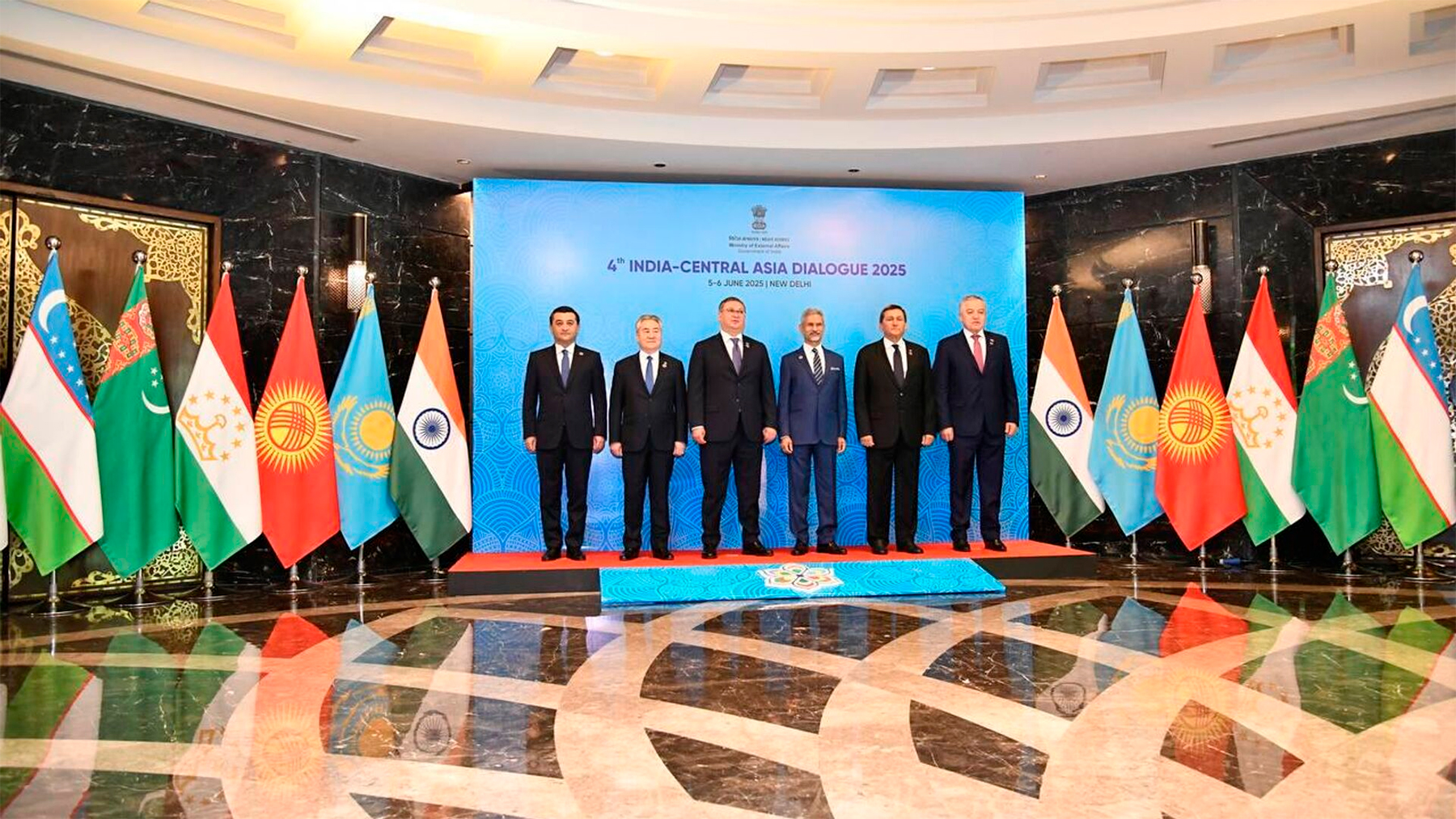
India’s Growing Visibility in Central Asia
Fourth, India’s role in the ongoing Russia-Ukraine conflict was acknowledged by President Putin, who thanked India for its “restrained and objective” stance on the issue. The presence of Kirill Dmitriev, Russia’s envoy in Ukraine in President Putin’s delegation also affirms India’s potential role during and after the conflict.
There is no communication between Europe and Russia and India is likely taking up the role of a “credible messenger” between the two sides. Soon, the European leaders are likely to be in New Delhi for India’s Republic Day parade and New Delhi will pass on its observations to them. Showcasing its balanced approach, India is also working on a visit by Ukrainian President Volodymyr Zelenskyy to New Delhi.
From India’s strategic point of view, it would be helpful if the U.S. and Russia get along and have a less problematic relationship. This gives New Delhi more strategic space for maneuvering in its foreign and security policy. The Trump administration has adopted a softer tone towards Russia in its latest national security strategy in which Russia is not mentioned as a “direct threat.” However, India is also managing a “divided West” as the European countries are not happy with U.S. plans to achieve a peace deal between Russia and Ukraine. They continue to see Russia as a direct security threat.
The Trump administration has shaken up the international economic and geopolitical system. No clear-cut global order is in sight in the near term, but India-Russia ties are suited for any kind of world order that eventually develops. India does not share a border with Russia, nor is there a history of conflict between them. Such trusted ties will reinvent themselves and endure in coming years, although it may or may not be as robust as its heydays.
(votes: 6, rating: 5) |
(6 votes) |
No matter how turbulent global politics becomes in the coming decades, New Delhi is convinced that Moscow will remain a reliable and valuable partner
India’s Growing Visibility in Central AsiaIndia’s leadership is employing a “development-oriented” approach in Central Asia, one that includes a clear cultural-civilizational component.
Putin’s Visit to New Delhi Signals a Sustained Partnership in EurasiaCentral Asia presents a key opportunity for India and Russia to deepen their collaboration, particularly in energy, security, and transportation, with the region serving as a critical nexus for expanding regional connectivity and enhancing economic and logistical ties between the two countries


