
Arms Embarg-NO! Renewing UN Sudan Sanctions
(votes: 2, rating: 5) |
(2 votes) |

English-language Publications Editor at the Russian International Affairs Council
Over three years have passed since fighting between rival armed factions broke out in Sudan. The situation is one of the most destructive the Horn of Africa has seen in years. Despite scant media attention, the conflict’s toll is gut-wrenching: tens of thousands of lives lost, nearly 30% of the population displaced either internally or externally, and around half of the population in dire need of humanitarian assistance. In response to the ongoing human rights atrocities, the international community, both unilaterally and multilaterally, has resorted to a well-established and widely utilized tool: sanctions. With the UNSC having renewed the South Sudan sanctions regime on May 31, what obstacles currently hamper the effectiveness of the tool in conflict resolution? How have sanctions impacted the situation in Sudan and why is there growing interest in lifting the current sanctions regime?
When considering the current debate pertaining to current UN sanctions against Sudan, understanding the role unilateral measures may have on the effectiveness of UN regimes proves to be of upmost importance. Sanctions that are implemented by multiple sources (the UN, EU, AU or individual countries) are typically imposed by bodies that lack formal institutional associations with the peace mediators actively trying to negotiate an end to a conflict, hence impeding critical moments in peace implementation and in humanitarian efforts. Negations can easily be thwarted if sanctions create or fail to remove obstacles to conflicting parties. As a result, this can prolong a conflict or even push parties towards further escalation. Apart from this, countries are increasingly using sanctions without the approval of the Security Council, at times not even bothering to complement their own measures with those of the UN. Even actions taken within the UNSC are often not adequately coordinated with UN mediation efforts, as they are often the result of Security Council negotiations that aim to send out broader signals about changing or transforming international norms rather than a solution to a specific problem. Thus, the addition of unilateral sanctions can create a complex and challenging environment for UN sanction regimes, hindering their effectiveness and potentially exacerbating human rights concerns. Even though there are some instances of complementarity between UN sanctions and peace mediation efforts—although generally, such remains to be the exception—the Sudan sanctions regime is not a case in point.
Even with the imposition of unilateral measures against Sudan, the country continues to find itself in a dire state. UN sanctions have been imposed on the country for decades, which makes the situation all the more alarming; it breeds disillusionment in the use of sanctions as an adequate response to critical situations and even brings into question the competency of the Security Council itself. The ability—and, to some degree, legitimacy—of the UNSC to handle conflicts in an effective manner is increasingly scrutinized, with sanctions being at the top of the debate. The lack of consideration for the views of the sanction-affected parties has become particularly concerning, as the recent sanction renewal directly exemplifies.
According to the Russian International Affairs Council United Nations Database (RUN), when the Council last renewed the sanctions regime in 2024, six Council members notably abstained: Algeria, China, Guyana, Russia, Sierra Leone, and Mozambique. Already, this hinted at growing unsteadiness in the regime, particularly as violations of the arms embargo continued and violence intensified. This time around, much remained the same: nine states voted in favor (Denmark, France, Slovenia, Greece, Guyana, Panama, the Republic of Korea, the UK, and the US) and six members, once again, abstained (Algeria, Pakistan, Somalia, Sierra Leone, China, and Russia). Interestingly, Guyana was the only country to flip its vote a year after its initial abstention. Regardless, the persistency of the rest of the Council—notably, its Global South representatives, and all African Union states—shows a growing resistance to the regime. Even though sanctions have been renewed, the appetite for their implementation is evidently fading. Not only that, the divide between Western states and those of the Global South has become even more apparent, particularly in terms of the Council’s approach to conflict resolution and, in some ways, the importance placed on certain international norms. With all these discrepancies within the council, as well as the tool itself, a key question still remains: why remove the sanctions now?
Clearly, sanctions have so far been unable to stop the warring parties from obtaining weapons in their entirety, but would removing the arms embargo really help deescalate the situation in Sudan? Or would it simply open the doors to a wave of new violence and bloodshed? Perhaps this uncertainty is a reason for a lack of a veto vote from a P5 member in the recent resolution. However, regardless of the matter, the lack of unity within the UNSC and the bloc-leaning politics taking ahold of the Council (West vs Rest—Russia, China and the Global South) does reveal a greater trend, particularly regarding the future role of sanctions in conflict resolution, and what international norms states are now placed at the top of international agenda.
Sanctions thus far have not coerced a change in behavior from either of the warring parties and have not successfully constrained activities or access to essential resources (funds, arms, sensitive goods). Again, the essence of the arms embargo—the main component of the Sudan sanctions regime—is less about coercion (imposing economic damage) and more about constraining access to arms, thereby limiting the ability of the concerned actors to use military force. Yet even in this sense, sanctions have also failed to produce significant results. In addition, the repeated violations of the embargo are not only problematic but run counterintuitive to their main objective; if sanction consequences are largely absent, especially over a prolonged period of time, any intended signaling effect that the UNSC may have initially generated by imposing the sanctions will fade, if not already.
Overall, there currently appears to be a lack of linkage between the political goals of the sanction regime and the respective conflict dynamics and changing conditions for peace efforts. Preventing the uncontrolled flow of weapons and other military equipment into conflict areas is, of course, crucial. However, the arms embargo design must be continuously modified to target and choke off all access points that have blossomed over the years. This is the only way in which embargoes can also be used as a positive sanction, or an effective bargaining chip. Afterall, sanctions are not a waste of a tool, if their design and implementation are not made to be wasteful. Even Russia and China have both expressed the importance of UN sanctions—not unilateral, or UCMs—when they are, indeed, well-structured and justly reflect international norms and principals (for example, in nuclear nonproliferation). Indeed, sanctions can aid in conflict resolution—but only if the Council properly recognizes where and how the aid should be directed to, avoiding repetitive and prolonged inaction.
To date, the wording of resolutions concerning Sudan have appeared too eager for sanction renewal. However, the aftermath of the recently renewed sanctions may be a major step in ending this cycle. Growing voices championing Sudan sanction removal reflect the desire of some Council Members (notably Russia, China, and the Global South) to revisit and modify the UNSC’s general approach to sanctions (avoiding endless renewals, incorporating interests of concerned state, etc.) that better reflects the spirit of multipolarity and international norms. In the case of Sudan, this means a complete reevaluation of the criteria for sanction removal, incorporating what Sudan has already and can actually achieve. An abstention is not a no, but it certainly is far from a yes. If future resolutions fail to consider the interests of Sudan and the parties involved, the previous abstentions may easily change to votes against or the regime could simply be vetoed, as had occurred with Mali.
Sanction overload has become an issue of national security and sovereignty for Sudan. The recent vote failed to consider the interests of not only the country, but also the AU: the role of Sudan’s armed forces was not reinforced and the arms embargo on the Necessary Unified Forces has not been lifted. Rather than use sanctions to supplement the conditions to promote conflict resolution, the arms embargo, in particular, appears to restrict the implementation of the Revitalized Peace Agreement, halting successful political processes and complicating the deployment and proper equipping of the national armed forces. In time, this can result in broader implications to the security and stability of the African continent.
Aside from being a matter of national security and sovereignty, sanctions are also a matter of economic opportunity and dignity. Every country deserves a fair economic opportunity in the international arena and a balanced approach in the policies and measures relating to it. Too often are sanctions used inconsiderately and implemented ineffectively, in turn disregarding international norms, bringing havoc to state economies and violating humanitarian law and the human rights of those residing in targeted states. As time proves repeatedly, direct and indirect human right violations are often a result of ineffective sanctions, especially UCMs. During armed conflict, this mechanism should not be used as long-winded punitive measure to advance the political agendas of individual countries or blocs. Rather, sanctions should act as a uniting tool to support, convey and reestablish the international norms outlined in the UN Charter. With all its drawbacks, sanctions should not be disregarded or avoided in their entirety. Rather, the design and approach to international sanction implementation and enforcement must be reimagined by the UNSC, so that the mechanism can be amended to incorporate the realities of the day but also end when their value expires.
When sanction regimes fail to represent and protect international norms, yet alone international law, the compliance thereof also weakens, hence rendering not only the mechanism as ineffective, but the UN institution as a whole. Instead of using sanctions as an open-ended strategy, the mechanism must be used strictly as what is was designed to be: a tool with a set, attainable goal. The naive theory of many world leaders is that the greater the sanctions pressure and the longer the regime, the greater the chance targets will “crack” and the conflict ends. However, that is far from the case: the longer the duration of a regime, the less value it brings to the negotiating table. Aside from the countless political, economic and even militaristic factors that contribute to this argument, there are also the psychological impacts that linger within a sanctioned society both on a social and business level. Also, the chances of alternative sources or black knights coming to the aid of the targeted state remain boundless, especially in today’s complex economic and political landscape. Even though Sudan is but one of the 14 ongoing UN sanction regimes, apparent changes in Council Member attitudes to the value of this particular regime may very well carry into all the others, changing not only how sanctions are viewed by the international community, but also how effectively the community can use the tool to reinforce the principals and norms laid out within the UN Charter.
Over three years have passed since fighting between rival armed factions broke out in Sudan. The situation is one of the most destructive the Horn of Africa has seen in years. Despite scant media attention, the conflict’s toll is gut-wrenching: tens of thousands of lives lost, nearly 30% of the population displaced either internally or externally, and around half of the population in dire need of humanitarian assistance. In response to the ongoing human rights atrocities, the international community, both unilaterally and multilaterally, has resorted to a well-established and widely utilized tool: sanctions. With the UNSC having renewed the South Sudan sanctions regime on May 31, what obstacles currently hamper the effectiveness of the tool in conflict resolution? How have sanctions impacted the situation in Sudan and why is there growing interest in lifting the current sanctions regime?
Why Sanctions?
The use of sanctions as a tool for resolving armed conflict has been a topic of debate for many years. Sanction effectiveness is contingent on a wide array of factors. This can include the very nature of the conflict, the types of sanctions introduced, the timing of the sanctions, the political, military and economic status of the targeted country, the level of cooperation by the targeted country, and—perhaps most important—the level of international support and sanction implementation succinctness. Under international law, the UN Security Council is the only body authorized [1] to impose sanctions to maintain or restore international peace and security. While nations and regional organizations may impose unilateral sanctions—including those of an extraterritorial nature—their legitimacy is limited by their own design as they often infringe upon the principles of sovereign equality and non-interference enshrined in international law. [2]
Implementing UN sanctions—the only legitimate form of international sanctions—during an armed conflict is often littered with a whole array of obstacles, with one of the greatest being UNSC timing. Unfortunately, by the time the Security Council acts, the situation is often at or reaching its breaking point, with serious human rights violations having already occurred, as the situation in the Central African Republic exemplifies. For this reason, international sanctions have gained a bad reputation, being seen as ineffective or unfair; useful but misused. [3] Additionally, sanctions often result in various unintended negative consequences, including weakened local institutional capacities, strengthened authoritarian rule, or even instances—if not an increase—in human rights violations.
Out of all its various forms (financial, travel, diplomatic, etc.), arms embargoes have been one of the most widely criticized sanction types. The UN Security Council (UNSC) imposes and designs arms embargoes by passing resolutions, effectively requiring all member states to implement them. Additionally, the UNSC establishes sanction committees to monitor their implementation, at times introducing a Panel of Experts (PoE) to evaluate sanction effectiveness and provide insight into what is happening on the ground. Sanction committees are crucial in the implementation of set out regimes; the body holds important decision-making powers as they can determine, place and remove individuals or entities on the United Nations Security Council Consolidated List. The committees are also responsible for setting out exemptions to embargoes when needed. Regardless of existing criticisms, virtually all current UN sanctions that are aimed at resolving armed conflict and supporting peace processes include embargos. Yet seeing how many of these regimes have been in place for years, and the situation in these places remains largely unaffected, sanction discreditation has become a common trend within expert and official discourse.
True, various reforms [4] in the UN certainly improved some aspects of sanction implementation and enforcement—the pivot to smart sanctions, [5] updated compliance mechanisms for arms embargoes, [6] new procedures for targeted sanctions designations and delistings, etc.—the tool still appears to lag behind the constantly changing realities of the day, as is quite apparent in Sudan. However, not only have UN sanctions transformed in the last few years; the political and security environment has also changed. Shifting power dynamics in the international arena have contributed to a new approach to sanction implementation. National interests among elected and permanent members of the body often means that the UNSC’s attention to certain armed conflicts often fluctuates. [7] Here, the realist nature of member states to adhere to the principals of statism, survival, and self-help may help explain individual UNSC member actions and their objectives to, for example, expand spheres of influence, prioritizing their individual state interests over that solving a conflict for “the greater good.” As a result, certain actions may collide with the initial goals and objectives set in the sanctions regime, hence rendering them ineffective or outdated. In turn, these trends have created hurdles for sanctions and in their ability to instigate or supplement conflict resolution. Another issue pertaining to sanctions, particularly those that are unilateral, is that many resort to the tool as a “Hail Mary” response to conflicts or political issues. Rather than be an alternative to war, states have increasingly adopted excessive coercive measures as a new means to wage war, hence the growing use of the term, “ unilateral coercive measures,” or UCMs.
Unilateral Coercive Measures
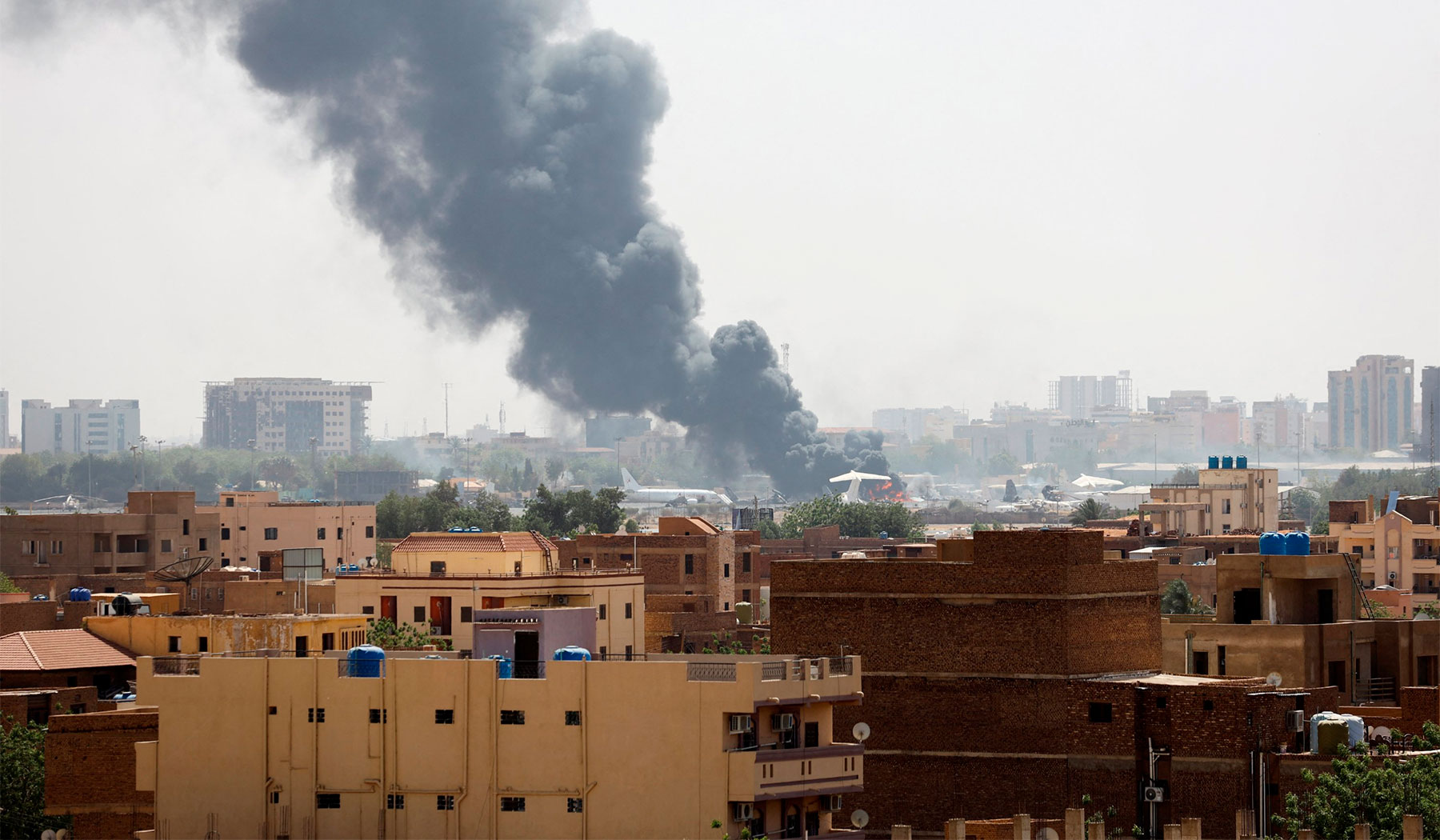
Sudan on the Brink of Civil War
Various unilateral measures have been imposed on Sudan since the late 1990s. The EU first imposed an arms embargo on Sudan in 1994, in response to the civil war in the southern part of the country. In May 2005, the EU merged its measures with the required UN sanctions on Sudan related to the conflict in Darfur. After South Sudan gained its independence in 2011, the EU extended the arms embargo to cover both Sudan and South Sudan. Four years later, the EU issued Council Regulation 2015/735, opening the door to impose further sanctions on individuals obstructing the political process in South Sudan or committing serious human rights violations. Current EU sanctions are contained in Council Regulation (EU) No 747/2014 and Council Decision 2014/450/CFSP, and include an arms embargo, assets freeze, and travel bans. Following Brexit, the UK followed suit, also implementing similar sanctions of its own. [8]
Apart of the its European allies, US sanctions against Sudan were implemented a few years later, after President Bill Clinton declared a national emergency with respect to Sudan in 1997 ( EO 13067), prohibiting imports to and exports from Sudan. It also empowered the US Treasury (OFAC) and US Commerce (BIS), to impose assets freezes and travel bans. Since then, with the help of several executive orders and new legislation, various additional coercive measures have been implemented. After 2017, the US lifted [9] some of its measures, even rescinding Sudan’s status as a State Sponsor of Terrorism. However, after escalations resumed, the Biden administration stepped up its measures against Sudan, as is evident in E.O. 13664 (2021), E.O. 13067 (2021), E.O. 13664 (2022), E.O. 13067 (2022), E.O. 13664 (2023) in E.O. 14098 (2023). [10]
For those unfamiliar with sanctions research, the list of executive orders, regulations, listings and decisions may appear rather overwhelming or, at worst, redundant. However, when considering the current debate pertaining to current UN sanctions against Sudan, understanding the role unilateral measures may have on the effectiveness of UN regimes proves to be of upmost importance. Sanctions that are implemented by multiple sources (the UN, EU, AU or individual countries) are typically imposed by bodies that lack formal institutional associations with the peace mediators actively trying to negotiate an end to a conflict, hence impeding critical moments in peace implementation and in humanitarian efforts. Negations can easily be thwarted if sanctions create or fail to remove obstacles to conflicting parties. As a result, this can prolong a conflict or even push parties towards further escalation. Apart from this, countries are increasingly using sanctions without the approval of the Security Council, at times not even bothering to complement their own measures with those of the UN. [11] Even actions taken within the UNSC are often not adequately coordinated with UN mediation efforts, as they are often the result of Security Council negotiations that aim to send out broader signals about changing or transforming international norms rather than a solution to a specific problem. Thus, the addition of unilateral sanctions can create a complex and challenging environment for UN sanction regimes, hindering their effectiveness and potentially exacerbating human rights concerns. Even though there are some instances of complementarity between UN sanctions and peace mediation efforts—although generally, such remains to be the exception—the Sudan sanctions regime is not a case in point.
Even with the imposition of unilateral measures against Sudan, the country continues to find itself in a dire state. UN sanctions have been imposed on the country for decades, which makes the situation all the more alarming; it breeds disillusionment in the use of sanctions as an adequate response to critical situations and even brings into question the competency of the Security Council itself. The ability—and, to some degree, legitimacy—of the UNSC to handle conflicts in an effective manner is increasingly scrutinized, with sanctions being at the top of the debate. The lack of consideration for the views of the sanction-affected parties has become particularly concerning, as the recent sanction renewal directly exemplifies.
UN Sanctions Sudan
In response to acts of violence and human rights violations—particularly by the Janjaweed—the UNSC passed UN Resolution 1556 in 2004, imposing an arms embargo [12] against Sudan, particularly on non-governmental entities and individuals operating in Darfur. A year later, with UN demands ignored and evident violations of both the N’Djamena Ceasefire Agreement and the Abuja Protocols, the UN expanded the arms embargo to apply to “all parties to the Agreement” and “any other belligerents in Darfur,” including the Sudanese Government. However, the government was given certain exemptions, and was obligated to obtain prior authorization for arms transfers to the region. [13] In addition to the arms embargo, a travel ban and assets freeze was imposed, sanctioning individuals—subsequently extended to entities—designated by the Sudan Sanctions Committee under UN Resolution 1591. The enforcement of the arms embargo was further strengthened by Resolution 1706 (2006), [14] Resolution 1945 (2010), and updated by Resolution 2035 (2012) and Resolution 2091(2013).
There were notable efforts (namely by the US) to extend the regime to cover the entire territory of Sudan, however, it proved largely unsuccessful due opposition within the Security Council, namely from China and Russia. The two countries even abstained in the first voting process that led to the 2004 arms embargo. Even then, Russia and China played a significant role in questioning the purpose and impact of sanctions, as arms supplies to Sudan were still possible, even without violating the embargo, given that the government was responsible for its approvals. Thus, the embargo did not appear to be a serious means to limit the arms supply in that particular geographic scope. Studies have proven that embargo exemptions for a respective government’s security forces also make monitoring sanctions more difficult, and can undermine the goal of strengthening state authority. With time, glaring loopholes in embargo enforcement became more than apparent, resulting in today’s Security Council questioning whether they should be lifted in their entirety.
As already noted, more than half of the UN sanction regimes address problems associated with armed conflict. [15] Objectively, sanctions aim to prevent or resolve armed conflict, mitigate and prevent an escalation or recurrence of a violent conflict, counter terrorism, or stem nuclear proliferation. [16] In the case of Sudan, the primary objective has been limiting the flow of arms and military material into the conflict zone to prevent escalation. Afterall, it is rather hard to fight a war when you have nothing to fight it with. Theoretically, an arms embargo would do just that: limit the availability of weapons in Sudan, hence preventing an escalation or more violence. Though this seems simple enough, in practice, the embargo proves to be nothing but a symbolic gesture by the Security Council to make it appear like the international community is taking decisive measures to mitigate a further escalation of the crisis. In closed discussions, PoE experts disclosed to the Council that serious violence and ceasefire violations continued in March and April of 2025, including attacks on the positions of the Sudan People’s Liberation Movement in Opposition (SPLM-IO) and aerial bombardments of civilian areas.
Gold Smuggling Financing Embargo Violations
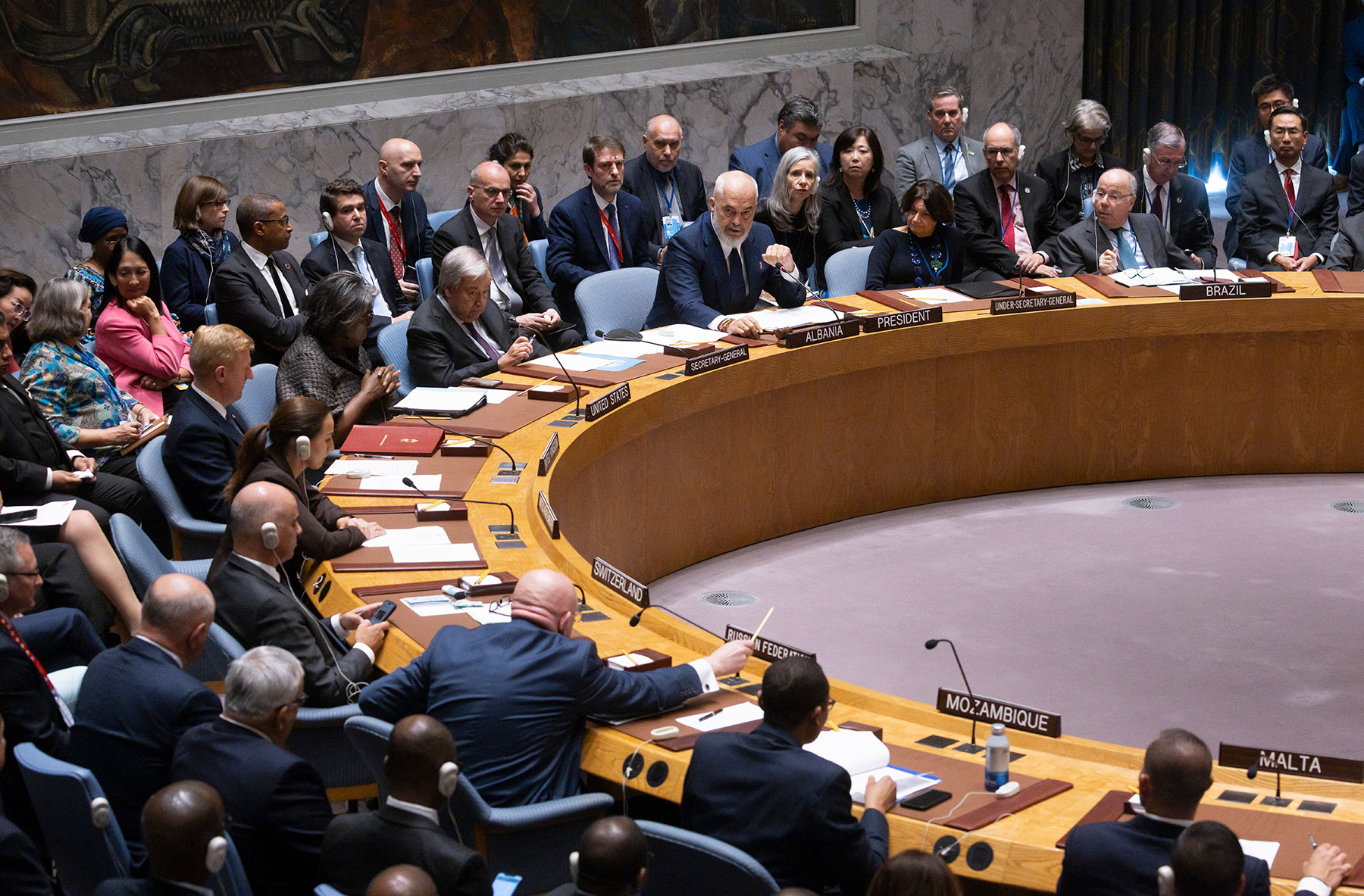
UN-doing Sanctions: The Significance of Russia’s Mali Veto
Before the outbreak of the conflict, Sudan was the third largest producer of gold in Africa, making this resource a critical part of the nation’s GDP. Sudan has a long history of gold smuggling, and the conflict only further aided in the exploitation, smuggling, and militarization of gold resources. In many ways, gold has become more than just an economic asset; it became a critical tool in funding all warring—and even internationally-involved—actors. Afterall, the power struggle between the army and the RSF cannot be separated from other external alliances; given its location—close to the Red Sea, access to the Sahel—Sudan has become quite a “ geopolitical powder keg.” In other words, the country has become a battleground for influence among major global powers, including those in the Security Council. According to various PoE reports, certain countries have been accused of receiving Sudanese gold from “both sides of the conflict,” as well countless cases of arms embargo violations. [17] These alarming trends are well reflected in UNSC resolutions, notably in Resolution 1556 and Resolution 1591. [18] With each year, Council concerns for violations and escalating violence evolved to become an active problem for the UNSC, which brought into question the very purpose of the sanctions regime.
According to the Russian International Affairs Council United Nations Database (RUN), when the Council last renewed the sanctions regime in 2024, six Council members notably abstained: Algeria, China, Guyana, Russia, Sierra Leone, and Mozambique. Already, this hinted at growing unsteadiness in the regime, particularly as violations of the arms embargo continued and violence intensified. This time around, much remained the same: nine states voted in favor (Denmark, France, Slovenia, Greece, Guyana, Panama, the Republic of Korea, the UK, and the US) and six members, once again, abstained (Algeria, Pakistan, Somalia, Sierra Leone, China, and Russia). Interestingly, Guyana was the only country to flip its vote a year after its initial abstention. Regardless, the persistency of the rest of the Council—notably, its Global South representatives, and all African Union states—shows a growing resistance to the regime. Even though sanctions have been renewed, the appetite for their implementation is evidently fading. Not only that, the divide between Western states and those of the Global South has become even more apparent, particularly in terms of the Council’s approach to conflict resolution and, in some ways, the importance placed on certain international norms. With all these discrepancies within the council, as well as the tool itself, a key question still remains: why remove the sanctions now?
Unattainable Benchmarks
Apart from the consistent gold smuggling and arms embargo violations, another issue pertaining to the current sanctions regime are the requirements that are set to lift them. Even though the current regime has aspects of positive sanctions—offering incentives for sanction removal, providing assistance in benchmark implementation, sharing visions of peace, etc. —the conditions currently set by the benchmarks are simply unattainable. In the recent April 2025 PoE report, the Panel claimed the transitional government has made some progress in implementing two UN benchmarks that are required to lift sanctions. Namely, the Panel noted Sudan’s success in the completion of the Strategic Defense and Security Review process contained in the revitalized agreement, as well as the formation of a unified command structure for the Necessary Unified Forces (NUF). However, since April 2024, little to no progress has been reached on the three other critical benchmarks: disarmament, demobilization and reintegration (DDR) process establishment and implementation; adequate existing arms and ammunition stockpile management; and Joint Action Plan implementation for the armed forces on addressing conflict-related sexual violence. With progress stalled on these three benchmarks, concern over the “persistent lack of political will” and “insufficient funding for the DDR process and weapons and ammunition management” in Sudan has impeded in its ability to begin the progress of lifting sanctions. In other words, any and all progress Sudan has thus reached with regards to the benchmarks seems minuscule in comparison for what is still expected of the state to accomplish. Rather than sanction removal acting as a motivating “carrot” in stabilizing the situation in Sudan, the unfeasible requirements, in addition to the continuation of the arms embargo, are beating hopes of a sanction-free Sudan down with a stick. The 2025 resolution maintains a steadfast position on the requirement of meeting all benchmarks (which were notably written in 2005), disregarding the real achievements Sudan has been able to accomplish in today’s reality, regardless of all its challenges.
Like many other governments burdened by UN arms embargoes, Sudan has repeatedly spoke out against the regime. The irrelevance of the decades-old benchmarks to the realities facing Darfur today plays a major role in this. Particularly problematic, the embargo was critiqued as encouraging “rogue armed transboundary bands to disrupt peace and order in Darfur.” African Union Council Members agree with Sudan, claiming that current measures could be counterproductive and undermine progress in the political and security spheres. Simply put, the benchmarks that are currently in place for lifting sanctions are simply out-of-touch and unrealistic. The AU Peace and Security Council and the Intergovernmental Authority on Development (IGAD) have also repeatedly called for lifting of all punitive measures—particularly UCMs—on South Sudan. If the benchmarks are not to be changed or amended so that they may establish real, achievable goals for Sudan, then the sanctions are in effect useless, if not mockingly abusive.
The Renewal Debate

Positions of BRICS Nations on UN Security Council Reform
Regardless of the various critiques raised against the regime—no P5 member vetoed the resolution and the sanctions were, in fact, renewed. Several Council members—namely, France, the UK, and US—continue to argue that sanctions as are essential for maintaining pressure on the conflicting parties to implement the 2018 Revitalized Peace Agreement. Particularly, the arms embargo is viewed as a significant factor that is actively curtailing the ongoing violence, and the possible escalation of, by limiting the flow of weapons into South Sudan. If to lift the arms embargo, there would be no mechanism that would limit access to arms, threatening more even bloodshed in the already volatile environment. However, not all in the Council have come to share these views.
As P5 members in the Security Council, Russia and China have become more assertive in the defense of Sudan, actively advocating for respecting state sovereignty and establishing a just response to the conflict that incorporates the interests of Sudan and, more generally, the region. They have long opposed the Sudan sanctions regime, viewing it as an impediment to Sudan’s ability to build and consolidate its state security institutions, secure its borders, and implement key provisions of the Revitalized Peace Agreement. Agreeing with the AU representatives in the Council (Algeria, Sierra Leone and Somalia), Russia and China believe the current regime not only disregards Sudan’s state sovereignty, but also the interests of the African community in the process. The lack of respect or consideration of the parties affected by the sanctions can also be viewed as a direct contradiction of certain international norms, primarily the respect for state sovereignty. Here, clashes regarding international norms (protection of state sovereignty, human rights, etc.) and the prioritization of also become apparent.
During debates, Russia also noted the negative impact of previous and current unilateral sanctions on the efficiency and legitimacy of the UN Sudan sanctions regime. In particular, previous US unilateral sanctions stopped all transactions using US currency or products. In practice, any business which operated in the US was not able to trade with Sudan. For years, international banks would not operate in the sanctioned country, so the government and Sudanese companies were largely unable to acquire certain goods such as airplanes or vital health equipment. Aside from economic barriers, sanctions have resulted in direct and indirect human rights violations, a result namely produced by US UCMs.
Although the US lifted some of its coercive measures against Sudan, in practice—little has changed. In the aftermath of US UCMs, companies still fear the risk of conducting business in Sudan (reputational damage, secondary sanctions, etc.), while overcompliance has contributed to the worsening economic situation in the country. As proof, Sudan’s UN representative noted that none of Sudan’s commercial banks provide loans to South Sudanese citizens due to fears of risk. Ironically, sanctions are often presented as a tool of accountability but, in the case of Sudan, they have acted more as barriers to economic opportunities, particularly for young people in the country.
Why Renew, What Does Not Do?
Clearly, sanctions have so far been unable to stop the warring parties from obtaining weapons in their entirety, but would removing the arms embargo really help deescalate the situation in Sudan? Or would it simply open the doors to a wave of new violence and bloodshed? Perhaps this uncertainty is a reason for a lack of a veto vote from a P5 member in the recent resolution. However, regardless of the matter, the lack of unity within the UNSC and the bloc-leaning politics taking ahold of the Council (West vs Rest—Russia, China and the Global South) does reveal a greater trend, particularly regarding the future role of sanctions in conflict resolution, and what international norms states are now placed at the top of international agenda.
Sanctions thus far have not coerced a change in behavior from either of the warring parties and have not successfully constrained activities or access to essential resources (funds, arms, sensitive goods). Again, the essence of the arms embargo—the main component of the Sudan sanctions regime—is less about coercion (imposing economic damage) and more about constraining access to arms, thereby limiting the ability of the concerned actors to use military force. Yet even in this sense, sanctions have also failed to produce significant results. In addition, the repeated violations of the embargo are not only problematic but run counterintuitive to their main objective; if sanction consequences are largely absent, especially over a prolonged period of time, any intended signaling effect that the UNSC may have initially generated by imposing the sanctions will fade, if not already.
Overall, there currently appears to be a lack of linkage between the political goals of the sanction regime and the respective conflict dynamics and changing conditions for peace efforts. Preventing the uncontrolled flow of weapons and other military equipment into conflict areas is, of course, crucial. However, the arms embargo design must be continuously modified to target and choke off all access points that have blossomed over the years. This is the only way in which embargoes can also be used as a positive sanction, or an effective bargaining chip. Afterall, sanctions are not a waste of a tool, if their design and implementation are not made to be wasteful. Even Russia and China have both expressed the importance of UN sanctions—not unilateral, or UCMs—when they are, indeed, well-structured and justly reflect international norms and principals (for example, in nuclear nonproliferation). Indeed, sanctions can aid in conflict resolution—but only if the Council properly recognizes where and how the aid should be directed to, avoiding repetitive and prolonged inaction.
Future of Sudan Sanctions
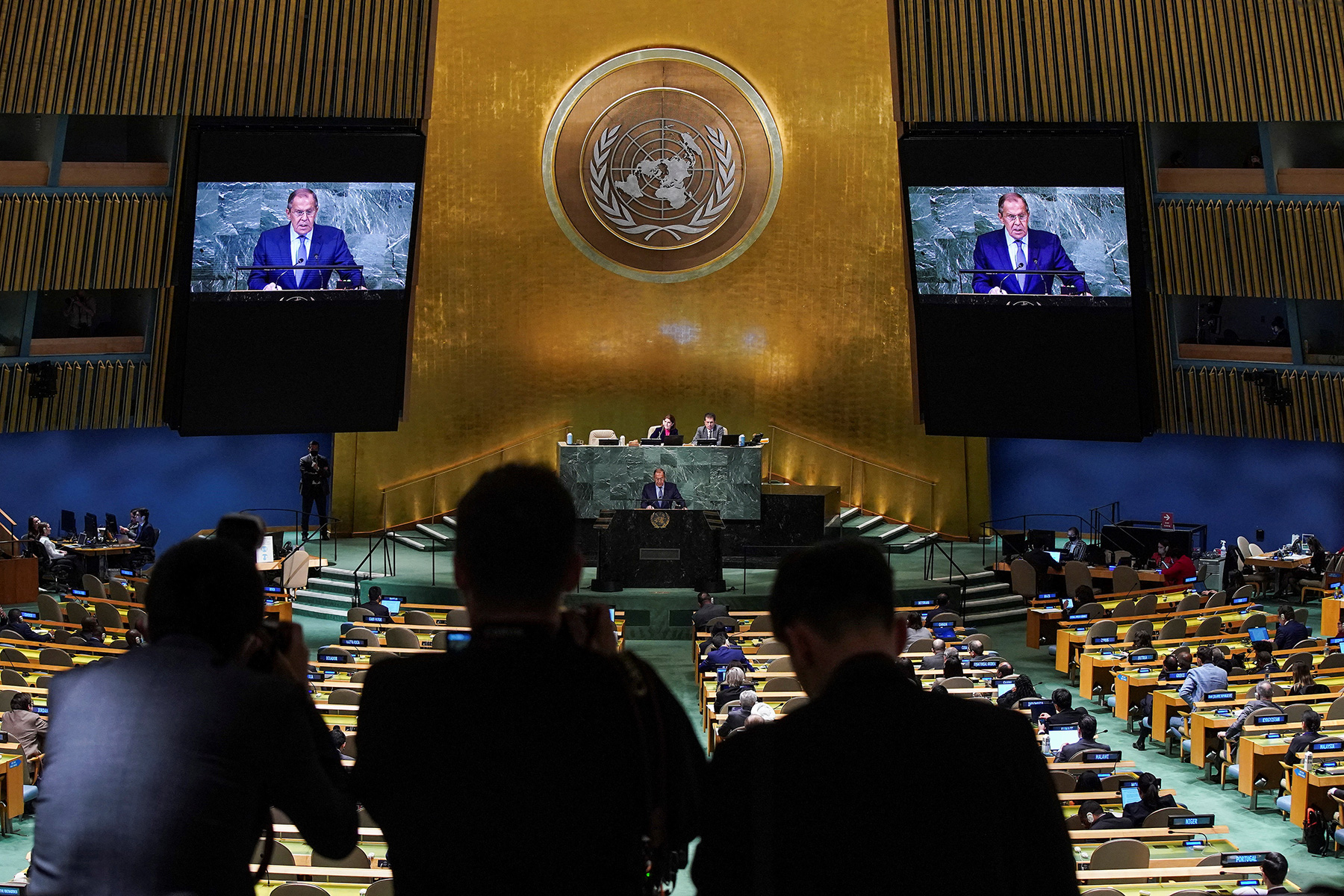
Dis-United Nations and Conceptual Mazes of the New World Order
To date, the wording of resolutions concerning Sudan have appeared too eager for sanction renewal. However, the aftermath of the recently renewed sanctions may be a major step in ending this cycle. Growing voices championing Sudan sanction removal reflect the desire of some Council Members (notably Russia, China, and the Global South) to revisit and modify the UNSC’s general approach to sanctions (avoiding endless renewals, incorporating interests of concerned state, etc.) that better reflects the spirit of multipolarity and international norms. In the case of Sudan, this means a complete reevaluation of the criteria for sanction removal, incorporating what Sudan has already and can actually achieve. An abstention is not a no, but it certainly is far from a yes. If future resolutions fail to consider the interests of Sudan and the parties involved, the previous abstentions may easily change to votes against or the regime could simply be vetoed, as had occurred with Mali.
Sanction overload has become an issue of national security and sovereignty for Sudan. The recent vote failed to consider the interests of not only the country, but also the AU: the role of Sudan’s armed forces was not reinforced and the arms embargo on the Necessary Unified Forces has not been lifted. Rather than use sanctions to supplement the conditions to promote conflict resolution, the arms embargo, in particular, appears to restrict the implementation of the Revitalized Peace Agreement, halting successful political processes and complicating the deployment and proper equipping of the national armed forces. In time, this can result in broader implications to the security and stability of the African continent.
Aside from being a matter of national security and sovereignty, sanctions are also a matter of economic opportunity and dignity. Every country deserves a fair economic opportunity in the international arena and a balanced approach in the policies and measures relating to it. Too often are sanctions used inconsiderately and implemented ineffectively, in turn disregarding international norms, bringing havoc to state economies and violating humanitarian law and the human rights of those residing in targeted states. As time proves repeatedly, direct and indirect human right violations are often a result of ineffective sanctions, especially UCMs. During armed conflict, this mechanism should not be used as long-winded punitive measure to advance the political agendas of individual countries or blocs. Rather, sanctions should act as a uniting tool to support, convey and reestablish the international norms outlined in the UN Charter. With all its drawbacks, sanctions should not be disregarded or avoided in their entirety. Rather, the design and approach to international sanction implementation and enforcement must be reimagined by the UNSC, so that the mechanism can be amended to incorporate the realities of the day but also end when their value expires.
When sanction regimes fail to represent and protect international norms, yet alone international law, the compliance thereof also weakens, hence rendering not only the mechanism as ineffective, but the UN institution as a whole. Instead of using sanctions as an open-ended strategy, the mechanism must be used strictly as what is was designed to be: a tool with a set, attainable goal. The naive theory of many world leaders is that the greater the sanctions pressure and the longer the regime, the greater the chance targets will “crack” and the conflict ends. However, that is far from the case: the longer the duration of a regime, the less value it brings to the negotiating table. Aside from the countless political, economic and even militaristic factors that contribute to this argument, there are also the psychological impacts that linger within a sanctioned society both on a social and business level. Also, the chances of alternative sources or black knights coming to the aid of the targeted state remain boundless, especially in today’s complex economic and political landscape. Even though Sudan is but one of the 14 ongoing UN sanction regimes, apparent changes in Council Member attitudes to the value of this particular regime may very well carry into all the others, changing not only how sanctions are viewed by the international community, but also how effectively the community can use the tool to reinforce the principals and norms laid out within the UN Charter.
1. This authority is derived from Chapter VII, Article 41 of the UN Charter.
2. Kochler, H. Sanctions and International Law // International Organizations Research Journal. 2019. Vol. 14, N. 3. P. 27–47.
3. Brzoska, M. International Sanctions: A Useful but Increasingly Misused Policy Instrument. Vision of Humanity, June 29, 2022. Contemporary Challenges The Global Crime Justice and Security Journal 4:97-114
4. For more, see: Brzoska M. et al. REVIEW ESSAY: From Dumb to Smart? Recent Reforms of UN Sanctions // Global Governance. Lynne Rienner Publishers, 2003. Vol. 9. N. 4. P. 519–535.
5. Gordon J. Smart Sanctions Revisited // Ethics & International Affairs. 2011. Vol. 25, № 3. P. 315–335.
6. Lebrun E., Rigual C. Monitoring UN Arms Embargoes. Small Arms Survey // Graduate Institute of International and Development Studies, 2016.
7. Allen S.H., Yuen A.T. As Time Goes by: Action in the UN Security Council // Global Studies Quarterly. Oxford University Press, 2024. Vol. 4, № 3.
8. Like the EU, UK sanctions also consist of an arms embargo, assets freeze, and travel bans, in addition to other restrictions.
9. Sections 1 and 2 of E.O. 13067 and all of E.O. 13412 were revoked.
10. This expanded the scope of previous Sudan-related executive orders to respond to the military’s seizure of power in October 2021 and the outbreak of violence on 15 April 2023.
11. Sergey A. Sanctions and International Institutions: How to Reduce Sanction Risks for Russia? // International Organizations Research Journal. 2019. Vol. 14. N. 3. P. 46–68.
12. According to the UN Sanctions App, the first sanctions regime case in Sudan lasted from 1996 until 2001. The second case began in 2004, and includes two episodes: the first, rather short lived, lasted from 2004 to 2005. It ended with the signing of a Comprehensive Peace Agreement between the Government of Sudan and the Southern Sudan People’s Liberation Movement in Nairobi. However, as fighting reignited, new sanctions were imposed on March 29, 2005 (Resolution 1591), establishing the second sanctions episode in Sudan that has lasted until this day.
13. Thomas D. Security Council Sanctions Governance: The Power and Limits of Rules. New York. 2019. P. 151.
14. Authorizes UNMIS to use all necessary means to seize, collect and dispose of arms and related material in Darfur in violation of the Resolution 1556 arms imports embargo.
15. Biersteker, Thomas J, et al. Targeted Sanctions: The Impacts and Effectiveness of United Nations Action // Cambridge University Press. Cambridge, United Kingdom. 2016.
16. Ibid.
17. While official gold exports from the Sudanese state are not smuggling per se—although these exports have historically been rife with actors skimming off the top—it has the same outcome of perpetuating the conflict by funding the SAF.
18. Collected by RUN Database. Particularly, Resolution 2138 expresses concern that the Resolution 1591 and Resolution 1672 travel ban, and financial asset freeze are not being implemented by all Member States. Resolution 2200 (2015) shares similar concerns.
(votes: 2, rating: 5) |
(2 votes) |
How to kickstart strategic dialogue between Russia and the United States, given the collapse of all official channels and communication systems?
Sudan on the Brink of Civil WarRegardless of who prevails in the current stand-off, the role of the military in the country will be decisive in Sudan in the medium term
UN-doing Sanctions: The Significance of Russia’s Mali VetoWhat might Russia’s veto mean in its approach to implementing and expressing its foreign policy within the UNSC?
Positions of BRICS Nations on UN Security Council ReformAlmost all of the nations that recently joined BRICS are seriously competing with the “old-timers” of the association, claiming a permanent seat on the UN Security Council


