
What We Know About the “Burevestnik” Missile and the “Poseidon” Mega-Torpedo
In
Login if you are already registered
(votes: 7, rating: 4.71) |
(7 votes) |

Research Fellow at the Center for International Security, Institute of World Economy and International Relations of the Russian Academy of Sciences, co-founder of the Vatfor project
In October, important updates emerged regarding two innovative systems developed by the Russian military-industrial complex—the Burevestnik missile and the Poseidon UUV (nuclear-armed uncrewed underwater vehicle). Their development was first announced by President Putin in March 2018. Now, both systems, each equipped with a nuclear propulsion unit, have successfully completed testing.
At the strategic level, such weapons can serve both as a means of delivering a deep second strike—one that is virtually guaranteed to reach almost any target—and as a signaling tool (launching several units “to patrol” to demonstrate an opponent’s vulnerability). The first scenario, however, is far more consistent with Russia’s traditional approach as a responsible nuclear power and with the overall posture of its strategic nuclear forces, which emphasizes launch-on-warning retaliatory counterstrikes.
For the first time in decades, the emergence of new classes of strategic offensive arms is being observed in real time. Their impact on the overall strategic balance will depend on the nature of their operational deployment and employment scenarios, as well as on the scale of their production and deployment. In general, these systems represent the first generation of their type, and so “teething problems” are therefore to be expected. The characteristics of the presented designs reflect compromises between desired operational parameters and what is technologically feasible at the current stage of scientific and engineering development, not to mention the typical challenges of transitioning from experimental prototypes to serial production.
At the same time, it should not be forgotten that Russia's existing strategic nuclear-missile capabilities are sufficient to destroy any adversary both today and tomorrow. Burevestnik (as is Poseidon) is a means of neutralizing prospective—conditionally “day-after-tomorrow”—enemy air- and missile-defense capabilities over the medium to long term.
At present, no other country possesses anything comparable, and it is possible that no one will initiate programs to develop analogous systems. However, if Russia succeeds in applying the technologies developed for Burevestnik and Poseidon to civilian purposes—for example, in the exploration of the Arctic, the ocean depths, and outer space (including the Moon)—global interest in such systems may increase as well.
The implementation of both projects has already consumed—and continues to consume—astronomical amounts of resources. This refers not only, or even primarily, to financial expenditures, but also to the scientific and engineering personnel involved. One of the factors motivating the initiation and consistent continuation of work on Burevestnik and Poseidon, despite other arguably more urgent priorities in military development, was the U.S. pursuit of a global and formally unconstrained missile defense system. In such circumstances, the natural reaction is to develop countermeasures for the most adverse—albeit largely hypothetical—scenarios.
What do observers in the United States think about all this? First, there is already a prevailing view that if the Russians are spending resources on exotic delivery systems, this is a positive development—since those resources are not being used to expand the “traditional” nuclear arsenal. Second, efforts to strengthen air-defense, missile-defense, and anti-submarine capabilities are already underway; Poseidon and Burevestnik will merely serve as additional arguments for intensifying those efforts.
News about Burevestnik and Poseidon emerged against the backdrop of exercises by Russia’s strategic nuclear forces, NATO’s nuclear exercise Steadfast Noon, and U.S. Strategic Command’s Global Thunder drills, as well as statements by Donald Trump regarding the possible resumption of nuclear weapons testing. Nevertheless, these developments should not be directly or rigidly linked. At the same time, it should not be forgotten that all of Russia’s strategic weapons are intended primarily to deter the United States. As one element on the agenda of a potential Russian–U.S. dialogue on strategic stability, new nuclear delivery systems have undoubtedly only strengthened their position.
In October, important updates emerged regarding two innovative systems developed by the Russian military-industrial complex—the Burevestnik missile and the Poseidon UUV (nuclear-armed uncrewed underwater vehicle). Their development was first announced by President Putin in March 2018. Now, both systems, each equipped with a nuclear propulsion unit, have successfully completed testing. So, what do we know about Burevestnik and Poseidon today?
What Will Follow Russia’s Exit from Moratorium on INF Deployment
The one rival of the lightning
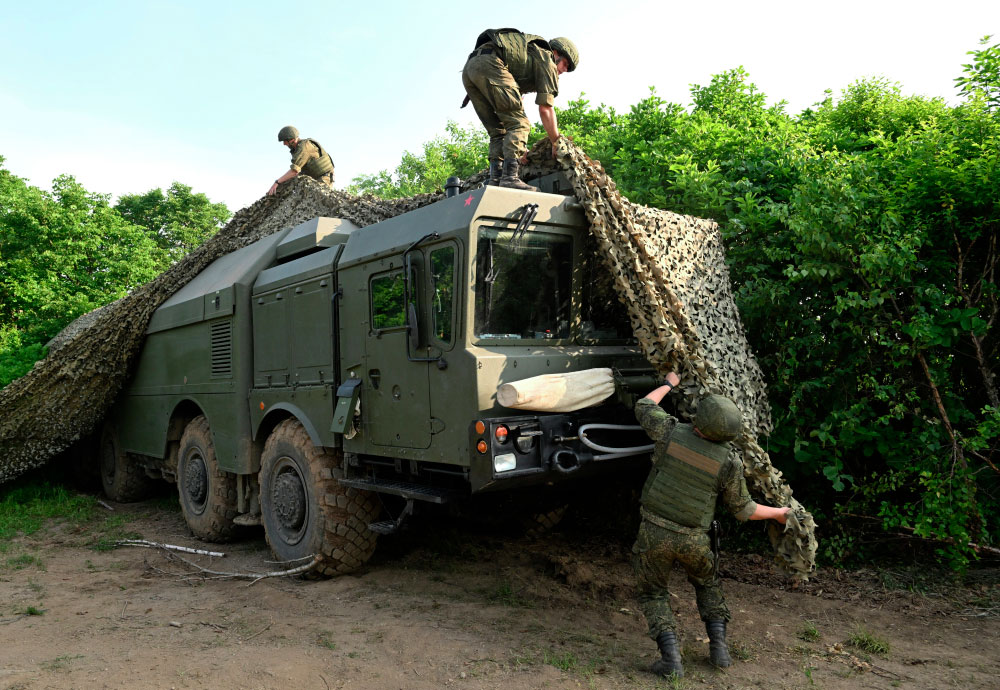
Burevestnik is a nuclear-powered, nuclear-tipped cruise missile with unlimited range, most likely designed for land-based deployment. The completion of its testing had been anticipated for quite some time, so the event that took place on October 21 was hardly unexpected. During the “final” tests, the missile reportedly remained airborne for about 15 hours, covering roughly 14,000 kilometers and performing both vertical and horizontal maneuvers. According to official statements, all declared performance characteristics were confirmed, making it possible to proceed toward deployment. At the same time, no details were provided about how the tests concluded or where Burevestnik ultimately landed—or, more likely, splashed down.
Furthermore, two important points were stated explicitly. First, it was emphasized that preparing Burevestnik for operational duty will still require a considerable amount of time and effort, which implies that the full deployment of the new system will not take place anytime soon. Second, officials noted the need to further develop options for its operational employment. Specialists are likely already determining the most effective way to use the Burevestnik: single launches, massed strikes, or, for example, loitering of several missiles over national territory or international waters; whether sustained combat patrols of launchers are feasible; and how to integrate Burevestnik with other strategic weapons as well as with general-purpose forces providing cover for its basing sites. Training combat crews and support units will also require time and highly specialized programs. In addition, the classification of this new weapon system remains to be determined.
Still, a shift appears to be underway: from an experimental project that demonstrated the feasibility of building a relatively small cruise missile powered by a nuclear propulsion unit to a fully-fledged combat missile system that literally “has no analogues in the world.” That said, Burevestnik’s place within the overall structure of the country’s strategic deterrent forces also raises questions, and, judging by official statements, not only among external observers.
No new information has yet emerged about the missile’s design (the nuclear propulsion unit in particular remains of special interest). The key points are clear, however: the missile can travel long distances, remain airborne for extended periods, and is capable of active maneuvering. It does not fly particularly fast, but it also does not leave detectable radioactive signatures.
The idea of creating a delivery system for nuclear weapons powered by a nuclear propulsion unit is not new. Similar projects were pursued during the previous Cold War. However, testing and the routine operations of such systems were judged to be excessively complex, costly, and simply too dangerous for developers and operators. Now, domestic nuclear specialists and cruise-missile designers have succeeded in producing a reliable and effective propulsion unit, which has been tested. According to Putin, “It is comparable in power to a nuclear submarine reactor, but it is a thousand – thousand! – times smaller.” The president also said that “while a conventional nuclear reactor requires hours or even days and weeks to start, this reactor starts up in minutes or even seconds”
Burevestnik appears to achieve guaranteed penetration of air and missile defense systems and precision strikes on protected targets by following maximally unexpected, very long trajectories and thereby bypassing the defended areas. That said, high-value targets are normally protected as thoroughly and densely as possible with surface-to-air missile systems. Under the “Golden Dome” project, among other measures, the plan is to deploy capabilities to defend the continental United States against aerodynamic targets—that is, cruise missiles.
One can expect that the yield of the Burevestnik’s nuclear warhead will be large or even very large. It is possible that the weapon is fitted with systems to detect hostile interference and, accordingly, to detonate in flight.
The vulnerability of the new missile should not differ greatly from that of a conventional long-range cruise missile. However, its potential to follow highly unconventional trajectories and to remain airborne for an unlimited time, makes detecting and intercepting Burevestnik a more difficult task. Moreover, even “regular” cruise missiles are not easy targets. During the transition to serial production, experience from using cruise missiles in the special military operation will almost certainly be applied to reduce the Burevestnik’s detectability.
Incidentally, during the award ceremony for the Burevestnik’s developers, it was announced that there are plans to create supersonic and even hypersonic cruise missiles with nuclear propulsion systems. However, it is unlikely that this task will be accomplished in the near future.

The Three-Body Problem
Lord of the Sea
Around the same time, reports also emerged about another test of the “multi-purpose oceanic system,” or, more simply, an (extra-)large uncrewed underwater vehicle (XLUUV) known as Poseidon. It is still quite difficult to assess the prospects for its deployment—perhaps even more so than in the case of Burevestnik. Nevertheless, there are already carriers for the Poseidon: the special-purpose nuclear submarine Belgorod and the large nuclear submarine Khabarovsk.
Overall, rumors and “leaks” about the Poseidon have been circulating for quite some time, and from what is known (including from officially released photos and videos), it represents a type of “mega-torpedo” with a high degree of autonomy, a nuclear propulsion system, and the capability to deliver nuclear payloads over intercontinental distances. Moreover, these nuclear payloads are once again of an extremely high-yield—measured in megatons, and possibly even in tens of megatons.
According to Putin, a test of the Poseidon was conducted on October 28, which included a launch from its carrier and the activation of the nuclear power unit. It appears that some time will still be required before full deployment, even though preparations for the system’s basing infrastructure are already underway. As for Poseidon’s power unit, it was stated that the reactor is “a hundred times smaller than a submarine’s nuclear reactor.” The Poseidon itself is reportedly capable of diving to depths of up to one thousand meters and traveling at speeds many times greater than those of existing surface ships.
If to indulge a little speculation about its “multi-purpose” nature, the development of XLUUVs is a key direction in advancing capabilities for naval warfare. Two main roles stand out for such vessels: reconnaissance and minelaying. It remains unclear what Poseidon can do in terms of gathering underwater intelligence; other domestic designs—such as Sarma or Klavesin-2R-PM—are likely better suited for that task. At the same time, minelaying is a core mission for the large Chinese AUVs displayed on September 3 during the Victory Parade in Beijing, and those vehicles closely resemble Poseidon in appearance. Moreover, with nuclear warheads, Poseidon could be used not only to destroy coastal infrastructure but also to target enemy naval formations.
It is likely that Poseidon carriers will also host other types of UUVs; overall, their role will be to build up an asymmetric undersea-warfare capability at both operational and strategic levels.
Nuclear Boomerang
What's It All For?
At the strategic level, such weapons can serve both as a means of delivering a deep second strike—one that is virtually guaranteed to reach almost any target—and as a signaling tool (launching several units “to patrol” to demonstrate an opponent’s vulnerability). The first scenario, however, is far more consistent with Russia’s traditional approach as a responsible nuclear power and with the overall posture of its strategic nuclear forces, which emphasizes launch-on-warning retaliatory counterstrikes.
For the first time in decades, the emergence of new classes of strategic offensive arms is being observed in real time. Their impact on the overall strategic balance will depend on the nature of their operational deployment and employment scenarios, as well as on the scale of their production and deployment. In general, these systems represent the first generation of their type, and so “teething problems” are therefore to be expected. The characteristics of the presented designs reflect compromises between desired operational parameters and what is technologically feasible at the current stage of scientific and engineering development, not to mention the typical challenges of transitioning from experimental prototypes to serial production.
At the same time, it should not be forgotten that Russia's existing strategic nuclear-missile capabilities are sufficient to destroy any adversary both today and tomorrow. Burevestnik (as is Poseidon) is a means of neutralizing prospective—conditionally “day-after-tomorrow”—enemy air- and missile-defense capabilities over the medium to long term.
At present, no other country possesses anything comparable, and it is possible that no one will initiate programs to develop analogous systems. However, if Russia succeeds in applying the technologies developed for Burevestnik and Poseidon to civilian purposes—for example, in the exploration of the Arctic, the ocean depths, and outer space (including the Moon)—global interest in such systems may increase as well.
The implementation of both projects has already consumed—and continues to consume—astronomical amounts of resources. This refers not only, or even primarily, to financial expenditures, but also to the scientific and engineering personnel involved. One of the factors motivating the initiation and consistent continuation of work on Burevestnik and Poseidon, despite other arguably more urgent priorities in military development, was the U.S. pursuit of a global and formally unconstrained missile defense system. In such circumstances, the natural reaction is to develop countermeasures for the most adverse—albeit largely hypothetical—scenarios.
What do observers in the United States think about all this? First, there is already a prevailing view that if the Russians are spending resources on exotic delivery systems, this is a positive development—since those resources are not being used to expand the “traditional” nuclear arsenal. Second, efforts to strengthen air-defense, missile-defense, and anti-submarine capabilities are already underway; Poseidon and Burevestnik will merely serve as additional arguments for intensifying those efforts.
News about Burevestnik and Poseidon emerged against the backdrop of exercises by Russia’s strategic nuclear forces, NATO’s nuclear exercise Steadfast Noon, and U.S. Strategic Command’s Global Thunder drills, as well as statements by Donald Trump regarding the possible resumption of nuclear weapons testing. Nevertheless, these developments should not be directly or rigidly linked. At the same time, it should not be forgotten that all of Russia’s strategic weapons are intended primarily to deter the United States. As one element on the agenda of a potential Russian–U.S. dialogue on strategic stability, new nuclear delivery systems have undoubtedly only strengthened their position.
Originally published at Profile.
(votes: 7, rating: 4.71) |
(7 votes) |
If Moscow and Beijing decide they can afford to show understanding for U.S. efforts to ensure its own security, this step must be reciprocated
What Will Follow Russia’s Exit from Moratorium on INF DeploymentNow restraint is giving way to deterrence
Nuclear BoomerangThere Are Neither Eternal Allies, Nor Perpetual Enemies, But Only Nuclear Arms Are Eternal and Perpetual


