
The Yemeni Crisis: Structural Characteristics and Current Dynamics
In
Login if you are already registered
(votes: 2, rating: 4.5) |
(2 votes) |

Ph.D. in Economics, Senior Researcher at the Center for Arab and Islamic Studies, Institute of Oriental Studies of the Russian Academy of Sciences
By mid-2025, the Yemeni crisis (YC) had passed through four stages of development. The two earlier stages—those of President Saleh’s rule and the implementation of the GCC Initiative—constituted its endogenous phase. The two subsequent stages, following the intervention of the Arab Coalition (AC) in March 2015, represent its geopolitical (military) phase. The AC’s military campaign in Yemen dragged on for seven years before entering a period of sustained de-escalation in April 2022. The current, “Palestinian,” stage began in October 2023, when the YC evolved into a new qualitative form—a hybrid armed conflict of a supraregional scale, combining elements of both regional and global dimensions. A distinctive feature of this stage is the direct link between the complex dynamics accumulated throughout the YC with the Palestinian–Israeli conflict (PIC) zone and Israel’s war in Gaza. The leading actors of this stage initially included the United States and the United Kingdom, which in December 2023 established the core of an international naval coalition to suppress anti-Israeli Houthi activism, followed later by Israel itself.
Debate over the causes of the new military phase of the YC spans a broad spectrum of interpretations: from assertions that Houthi actions pose threats to maritime security in the Red Sea and that the “Axis of Resistance” led by Iran endangers Israel’s security, to the opposite accusations directed at the United States and Israel, of aggressive policies and the obstruction of a lawful settlement in Gaza. For the purposes of studying the anatomy of the Yemeni crisis, it is important to emphasize another aspect of this issue: chronic failures in the settlement of the YC itself at all previous stages are usually caused by external geopolitical interference. The new phase is characterized by the reverse integration of what had once been distinguishable internal and external dimensions of the Yemeni crisis into a broader interethnic and interreligious conflict unfolding in another part of the region. Nevertheless, such a connection through an ideological construct of Yemeni origin does not appear alien or out of place. Having remained marginalized since 2004, Houthism has reemerged in the new stage of the civil conflict as a manifestation of the political will of the majority of the population—a society ravaged by years of war yet retaining its resilience and fighting spirit. This reality once again clearly reaffirms the long-standing argument that coercive methods are ill-suited to resolving the Yemeni conflict.
The prospects for the further development of the Yemeni conflict remain unpredictable. The link between the Yemeni conflict and the Palestinian-Israeli conflict persists, with Yemen’s crisis evolving into a format of direct confrontation between Sana’a and Israel.
The new center of war, sparked by Israel’s attack on Iran on June 13, 2025, and the ensuing twelve-day conflict that ended with US strikes on Iran’s nuclear facilities and Iran’s retaliatory strike on a US airbase in Qatar, prompted Sana’a to declare its readiness to support Iran. Sana’a also reaffirmed its course of linking the Yemeni conflict to the situation in Gaza and maintaining the blockade of Israeli shipping through the Bab el-Mandeb Strait.
Throughout all phases of the second stage of the military phase, Russia’s position consistently emphasized the need for a political settlement of the Yemeni conflict. On May 14, 2025, Russia’s Permanent Representative to the UN, Vassily Nebenzia, stated that during nearly two months of confrontation between the United States and the Houthis, the number of casualties had exceeded 200, with several hundred more injured. He noted that US strikes, carried out almost nightly on the sovereign territory of Yemen, targeted not only military sites but also civilian infrastructure—without achieving any tangible results, either in suppressing Ansar Allah’s military capabilities or in forcing the movement to abandon its chosen course of action. Welcoming the cessation of US attacks on Yemen, the Russian envoy remarked: “As they say, better late than never. Washington, it seems, has finally recognized the futility of a military approach, something we have repeatedly pointed out… This could have been the first step toward broader de-escalation around Yemen. Unfortunately, that is not the case, as Israel has now begun its relay bombings of Yemen.”
US-UK actions in Yemen bore all the hallmarks of a large-scale neocolonial military campaign. From the outset, it took the form of a demonstration of military superiority, differing little in method and tactics from the operations of the Arab Coalition, which between March 2015 and April 2022 carried out nearly 250,000 airstrikes on Yemen. The coalition’s inability to organize a ground operation—essential for achieving a military victory—proved to be a repetition of the same old lesson: the refusal of the Arab Coalition to participate in order to maintain the de-escalation phase, and the agreement of Yemen’s centers of political influence within the IRG to take part only if supplied with US weapons, which would have jeopardized their patrons in the Arab Coalition, leading to no meaningful results. Moreover, the Palestinian backdrop of this new stage created the risk that, in the future, the accumulated military power of Sana’a could turn against Israel’s allies. The second phase of the geopolitical stage of the crisis cannot yet be considered fully complete—but it may well evolve into a third phase of conflict if Israel seeks to seize the initiative.
The structure of the Yemeni crisis developed gradually throughout the entire period following the unification, in May 1990, of two republican states—the Yemen Arab Republic (YAR) and the People’s Democratic Republic of Yemen (PDRY)—into a unitary state. The unprepared and forced merging process of the administrative bodies and armed forces of two states with different socio-political systems and ideologies, yet related historical, cultural, and ethnic communities, coincided with the global restructuring of the international system, the collapse of the USSR, and the Gulf War. Together, brought sanctions against the young state by the US and the Gulf monarchies, as well as the extradition of nearly one million Yemeni migrant workers, and the subsequent rise of political Islam throughout the region. Both states, burdened by their own internal social and political problems, were unified expecting that it would enable the creation of a new paradigm of development, and that a new source of income from the export of recently discovered oil fields in the neighboring provinces of Marib and Shabwah would help accelerate modernization and alleviate these problems. However, this did not happen—the democratic institutions of power, the multiparty system, and direct universal presidential elections, introduced for the first time by the constitution of the new state, did not prevent the rise to power of a YAR-era conservative coalition, and oil reserves were insufficient to replicate the experience of oil-rich countries.
However, the partnership between the General People’s Congress (GPC) and al-Islah turned into rivalry within just a few years after their joint victory over the former ruling party, the Yemeni Socialist Party (YSP), in 1994. The religious reform aimed at Salafizing the population, overseen by the Islamist wing of al-Islah (the Yemeni branch of the Muslim Brotherhood*), evolved into an instrument of political struggle, undermining the regime of President Ali Abdullah Saleh (1947–2017). Saleh personally oversaw the state’s security apparatus, but ceded control of education and significant legislative powers to al-Islah.
The reform led to a growing number of conflicts: first clashes with the Shafi‘i traditions of the South, and later with the Zaydi traditions of the North. The aggressive dissemination of a proselytizing form of radical Salafism through a network of religious institutes (maahid ‘ilmiyya), supervised by al-Islah, was perceived by communities as a state policy that alienated society from the state. Dissatisfaction with the socioeconomic and political situation in the country took the form of identity-based conflicts, unprecedented in the country’s history. These conflicts had nothing in common with Sunni–Shia antagonisms traditionally represented in Yemen by two closely related schools of Islamic theology and law (aqidah and fiqh): the Shafi‘i school (around 60% of the population) and the Zaydi school (around 40%). In the public consciousness, these tensions came to be understood as a confrontation between “true Islam,” rooted in authentic Yemeni religious practices, and a foreign, radical takfiri current that was fracturing the social fabric.
The consequences of this conflict in the South were manifested in the emergence of the concept of “southern identity,” which replaced the concept unified Yemeni identity that had been instilled among the inhabitants of the YAR and the PDRY by their respective republican regimes prior to unification. This new concept formed the ideological foundation of “southern nationalism,” which positioned the southern society in opposition to the northern, or “Yemeni,” society, depicting the former as “progressive” and the latter as “backward,” immersed in tribalism and fundamentalism, and therefore incompatible with the South. Since 2009, the political leaders of the southern Yemeni separatist movement “al-Hirak” (the Peaceful Southern Movement) have made the restoration of the status quo—the independence of the South within the borders of the 1990 PDRY—the slogan of the movement as the most effective means of achieving a peaceful resolution of the “southern question.”
At the same time, in Yemen’s northern Zaydi provinces, the takfiri practices of the “reformers” provoked a similar defensive reaction among Zaydi youth. To counter the Salafi proselytism propagated by the international educational institute “Dar al-Hadith” in Dammaj (located near Saada, the historical stronghold of Yemeni Zaydism since the ninth century), the Zaydi intellectual elite established the “Shabab al-Mu’min” movement (“The Believing Youth”), which celebrated the historical contributions of Yemenis to the Islamic world. The movement’s ideological foundations lay in Zaydi theology. The concept of the “Quranic path,” under the guidance of a spiritual leader (Alam al-Huda) as a means of restoring solidarity within the ummah (Islamic community) reflected al-Houthi’s engagement with various modern currents of political Islam—both Shia and Sunni—with the additional element of Yemeni nationalism.
Although the doctrine was notably original, it nonetheless contained similarities with Khomeinism, Salafism, Ikhwanism (the ideology of the Muslim Brotherhood), nationalism, and other ideological “-isms,” which made it the subject of various speculations and criticisms, including from within Zaydi theological circles. At the core of al-Houthi’s teachings are the civilizational dimensions of injustice in international relations in the era of globalization. In his interpretation, Takfirism appears both as a distortion of Islamic values and as an instrument of anti-Islamic policy pursued by the United States and Israel, embodied in Zionism and in the obstruction of a peaceful resolution of the Palestinian question. Al-Houthi viewed the militarist expansion of the United States following the 2003 occupation of Iraq as a signal for the mobilization of the Arab and Muslim world to resist the inevitable subsequent waves of expansion, which, in his view, sought to seize the region’s resources through the destruction of its identity.
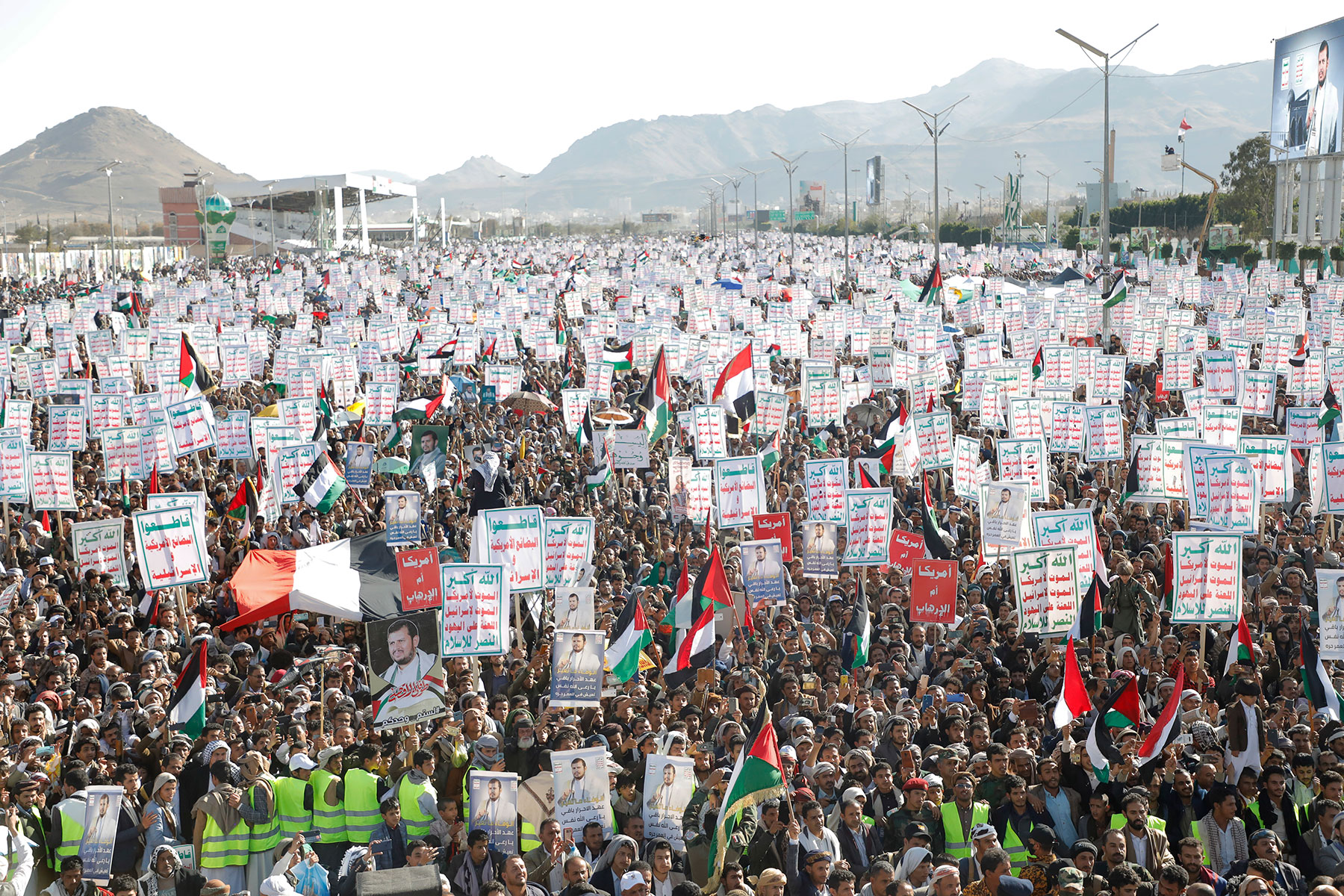
In domestic politics, the Houthi movement adhered strictly to constitutional methods: it proposed to deprive the religious reform movement (and the al-Islah Party) of state privileges, and to exclude security cooperation from Yemen’s relations with the United States. This aspect of Houthi ideology conflicted with President Saleh’s policy that aimed for a strategic partnership with the United States, adopted in 2001 when Yemen joined the global US counterterrorism campaign in the aftermath of the September 11 attacks. For the Saleh regime, this partnership produced highly contradictory outcomes: it triggered an explosive rise in anti-American sentiment across Yemini society, while simultaneously projecting the appearance of strengthening Yemen's status in the region—even as a potential competitor—and subordinated the politically empowered security apparatus, led by Saleh’s close relatives, to the oversight of US counterparts.
In 2004, President Saleh declared war on the Houthis after their refusal to cease chanting the slogan “Death to America! Death to Israel! Curse the Jews! Victory to Islam!”— a phrase that had become both a symbol of the movement and the quintessential expression of the political ideology of Houthism.[1] The bloody and disastrous Saada wars of 2004–2010, together with the death of the movement’s respected leader in 2004, weakened the regime and prompted an influx of armed tribes and followers from other segments of the population into the ranks of the Houthi resistance, transforming it into a significant local opposition force. As a result, a year before the outbreak of the peaceful uprising of 2011, which would shake the Saleh regime, the so-called “Houthi problem” had already emerged, standing alongside the “southern question” among the most pressing national issues facing the country.
The situation in Yemen during the 1990s and 2000s was characterized by the expert community as unstable. Many US political scientists classified the country as a classic case of a “fragile state,” a concept introduced into expert discourse by the World Bank in the early 1990s. In the 2000s, Yemen also gained a solid reputation as one of the global epicenters of “international terrorist threats,” becoming a major testing ground for the military and political expansion of US intelligence agencies. The “fragile state” concept thus served as a framework legitimizing direct external interference in the country’s internal affairs. At the major international conference on Yemen, held in London in January 2010, the agenda was dominated by security concerns, rather than reform, as Yemenis had hoped for. In 2011, Yemen became one of the major focal points of the wave of social uprisings that swept across the region as part of the “Arab Spring.”
The concept of the “fragile state,” the militarization of the national budget, and the erosion of the country’s sovereignty formed the backdrop against which political contradictions were transferred into the realm of force, rather than being resolved through the democratic mechanisms enshrined in the constitution. At the same time, the crisis in relations between society and the state, as well as among political actors themselves, were in fact manifestations of the immune system of a healthy and viable ethnocultural organism, expressed in the form of specific reactions to political anomalies. Al-Islah continued to enjoy support from the kingdom, which was promoting religious reform, while the United States became ever more deeply embedded in Yemen’s security apparatus, despite the open signs of civil discontent.
Despite their spontaneous nature and the absence of an organizing core, the mass youth protest demonstrations that swept through Yemeni cities in February 2011 bore all the hallmarks of a genuine social revolution. The crises of both the “lower” and “upper” strata were clearly evident. The revolution in Yemen took the form of a unique international peaceful transitional plan—the Gulf Cooperation Council (GCC) Initiative, launched on November 23, 2011, under the auspices of the Permanent Mission of the UN Secretary-General. The plan delegated to the inclusive National Dialogue Conference (NDC), held in Sana’a from March 2013 to January 2014, the task of developing the foundations of a new constitution—a process that would have been impossible under the conditions of a “fragile state” without the presence of a healthy and success-oriented civil society that expressed the will of the overwhelming majority of Yemenis.
The curators of the project focused the NDC agenda on the two previously mentioned issues—the “southern question” and the “Houthi problem”—thereby underscoring the priority of Yemen’s endogenous challenges within the transitional period. The only element of the transition that could be regarded as externally introduced was the proposal to reform the structure of the state toward decentralization and federalization, presented as a panacea for addressing the aforementioned problems.
A unique feature of the Yemeni transition was the retention by President Saleh of his position as chairman of the ruling General People’s Congress (GPC) after the planned transfer of the presidency to his deputy—Abd Rabbuh Mansur Hadi (who also served as his deputy within the party hierarchy)—in February 2012. The assassination attempt on Saleh in June 2011 transformed the former partners and rivals—the GPC and al-Islah—into true political antagonists. The same attack ultimately left the leadership of al-Islah by 2014, without its main social base—the Hashid tribal confederation, to which Saleh himself also belonged.
The new alliance that emerged in 2014, bringing together the General People’s Congress (GPC) and the Ansar Allah movement—a coalition of “conservatives” and “revolutionaries”—delivered a political defeat to the Islah Party, whose spiritual leader regarded the revolution as a precursor to the impending caliphate. The “Peace and National Partnership Agreement,” signed by President Hadi on September 21, 2014, and endorsed by the UN Security Council, enabled him to shift the foundation of his regime from the Islah Party to the new alliance, and to form a new technocratic government headed by Khaled Bahah in December 2014. Along with these radical changes on the Yemeni transition scene, the bets made in advance by external actors on the victory of the Islah party collapsed, bringing Ansar Allah to the role of a potential beneficiary of the transition, along with the GPC.
It was only in late January 2015 that interim president Hadi signaled trouble by voluntarily submitting his resignation. Nevertheless, the chief coordinator of the project, the head of the UN Secretary-General’s permanent mission, Jamal Benomar, remained a steadfast advocate of the peaceful completion of the plan up until March 24, 2015. He continued to operate from the capital, Sana’a, which was by then controlled by the new alliance, even after Hadi relocated on February 21, 2015 to Aden, a city that had already been seized by separatist forces.
Among the lessons learned from the transition process, in addition to confirming the effectiveness of convening an inclusive ND, one may also note the doubt it cast on the expert community’s commitment to decentralizing and federalizing Yemen. The debate among Yemeni participants on this issue nearly led to the collapse of the conference, revealing the incompatibility of positions among Yemen’s leading political actors concerning both the number of constituent entities in the proposed federation and the nature of their relationship with the central government. The strong regionalist traditions in the young Yemeni state gave rise to well-founded fears that the federalization project might ultimately lead not to the desired strengthening of national unity, like in other societies, but to the state’s disintegration.
Conflict in the Middle East: Possible Regional Implications
By mid-2025, the Yemeni crisis (YC) had passed through four stages of development. The two earlier stages—those of President Saleh’s rule and the implementation of the GCC Initiative—constituted its endogenous phase. The two subsequent stages, following the intervention of the Arab Coalition (AC) in March 2015, represent its geopolitical (military) phase. The AC’s military campaign in Yemen dragged on for seven years before entering a period of sustained de-escalation in April 2022. The current, “Palestinian,” stage began in October 2023, when the YC evolved into a new qualitative form—a hybrid armed conflict of a supraregional scale, combining elements of both regional and global dimensions. A distinctive feature of this stage is the direct link between the complex dynamics accumulated throughout the YC with the Palestinian–Israeli conflict (PIC) zone and Israel’s war in Gaza. The leading actors of this stage initially included the United States and the United Kingdom, which in December 2023 established the core of an international naval coalition to suppress anti-Israeli Houthi activism, followed later by Israel itself.
One is reminded of the prophetic comparison made in the summer of 2015 by UN Secretary-General Ban Ki-moon, who described the Yemeni crisis (YC) as a “ticking time bomb” that could explode if not defused through early political settlement. By the summer of 2025, the Yemeni crisis had absorbed, alongside its autonomous complex of unresolved internal contradictions, several additional subregional and regional layers, thus becoming a military–political “ticking bomb” for the entire region.
Debate over the causes of the new military phase of the YC spans a broad spectrum of interpretations: from assertions that Houthi actions pose threats to maritime security in the Red Sea and that the “Axis of Resistance” led by Iran endangers Israel’s security, to the opposite accusations directed at the United States and Israel, of aggressive policies and the obstruction of a lawful settlement in Gaza. For the purposes of studying the anatomy of the Yemeni crisis, it is important to emphasize another aspect of this issue: chronic failures in the settlement of the YC itself at all previous stages are usually caused by external geopolitical interference. The new phase is characterized by the reverse integration of what had once been distinguishable internal and external dimensions of the Yemeni crisis into a broader interethnic and interreligious conflict unfolding in another part of the region. Nevertheless, such a connection through an ideological construct of Yemeni origin does not appear alien or out of place. Having remained marginalized since 2004, Houthism has reemerged in the new stage of the civil conflict as a manifestation of the political will of the majority of the population—a society ravaged by years of war yet retaining its resilience and fighting spirit. This reality once again clearly reaffirms the long-standing argument that coercive methods are ill-suited to resolving the Yemeni conflict.
The extraordinary nature of the situation within the Yemeni crisis (YC) zone at its new geopolitical stage was further compounded by the selective and fluctuating designation of the Houthis as international terrorists, which varied depending on the mood of the US administration [2] and was alternately acknowledged or disregarded by regional actors, depending on circumstances. This accusation against the Houthis created a legal dilemma concerning the status of the second participant in the coalition government, which recognized the constitution and consolidated its authority in Sana’a in August 2016—namely, the core of the General People’s Congress (GPC). The unrecognized regime controls approximately 30 percent of the country’s territory, where over 70 percent of Yemen’s population resides. The equal participation of Ansar Allah and the GPC in the fully restored state institutional structure left unresolved the question of how the United States defines the GPC’s involvement in terrorism, given that at the time of the formation of the National Salvation Government in Sana’a, the party retained the same leadership cadre, headed by former President Saleh, with whom the US had maintained a strategic partnership for nearly a decade prior to the events of 2011. In the Supreme Political Council, the executive governing body in Sana’a consisting of ten members—five from the GPC and five from Ansar Allah—the position of head has consistently been held by a representative of Ansar Allah, whereas the posts of prime minister, foreign minister, and heads of certain security agencies and military institutions have been predominantly occupied by GPC members.
Another dilemma relates to a demand in UN Security Council Resolution 2216, which requires the Houthis to surrender their heavy weapons and withdraw from Sana’a—in other words, to capitulate. Given the coalition nature of the ruling alliance in Sana’a, it remains unclear whether the same requirement of the UN mission's normative act applies to the GPC party, which has traditionally controlled the army and security services. Without calling into question the status of the internationally recognized government (IRG)—acknowledged by Russia as the legitimate government of Yemen despite Moscow’s critical position on Resolution 2216 during its deliberations and its decision to abstain from the vote— the realistic feasibility of the resolution’s demand nevertheless comes into question. It requires the Houthis to surrender their weapons—understood to mean the entire arsenal accumulated during Saleh’s rule—to the Hadi government in exile, which has remained permanently based in a neighboring state with which Yemen shares a long and complex, and by no means easy, history of relations.
The main reasons for the escalation of the Yemeni crisis (YC) into a new phase in October 2023 were likely the following: 1) the hopeless obsolescence of the UN’s normative framework for conflict resolution; 2) the inadequacy of the “proxy” construct in analyzing the armed conflict involving the Arab Coalition (AC), which reduced it to the framework of a proxy war between Saudi Arabia and Iran; 3) and the rivalry among numerous foreign actors at various levels for geopolitical influence in Yemen, while disregarding the Yemeni people’s right to sovereignty.
Before the Yemeni crisis (YC) transitioned to its “Palestinian” stage, two main approaches to its resolution had taken shape within the discourse: one that is official (yet ineffective) and one pragmatic (yet unacceptable to several domestic and, above all, powerful external actors). The specificity of this division, reflecting the mixed endogenous–geopolitical nature of the YC itself, lies in the attempts by powerful interest groups behind these approaches to pursue incompatible strategies through the same permanent special mission appointed by the UN Secretary-General. The first approach was set out in UN Security Council Resolution 2216 (April 2015), which formally became the normative framework for the UN mission’s activities and was oriented toward a military solution to the “Houthi problem”—using force to bring the unrecognized regime in Sana'a to its knees until the Houthis surrender completely. The second approach, which emerged almost immediately after the outbreak of the war in March 2015, came from the expert community, many of whose members shared the criticism voiced by Russia’s Permanent Representative to the UN Security Council (2006–2017) Vitaly I. Churkin of the draft resolution 2216. This perspective was grounded in an understanding of Yemeni realities rather than the preferences of foreign actors. It has long served as a practical guideline for the work of the current head of the UN mission in Yemen, Hans Grundberg, and is based on two main elements: a) facilitating the prompt cessation of foreign military intervention in the Yemeni crisis; and b) launching a comprehensive political peace process in an inclusive Yemeni format under the auspices of the United Nations. This scenario gave the “green light” in particular to the Omani track and to the de-escalation phase that began in April 2022. Its progress has been actively supported by both the UN mission and Russian diplomacy at every stage.
The de-escalation phase and the Omani track of direct negotiations between Riyadh and Sana’a over the terms for ending the war became the main outcome of the protracted Yemeni crisis and one of the most significant achievements of the reform policy pursued by Saudi Crown Prince Mohammed bin Salman. The new leader of Saudia Arabia first became acquainted with the Yemeni crisis while serving as the commander of Operation Decisive Storm, conducted by the Arab Coalition, and by 2021–2022, he enabled Saudi Arabia to take the initiative in launching a process to bring the conflict to an end according to its own design, based on a regional framework.
The liberal reforms in Saudi Arabia that began to affect the religious sphere in 2017, the alarming dynamics of the military conflict in Yemen that hindered the Kingdom’s strategy to achieve regional leadership under the Vision 2030 framework, and finally, the reassessment of approaches to regional security involving Iran—all preceded this turn toward de-escalation in the Yemen. The intellectual foundation for this policy shift was laid out in a 2022 monograph, “The Houthi Movement in Yemen: Ideology, Ambitions, and Security,” published by the King Faisal Center for Research and Islamic Studies (KFCRIS) in Saudi Arabia [3]. Most of the articles in the volume were written by prominent representatives of various Western schools of Oriental studies and Yemeni research centers, who arrived at a shared conclusion regarding the groundlessness of applying the “proxy” concept to the Yemeni Houthis [4]. In their view, the construct itself contributed far more to the development of Sana’a’s relations with Iran and the “Axis of Resistance” during the years of the armed conflict than did any a priori assumption that the movement was serving Tehran’s interests before the war began. The authors agreed that the roots of Houthism lie both in Yemen’s history and traditions and in the bleak contemporary political situation in the Middle East following the attacks of September 11, a situation which—according to Sayyid Hussein al-Houthi and his successor, his brother Sayyid Abdul-Malik al-Houthi, the current leader of Ansar Allah—was largely the result of US policies that have plunged the region into chaos.
Of course, the “revelations” in the monograph did not make relations between the Saudia Arabia and Ansar Allah any frindlier, but removing the label of “enemy agent” from the movement allowed the parties to sit down at the negotiating table and return the “Houthi problem” (along with others) to the agenda for a comprehensive settlement of the Yemeni conflict.

Extra-Regional Actors in the Middle East
The process for sustained de-escalation enjoyed the support of the UN mission, while at the same time faced serious opposition from a number of competing political power centers (PPCs). These PPCs united in April 2022, into the Presidential Leadership Council (PLC) under the leadership of the new Internationally Recognized Government (IRG) president, Rashad al-Alimi, who feared a weakening of their political standing. Resistance also came from the United States, which supported this discontent out of concern that regional actors might seize the initiative in shaping the Yemeni peace process. US Special Envoy for Yemen Tim Lenderking (2021–2025), repeatedly emphasized the leading role of the United States, indirectly criticizing the UN mission for its support of the negotiations in Oman. His remarks before the House Foreign Affairs Committee in December 2022 were particularly telling: “The Houthis’ last-minute demand to divert limited oil export revenues, received by the Yemeni government, to pay the salaries of active Houthi combatants—even though the Houthis have refused to commit to a ceasefire—prevented the UN from securing a new truce agreement between the parties in October… These actions are an affront to the entire international community and are completely unacceptable.” This highlighted the growing divergence between the UN’s mediation approach, which sought a regionally balanced compromise, and Washington’s position, which prioritized maintaining its own influence over the trajectory of the Yemeni settlement.
The two official visits exchanged between Riyadh and Sana’a in April and September 2023, following the normalization of relations between Saudi Arabia and Iran under Beijing’s mediation in March, differed markedly in their atmosphere: the initial enthusiasm had clearly begun to fade, deepening Sana’a’s uncertainty about the outcomes and timelines of the negotiations.
If the agreement on the “road map” within the framework of the Omani track—which readiness was announced by Hans Grundberg only on December 23, 2023—had been reached earlier, the new escalation of the Yemeni crisis (YC) might not have occurred at all, or it might have taken a much less aggressive form. The new military stage of the YC covers October 7, 2023, to May 6, 2025, and is divided into three distinct phases. The de-escalation phase along the line of military contact between the forces of the Arab Coalition (AC) and Sana’a has remained formally in effect, although it has noticeably deteriorated in all other aspects of the process, pushing the humanitarian and economic situation once again to the brink of collapse.
It should be noted that the initiative linking the Yemeni crisis (YC) to the situation in the Palestinian-Israeli conflict zone originated solely from the unrecognized authorities in Sana’a and had nothing in common with the policy of the official Yemeni government—the internationally recognized government (IRG). The latter expressed its stance through support for the resolutions of international summits and organizations such as the League of Arab States (LAS) and the Organization of Islamic Cooperation (OIC), which condemned Israel for the genocide of Gaza’s Palestinian population but prioritized the goal of preventing further conflict escalation. Many members of the PLC sharply criticized the policy of the Houthis, describing them as a terrorist group and their actions in the Red Sea against Israel as harmful to Yemen’s national interests. This nuance is important to bear in mind, especially when encountering media headlines such as “Yemen Enters the War with Israel,” which reflect, rather, the enormous resonance of Sana’a’s policies across the Arab and Muslim world — policies coordinated with participants in the so-called “Axis of Resistance.” The following section will focus precisely on the policy of the unrecognized regime—the initiator of this new stage.
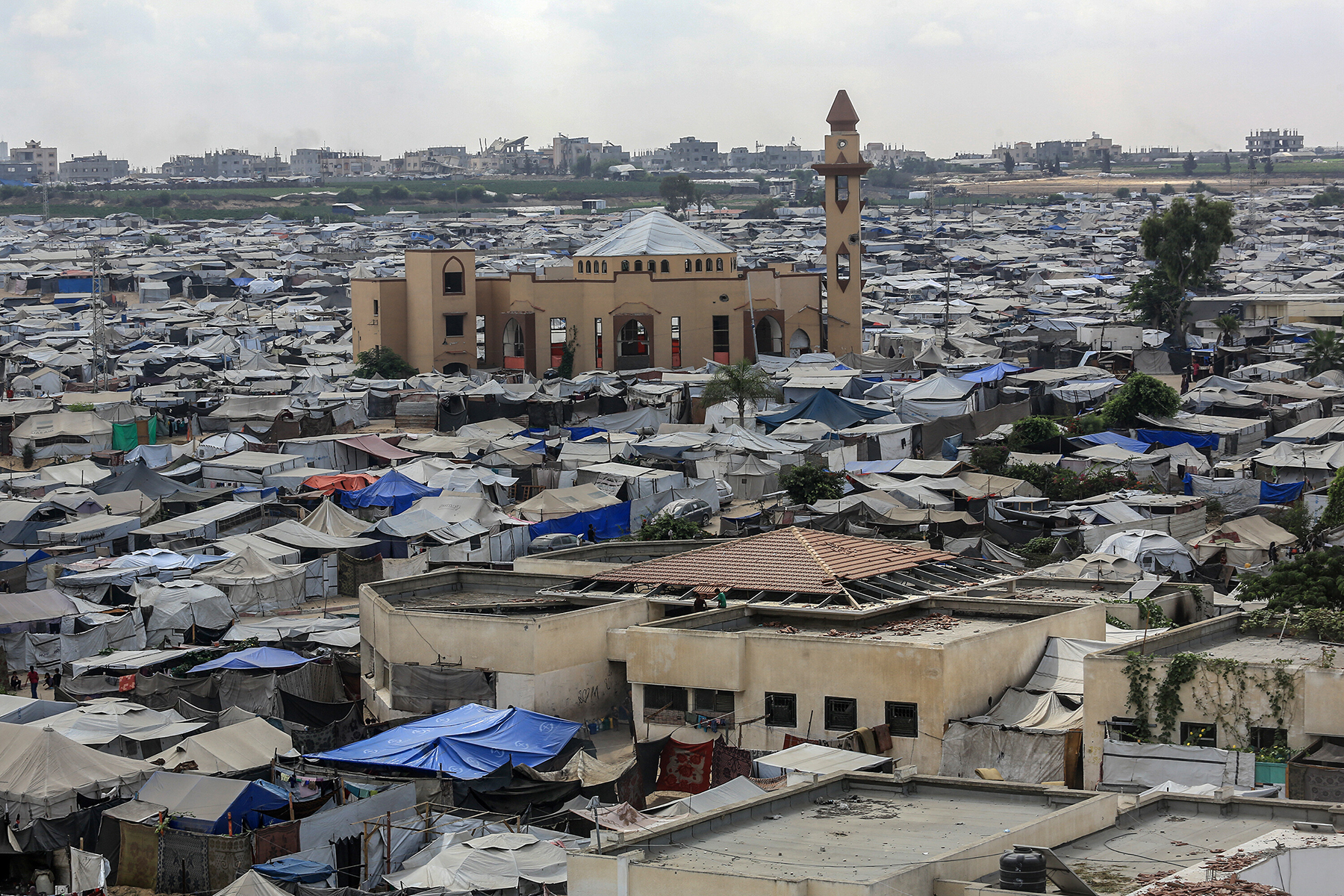
The trigger for the transition to a new stage of the YC was the sudden Hamas raid of October 7, known as “Tufan al-Aqsa” (“Al-Aqsa Flood”), and the large-scale, well-coordinated Israeli military operation in Gaza, Operation Iron Sword, which resulted in the near-total destruction of the city and, by June 2025, casualties amounting to roughly 9 percent of its population. During the first phase, from October 7 to December 18, 2023, the leaders of Ansar Allah seized full control over the formulation of both the domestic and foreign policy of the unrecognized government in Sana’a, achieving a qualitative breakthrough in consolidating its ideological base around the Houthi doctrine. The Palestinian issue, which had already held a prominent place in Ansar Allah’s rhetoric—particularly in their condemnation of the Saudi and Emirati military intervention in Yemen, which they labeled an “unprovoked aggression” orchestrated by their common enemies, the United States, the United Kingdom, and Israel (referred to as the “Trio of Evil” discourse) to establish a strategic foothold in the Red Sea as part of a New Middle East project hostile to Arab interests—now became the all-dominant theme. The Palestinian solidarity campaign, “The Battle of the Promised Victory and Sacred Jihad,” permeated every policy sphere under the unrecognized regime, fully occupying domestic political discourse.
Weekly, well-organized mass marches involving millions of participants, held under the slogans of the Demonstration Organizing Committee and accompanied by televised public lectures and religious sermons by the movement’s leader, Sayyid Abdul-Malik al-Houthi, served as an official manifestation of the will and determination of the entire Yemeni people to stand firm in defense of the rights of Palestine. These events featured not only threats directed at their perceived enemies but also sharp criticism of the policies of Arab and Islamic states for their “negligence,” as well as of the IRG, which they denounced as “anti-popular.”
In October–November 2023 civilian solidarity with the residents of Gaza was supplemented by the unrecognized Houthi regime’s military–political actions under the slogan addressed to Hamas’s organizations, “You are not alone!” The Sana’a authorities blocked Israeli shipping through the Bab al-Mandeb, began launching rockets toward the Red Sea port of Eilat—significantly disrupting its operations—and concurrently organized fighter-training courses to prepare “hundreds of thousands of Yemenis” for voluntary entry into the war against Israel. Expressions of loyalty to the “leader of the revolution,” Sayyid Abdul-Malik al-Houthi, reached an unprecedented scale, extending throughout the military command at all levels.
The head of the Supreme Political Council (SPC) of the Sana’a regime, Mahdi al-Mashat, emphasized that the countermeasures introduced against Israel were linked solely to the war and blockade in the Gaza Strip and were not intended to obstruct freedom of navigation through the Bab al-Mandeb Strait for any other companies or vessels. Overall, the restriction affected only about 1–1.5 percent of total cargo traffic.
The second phase, lasting from December 18, 2023 to January 19, 2025, encompasses Operation Poseidon Archer, conducted by a US–U.K. maritime coalition, known as Operation Prosperity Guardian, during the administration of President Biden. In a joint statement issued by the governments of the United States and several of its partners on January 3, 2024, referring to attacks on about ten commercial vessels involving roughly one hundred drones launched from Yemen’s shores, it was stated:
“…These attacks endanger the lives of innocent people from around the world and represent a serious international problem requiring collective action. Nearly 15% of global maritime trade passes through the Red Sea, including 8% of global grain trade, 12% of seaborne oil trade, and 8% of liquefied natural gas shipments. International shipping companies continue to reroute their vessels around the Cape of Good Hope, leading to significant costs and weeks-long delivery delays, ultimately threatening the transport of essential food, fuel, and humanitarian aid worldwide. Let our message be clear: we call for the immediate cessation of these illegal attacks and the release of unlawfully detained ships and crews. The Houthis will be held accountable for the consequences if they continue to endanger lives, the global economy, and the free flow of commerce through the region’s vital waterways.”
The strikes launched by the joint military coalition on January 11, 2024, aimed to “restore freedom of navigation” through the strait and deprive Sana’a of the military capacity to continue its attacks on shipping. Although Israel was not mentioned, within Yemen the openly pro-Israeli campaign against the Sana’a alliance significantly complicated the position of the internationally recognized government.
The operation ended on January 19, 2025, without achieving its objectives, coinciding with President Biden’s departure from office.
US regional and EU partners declined to operate under US command. The EU’s Operation Aspides focused solely on protecting and escorting commercial vessels. Among the Gulf states, only Bahrain participated in the US–U.K. maritime coalition, providing basing facilities for the US and British fleets, as well as for the CENTCOM command headquarters.
The United States invoked Article 51 of Chapter VII, “Action with Respect to Threats to the Peace, Breaches of the Peace, and Acts of Aggression,” of the UN Charter [5] (concerning the right to self-defense) to justify its aggression in Yemen. The legal basis of the US-UK joint military operation was subjected to serious criticism by the Russian Ministry of Foreign Affairs and by Russia’s Permanent Representative to the UN, Vassily A. Nebenzia. In a comprehensive January 22, 2024, letter to UN member states, he outlined Russia’s position, characterizing the actions of the United States and the United Kingdom as a gross violation of international law and a threat to peace [6].
Russia did not endorse the Houthi threats to navigation, but against the backdrop of the even more explosive situation in Gaza—which the Houthi countermeasures were ostensibly aimed at containing—it advocated finding comprehensive, balanced solutions to both issues in parallel. A similar position was shared by most regional actors, who expressed concern over threats to maritime shipping, primarily stemming from the military campaign of the US–U.K. maritime coalition in the Red Sea.
According to the 2024 annual report of the Suez Canal Authority, revenues from vessel transits fell by 60 percent, depriving Egypt of approximately USD 7 billion (prior to the establishment of the Operation Prosperity Guardian coalition, the decline had been only about 2–3 percent).
Almost every quarter during the military phase of the “Palestinian” stage, the Houthis unveiled new types of equipment and refined their tactics for attacking maritime targets, including commercial and military vessels belonging to the United States and the United Kingdom, both of which had been added to Sana’a’s blacklist after the onset of aggression. This development became a pretext for renewed threats against Iran, which was accused of supplying weapons to the Houthis while allegedly bypassing all the cordons established since March 2015—areas that had long been under the control of the US and British naval forces.
On July 20, 2024, Israeli air forces joined Operation Poseidon Archer, a day after the first Yemeni drone explosion occurred in Tel Aviv.
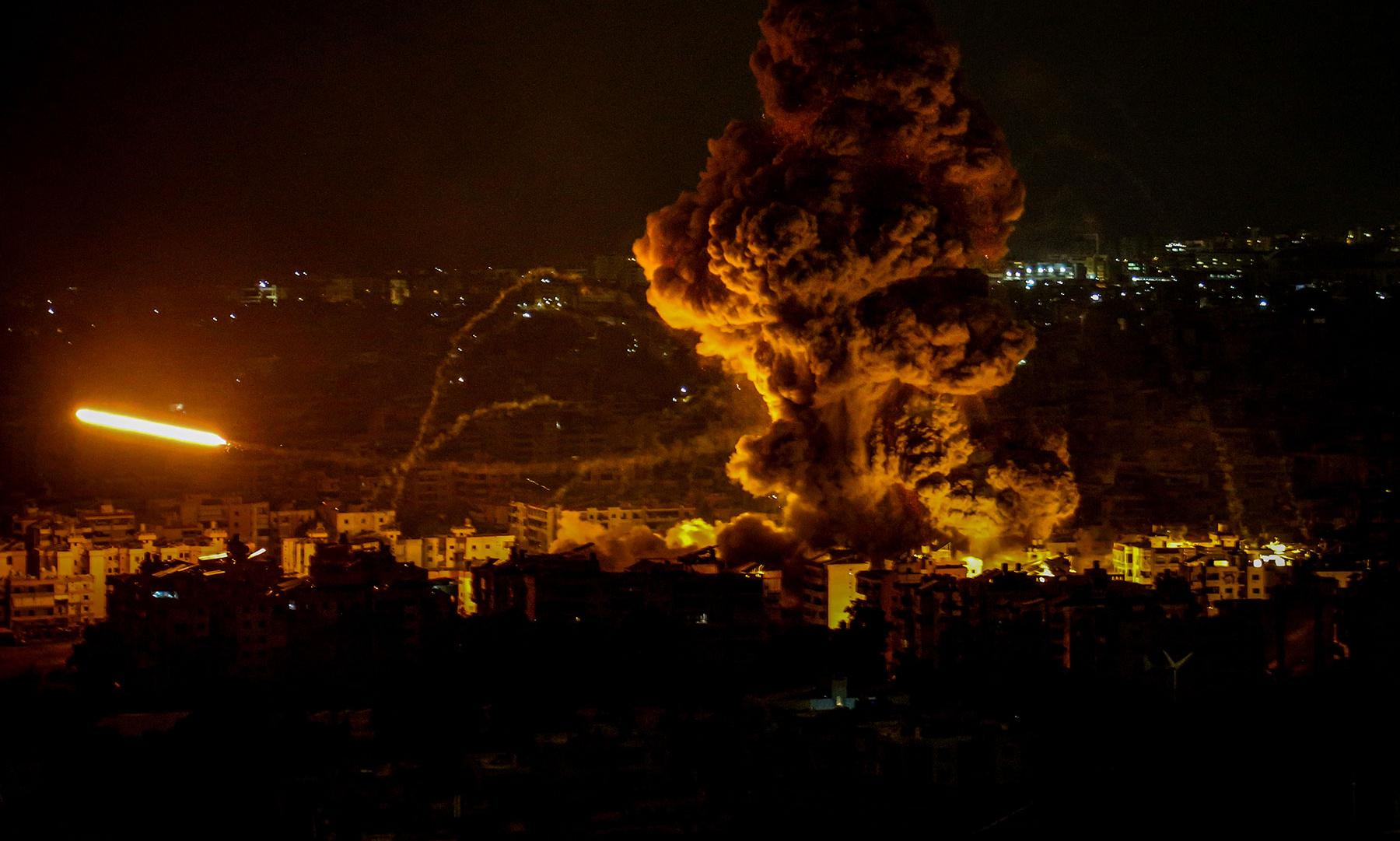
In the second half of the year, Israel carried out three additional attacks, coordinated with the US-UK joint military operations. Meanwhile, strikes on Israeli territory from Yemen became increasingly frequent. From October 2023 to mid-January 2025, Sana’a’s media outlets reported 92 air raids targeting various sites in Israel, including the port of Haifa on the Mediterranean (in coordination with Iraqi resistance forces) and Ben Gurion International Airport in Tel Aviv. During the same period, the Houthis also attacked 24 Israeli vessels, conducted 78 military operations against the US Navy, and targeted 30 US merchant ships, as well as 13 British vessels.
The Blockade’s Toll: How War Is Deepening the Humanitarian Crisis in Gaza
Attacks on Israeli territory involved the use of cruise and ballistic missiles—some with hypersonic capabilities capable of breaching Israel’s defenses—as well as a large number of drones. According to incomplete data from the first year of Operation Poseidon Archer, 1,200 airstrikes were carried out against Yemen.
The combat experience gained by US forces during the war with Yemen in the Red and Arabian Seas was regarded by many experts as highly instructive. It became the subject of close analysis, particularly regarding the conditions of a conflict in which drones costing up to $20,000 each were pitted against air defense missiles priced between $1 million and $4.5 million apiece.
The change of administrations in the White House on January 19, 2025, brought about a pause in the war in Gaza and a simultaneous halt to Houthi attacks on all vessels in the Red and Arabian Seas. The arrival of President Trump, however, was accompanied by a sharp escalation of US military activity, under Operation Rough Rider. Trump’s designation of the Houthis as a Foreign Terrorist Organization (FTO) on January 22, 2025, coincided with this pause in hostilities and directly contradicted UN envoy Hans Grundberg’s appeal for deescalating the military conflict in the Red Sea, citing Yemen’s dire humanitarian situation. During a UN Security Council briefing on February 13, 2025, Grundberg opened his remarks with a call for de-escalation. Yet, on March 15, 2025, the United States resumed heavy bombardments of Yemen, ahead of Israel’s breakdown of the Gaza ceasefire. As The Washington Times reported, “President Trump warned the Iran-backed terrorist group that it must cease all attacks on commercial vessels in the Red Sea, or ‘you will face a hell the likes of which you have never seen before.’”
A new wave of unprecedentedly intense daily airstrikes under Operation Rough Rider lasted from March 15 to May 6, 2025. The campaign’s launch was accompanied by a major political scandal—dubbed “Signalgate”—triggered by the leak of confidential information about US operational scenarios for the strike on Yemen. The details were published in an article by The Atlantic’s editor-in-chief, Jeffrey Goldberg, who had inadvertently been added to a messaging group created by National Security Advisor Mike Watts. The leak cost Watts his position.
The operation involved the aircraft carrier USS Harry S. Truman (CVN-75), which lost a total of three F-18 fighter jets, each valued at $67 million, in several separate incidents during the campaign. The United States also lost more than a dozen MQ-9 Reaper [7] drones, each worth around $30 million, shot down over Yemeni territory. Overall, the cost of US operations in Yemen is estimated at approximately $7 billion.
At the end of April 2025, British aircraft once again joined Operation Rough Rider, and on May 5, Israeli air forces carried out their first massive strike of the campaign, targeting sensitive infrastructure sites and residences of Ansar Allah’s political and military leaders. Israel continued its attacks even after President Trump declared the operation concluded. Speaking at an investment forum in Riyadh in mid-May, the US president offered the following remarks about his decision: “In recent weeks, after repeated attacks on American ships and freedom of navigation in the Red Sea, US forces conducted more than 1,100 strikes against the Houthis in Yemen. As a result, the Houthis agreed to stop. They said, ‘We don’t want this anymore.’ You’re hearing that from them for the first time. They’re tough guys, they’re fighters. But just a few days ago, we asked them to stop attacking commercial ships. They had no intention whatsoever of targeting commercial vessels or anything American, and they were very happy that we stopped—but we had 52 days of thunder and lightning like they’d never seen before. It was a fast, fierce, decisive, and extremely successful use of military power. Not that we wanted it, but they were hitting ships. They were shooting at you. They were shooting at Saudi Arabia. We weren’t.”
***
The prospects for the further development of the Yemeni conflict remain unpredictable. The link between the Yemeni conflict and the Palestinian-Israeli conflict persists, with Yemen’s crisis evolving into a format of direct confrontation between Sana’a and Israel.
The new center of war, sparked by Israel’s attack on Iran on June 13, 2025, and the ensuing twelve-day conflict that ended with US strikes on Iran’s nuclear facilities and Iran’s retaliatory strike on a US airbase in Qatar, prompted Sana’a to declare its readiness to support Iran. Sana’a also reaffirmed its course of linking the Yemeni conflict to the situation in Gaza and maintaining the blockade of Israeli shipping through the Bab el-Mandeb Strait.
Throughout all phases of the second stage of the military phase, Russia’s position consistently emphasized the need for a political settlement of the Yemeni conflict. On May 14, 2025, Russia’s Permanent Representative to the UN, Vassily Nebenzia, stated that during nearly two months of confrontation between the United States and the Houthis, the number of casualties had exceeded 200, with several hundred more injured. He noted that US strikes, carried out almost nightly on the sovereign territory of Yemen, targeted not only military sites but also civilian infrastructure—without achieving any tangible results, either in suppressing Ansar Allah’s military capabilities or in forcing the movement to abandon its chosen course of action. Welcoming the cessation of US attacks on Yemen, the Russian envoy remarked: “As they say, better late than never. Washington, it seems, has finally recognized the futility of a military approach, something we have repeatedly pointed out… This could have been the first step toward broader de-escalation around Yemen. Unfortunately, that is not the case, as Israel has now begun its relay bombings of Yemen.”
US-UK actions in Yemen bore all the hallmarks of a large-scale neocolonial military campaign. From the outset, it took the form of a demonstration of military superiority, differing little in method and tactics from the operations of the Arab Coalition, which between March 2015 and April 2022 carried out nearly 250,000 airstrikes on Yemen. The coalition’s inability to organize a ground operation—essential for achieving a military victory—proved to be a repetition of the same old lesson: the refusal of the Arab Coalition to participate in order to maintain the de-escalation phase, and the agreement of Yemen’s centers of political influence within the IRG to take part only if supplied with US weapons, which would have jeopardized their patrons in the Arab Coalition, leading to no meaningful results. Moreover, the Palestinian backdrop of this new stage created the risk that, in the future, the accumulated military power of Sana’a rivals could turn against Israel’s allies. The second phase of the geopolitical stage of the crisis cannot yet be considered fully complete—but it may well evolve into a third phase of conflict if Israel seeks to seize the initiative.
* The organization is designated as a terrorist organization and is banned within the territory of the Russian Federation.
1. Bokov, T. A. The Yemeni Houthi Movement: Causes of Emergence, Formation, and Development. Author’s abstract of the dissertation for a PhD in Historical Sciences. — St. Petersburg, 2023. P. 162.
2. In January 2021, as he was leaving office, President Donald Trump designated the Houthis as an international terrorist organization. In February of the same year, the newly elected President Joe Biden removed them from the list, only to re-designate them in January 2024. Beginning his next term in January 2025, Donald Trump escalated the classification of the Houthis to the level of a “Foreign Terrorist Organization” (FTO).
3. The Huthi Movement in Yemen Ideology, Ambition and Security in the Arab Gulf / Abdullah Hamidaddin. London: I.B. Tauris, 2022.
4. The book’s editor-in-chief was Dr. Abdullah Hamidaddin, Assistant Secretary-General of the Center. Among the contributors were B. Haykel (Princeton University), M. Brandt (Austrian Institute for Social Anthropology, ISA), E. Ardemagni (Italian Institute for International Political Studies, ISPI), and others.
5. In March 2015, the same article served as a reference point for launching the Arab Coalition’s Operation Decisive Storm.
6. United Nations S/2024/90 Security Council Distr.: General 22 January 2024 Letter dated 22 January 2024 from the Permanent Representative of the Russian Federation to the United Nations addressed to the President of the Security Council
7. The MQ-9 Reaper is a remotely piloted unmanned aerial vehicle (UAV) designed for medium-altitude, long-endurance missions. It is primarily employed for intelligence, surveillance, and reconnaissance (ISR) operations, as well as precision strike missions.
(votes: 2, rating: 4.5) |
(2 votes) |
The U.S. and the UK will likely use the challenging military and political environment for a further escalation of the crisis
A vertical rather than horizontal escalation can be expected, involving other actors in the war
Extra-Regional Actors in the Middle EastReport No. 99 / 2025
The Blockade’s Toll: How War Is Deepening the Humanitarian Crisis in GazaInternational response remains fragmented


