
Strategic Aspects of Mutual Relations Between China and the Caucasus Countries
(votes: 19, rating: 5) |
(19 votes) |

Doctor of Political Sciences, Professor
The article examines China’s geostrategy in the South Caucasus, focusing on how Beijing seeks to secure its interests through cooperation in transport, logistics, and energy. It notes that in recent years, China has significantly broadened its engagement with the region, tailoring its partnerships to the distinct geographic and economic potential of each South Caucasus state. The analysis highlights that while common priorities exist, such as infrastructure and trade connectivity, China maintains differentiated approaches toward Armenia, Azerbaijan, and Georgia. The article also explores the dynamics and future prospects of these relationships, arguing that China’s activities in the region are largely pursued within the framework of the Belt and Road Initiative.
Several factors define the unique character of relations between China and the countries of the South Caucasus. First, the geographical distance between China and the South Caucasus has contributed to the relatively slow establishment and development of political relations and broader cooperation. Cooperation within the framework of the Belt and Road Initiative is primarily economic in nature. Although the markets of the South Caucasus countries and the scale of cooperation with each are not yet large for China, the region is assessed as having significant long-term potential, primarily because it provides direct access to European markets.
In the financial sphere, through instruments such as the Silk Road Fund and the Asian Infrastructure Investment Bank, the South Caucasus has become an important geo-economic vector for China. By making substantial investments in the region, China enhances its regional geopolitical influence and strategic opportunities. The hydrocarbon resources of the region further increases its strategic importance. China’s main strategic objective regarding the South Caucasus is the establishment of a Eurasian land and sea transport corridor. Cooperation in the energy sector constitutes a key priority in China’s foreign policy, while economic and technological collaboration strengthens its position in the region. In this way, China seeks to balance the geopolitical activities of other major powers with interests in the South Caucasus. At the same time, China closely monitors the security situation in the region to prevent potential threats and maintain regional stability, which aligns with its geostrategic interests. Notably, China adopts a cautious approach to political issues, aiming to avoid confrontation with third-party states while consolidating its influence through economic and infrastructural engagement.
Introduction
In the early 1990s, relations between China and the South Caucasus countries did not experience significant development. This can be mainly explained by two factors. First, at that time, China focused primarily on the countries of Central Asia. According to its foreign policy strategy, it was initially important to establish closer relations and develop cooperation with neighboring or geographically proximate states. Accordingly, China devoted greater attention to the dynamic development of political relations and economic cooperation within its immediate region. Second, the South Caucasus was relatively isolated from China, and historically, the region was not considered a priority in China’s foreign policy. Although China had some historical contact with the South Caucasus states, relations and cooperation remained underdeveloped. China began establishing diplomatic relations with the South Caucasus states in the first years following their independence. The region’s high conflict potential compelled China to act cautiously. Consequently, China sought to avoid involvement in regional conflicts and geopolitical confrontations, while actively pursuing economic cooperation, which represented the most optimal form of engagement in the region.
Today, the South Caucasus occupies an important place in China’s foreign policy strategy, as it offers unique access to European markets. The region serves as a strategic crossroads along the north–south and east–west axes. Furthermore, its rich hydrocarbon resources are significant for China’s energy and economic interests. In recent years, the emergence of a new geopolitical configuration and the relative stabilization of the region have provided new momentum for the development of China–South Caucasus relations.

Russia and China in the Era of Trade Wars and Sanctions
China’s Global Geopolitical Strategy at the Current Stage
Today, China’s growing global political and economic power has shaped the formation of its national interests across nearly all regions of the world. China’s geopolitical strategy is primarily influenced by its geographical position, the constraints on realizing its national interests, and contemporary global challenges. Despite the diversity of influencing factors and geopolitical orientations, it can be argued that the ultimate goal of China’s foreign political and economic activities is the great national rejuvenation of the Chinese people. Accordingly, China prioritizes the creation of a favorable international environment to ensure sustainable development and the formation of the necessary resource base for this development. This principle underpins the governance concept of President Xi Jinping and is consistently emphasized in official discourse. A central driver of China’s rapid development is the cultivation of extensive international contacts. Indeed, China’s role in contemporary international relations and economic cooperation demonstrates that its development cannot occur in isolation. Conversely, it is difficult to envision the development and stability of the modern world without China’s active participation. Against this backdrop, it is particularly useful to examine the specific aspects of China’s overall geostrategy, and in particular, its strategic approach to the Caucasus countries. There is little doubt that the development of this region is closely linked to the level and nature of its relations with China.
To further understand the essence and prospects of China’s geopolitics at both regional and global levels, it is necessary to consider several characteristic elements. China’s main strategic geopolitical resource lies in its loyalty to historical traditions and its strict discipline, grounded in social harmony and justice. While this may initially appear philosophical, it forms a strong basis for the effective achievement of national development goals. The concept of “Great Chinese Discipline” is a key factor not only in domestic governance but also in the implementation of foreign policy. British historian Arnold Toynbee argued that China will be one of the key determining factors in the history of the twenty-first century, contributing to the world through a successful combination of Western dynamism and traditional Chinese stability.
Chinese history provides a unique example of a continuously developing state-civilization spanning over four thousand years. Elements of this ancient civilization are clearly reflected in China’s foreign policy and geostrategy, which address international issues according to a logic unique to the Chinese people. Figuratively, time passes differently in China than elsewhere, as if stretched and slowed. This temporal perspective is evident in the country’s gradualist approach to foreign policy: the more one rushes, the later one achieves objectives. Like domestic policy, foreign policy development is constantly reviewed based on the analyses of leading scholars and researchers, with adjustments made as necessary. Considering historical conditions alongside internal and external factors, China’s foreign policy concept is continuously refined, and the mechanisms for its implementation are regularly improved.
China’s foreign policy strategy is thus oriented toward a long historical horizon, shaped by centuries of experience and pragmatic decision-making. A key indicator of this pragmatism in the contemporary international system is China’s advocacy of multipolarity and its policy of mutually beneficial cooperation with all states. From China’s perspective, multipolarity ensures the safe and peaceful coexistence of all actors in international relations. In recent years, experts characterize China’s foreign policy as a strategy of peaceful neighborhood, emphasizing pragmatism in resolving issues with neighboring countries, particularly border disputes. This approach is evident in China’s relations with Russia, India, and Vietnam. [1]
The developments of recent decades demonstrate that China’s economic growth has consistently outpaced global averages. This economic strength is closely reflected in its foreign policy strategy, giving rise to what can be termed “economic diplomacy” as a central component of China’s geostrategy. Economic diplomacy has played a decisive role in strengthening China’s international position and expanding its influence on the global stage. [2] Tsui Liju, president of the Institute of Modern International Relations, observes that over recent decades, China has progressed from relatively weak positions to relatively strong ones, without encountering serious conflicts with major world powers. In the coming periods, China is expected to advance from strong to even stronger positions, further enhancing its international influence. This growing influence is already a source of concern for established powers, particularly the United States and the European Union. Indeed, China’s expanding role in the supply markets of Europe and the US is contributing to emerging tensions and competitive dynamics between these actors. [3] For instance, during the Trump administration in the United States, high tariffs were imposed on Chinese products, prompting a similar response from China. Although a degree of compromise has been reached between the parties, elements of tension persist. While these tensions may initially appear to be purely economic, they also reflect underlying aspects of the struggle for geopolitical influence. In all cases, China has demonstrated its capacity for effective response, as noted by numerous experts. The competitiveness of Chinese products and their expanding presence in global supply markets have significantly enhanced the country’s geopolitical influence.
Moreover, China’s domestic market is highly attractive to leading global companies, which actively seek to enter and consolidate their positions within it. These economic dynamics are closely intertwined with the country’s foreign policy and diplomatic strategies. Taking these factors into account, China implements a pragmatic geostrategy suited to the requirements of the contemporary era, drawing upon diplomatic traditions cultivated over centuries. Since the beginning of the twenty-first century, China has exhibited a new approach to foreign policy, reflected in key strategic documents such as the New Security Concept, the New Approach to Development, and the Harmonious World Concept. This approach has been characterized as the new era of Chinese diplomacy. Mamonov notes that the ideological foundations of China’s contemporary diplomacy are rooted in the approach of Deng Xiaoping, who emphasized the principles of careful observation, consolidation of strength, confident response to change, secrecy regarding capabilities, avoidance of premature leadership claims, and a focus on concrete actions. [4]

The primary vector of China’s contemporary geostrategy is the establishment of a system of relations that enables the most favorable implementation of foreign policy with neighboring and nearby regions. China is one of the few countries in the world with both land and maritime borders, a reality that necessitates particular attention to the development of political relations and economic ties with countries in its immediate vicinity. This strategic focus has been a central factor in the success of China’s foreign policy. Close economic contacts serve as a key driving force behind the expansion of China’s geopolitical influence and its achievements in surrounding regions.
Since the late 2000s, amid increasing global economic instability, China has played an increasingly effective role in the economic development of Asian countries. Notably, China’s leadership within the Shanghai Cooperation Organization has contributed significantly to peace and stability in the region. Chinese enterprises have set trends that continue to this day, further consolidating the country’s influence. In the twenty-first century, leading global powers, including China, place special emphasis on the role of “soft power” in the formulation and implementation of foreign policy strategies. [5] n this context, China’s approach merits special attention. Beyond its substantial economic development potential, the implementation of an effective “soft power” strategy plays a crucial role in the rapid expansion of China’s global influence. Contemporary Chinese diplomacy identifies four principal components of the “soft power” vector: the strengthening of China’s political influence, the enhancement of economic competitiveness, the cultivation of a positive national image to increase attractiveness, and the assurance of respect for China’s decisions at the international level. These components have been formally recognized as official elements of China’s geostrategic “soft power” policy. At the present stage, this policy constitutes a central line in the People’s Republic of China’s geostrategy, aimed primarily at securing global acknowledgment of its rising power. China is pursuing a multi-vector foreign policy strategy aimed at consolidating its status as a historically powerful state. Its demographic, territorial, and economic indicators provide a solid foundation for this status, positioning China among the leading global powers. In addition to these material factors, China possesses a unique cultural resource: the world’s oldest continuous civilization, rich in traditions and diplomatic heritage. The preservation and application of these ancient diplomatic principles contribute significantly to the effectiveness of China’s foreign policy strategy. Furthermore, the country’s substantial military capabilities, including nuclear weapons, constitute a critical factor underpinning its diplomatic influence. As noted by Wright, diplomacy is most effective when supported by genuine military power. [6] China’s diplomacy is reinforced by its substantial military capabilities and its permanent membership in the United Nations Security Council, which further enhances its influence over diverse international processes. Considering all these factors, it is evident that China can confidently rely on its status and influence within the contemporary system of international relations. This combination of power and international standing shapes the contours of the geostrategy that China pursues across various regions of the world.
China’s South Caucasus Policy
The historical roots of relations between China and the South Caucasus trace back to the early Middle Ages, with the Great Silk Road playing a pivotal role in establishing and developing these connections. Even today, transport and logistics remain central to China’s engagement with the countries of the region. China’s specific interests in the South Caucasus are primarily pursued within the framework of the Belt and Road Initiative, encompassing geopolitical, geoeconomic, and security dimensions. Accordingly, China has sought to deepen diversified cooperation with Azerbaijan, Georgia, and Armenia.
The South Caucasus is not only strategically significant but also a complex region characterized by sharply conflicting interests among major global powers. By leveraging its economic and technological cooperation opportunities, China can steadily strengthen its position in the region, contributing, in a stabilizing sense, to balancing the geopolitical competition of the great powers. In the near future, the strategic importance of the South Caucasus for China is expected to increase considerably, as the implementation of the Belt and Road Initiative transforms the region into a vital corridor connecting Eurasia and Africa. Consequently, geopolitical and geoeconomic initiatives in the region are likely to be increasingly influenced by China.
China pursues diversified cooperation tailored to the unique characteristics of each South Caucasus state. Cooperation with Azerbaijan spans both energy and transport-logistics sectors, encompassing traditional and new energy sources. Engagement with Georgia facilitates the export of Chinese products to European markets, positioning the country as a corridor to the Black Sea. Collaboration with Armenia primarily focuses on communication technologies. Overall, interactions between China and the South Caucasus countries are marked by intensity and density, indicating promising prospects for the development of a comprehensive system of relations.
At the same time, two factors have constrained the development of China–South Caucasus cooperation. First, geographic conditions remain challenging, as the region’s access to China is limited; however, the restoration of the historical Silk Road is expected to expand these opportunities significantly. Second, China’s engagement with the South Caucasus began relatively late, so its diplomatic interests in the region have primarily focused on economic cooperation. Indeed, the South Caucasus is viewed as a central geography for the implementation of the Belt and Road Initiative, serving as a major corridor connecting China with European markets, while also offering substantial market potential.
Following the resolution of the Nagorno-Karabakh conflict, a new geopolitical configuration has emerged in the South Caucasus. These updated geopolitical realities and the evolving security environment have significantly influenced the geostrategic calculations of states with interests in the region. In particular, the attractiveness of the South Caucasus as a zone for cooperation under safe and secure conditions—historically marked by high conflict potential—has increased considerably. Simultaneously, the competition for influence and control in the region has entered a new phase. China’s expanding geopolitical and geoeconomic interests, along with the establishment of closer and more intensive contacts with regional countries, serve as an important balancing factor. The presence of substantial economic interests in the South Caucasus also underscores the importance of security considerations. Accordingly, China’s interests in the region can be broadly categorized into three interrelated dimensions: geopolitical, geoeconomic, and security.
China recognizes significant opportunities to meet its energy needs in the South Caucasus region. The reliable safeguarding of interests in such strategic vectors requires deliberate geostrategic measures, particularly given the intense competition between the West and Russia over control of both energy resources and transport-communication corridors in the region. In this context, China has been making concerted efforts to position itself as a third influential power alongside these actors. The intensification of contacts between China and the regional states underscores the prospects of these efforts. Strengthening China’s role as a balancing factor is also important for regional stability and security.
Within the framework of the Belt and Road Initiative, China can expand its influence through investments across states and regions, with the South Caucasus occupying a prominent position. Strategically, China seeks to prevent rival powers from exerting excessive influence in areas critical to its interests. In this regard, the United States, as a primary competitor, represents a key obstacle to the implementation of China’s geostrategy, including in the South Caucasus. Actions that challenge China’s security, such as the contested relations between the United States and Taiwan, are viewed critically. For instance, the visit of the former Speaker of the U.S. House of Representatives, Nancy Pelosi, to Taiwan elicited a strong reaction from China, which interpreted the visit as a challenge to its sovereignty and territorial integrity. The U.S. appears to leverage the Taiwan factor as an instrument of influence against China, viewing it—alongside Russia—as a major geopolitical rival in the South Caucasus.
Nevertheless, China has the opportunity to deepen and intensify its economic relations with the countries of the South Caucasus through the Belt and Road Initiative. Promoting economic development remains a central objective of China’s contemporary foreign policy. Its robust economic competitiveness enables it to circumvent Western economic constraints and expand its global influence. Over the past two decades, the presence of Chinese companies in the South Caucasus has increased significantly, reflecting China’s growing economic clout on the global stage. [7]
China’s strategy regarding the South Caucasus demonstrates that the region’s significance for its geo-economic interests is increasing year by year. The South Caucasus is thus a central vector of China’s foreign policy. China primarily regards the region as a geography offering unique transport and communication opportunities, which are of vital importance for the world’s fastest-growing economy. Located at a strategic point on the Eurasian continent, the South Caucasus connects China with Europe, enhancing its strategic value. China is actively working to expand its land-based trade opportunities with Europe by supporting the Trans-Caspian international transport route. Simultaneously, the implementation of the “North-South” international transport corridor project enables China to diversify its transport routes further. These critical transport and logistics corridors pass through the South Caucasus, providing China with unique opportunities to strengthen its presence in European consumer markets.
Overall, the South Caucasus allows China to enhance its influence in another strategically important region. Given the current turbulence in the global economy and the instability of the international political environment, China mitigates economic risks by establishing more reliable and diversified contacts within the South Caucasus region. Furthermore, the transport and logistics corridors traversing the territory of the Republic of Azerbaijan are particularly attractive for China. The rapid development of relations between China and Azerbaijan, along with the significant expansion of cooperation in recent years, is closely linked to the strategic importance of transport and logistics corridors. Another key factor enhancing the significance of the South Caucasus for China is the region’s energy resources. The South Caucasus plays an indispensable role in facilitating the transport of energy carriers between Asia and Europe, and China aims to leverage these unique transport capabilities to strengthen its economic and geopolitical presence in the region. Similarly, Sino-Georgian relations have reached a turning point, marking a new stage in China’s geostrategy toward the South Caucasus and reflecting a significant geopolitical shift in the region. The establishment of active cooperation and the dynamic development of political relations between China and Georgia have drawn concern from Western actors, who perceive a gradual erosion of their influence in the country. Notably, Georgia became the first regional state to sign a free trade agreement with China in 2017, and currently, 1,893 Chinese companies operate within its borders, highlighting the growing economic footprint of China in the South Caucasus. There is a noticeable trend of increasing numbers of Chinese companies operating in Georgia, many of which are engaged in major infrastructure projects across the country. Beyond economic cooperation, relations between China and Georgia are also developing rapidly in the fields of culture, humanitarian studies, and education. Georgia’s favorable geographical location, coupled with its provision of direct access to the Black Sea, aligns closely with China’s geostrategic interests in the region. While the development of bilateral cooperation is of strategic importance for China, it is equally significant for Georgia’s economic growth and the expansion of its humanitarian and educational ties.
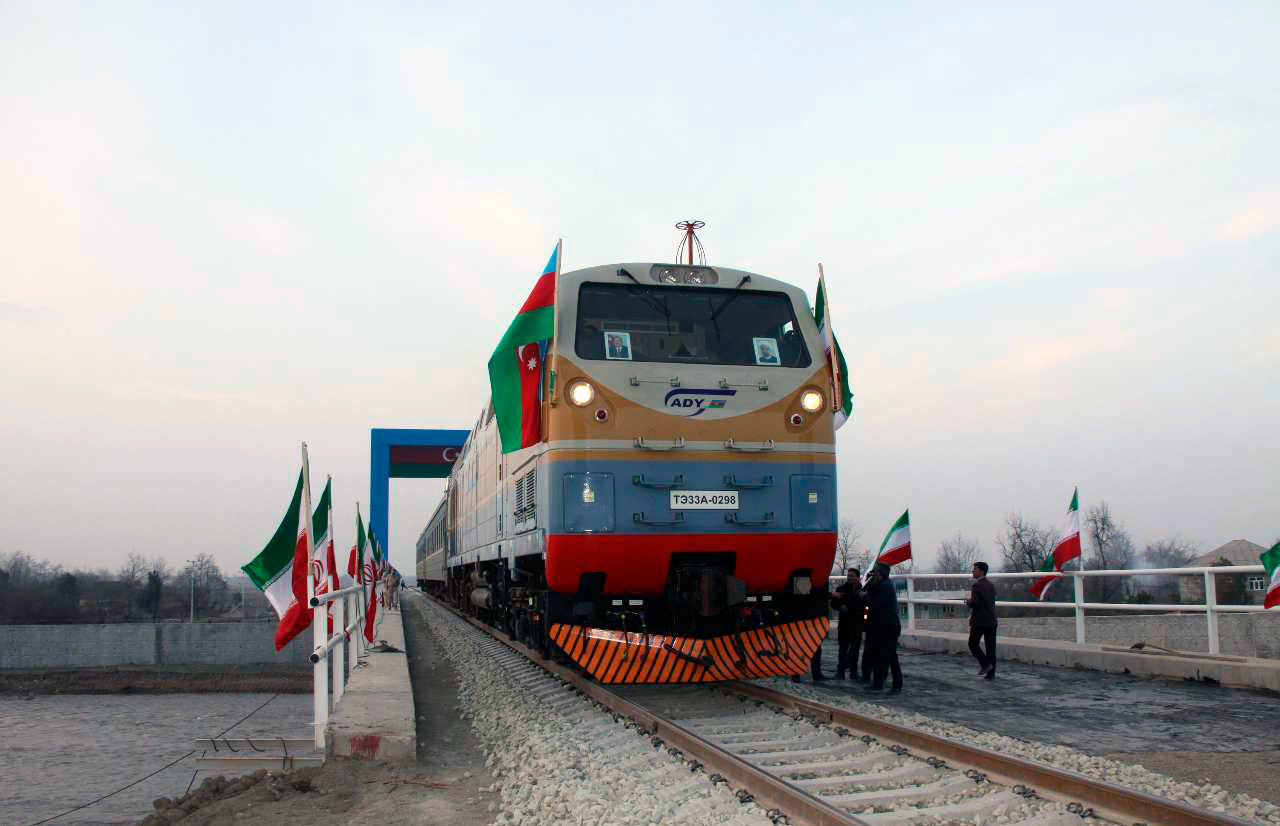
A Network of Mutual Interests: Iran and the Revival of the Julfa–Nakhichevan Railway in the South Caucasus
As previously noted, one of China’s key areas of cooperation in the South Caucasus region is the security sector. Regional stability remains a central concern for China, given that the South Caucasus is not an isolated geography but is closely connected to the Middle East, West Asia, and the North Caucasus, where various security threats persist. The potential for these threats to approach China’s borders is closely monitored. China is also highly attentive to the security of its investments and future economic interests in the region within the framework of the Belt and Road Initiative. By engaging in active economic activities across all three countries and implementing large-scale infrastructure projects, China simultaneously creates opportunities to address and discuss regional security issues. Looking ahead, the establishment of a reliable security environment along the Belt and Road corridors is likely to become a central focus of China’s contacts and cooperation with all three South Caucasus states.
Conclusion
Several factors define the unique character of relations between China and the countries of the South Caucasus. First, the geographical distance between China and the South Caucasus has contributed to the relatively slow establishment and development of political relations and broader cooperation. Cooperation within the framework of the Belt and Road Initiative is primarily economic in nature. Although the markets of the South Caucasus countries and the scale of cooperation with each are not yet large for China, the region is assessed as having significant long-term potential, primarily because it provides direct access to European markets.
In the financial sphere, through instruments such as the Silk Road Fund and the Asian Infrastructure Investment Bank, the South Caucasus has become an important geo-economic vector for China. By making substantial investments in the region, China enhances its regional geopolitical influence and strategic opportunities. The hydrocarbon resources of the region further increases its strategic importance. China’s main strategic objective regarding the South Caucasus is the establishment of a Eurasian land and sea transport corridor. Cooperation in the energy sector constitutes a key priority in China’s foreign policy, while economic and technological collaboration strengthens its position in the region. In this way, China seeks to balance the geopolitical activities of other major powers with interests in the South Caucasus. At the same time, China closely monitors the security situation in the region to prevent potential threats and maintain regional stability, which aligns with its geostrategic interests. Notably, China adopts a cautious approach to political issues, aiming to avoid confrontation with third-party states while consolidating its influence through economic and infrastructural engagement.
References
- Agaev I., Gao Fei. The Shanghai Cooperation Organization and China’s New Diplomacy // Discussion Papers in Diplomacy. Netherlands: Institute of International Relations “Clingendael”, 2010.
- Borodavkin A. Russia and China: On the Path of Good-Neighbourliness and Cooperation // Problemy Dalnego Vostoka (Problems of the Far East). 2009. No. 5. P. 12–19.
- Luzyanin S., Mamonov M. China on the Path to a “Superpower”: How Far Is Left to Go? // Obozrevatel. 2011. No. 4. P. 78–91.
- Leksyutina Ya. V. China in the South Caucasus: The Scale of Economic Presence // Postsovetskie Issledovaniya (Post-Soviet Studies). 2022. No. 1. EDN: ZZAYDS.
- Meltzer J., Shenai N. U.S.–China Economic Relations: A Comprehensive Approach. Washington, DC: Brookings Institution, 2019. 30 p.
- Mamonov V. M. The System of Foreign Policy Priorities of Contemporary China // Modern World Politics: Applied Analysis. Bogaturov A. D. (ed.). 2nd ed., rev. and enl. Moscow: Aspekt-Press, 2010. 592 p.
- Wright Q. Some Reflections on War and Peace // Theory of International Relations: A Reader. Tsygankova P. A. (ed.). Moscow: Gardariki, 2002. P. 384–398.
1. Borodavkin A. Russia and China: On the Path of Good-Neighbourliness and Cooperation // Problemy Dalnego Vostoka (Problems of the Far East). 2009. No. 5. P. 12–19.
2. Luzyanin S., Mamonov M. China on the Path to a “Superpower”: How Far Is Left to Go? // Obozrevatel. 2011. No. 4. P. 78–91.
3. Meltzer J., Shenai N. U.S.–China Economic Relations: A Comprehensive Approach. Washington, DC: Brookings Institution, 2019. 30 p.
4. Mamonov V. M. The System of Foreign Policy Priorities of Contemporary China // Modern World Politics: Applied Analysis. Bogaturov A. D. (ed.). 2nd ed., rev. and enl. Moscow: Aspekt-Press, 2010. 592 p.
5. Agaev I., Gao Fei. The Shanghai Cooperation Organization and China’s New Diplomacy // Discussion Papers in Diplomacy. Netherlands: Institute of International Relations “Clingendael”, 2010.
6. Wright Q. Some Reflections on War and Peace // Theory of International Relations: A Reader. Tsygankova P. A. (ed.). Moscow: Gardariki, 2002. P. 384–398.
7. Leksyutina Ya. V. China in the South Caucasus: The Scale of Economic Presence // Postsovetskie Issledovaniya (Post-Soviet Studies). 2022. No. 1. EDN: ZZAYDS.
(votes: 19, rating: 5) |
(19 votes) |
External political factors may have a growing influence on Russian-Chinese economic relations
Eurasian Security Architecture: Origins, Core Principles, and Prospects for EvolutionValdai Discussion Club Report
Security First, Economics Second: Is the SCO’s Institutional Trajectory a False Dichotomy or an Emerging Model of Regionalism?The SCO embodies a persistent tension between security imperatives and development ambitions, but this tension is not a weakness
A Network of Mutual Interests: Iran and the Revival of the Julfa–Nakhichevan Railway in the South CaucasusIt is not only in Iran's interest, but also in the interest of Azerbaijan, Armenia, Georgia, Russia, and Turkey, for Iran to reconnect to the Southern Caucasus railway network through both the Rasht-Astara and Julfa-Nakhichevan routes after three decades


