
India’s Growing Visibility in Central Asia
In
Login if you are already registered
(votes: 3, rating: 3.33) |
(3 votes) |

Junior Research Fellow, Center for Indian Ocean Region Studies, IMEMO RAS
For many years, political and expert communities in India and the Central Asian states have existed in a state of uncertainty and anticipation. Over a nearly quarter century of modern history, the two sides have found it difficult to translate their written declarations of “good intentions” and “close historical ties” into practical action. Bilateral contacts were sporadic, and the early attempts by state-owned oil and gas companies to participate in the development of energy resources in Kazakhstan, Turkmenistan, and Uzbekistan did not reflect the level of interest of India’s broader business community. Major national conglomerates that form the “core” of the private sector were not interested in local markets. Over the past several years, however, the situation has started to change. Representatives of Indian firms now make regular visits to the capitals of the post-Soviet republics, and political elites meet with their partners within various multilateral formats.
For New Delhi, creating its own dialogue platform is less a matter of image than a way to articulate its economic and strategic interests independently of the positions of other players.
Throughout its modern history, India’s policy toward the region has passed through several important stages. In the late 1990s and early 2000s, the region was viewed exclusively through the lens of national security. The Indian National Congress (INC), which governed from 2004 to 2014, sharply transformed this approach and brought economic imperatives to the forefront. The energy needs of India’s rapidly growing economy dominated the agenda of every meeting. The approach of the current Bharatiya Janata Party (BJP) administration initially absorbed selected elements of the previous government’s policy. However, over time, the leadership adopted what some Indian experts refer to as a “development-oriented” strategy, one that includes a distinct cultural-civilizational component.
A defining feature of the current approach is the expansion of the cultural agenda and the growing presence of the Indian diaspora in the region.
Another characteristic is a strong emphasis on economic issues along several key areas:
- Launching digital initiatives
- Developing the International North–South Transport Corridor (INSTC) with the inclusion of Iran’s Chabahar Port
- Implementing projects related to resource development
The warming of relations between Moscow and New Delhi in recent years raises the question of how Russia should respond to India’s growing activity in a region that is geographically and historically close to Russia. A pressing need is the implementation of trilateral projects (India–Russia–a Central Asian state) in the areas of resource development, renewable energy, and new technologies.
Political and expert communities in India and the Central Asian states have long found themselves in a state of uncertainty and anticipation. The five-party summit, which was first held in early 2022 to mark the thirtieth anniversary of diplomatic relations, was supposed to take place in 2024 but has again been postponed indefinitely. Messages coming from India regarding its timing now point to the spring of 2026.
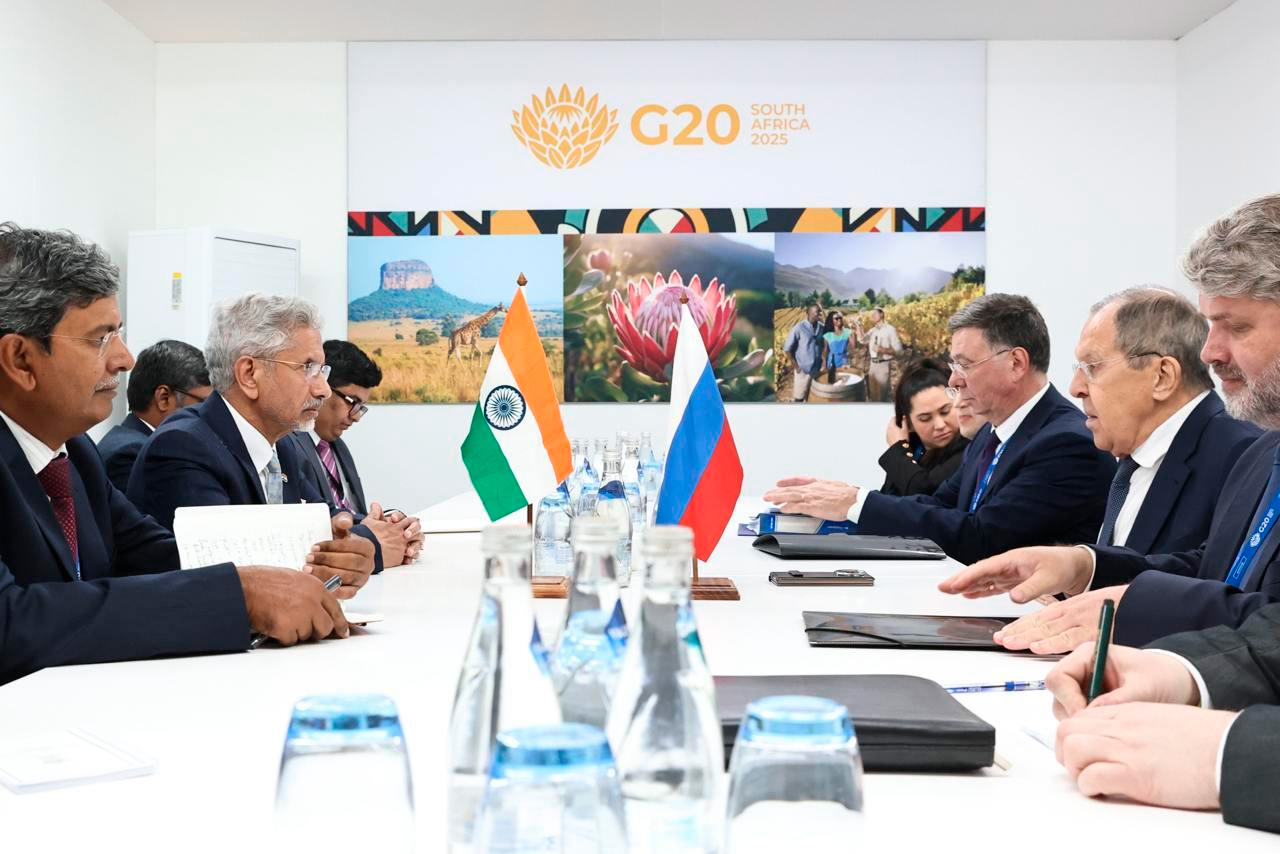
The Issue of Connectivity in India-Russia Relations — From Eurasia to the Arctic
An event that would be fairly ordinary in any other context of New Delhi’s regional policy holds particular significance here. Over a quarter century of modern history, the two sides have struggled to translate their written declarations of “good intentions” and “close historical ties” into practical action. Bilateral contacts were sporadic, and the early attempts by state-owned oil and gas companies to participate in the development of energy resources in Kazakhstan, Turkmenistan, and Uzbekistan did not reflect the level of interest within India’s broader business community. Major national conglomerates, which form the “core” of the private sector, were not interested in local markets.
Over the past several years, however, the situation has begun to change. Representatives of Indian firms now make regular visits to the capitals of the post-Soviet republics, and political elites meet with their partners within various multilateral formats. It is therefore worth examining how India’s policy has evolved and where these changes may lead.
Enhancing Political Resilience
If to rank the achievements of Prime Minister N. Modi’s administration, political engagement should be placed first in the context of relations with the Central Asian states. Over its ten years in power, the Bharatiya Janata Party (BJP) has been able to give these contacts new qualitative and quantitative characteristics. In 2015, just a year after his first term election, Modi made a “historic” visit to the capitals of the regional republics, and the country began the process of joining the SCO as a full member. In India, these developments were seen as breaking a glass ceiling and helping the country escape isolation along the Eurasian vector—an especially important task given China’s growing politico-economic activity.
However, the political leadership’s plans did not materialize immediately. For a long time, the promoted models of engagement did not lead to diplomatic “breakthroughs.” In the SCO, for example, despite joint participation in the Regional Anti-Terrorist Structure (RATS), issues of sovereignty and counterterrorism became points of contention in relations with Beijing and Islamabad. The deficit of trust affected the nature of diplomatic maneuvering: for several consecutive years, India’s top leadership preferred to distance itself from the organization’s activities, which sharply contrasted with Islamabad’s approach, as it publicly emphasizes the SCO’s importance. The decision to hold the 2023 chairmanship in an online format and the refusal to participate in the 2024 summit in Astana raised questions among local observers—questions to which no clear answer has been provided. [1]

The warming of relations at the 2025 summit in Tianjin, which Modi attended in person, inspires a measure of optimism regarding the development of India–China ties. However, it is still premature to speak of a reversal of the broader trend. The refusal of India’s Defense Minister R. Singh to sign a joint statement that made no mention of the April terrorist attack in Pahalgam indicates the chronic nature of unresolved issues.
At the same time, it can be stated that New Delhi’s position has recently become more substantive. For example, on November 18, 2025, India’s Foreign Minister S. Jaishankar emphasized that the organization must “adapt to the global landscape” and “reform its working methods.” This position should be viewed in the context of the broader shift in India’s diplomatic approach across the Eurasian space in general and in Central Asia in particular.
Previously, India engaged with the five post-Soviet republics exclusively on a bilateral basis, and its position toward each country was developed separately. Relations with Tajikistan were political-strategic in nature, with Kazakhstan and Turkmenistan centered on energy, and with Kyrgyzstan focused on humanitarian issues.
In recent years, a clear shift toward a region-wide track has emerged: New Delhi is bringing its own development agenda to the forefront, shaping it on a new institutional basis. Since 2019, the India–Central Asia Dialogue has been operating under the Ministry of External Affairs; since 2020, business-community meetings have taken place within the framework of a business council; and since 2022, interactions have occurred at the level of heads of state, national security councils, and ministries of culture.
For New Delhi, creating its own dialogue platform is less a matter of image than an opportunity to articulate its economic and strategic interests independently of the positions of other players.
The Law for Transforming Quantity into Quality
Throughout its modern history, India’s policy toward the region has passed through several important stages. In the late 1990s and early 2000s, the region was viewed almost exclusively through the lens of national security. It was seen as an arena for political-strategic confrontation with Pakistan, as well as a space for containing Islamic radicalism emanating from Afghanistan. The Indian National Congress (INC), which governed from 2004 to 2014, sharply transformed this approach and brought economic imperatives to the forefront. The energy needs of India’s rapidly growing economy dominated the agenda of every meeting. As a result, relations with Kazakhstan received a significant boost.
The approach of the current Bharatiya Janata Party (BJP) administration is different. At the initial stage, it absorbed selected elements of the previous government’s policy, but over time the leadership adopted what some Indian experts describe as a “development-oriented” approach with a distinct cultural-civilizational component. It is within this framework that one should also view reports about India’s withdrawal from the territory of its main military-strategic asset—the Ayni airbase in Tajikistan, where New Delhi had at various times engaged in infrastructure reconstruction and the training of local specialists.
A defining feature of the current approach is the expansion of the cultural agenda and the growing size of the Indian diaspora in the region, which today stands at around 50,000 people. [2] The increase in the number of Indians arriving for study or work is driven by a simplified visa regime and the development of air connectivity. The impact of the Special Military Operation must also be taken into account: Ukraine has ceased to be a destination for medical education, prompting Indian students to show greater interest in other parts of the post-Soviet space.
Another characteristic feature is the emphasis on economic issues along several key directions:
- Launching digital initiatives. Through digitalization, the government seeks to simplify the presence of Indian citizens in Central Asia. Accordingly, there have been proposals to extend the Unified Payments Interface (UPI), which enables instant transfers to a bank account without disclosing account details, as well as the DigiLocker service, which facilitates the storage of documents. Proposals in the fields of artificial intelligence and new technologies have also been voiced, though concrete projects have not yet moved toward implementation.
- Developing the International North–South Transport Corridor (INSTC) with the inclusion of Iran’s Chabahar Port. New Delhi views the closer discussion of projects in the transport and logistics sphere as strategic. Implementation of the INSTC would help eliminate the imbalance in interregional trade, which does not exceed $2 billion. A substantial share of India’s merchandise exports consists of capital-intensive goods, which are transported by air.
- Implementing projects related to resource development. Of particular note is the India–Central Asia Rare Earth Forum, established in September 2024. The event coincided with the signing of an agreement to build an Indian–Kazakh enterprise for titanium production on Indian territory. However, the main focus of the initiative is clearly the Central Asian region. New Delhi’s political leadership aims to reduce the country’s resource dependence on China in the sphere of critical minerals. To this end, India launched the National Critical Minerals Mission in 2025, which seeks to encourage investment in mineral development by promoting public–private partnerships.
What This Means for Russia
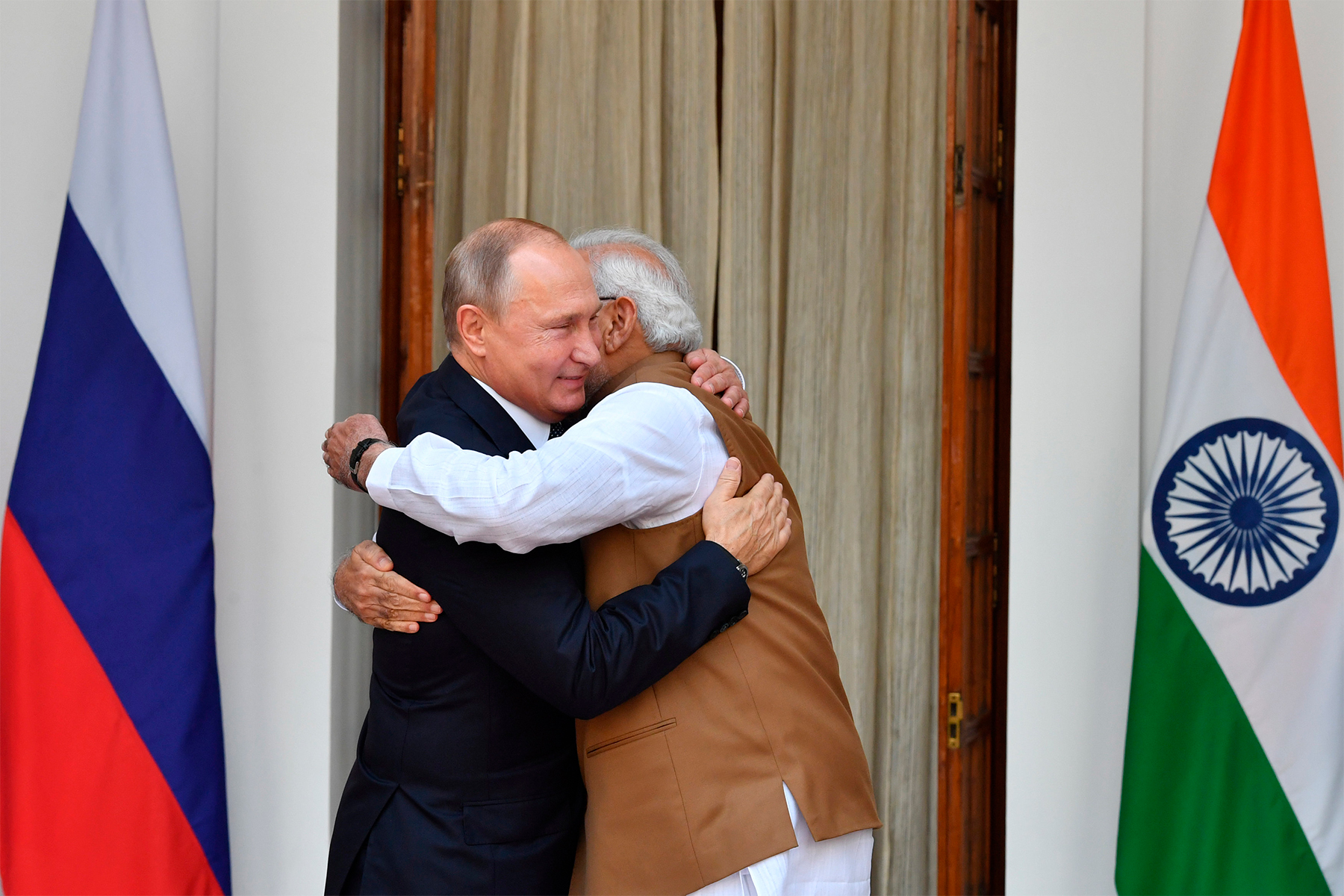
Russia and India: Key Areas of Cooperation
The warming of relations between Moscow and New Delhi in recent years raises the question of how Russia should respond to India’s growing activity in a region that is geographically and historically close to Russia. Despite differing assessments of Moscow’s actions, the local expert community has consistently viewed cooperation with Russia as one of the few avenues through which India could strengthen its position in Central Asia. However, in the span of thirty years, concrete projects never materialized. One reason was a degree of mistrust in the mid-2000s, triggered by New Delhi’s rapprochement with Washington.
The new era sets different tasks. There is an urgent need to implement trilateral projects (India–Russia–a Central Asian state) in the areas of resource development, renewable energy, and new technologies. Such initiatives would give additional momentum to the INSTC project by strengthening the internal incentives for expanding investment in transport infrastructure. In the absence of meaningful commercial interests, the creation of a Eurasian transport corridor is difficult to achieve. For India, participation in any overseas project must serve the goals of national economic development and improving the well-being of its citizens. At present, the level of India–Russia overland trade does not meet these requirements.
1. The decision not to hold the SCO meeting in New Delhi in person in 2023 was explained by COVID-related restrictions, while the refusal to attend the session in Astana was attributed to the need to participate in the first session of the Lower House of Parliament (the Lok Sabha). However, the session concluded a day before the summit began. In 2019, an equally demanding schedule did not prevent the prime minister from attending the SCO meeting in Bishkek.
2. According to data from reports by India’s Ministry of External Affairs.
(votes: 3, rating: 3.33) |
(3 votes) |
Using the potential of the Shanghai Cooperation Organisation could be an opportunity to maintain systemic approach to regional connectivity
Russia-India Сooperation in Agriculture and Food SecurityRIAC and Synergia Foundation Report No. 103 / 2025
The Proof of the Pudding: Outcomes of the 25th SCO Summit for India and PakistanThe summit took place in the right place at the right time
Russia and India: Key Areas of CooperationNo matter how turbulent global politics becomes in the coming decades, New Delhi is convinced that Moscow will remain a reliable and valuable partner


