
At the Dawn of a New Strategic Axis: How the Conflict with Iran Is Reshaping Regional Alliances
In
Login if you are already registered
(votes: 1, rating: 5) |
(1 vote) |

Independent Analyst

Commentator for International Affairs under the Editor-in-Chief of Nezavisimaya Gazeta
On the eve of the conflict with Iran, which began on February 28, 2026, Israeli leadership outlined its vision of the shifting bloc architecture in the Middle East and adjacent regions. Six days before the start of the military operation, Prime Minister Benjamin Netanyahu announced the formation of a “hexagonal alliance within or around the Middle East,” whose participants, he stated, would share “common perspectives on the realities, challenges, and objectives in confronting radical movements—both the ‘Shiite axis,’ which was heavily struck [referring to the 12-Day War of 2025], and the emerging radical Sunni axis.”
At the heart of this concept is the creation of a pro-Israel “axis” of states, encompassing the UAE, India, Greece, Cyprus, and select African players (Somaliland and/or Ethiopia). The inclusion of these extraregional actors can be understood as Israel’s effort to strengthen its position as a key transit hub between Asia and Europe, leveraging the India–Middle East–Europe Economic Corridor. However, the primary purpose of the proposed alliance is geopolitical and military: to prevent the emergence of a counterpart to the “Shiite axis” in the Middle East.
Over the course of more than a year, Israeli leadership has increasingly come to view Turkey as the nucleus of a gradually forming potential “Sunni bloc,” which includes Saudi Arabia and Pakistan, and—less explicitly—Egypt and Qatar. Within Prime Minister Benjamin Netanyahu’s government, there is a belief that this alliance could challenge Israel’s regional influence and constrain its strategic options. Israeli officials note that Turkey, which significantly expanded its influence in the Middle East following the December 8, 2024, regime change in Syria, is increasingly perceived as a potential “new Iran.” To Israel, this constitutes a new existential adversary that necessitates the development of countermeasures.
In the changing regional context, Prime Minister Benjamin Netanyahu’s concept of a hexagonal alliance appears to be an effort to reinterpret and transform the Abraham Accords—a strategic framework originally designed to contain Iran and its allied “axis” by reducing the political distance between Israel and the Gulf states. This distance (leaving aside the UAE) began to widen with the onset of the 2023 Gaza conflict and is likely to continue increasing due to the repercussions of escalation with Iran.
It appears that for states perceiving threats from Israel, Turkey, and Saudi Arabia, this conflict has heightened the urgency of seeking containment measures within a bloc-based logic. Despite Prime Minister Benjamin Netanyahu’s attempt to label this group of countries as an “axis,” there is currently no structured military bloc in place. Rather, both Turkey and Saudi Arabia seem focused on formalizing overlapping security interests, driven by growing doubts over the reliability of external (U.S.) guarantees.
The main factor linking the emerging “Sunni bloc” with the weakened Iranian “resistance” architecture is their shared orientation toward confronting Israel, both individually and in coalition. Israeli officials note that the Netanyahu government’s consistent reliance on military pressure—even under formally negotiated ceasefires—is increasingly recognized and factored into the calculations of Middle Eastern states.
A key question in the shifting bloc landscape will be the role Iran occupies once the active phase of hostilities concludes. The Netanyahu government has signaled that, in the event of a total collapse of Iranian leadership, it would like to incorporate its regional rival as an element of its “axis.” However, the first days of the conflict have provided the Israeli state with an opportunity to assess the situation more soberly.
On the eve of the conflict with Iran, which began on February 28, 2026, Israeli leadership outlined its vision of the shifting bloc architecture in the Middle East and adjacent regions. Six days before the start of the military operation, Prime Minister Benjamin Netanyahu announced the formation of a “hexagonal alliance within or around the Middle East,” whose participants, he stated, would share “common perspectives on the realities, challenges, and objectives in confronting radical movements—both the ‘Shiite axis,’ which was heavily struck [referring to the 12-Day War of 2025], and the emerging radical Sunni axis.”
At the heart of this concept is the creation of a pro-Israel “axis” of states, encompassing the UAE, India, Greece, Cyprus, and select African players (Somaliland and/or Ethiopia). The inclusion of these extraregional actors can be understood as Israel’s effort to strengthen its position as a key transit hub between Asia and Europe, leveraging the India–Middle East–Europe Economic Corridor. However, the primary purpose of the proposed alliance is geopolitical and military: to prevent the emergence of a counterpart to the “Shiite axis” in the Middle East.
Over the course of more than a year, Israeli leadership has increasingly come to view Turkey as the nucleus of a gradually forming potential “Sunni bloc,” which includes Saudi Arabia and Pakistan, and—less explicitly—Egypt and Qatar. Within Prime Minister Benjamin Netanyahu’s government, there is a belief that this alliance could challenge Israel’s regional influence and constrain its strategic options. Israeli officials note that Turkey, which significantly expanded its influence in the Middle East following the December 8, 2024, regime change in Syria, is increasingly perceived as a potential “new Iran.” To Israel, this constitutes a new existential adversary that necessitates the development of countermeasures.
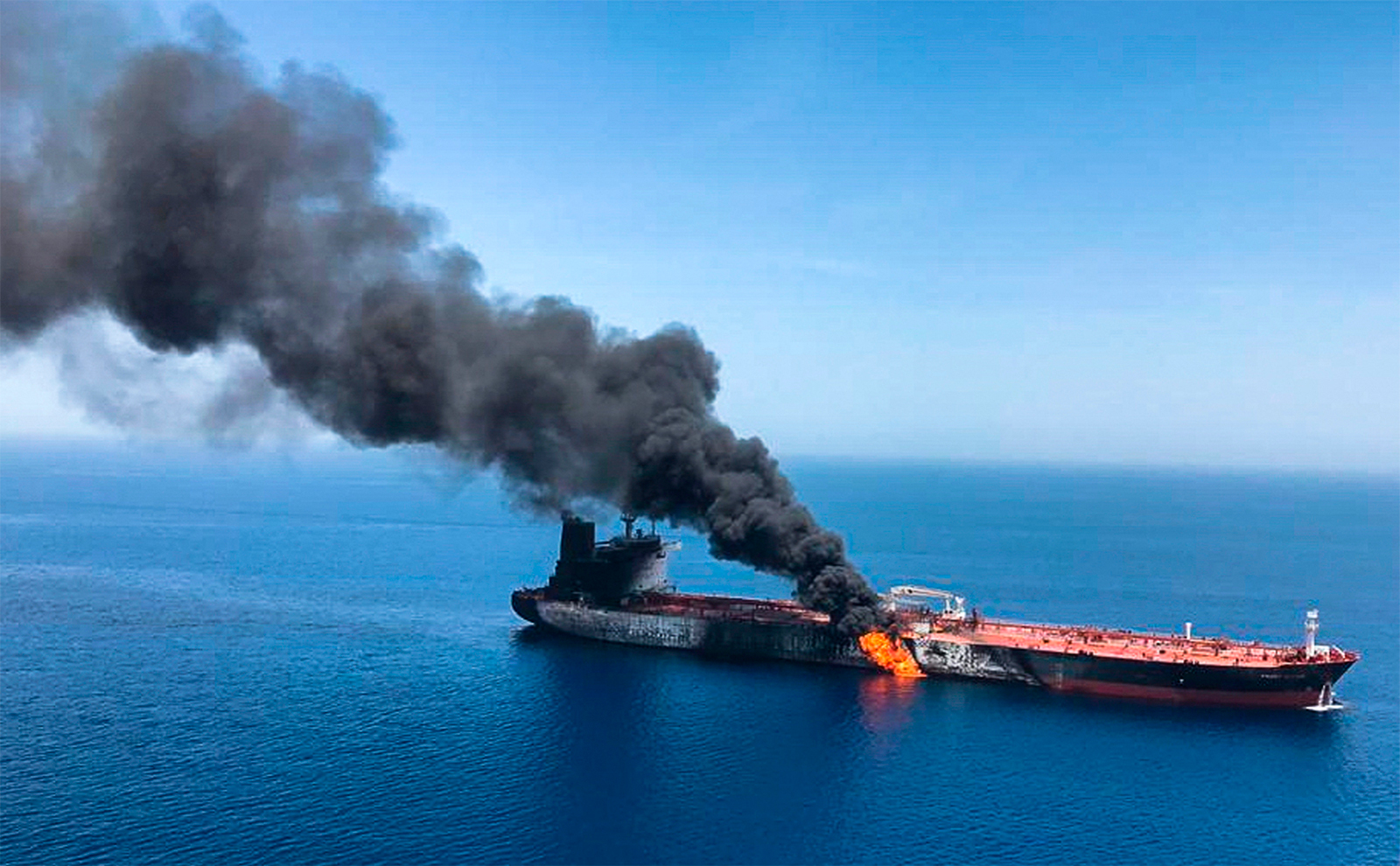
Attack on Iran: A Balance of Results
“Sunni Axis”
The formal basis for the formation of the “triangle” along the Turkey–Saudi Arabia–Pakistan line was established with the signing of a strategic military agreement between Riyadh and Islamabad on September 17, 2025. While the accord was presented as a framework for defense cooperation, one of its key provisions carried far-reaching politico-military implications—it effectively mirrored Article 5 of the North Atlantic Treaty, under which an armed attack against one member is considered an attack against all. Against this backdrop, reports emerged that Turkey had begun exploring the possibility of joining the bloc.
In theory, the conclusion of a military pact between these three closely connected states would appear logical. Turkey could contribute its capabilities in the defense-technical sphere, Saudi Arabia could provide financing, and Pakistan could offer a symbolic nuclear umbrella (though its practical use within the “triangle” would be unrealistic). At the same time, Riyadh and Ankara would be able to demonstrate to their ally Washington that they do not rely on formal security guarantees, while Islamabad could signal to its regional rival, New Delhi, its ability to garner support from extraregional actors.
It is possible that this segment of the evolving bloc architecture could expand to include additional participants. Turkey and Qatar, for example, are steadily strengthening not only political but also military ties, ranging from joint maneuvers to the establishment of joint ventures for the production of maritime unmanned systems. Moreover, Turkish leadership has demonstrated sufficient political will to overcome longstanding disagreements with the authorities in Egypt and Saudi Arabia. In recent years, especially following the escalation of the conflict in the Gaza Strip, Ankara has actively expanded its economic, defense, and industrial cooperation with these states.
Separately, Saudi Arabia has initiated negotiations with Egypt and Somalia on a security cooperation agreement. The draft arrangement, still under development, is aimed at “strengthening strategic coordination in the security sphere, expanding military ties, and reinforcing the joint role of the three countries in ensuring regional stability.” However, a more concrete objective is to prevent the consolidation of rival states—namely the UAE and Israel—in the Horn of Africa. The latter, in 2025, officially recognized the status of Somaliland, an unrecognized state that maintains ties with the UAE.
According to sources cited by The Washington Post, the Saudi ruling establishment is leaning toward a more assertive approach in countering Israel and the UAE across the full spectrum of its strategic interests, including in Africa. This shift followed a near loss of Saudi positions in Yemen. This refers to the offensive launched in December 2025 by the Southern Transitional Council (STC)—a separatist project aligned with the UAE and Israel—which moved against pro-Saudi forces that month but was ultimately defeated due to insufficient tribal support and direct Saudi military intervention.
In the context of the war with Iran that began on February 28, 2026, and rapidly spread across the territories of the Gulf states, Israeli officials publicly suggested that Saudi Arabia might renew its interest in the Abraham Accords. However, the Saudi ruling establishment, along with the authorities of several Gulf countries, has for some time signaled that Arab–Israeli normalization is fundamentally unfeasible amid Israel’s growing military activity in the region. “We have long known that Israel—not Iran—serves as the primary source of instability in the region,” Oman’s Foreign Minister Badr al-Busaidi stated on November 1, 2025.
Israeli “Polygon”
The concept of the Israeli “polygon” assumes that close cooperation with Israel will continue with the UAE—a country that, in 2020, became one of the pioneers of Arab–Israeli normalization. It should be noted that these expectations are not unfounded. The two-year war in the Gaza Strip, which served as a significant stress test for Arab–Israeli rapprochement, did not weaken Israeli–Emirati ties. On the contrary, the two sides continued cooperation in the security domain and even expanded their partnership in the defense-technical sphere.
Tehran’s decision to direct the main wave of its retaliatory strikes at the UAE during the first week of the 2026 conflict was driven precisely by its perception of this Gulf state as a key conduit for Israeli interests in the Middle East. This was stated unequivocally by former Iranian Foreign Minister Mohammad Javad Zarif, who expressed the view that “the UAE and Israel are one and the same.”
The first week of the 2026 conflict with Iran demonstrated that the UAE continues to operate in close alignment with Israel, despite its dissatisfaction with the military escalation in the Middle East. A delegation from the Israel Defense Forces (IDF) Home Front Command was deployed to the UAE to provide assistance under wartime conditions. The UAE leadership also considered freezing Iranian banking assets within its jurisdiction and, according to Hebrew-language media reports, ultimately decided to carry out a limited strike against Iranian infrastructure aimed at containing the Islamic Republic’s activities.
In addition to Israel’s traditional partners in the Eastern Mediterranean—Greece and Cyprus—India constitutes a key pillar of the emerging “hexagonal alliance.” Just days before the outbreak of the conflict with Iran, Indian Prime Minister Narendra Modi paid a visit to Israel, during which the two sides elevated their relationship to a special strategic partnership. “There is a great alliance between Israel and India, and we will discuss all forms of cooperation. As you know, India is not a small country. Its population is at 1.4 billion. India possesses enormous strength and significant global standing,” Modi stated following the visit. Israel’s interest in deepening ties with India is driven both by the expansion of transport corridors and by the desire to establish a counterweight in South Asia to states that Israeli leadership identifies as conduits of radical Islam—namely Turkey and Pakistan.
The African extension of the “polygon” includes players such as Somaliland and Ethiopia. By strengthening ties with these actors, Israel, together with the UAE, aims to expand its strategic presence in the Horn of Africa, which is increasingly becoming a key arena of competition among Middle Eastern powers for influence over the Red Sea. Over the past decade, Benjamin Netanyahu has repeatedly stated that “Israel is returning to Africa, and Africa is returning to Israel.” The intensification of geopolitical rivalry with the “Sunni axis” is likely to further accelerate this process.
Beyond the Blocs
The issue of Israel’s strategic reorientation has emerged against the backdrop of the effective collapse of Iran’s previous “resistance architecture,” which was built around a network of proxy forces (not exclusively Shiite, given Tehran’s level of support for Hamas). Israel capitalized on its principal vulnerability—the reliance on linking multiple theaters (Lebanon, Iraq, Yemen, the Gaza Strip, and Syria under Bashar al-Assad), whose economies are in severe distress—and succeeded in dismantling Tehran’s network of allies. The culmination of this process was expected to be the joint operation with the United States against Iran, launched on February 28, 2026.
However, unlike the “Shiite axis,” the emerging “Sunni arc,” while not free of internal contradictions, is grounded in sovereign states rather than militias or quasi-state actors. Accordingly, members of this informal coalition possess substantial financial resources, a broad diplomatic toolkit, and—crucially, like Israel itself—the capacity to exert significant influence on the U.S. presidential administration.
For its part, Washington is taking additional measures to strengthen Israel’s defense posture. The buildup of forces at Muwaffaq Salti Air Base in Jordan reflects not only the temporary redeployment of air assets for strikes against Iran, but also longer-term plans to reinforce Israel’s eastern flank through investments in Jordan’s economy and defense-industrial sector (with annual U.S. grants averaging $830–850 million in 2024–2026).
The United States, which maintains numerous defense agreements with both participants in the Israeli “polygon” and the putative “Sunni axis,” cannot remain on the sidelines of the emerging bloc competition—or at least its ongoing rebalancing. However, resolving the dilemma of whom to support in this indirect confrontation among its partners will be difficult, and is unlikely to come without excesses and reputational costs.
Other extraregional actors also risk being drawn into this emerging bloc confrontation. For example, in Turkey there is a perception that a new security architecture is taking shape in the Eastern Mediterranean centered on Cyprus, which—alongside Israel—European Union member states may be compelled to support. According to this view, Athens and Nicosia are seeking to elevate the issue of Cyprus’s security into a broader, multilateral EU security matter. European states are unable to ignore this issue, including due to formal commitments. For instance, Greece, the Republic of Cyprus, and France maintain a trilateral mechanism aimed at both military and diplomatic coordination.
As for Russia, the shifting bloc architecture around the Middle East may yield certain political dividends—from a reduction in international attention to the conflict with Ukraine to potential opportunities in mediation. At the same time, there is a distinct set of risks: in the context of intensifying bloc confrontation, it is possible that Moscow will eventually be compelled to take a side, limiting its room for maneuver.

Potential Scenarios of Iran’s Conflict with the US and Israel Post-Khamenei
Beyond the Abraham Accords
In the evolving regional context, Prime Minister Benjamin Netanyahu’s concept of a “polygonal” alliance appears to be an attempt to reinterpret and transform the Abraham Accords—a strategic framework originally designed to contain Iran and its allied “axis” by reducing the political distance between Israel and the Gulf states. This distance (with the exception of the UAE) began to widen with the onset of the 2023 Gaza war and is likely to continue increasing in light of the consequences of escalation with Iran.
It appears that for states perceiving threats from Israel, Turkey, and Saudi Arabia, this war has intensified the search for deterrence mechanisms within a bloc-based framework. Despite Prime Minister Benjamin Netanyahu’s attempt to frame this group of countries as an “axis,” there is, for now, no move toward establishing a structured military alliance. Rather, both Turkey and Saudi Arabia appear to be working to formalize overlapping security interests amid growing doubts about the reliability of external (U.S.) security guarantees.
The main factor linking the emerging “Sunni bloc” with the weakened Iranian “resistance” architecture is their shared orientation toward confronting Israel, both individually and in coalition. Israeli officials note that the Netanyahu government’s consistent reliance on military pressure—even under formally negotiated ceasefires—is increasingly recognized and factored into the calculations of Middle Eastern states.
A key question in the shifting bloc landscape will be the role Iran occupies once the active phase of hostilities concludes. The Netanyahu government has indicated that, in the event of a total collapse of Iranian leadership, it would like to incorporate its regional rival as an element of its “axis.” However, the first days of the conflict have provided the Israeli state with an opportunity to assess the situation more soberly.
(votes: 1, rating: 5) |
(1 vote) |
The situation surrounding Iran fosters a kind of fatalism among all parties—a mind-set that risks defining the geopolitical climate for years to come
Attack on Iran: A Balance of ResultsMajor players are less sensitive to crises; asymmetry of potential is hardly an obstacle to resistance; a lack of allies is a problem; but being a junior partner can lead to being held hostage to a major player’s game
Potential Scenarios of Iran’s Conflict with the US and Israel Post-KhameneiEven if Israel and the Trump administration entered the battle against Iran together, there is probably a difference in their perspectives on the goals of the current conflict
America’s Waning Consensus — The Iran War and the Fracturing of Global AlignmentA War Without a Coalition


