The Battle for the Indian Applicant: How to Compete with the West?
(votes: 5, rating: 5) |
(5 votes) |

RIAC Director of Programs
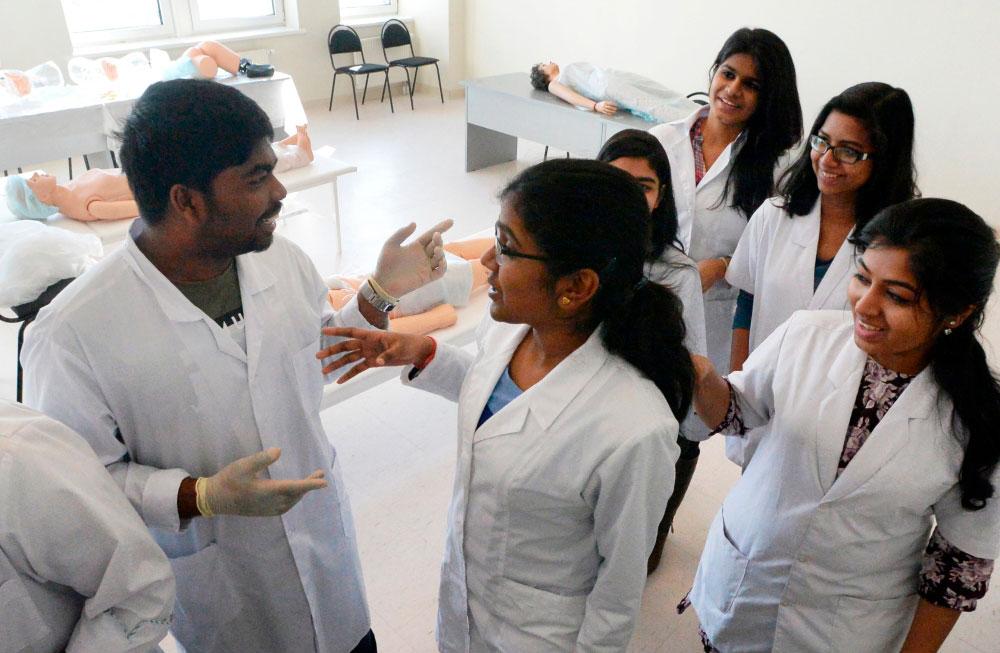
Educational cooperation between Russia and India occupies a significant place within the broader framework of bilateral relations. At the highest political level, there is a consistently articulated view that this area holds substantial potential for further development. Russia assigns considerable importance to fostering the educational mobility of Indian students to its institutions. India ranks second—after China—as a country of origin among international students from non-CIS countries studying in Russia. Demand for Russian education in India continues to grow steadily. Over the past year, the number of Indian students in Russia has increased by 35%. According to Denis Alipov, Ambassador Extraordinary and Plenipotentiary of the Russian Federation to India, as of July 2025, approximately 30,000 Indian students were enrolled in Russian universities.
At the same time, this figure remains modest, given that approximately 1.8 million students from India go abroad for education each year. The majority of Indian students pursue higher education in institutions in Canada, United States, United Kingdom, and Australia. Germany, France, the Netherlands, and the United Arab Emirates are also gaining in popularity. The highest demand is concentrated in STEM education, business, medical training, and AI-related fields. In Russia, however, the overwhelming majority of Indian students are enrolled in medical programs, showing limited engagement with other fields that are in high demand for India, such as nuclear energy, advanced materials production, transport engineering, medicinal chemistry and medical instrumentation, as well as information technology.
Here, it is evident that Russia is capable of offering India significantly more in advancing educational cooperation, both in quantitative terms and in expanding the range of academic fields that are attractive to Indian students.
There is a need for sustained, large-scale efforts to familiarize Indian youth with the broad range of academic programs that Russia can offer. This is particularly important in the fields that are most in demand in India, as outlined above.
Substantial efforts are required to strengthen outreach in India’s digital and media spaces. As research by the Russian International Affairs Council indicates, Russia has so far made limited progress in this area. The activities of Rossotrudnichestvo (including its “Russian Houses”) in promoting Russian education in India have demonstrated insufficient effectiveness. Educational fairs and conventions, according to feedback from Russian universities, yield some results, but their overall impact remains limited in scale—particularly for non-medical fields.
Given that the primary source of information about Russian education is friends and acquaintances, it is essential to establish systematic engagement with current students, alumni, and opinion leaders in India. All these groups can serve as ambassadors for Russian universities. Many universities note that a critical condition for attracting a substantial number of Indian students is the presence of a core group of students enrolled in a given university or program who can share and disseminate their positive experiences among their compatriots.
Aggregated portals on Russian education are in high demand. Therefore, it is extremely important to continue efforts to develop and maintain comprehensive and up-to-date information about Russian universities on the Study in Russia portal. Equally important is the content of official university websites in English, which serve as a key source of information about the institution, regardless of the primary information source or the method of application (whether independently or through an agency).
When working with recruitment agencies, it is important to ensure that they are reputable organizations. Many Indian students share negative experiences with some agencies, citing issues such as inflated service fees, strict contractual terms, and discrepancies between promises and actual conditions. In this context, it is recommended to expand opportunities for students to apply directly to universities, without intermediaries.
Educational cooperation between Russia and India occupies a significant place within the broader framework of bilateral relations. At the highest political level, there is a consistently articulated view that this area holds substantial potential for further development. Russia assigns considerable importance to fostering the educational mobility of Indian students to its institutions. India ranks second—after China—as a country of origin among international students from non-CIS countries studying in Russia. Demand for Russian education in India continues to grow steadily. Over the past year, the number of Indian students in Russia has increased by 35%. According to Denis Alipov, Ambassador Extraordinary and Plenipotentiary of the Russian Federation to India, as of July 2025, approximately 30,000 Indian students were enrolled in Russian universities.
At the same time, this figure remains modest, given that approximately 1.8 million students from India go abroad for education each year. The majority of Indian students pursue higher education in institutions in Canada, United States, United Kingdom, and Australia. Germany, France, the Netherlands, and the United Arab Emirates are also gaining in popularity. The highest demand is concentrated in STEM education, business, medical training, and AI-related fields. In Russia, however, the overwhelming majority of Indian students are enrolled in medical programs, showing limited engagement with other fields that are in high demand for India, such as nuclear energy, advanced materials production, transport engineering, medicinal chemistry and medical instrumentation, as well as information technology.
Here, it is evident that Russia is capable of offering India significantly more in advancing educational cooperation, both in quantitative terms and in expanding the range of academic fields that are attractive to Indian students.
Russia and India: Key Areas of Cooperation
What motivates Indian students to choose education in Russia?
Russia is traditionally perceived as a country that offers a high-quality education at an affordable cost. At Kazan State Medical University, several key factors attract Indian students. First and foremost is the high standard of medical training, evidenced by graduate success in passing the screening test in their home country: 90% confirm their qualifications, with half doing so on their first attempt. This serves as a compelling argument for prospective students from India and their families,” notes Elena Koshpaeva, Dean of the Faculty of International Students at Kazan State Medical University. “An additional important factor is the affordability of tuition compared to India and European countries.”
At the same time, a study by the Russian International Affairs Council indicates that among the most significant factors influencing Indian student choice of Russian education are the opportunity to study in English (49%), a high level of safety and comfortable living conditions (39%), and education affordability (38%). The perceived quality of Russian education holds a more moderate position. The importance of this factor is significantly lower than that of prospects for successful employment and education affordability. Least significant of the factors are the possibility of obtaining a state-funded study quota or receiving a special educational scholarship.
The importance of the English language is further underscored by the fact that the overwhelming majority of Indian students (92% of respondents) are enrolled in English-language programs. It is evident that future growth in the number of students from India will largely depend on the availability and expansion of such programs.
An alternative pathway may involve bilingual programs, in which instruction is conducted in English during the initial years alongside the study of Russian, followed by a gradual transition to Russian-language instruction at more advanced stages. This approach is particularly relevant for medical fields, where curricula require mandatory clinical training. Such a model has been successfully implemented by Siberian State Medical University.
The importance of safety and comfortable living conditions underscores the need to ensure access to student housing or to provide other affordable and suitable accommodation options for students. Russian medical universities do, in practice, place considerable emphasis on securing housing for Indian students. According to feedback from a number of institutions, one effective approach has been signing agreements with hostels, which significantly simplifies the organization of student accommodation. Kazan State Medical University, for example, employs a mechanism where rental costs are partially subsidized as an additional incentive for academic performance. At the same time, as the experience of Perm State Medical University shows, many students prefer to rent their own apartments, often relying on contacts provided by friends or relatives who are already enrolled at the university.
Significant advantages in attracting students from India include a compact campus layout (with all facilities within walking distance), as well as the provision of shuttle services for more dispersed campuses (as demonstrated by the experience of Siberian State Medical University).
Russian medical universities largely entrust student recruitment and ongoing support during studies to established and vetted recruitment agencies. According to Ekaterina Pleshkova, Head of International Development Department at Siberian State Medical University, “this arrangement has developed historically and also facilitates more effective communication with students from India—allowing oversight of issues such as conduct, academic performance, and class attendance.” Recruiters also assist in outreach activities, including engagement with prospective applicants and their parents.
Factors Constraining Educational Mobility from India
Representatives of Russian universities note that Indian students generally show limited interest in learning the Russian language, as most do not currently view Russia as a destination for long-term employment or residence. A defining feature of Indian student perceptions of Russian education is that it is an intermediate stage for their educational and career trajectories. As observed by researchers from Far Eastern Federal University, Indian medical graduates who complete their studies in Russia almost never remain in the country. Instead, they return to India to take the national qualifying examination, with a view to subsequent employment in India and in English-speaking countries—such as the United States, United Kingdom, and Canada—as well as in the Gulf states, where the healthcare sector largely operates in English.
Given the popularity of Russian medical education among students from India, overall growth in the number of Indian students in Russia can be expected to come primarily from those pursuing medical degrees (as other fields currently attract limited interest). However, a significant constraining factor is also emerging in this area. In line with the ongoing reforms in India’s medical education system, stricter requirements are anticipated for the recognition of foreign diplomas. In particular, there are proposals that may require graduates to undergo accreditation in Russia in the Russian language, which would necessitate substantial revisions to academic programs and a strengthening of language training. This, in turn, could lead to a decline in interest in Russian medical education. To mitigate this challenge, Russian universities will evidently need to place greater emphasis on positioning employment opportunities and strengthening support for student career trajectories.
A significant barrier to attracting a larger number of students from India is the language gap—specifically, the lack of essential information on Russian university websites regarding admissions procedures, required documentation, and related matters, as well as the absence of functioning English-language contact channels. These issues are identified by Indian students as among the most critical to their educational experience.
During their course of study, the presence of a language barrier negatively affects student adaptation to the Russian academic process, as well as broader sociocultural integration, and consequently shapes the overall educational experience that students may later informally share through “word-of-mouth.” As research by the Russian International Affairs Council shows, acquaintances, friends, and relatives constitute the primary source of information about Russian education for students from India.
Among the challenges faced by students from India at the pre-admission stage when searching for information about universities are the lack of internship and placement opportunities for international students, as well as limited prospects for employment after graduation. At the same time, Indian students demonstrate a strong interest in practical training and internships during their studies. “Indian students are oriented toward practice-based learning—even exchange students actively seek research and professional internships.
Geography can also be identified as a constraining factor. There are natural geographic and logistical limitations in attracting students from India, who tend to prefer regions with milder climates and closer proximity to India. However, where applicants are specifically interested in a particular university and academic program distance and logistics are not decisive. In practice, the location of the university and the availability of a specific academic program carry roughly equal weight when choosing a Russian institution.
Russian medical universities with a large share of students from India identify two main groups of constraints on significantly increasing their numbers: infrastructure limitations (a limited capacity to accommodate students and provide comfortable living conditions) and overall caps on the number of international students.
As for universities offering non-medical programs, the range of constraining factors is much broader. The most fundamental among them is the lack of awareness among young people in India and their parents about the opportunities offered by Russian education, including its strong programs and fields of study, as well as the insufficiently developed partnerships between Russian and Indian universities. For this reason, it is difficult to anticipate a significant increase in the number of Indian students. Growth will undoubtedly occur, but it will largely be driven by the medical fields.
Russia also notably faces significant competition from Western countries in developing academic and research cooperation with India. In recent years, these countries have substantially intensified their efforts to expand engagement with India through large-scale, state-level initiatives. In October 2025, Narendra Modi approved the establishment of nine campuses of leading British universities on Indian territory. In March 2026, the launch of the Canada–India Talent and Innovation Strategy was announced, which will oversee the development of partnerships between leading educational institutions of the two countries, the expansion of student and faculty mobility programs, and the implementation of joint research with tangible economic and innovation outcomes. In early 2026, India’s Minister of Education called on Spanish universities to open campuses in India as part of the implementation of the National Education Policy 2020. In February 2026, France officially expressed its intention and readiness to significantly expand educational mobility with India. In January 2026, Friedrich Merz announced the implementation of a comprehensive India–Germany higher education roadmap, a key element of which is the establishment of campuses of German universities in India.

Opportunities for Expanding Educational Mobility from India
There is a need for sustained, large-scale efforts to familiarize Indian youth with the broad range of academic programs that Russia can offer. This is particularly important in the fields that are most in demand in India, as outlined above.
Substantial efforts are required to strengthen outreach in India’s digital and media spaces. As research by the Russian International Affairs Council indicates, Russia has so far made limited progress in this area. The activities of Rossotrudnichestvo (including its “Russian Houses”) in promoting Russian education in India have demonstrated insufficient effectiveness. Educational fairs and conventions, according to feedback from Russian universities, yield some results, but their overall impact remains limited in scale—particularly for non-medical fields.
Given that the primary source of information about Russian education is friends and acquaintances, it is essential to establish systematic engagement with current students, alumni, and opinion leaders in India. All these groups can serve as ambassadors for Russian universities. Many universities note that a critical condition for attracting a substantial number of Indian students is the presence of a core group of students enrolled in a given university or program who can share and disseminate their positive experiences among their compatriots.
Aggregated portals on Russian education are in high demand. Therefore, it is extremely important to continue efforts to develop and maintain comprehensive and up-to-date information about Russian universities on the Study in Russia portal. Equally important is the content of official university websites in English, which serve as a key source of information about the institution, regardless of the primary information source or the method of application (whether independently or through an agency).
When working with recruitment agencies, it is important to ensure that they are reputable organizations. Many Indian students share negative experiences with some agencies, citing issues such as inflated service fees, strict contractual terms, and discrepancies between promises and actual conditions. In this context, it is recommended to expand opportunities for students to apply directly to universities, without intermediaries.
Toward More Balanced Russia–India Economic Relations
Which tools could be effective?
It is important to work on enhancing the competitiveness of individual programs—these should have international accreditation and strong positions in global rankings for specific specializations. “Indian students pay attention to quality indicators—ranking positions, accreditations in the field of business and management,” notes Ekaterina Demchenko, Director of the Center for International Cooperation, Institute of Economics and Management, Ural Federal University.
Research by the Russian International Affairs Council emphasizes the importance of promoting a university in the Indian education market through regional or city-based marketing, highlighting specific academic programs that are high in demand in India, offering affordable tuition, providing comfortable living conditions, and showcasing the university’s research infrastructure. The experience of Siberian State Medical University also demonstrates the effectiveness of sharing alumni success stories with the Indian audience. Since Indian students are oriented toward practical learning, offering internships and practical training opportunities as part of specific programs could provide a significant competitive advantage for a Russian university.
Working with partner universities in India is of great importance, as is the development of network and exchange programs, and the expansion of various forms of bilateral cooperation, including joint research projects. “Personal contact is extremely important—guest lectures, developing expertise and international recognition. The direct experience of professors from Indian universities with Ural Federal University matters: if they have visited us to participate in conferences or deliver guest lectures, they are likely to recommend URFU to their students. Participation in short-term programs also works very effectively,” comments Ekaterina Demchenko.
Successful examples include the exchange program between Ural Federal University and the Indian Institute of Foreign Trade. According to Kazan State Medical University (KSMU), internships for Indian students at partner universities also produce good results—for KSMU, this involves the Datta Meghe Institute of Medical Sciences, offering a summer clinical practicum at the Indian institution for four to six weeks.
Associate Professor, Department of Linguistics and Intercultural Communication, Eastern Institute (School), Far Eastern Federal University, Olga Gich highlights the importance of personal contacts between the leadership of Russian and Indian universities: “Based on our recent experience in intensifying cooperation with Indian educational institutions, we have observed that in-person visits by representatives of Russian universities at the leadership level significantly enhance the effectiveness of dialogue. The Indian side places particular value on meetings with the executive teams of Russian universities to discuss strategic partnership issues, as remote formats are not always perceived as sufficiently impactful.”
Judging by the demand from India for branches of leading foreign universities in line with the implementation of India’s National Education Policy 2020, there is significant potential in establishing representative Russian engineering and technical universities in India. Overall, the development of educational cooperation with India should not focus solely on attracting Indian educational migrants, but also on fostering scientific and academic institutional collaboration, taking into account the current context of higher education development in India. Russian universities have all the prerequisites for success: affordable tuition, competitive educational programs, high-quality faculty staff, and growing interest from Indian students. However, to translate this potential into significant growth in both quantity and quality, more systematic efforts are needed.
(votes: 5, rating: 5) |
(5 votes) |
Interview with Tobby Simon, President of the Synergia Foundation
Snow, Stethoscopes, and Success: The Indian-Russian Educational Bridge to a New EraBy enhancing support systems, language training, and career pathways, both countries can strengthen this vital educational bridge
Russia and India: Key Areas of CooperationNo matter how turbulent global politics becomes in the coming decades, New Delhi is convinced that Moscow will remain a reliable and valuable partner
Toward More Balanced Russia–India Economic RelationsRIAC and Gateway House Report #113 / 2026