
Summit in Egypt: A Declaration of Intent Without Israel
In
Login if you are already registered
(votes: 4, rating: 4.5) |
(4 votes) |

Ph.D. in Historical Sciences, Research Fellow at the Centre for Middle Eastern Studies, IMEMO RAS
The peace summit held in Egypt on resolving the conflict in the Gaza Strip was a large-scale event involving a number of regional and extra-regional actors, with strong participation from European countries. Its outcomes, however, were largely declarative. One of the main reasons for this was the absence of one of the key players at the negotiating table—Israel.
The final declaration, calling for peace and stability, sends important signals, but its practical implementation remains uncertain. It gives the impression that the summit was largely detached from the actual negotiation process aimed at ending hostilities. The event was organized on an accelerated schedule, and in this sense, it appeared somewhat disconnected from the conflict itself—even though it ostensibly sought to end it.
The implementation of Donald Trump’s 20-point plan to resolve the Gaza conflict—aimed at ending the current active phase of the war—is not directly linked to the summit. In a sense, it coincided with the plan’s first phase: a ceasefire, partial withdrawal of Israeli troops, and the release of hostages. Israel has largely accepted the plan, as it reflects many of its national interests. Hamas has also approved the initiative, but with significant reservations.
The Sharm el-Sheikh summit was an important symbolic gesture, reflecting both regional and international concerns over the ongoing turmoil in the Middle East. However, without Israel’s direct participation, and amid fundamental disagreements with Hamas, the meeting fell short of being a breakthrough. It is still unclear whether the ceasefire will last; only after this becomes evident can the prospects for a long-term settlement be seriously discussed. The path from declarations of intent to real peace remains challenging and requires continued effort.
The peace summit held in Egypt on resolving the conflict in the Gaza Strip was a large-scale event involving a number of regional and extra-regional actors, with strong participation from European countries. Its outcomes, however, were largely declarative. One of the main reasons for this was the absence of one of the key players at the negotiating table — Israel.
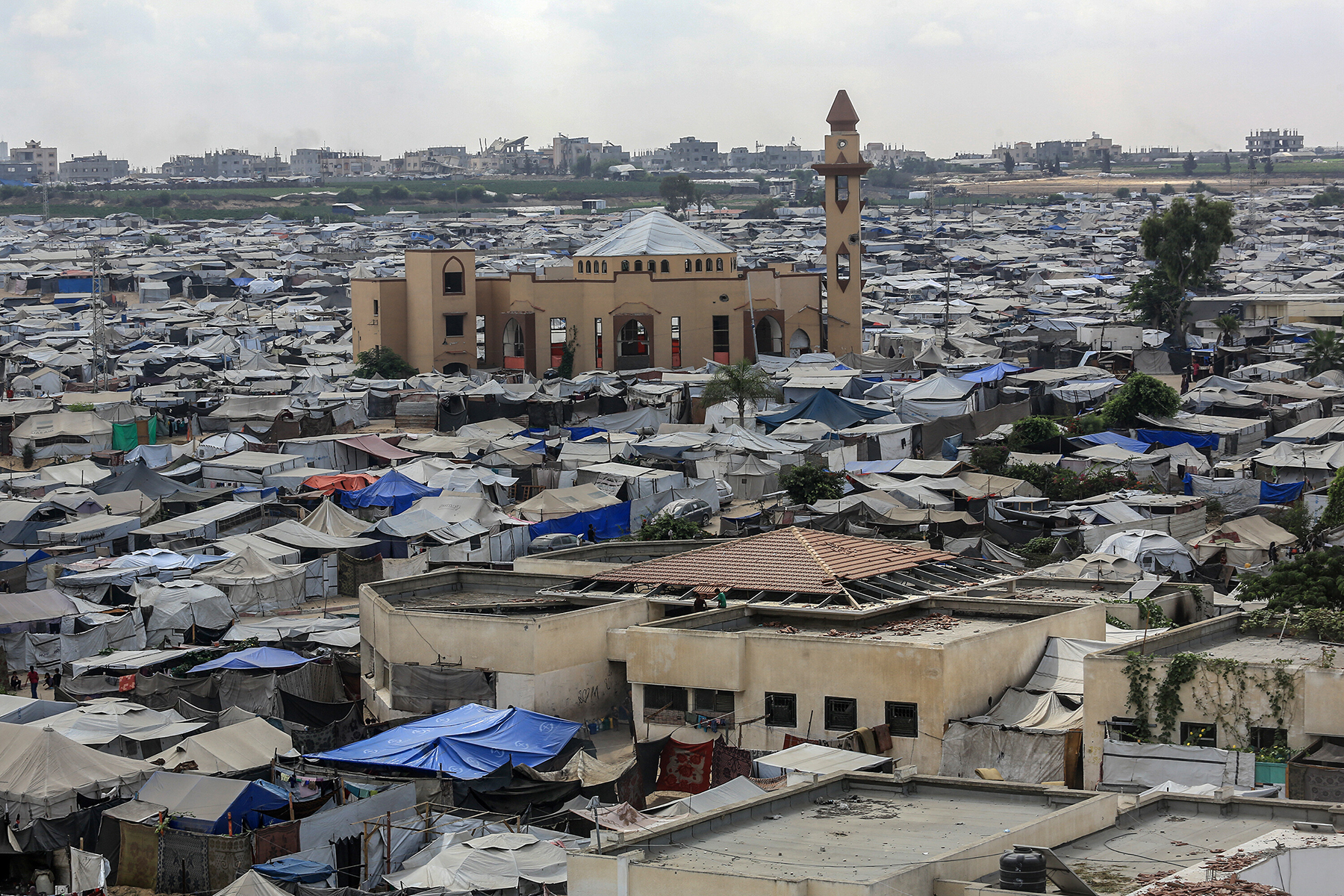
The Blockade’s Toll: How War Is Deepening the Humanitarian Crisis in Gaza
Prime Minister Benjamin Netanyahu was invited but declined to participate at the last moment. The official reason cited was the upcoming Jewish holiday, Simchat Torah. However, it is possible that the real reasons lie in Netanyahu’s strained relations with other summit participants and potential objections from members of his ruling coalition. As a result, a summit intended to help end a bilateral conflict effectively took place without either side’s participation.
The final declaration, calling for peace and stability, sends important signals, but its practical implementation remains uncertain. It gives the impression that the summit was largely detached from the actual negotiation process aimed at ending hostilities. The event was organized on an accelerated schedule, and in this sense, it appeared somewhat disconnected from the conflict itself — even though it ostensibly sought to end it.
The focus of the event shifted from the Israeli–Palestinian issue to broader regional dynamics. Perhaps its main purpose was not to produce concrete decisions, but to generate momentum for future efforts and to bring various actors together on a shared platform.

Trump’s Plan
The implementation of Donald Trump’s 20-point plan to resolve the Gaza conflict—aimed at ending the current active phase of the war—is not directly linked to the summit. In a sense, it coincided with the plan’s first phase: a ceasefire, partial withdrawal of Israeli troops, and the release of hostages.
Israel has largely accepted the plan, as it reflects many of its national interests. Hamas has also approved the initiative, but with significant reservations. The key sticking point remains the clause on the group’s disarmament and the demilitarization of the Gaza Strip. It is difficult to imagine Hamas agreeing to these demands—just as it is unclear how regional and external actors could enforce compliance—whether through diplomatic or military means.
On the ground, a partial ceasefire is in effect. The offensive has been halted; Israel maintains control over a significant part of Gaza, and sporadic clashes continue. Without a clearly defined roadmap, it is too early to speak of the plan’s implementation in practice.
Positions of Other Players
- Western countries. Recent decisions by the United Kingdom, France, Canada, and Australia to recognize Palestinian statehood are largely symbolic. They are intended to strengthen the legitimacy of the Palestinian Authority as opposed to Hamas. However, Hamas may use these gestures in its propaganda as proof of the “rightness” of its actions on October 7, 2023. In any case, these steps carry little practical consequence or real impact at this point in time.
- Arab states are interested in regional stabilization and in normalizing relations with Israel. Their participation in post-war settlement efforts is likely, but will require forming a political vision that all parties can accept.
- Russia. The previously planned Russia–Arab summit in Moscow was postponed amid increased U.S. diplomatic activity. The exact reason for Russia’s absence from the Egyptian summit is unclear, though it may have been due to the short notice of its organization. Nevertheless, Moscow continues to support all peacekeeping efforts in the region.
***
The Sharm el-Sheikh summit was an important symbolic gesture, reflecting both regional and international concerns over the ongoing turmoil in the Middle East. However, without Israel’s direct participation, and amid fundamental disagreements with Hamas, the meeting fell short of being a breakthrough. It is still unclear whether the ceasefire will last; only after this becomes evident can the prospects for a long-term settlement be seriously discussed. The path from declarations of intent to real peace remains challenging and requires continued effort.
(votes: 4, rating: 4.5) |
(4 votes) |
Report No. 99 / 2025
The Blockade’s Toll: How War Is Deepening the Humanitarian Crisis in GazaInternational response remains fragmented


