
Putin’s Visit to New Delhi Signals a Sustained Partnership in Eurasia
In
Login if you are already registered

Research Consultant, Chintan Research Foundation, New Delhi, Senior Research Fellow & PhD Candidate, Centre for Russian and Central Asian Studies, Jawaharlal Nehru University
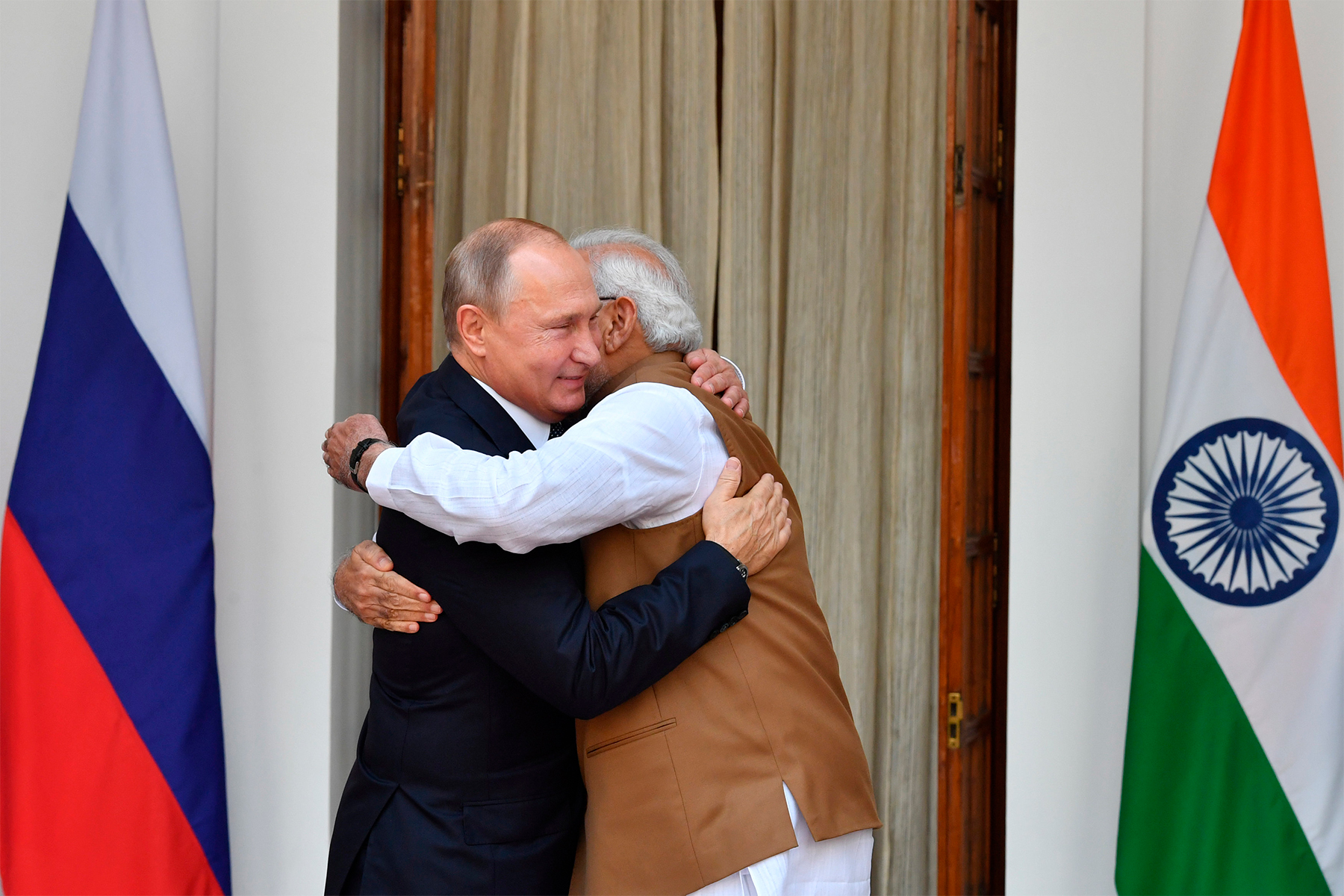
Russian President Vladimir Putin’s landmark visit to New Delhi marked a pivotal development for the bilateral partnership. Deeply rooted in symbolism and coming against the backdrop of flux in global geopolitics, following the U.S. imposition of secondary tariffs against India due to its continued Russian oil imports, the visit served as a significant moment for the reassertion of a multipolar world order. Beyond these developments, the annual India-Russia bilateral summit also presents an opportune moment to ascertain the direction of bilateral cooperation, particularly in the broader context of India’s strategic engagement in Eurasia and its regional security concerns, especially in the aftermath of Operation Sindoor. During the 23rd Summit, the discussion between Prime Minister Modi and President Putin focused on strengthening bilateral and multilateral cooperation to combat common threats such as terrorism, extremism, and transnational crime, with a particular emphasis on countering cross-border terrorism and ensuring regional security, especially in the context of Afghanistan.
However, discussions on strategic regional stability cannot overlook Central Asia, a key pillar of regional security in Eurasia. Central Asia, as the gateway to Afghanistan, has been deeply affected by terrorism, and the Central Asian Republics (except Turkmenistan) are critical partners in the Shanghai Cooperation Organization (SCO), where regional security is a central concern for its members. As such, Putin’s successful visit to New Delhi reinforces the perception that the trajectory of cooperation in Eurasia, particularly on regional security and connectivity, will continue on its current path.
Russian President Vladimir Putin’s landmark visit to New Delhi marked a pivotal development for the bilateral partnership. Deeply rooted in symbolism and coming against the backdrop of flux in global geopolitics, following the U.S. imposition of secondary tariffs against India due to its continued Russian oil imports, the visit served as a significant moment for the reassertion of a multipolar world order. Beyond these developments, the annual India-Russia bilateral summit also presents an opportune moment to ascertain the direction of bilateral cooperation, particularly in the broader context of India’s strategic engagement in Eurasia and its regional security concerns, especially in the aftermath of Operation Sindoor. During the 23rd Summit, the discussion between Prime Minister Modi and President Putin focused on strengthening bilateral and multilateral cooperation to combat common threats such as terrorism, extremism, and transnational crime, with a particular emphasis on countering cross-border terrorism and ensuring regional security, especially in the context of Afghanistan.
However, discussions on strategic regional stability cannot overlook Central Asia, a key pillar of regional security in Eurasia. Central Asia, as the gateway to Afghanistan, has been deeply affected by terrorism, and the Central Asian Republics (except Turkmenistan) are critical partners in the Shanghai Cooperation Organization (SCO), where regional security is a central concern for its members. As such, Putin’s successful visit to New Delhi reinforces the perception that the trajectory of cooperation in Eurasia, particularly on regional security and connectivity, will continue on its current path.
India’s Eurasian Strategy
Russia and India: Key Areas of Cooperation
India’s Eurasian strategy has increasingly aligned with the transformation of the international political economy, aiming for a secure and interconnected Eurasia. This strategy focuses on strengthening regional security and enhancing connectivity throughout the region.
A critical element of India’s security approach is its longstanding partnership with Russia. Rooted in over seven decades of cooperation since the Soviet era, this partnership focuses on common security interests, especially in combating terrorism. Since the 1990s, India and Russia have worked closely on stabilizing Afghanistan, a key focal point for regional security. Their continued cooperation through multilateral frameworks, such as the Moscow Format Consultations, is vital in addressing security challenges, promoting stability, and supporting Afghanistan’s economic and humanitarian recovery. Central Asia plays a crucial role in this framework, with four of its countries actively participating in these discussions. The region’s involvement, alongside the strong Russia-India partnership, provides a solid foundation for expanding cooperation on regional security issues. Cross-border terrorism remains a central concern for India, with Russia and Central Asia recognized as key actors in eradicating this threat.
In parallel, India’s Eurasian strategy emphasizes connectivity, reflecting its commitment to a multipolar world. Initiatives like the International North-South Transport Corridor (INSTC), the Eastern Maritime Corridor, and the Northern Sea Route highlight India’s efforts to enhance transport links and regional integration. These connectivity projects also bolster India’s economic engagement with Eurasia and contribute to its vision of a more connected and secure region. New Delhi’s active participation in regional and plurilateral organizations such as the Shanghai Cooperation Organization (SCO) and BRICS further strengthens these ties.
Central Asia is indispensable in advancing this vision of connectivity. The Central Asian Republics (CARs) are vital partners in facilitating trade, infrastructure, and regional cooperation. Russia’s Greater Eurasian Partnership, which aims to harmonize initiatives like the Eurasian Economic Union, the Belt and Road Initiative, and the INSTC, underscores the importance of Central Asia’s role in enhancing regional connectivity. As these efforts unfold, the significance of Central Asia to India’s Eurasian strategy becomes ever more apparent, positioning the region as a key player in India’s broader geopolitical and economic ambitions.
How is Central Asia Important?
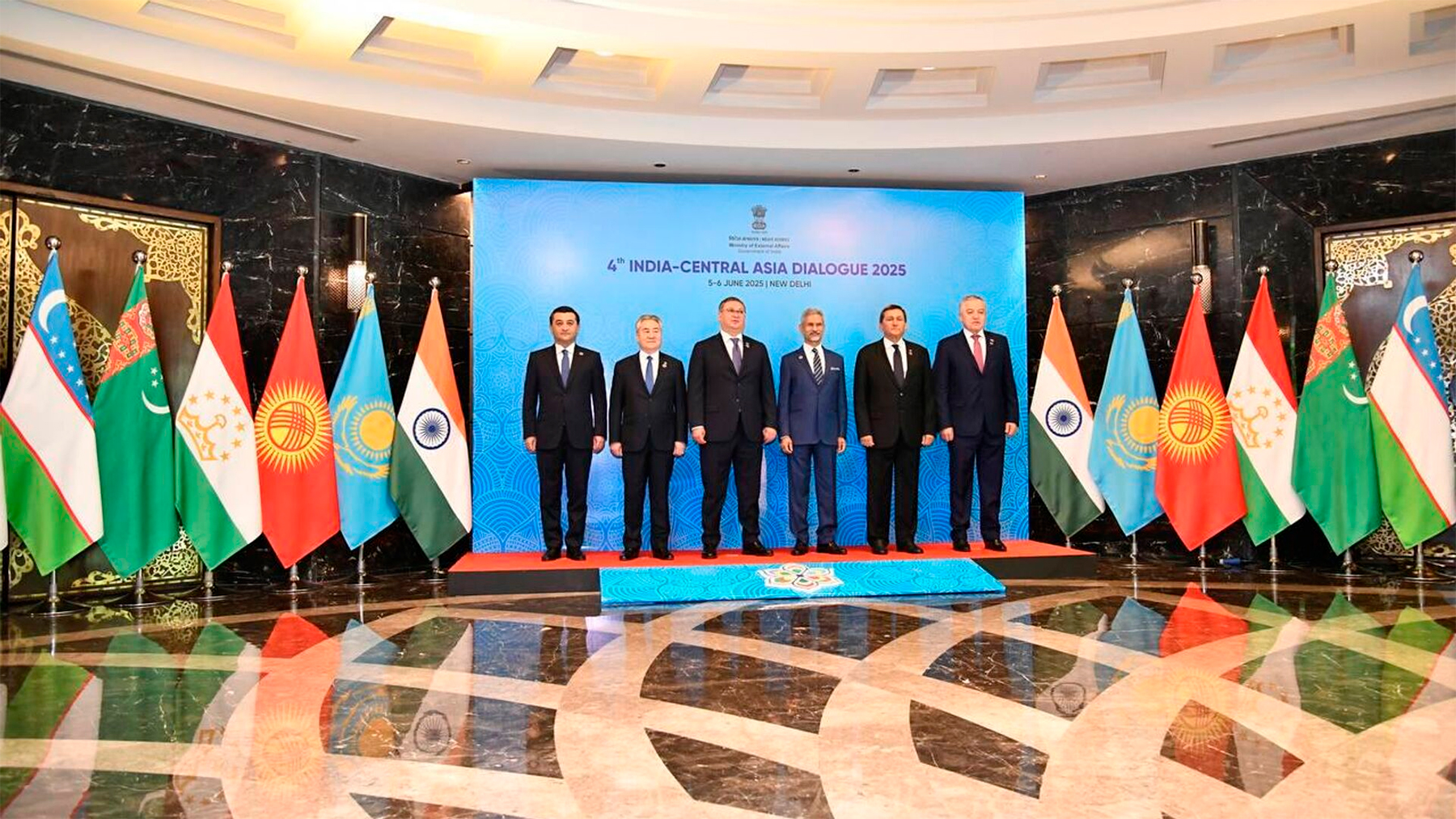
India’s Growing Visibility in Central Asia
The region is crucial for India-Russia connectivity via the INSTC. The assertion in this year’s Modi-Putin summit joint statement to “deepen cooperation in building stable and efficient transport corridors,” with a focus on expanding logistics links in INSTC, highlights the crucial role Central Asia would play in facilitating regional connectivity for the success of this initiative.
First, at a time when Central Asia is attempting a more balanced approach by seeking diversity of investments and inviting all actors equally while asserting a multi-vector foreign policy, a stronger partnership between India and Russia gives more leverage to the CARs at regional platforms like the SCO. Moreover, the SCO, where India’s engagement has weakened somewhat in recent years, appears to be regaining importance for India, as it can serve as a vouch for a multipolar world. To maintain India’s interests within the grouping, Central Asian countries and Russia are key partners, given India’s comparatively weaker relations with China and its rival neighbour, Pakistan.
Second, the potential conclusion of the FTA between India and the EAEU can further enhance India’s economic presence in the region. It will strengthen its geopolitical ties with Central Asian countries (Kazakhstan and Kyrgyzstan), aligning with India's “Connect Central Asia” policy. Central Asian countries play a role in the wider Russia-India dynamic. Like Russia, the Central Asian states also share numerous convergences and seldom have bilateral irritants, which contribute to enhanced Indian soft power in the region, giving more weight to its Eurasian partnership.
Central Asia presents a key opportunity for India and Russia to deepen their collaboration, particularly in energy, security, and transportation, with the region serving as a critical nexus for expanding regional connectivity and enhancing economic and logistical ties between the two countries. Against this backdrop, the summit underscores the deepened strategic partnership despite geopolitical headwinds and poses itself as another pivotal moment to assess where New Delhi stands in the discourse of shaping Eurasia.
(votes: 7, rating: 4.57) |
(7 votes) |
No matter how turbulent global politics becomes in the coming decades, New Delhi is convinced that Moscow will remain a reliable and valuable partner
India’s Growing Visibility in Central AsiaIndia’s leadership is employing a “development-oriented” approach in Central Asia, one that includes a clear cultural-civilizational component.


