
EU: Change of personnel or change of policy?
Newly elected European Council President
Donald Tusk of Poland applauds during a news
conference with outgoing European Council
President Herman Van Rompuy and newly
elected European High Representative for
Foreign Affairs Federica Mogherini of Italy
during an EU summit in Brussels
August 30, 2014
(no votes) |
(0 votes) |
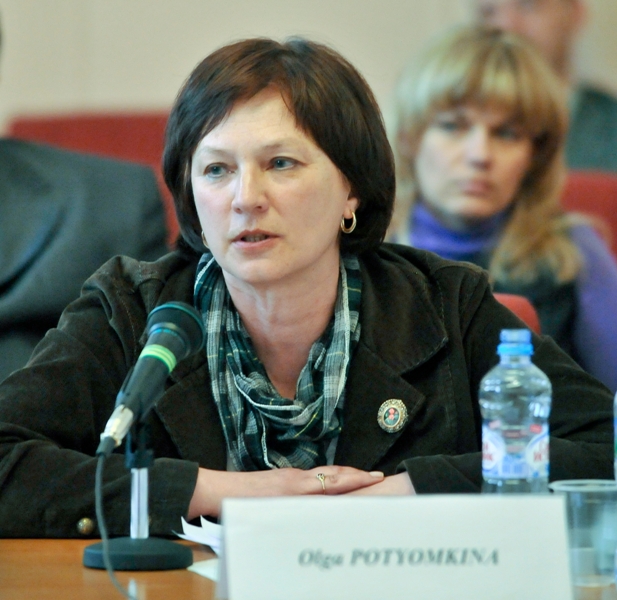
On 30 August 2014 an EU summit elected former Polish prime minister Donald Tusk President of the European Council. Italy’s Federica Mogherini also became the new face of European diplomacy. Will the new political leaders manage to strengthen the voice of the European Union on the international stage, where the situation is now far from stable? How will relations with Russia develop in the context of the Ukrainian crisis? Olga Potemkina, Doctor of Political Sciences, Head of the European Integration Research Department at the RAS Institute of Europe, comments on the situation.
On 30 August 2014 an EU summit elected former Polish prime minister Donald Tusk President of the European Council. He will replace Herman Van Rompuy, whose presidency was marked by a lack of initiative and of political will. Italy’s Federica Mogherini also became the new face of European diplomacy. For many decades the EU has been unable to shake off the image of being a “political dwarf”. Will the new political leaders manage to strengthen the voice of the European Union on the international stage, where the situation is now far from stable? How will relations with Russia develop in the context of the Ukrainian crisis? Olga Potemkina, Doctor of Political Sciences, Head of the European Integration Research Department at the Russian Academy of Sciences Institute of Europe, and Russian International Affairs Council expert, comments on the situation.
A change of power has taken place in the EU’s supranational bodies. Bearing in mind the difficult political climate which has formed in Europe, what can you say about the appointment of Donald Tusk and Federica Mogherini to these top posts in the EU?
First of all, it’s worthwhile identifying the main difference between these newly appointed politicians and their predecessors. They are undoubtedly compromise figures (“The balance between the old and new members, between the major and minor countries, between left and right and between west and east and, finally, the gender balance, which has recently taken on considerable importance” – Vladimir Chizhov, Permanent Representative of Russia to the EU), but at the same time the future EU leaders have great political significance and charisma, even Federica Mogherini, whose main shortcoming is said to be her lack of experience in the foreign policy arena. This means that they will be able to play a more prominent role in the leadership of the European Union, as, incidentally, will Jean-Claude Juncker, the new President of the European Commission, and consequently their political preferences will be important. It was originally believed that the President of the European Council and the EU’s High Representative for Foreign Affairs and Security Policy balanced each other out: Mogherini, with her “friendly” attitude to Russia versus the “hardliner” Tusk. However, as soon as she was elected, Federica Mogherini changed the tone of her statements, and her “friendly” attitude gave way to almost the same degree of severity. Does it follow that she is taking a hostile stance towards Russia? First, by stating that Russia was no longer a strategic partner of the European Union, Mogherini was speaking pure truth: partnership ends where sanctions begin. Second, it is well known that it was her attempt to adopt a more or less objective approach to the Ukrainian crisis that almost denied her the opportunity to be elected High Representative. It appears that at this difficult moment the current European politicians will not diverge from the mainstream – fear of the “Russian threat” to European security, which can be averted by pressure and sanctions. At the same time Federica Mogherini has emphasised that the diplomatic path to a settlement of the conflict remains open.
Herman Van Rompuy was known for his moderation and his lack of initiative in taking decisions on a pan-European scale. What will Donald Tusk be like in the role of head of the European Council? A prominent Polish politician, will he be hostile towards Russia?
While Herman Van Rompuy’s position could be disregarded when the political agenda for the European Union was being drawn up (this position was not particularly voiced), Donald Tusk immediately declared his priorities: to focus the EU’s attention on Eastern Europe and in particular on relations with Russia; to prevent the United Kingdom leaving the EU; to overcome the divide between the Eurozone countries and the EU states that do not belong to it. Eastern Europe was named the first point in Donald Tusk’s programme; many experts believe that his appointment is evidence of the EU’s increased focus on the issues concerning the “new members of the EU”. It seems that this is something of an exaggeration: one of the top posts had to be given to a representative of the “new EU” without fail in order to maintain the balance of interests between the member states. Moreover, Tusk’s appointment was a “consolation prize” for David Cameron, who had been unsuccessful in the matter of the appointment of the President of the European Commission. The new President of the European Council, Donald Tusk, has done a lot to strengthen German–Polish relations and will support Germany’s initiatives, as he values Angela Merkel’s attention. At the same time he is described as an “Atlanticist”, and so will push for talks between the EU and the USA about a free trade zone, as does Jean-Claude Juncker. Tusk will also be a fervent supporter of Juncker in terms of deepening European integration.
Experts are quoting the statement by Ukraine’s foreign minister Pavlo Klimkin that “in the corridors of Brussels” Tusk’s appointment is being called pretty much the “biggest sanction against the Russian Federation” and a “challenge” for Russia. Of course, Tusk’s appointment is not the best option for the relationship between Russia and the EU, but neither is it the worst. In his “past life”, before the Ukrainian crisis, Donald Tusk was not noted for being Russophobic (we might recall the period of Poland’s presidency in the EU, which was favourable for Russia). In addition, he is not inclined to hysterics and is described as an extremely pragmatic politician.
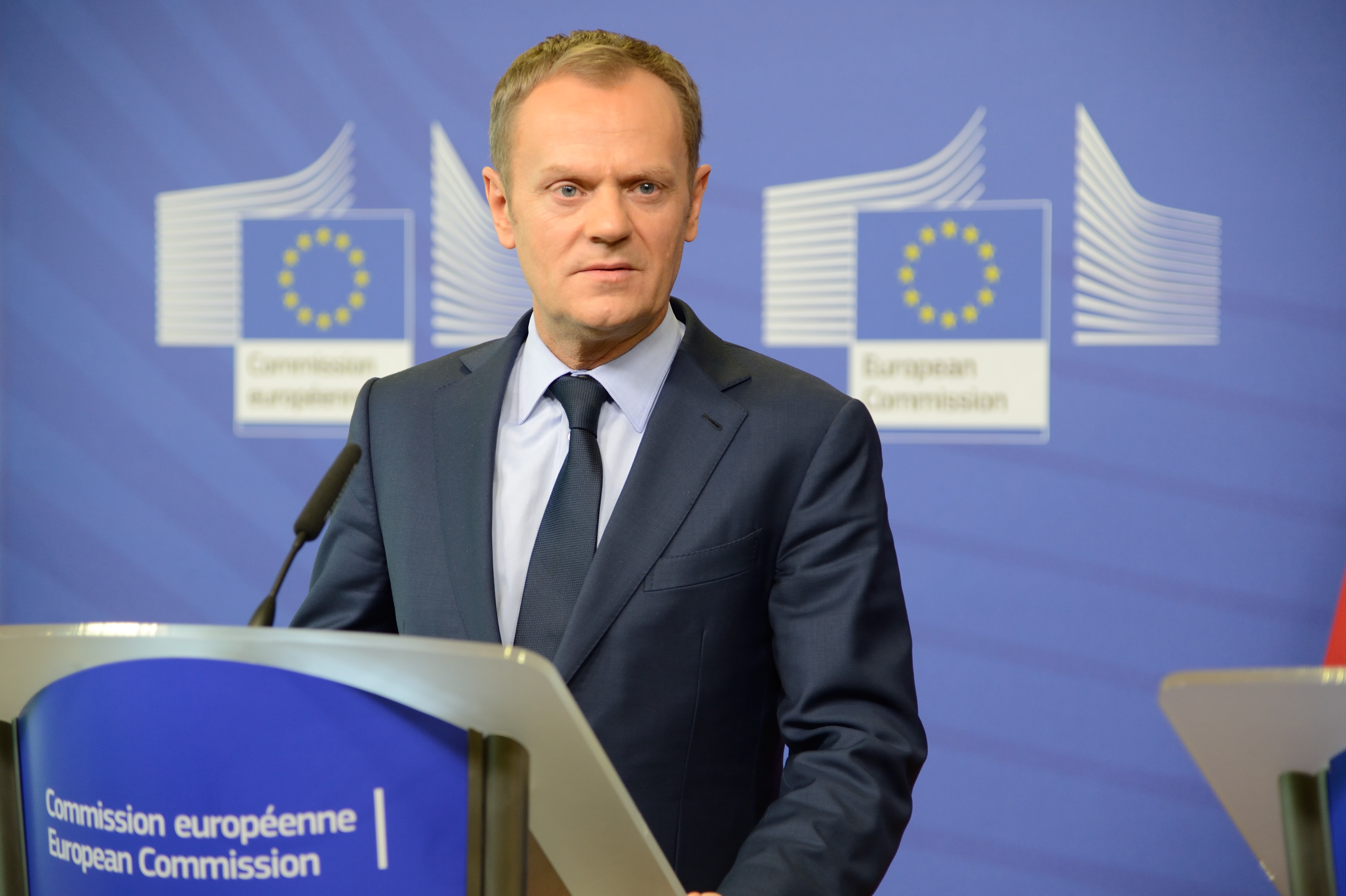
Donal Tusk
What position will Donald Tusk take in the process of settling the Ukrainian crisis?
As the future President of the European Council, officially Donald Tusk will only be able to take a position with effect from 1 December 2014. That position will be based on the specific state of affairs: will the military actions have ceased by then, and will some clarity have emerged in Ukraine’s political set-up? Depending on this, relations between Russia and the EU might continue to develop in the direction of confrontation and a tightening of the sanctions spiral, or the two sides will have to think about help in restoring destroyed cities, returning refugees and preparing for the winter weather. In the latter case, such help could become a starting point for restoring cooperation between Russia and the EU, although the damage done to the relationship will take a very long time to mend. Unfortunately, so far Donald Tusk’s statements have been more aimed towards continuing the sanctions and putting pressure on Russia. At the same time Donald Tusk may use the Ukrainian crisis as a way to consolidate the member-states’ foreign policy positions and to strengthen European security and defence policy.
(no votes) |
(0 votes) |


