War Revisited: Fifty Conclusions
In
Login if you are already registered
(votes: 3, rating: 5) |
(3 votes) |

Doctor of Political Science, Ph.D. in History, Deputy Director for Science of the IOS RAS, RIAC Member
The de-escalation of the conflict between Israel and the United States, on the one hand, and Iran, on the other—as occurred in June 2025—is usually accompanied by triumphant declarations from all sides. Even the Gulf Arab monarchies, which have become unintended victims of a war not of their making, proclaim victory. Yet, as was also the case in June 2025, such statements do not mean that the conflict has truly ended. The negotiations in Islamabad may collapse at any moment or, more likely, fail to produce substantive results. Moreover, even if they are formally successful, no credible guarantees of a stable peace in the region can currently be offered.
Under these circumstances, it is useful to draw several conclusions that are important for understanding both the broader dynamics of international relations and the specific regional context.
The war against Iran has brought to the forefront the question of constructing new security systems across Eurasia, just as a resolution of the Ukrainian conflict is expected to open the way to a new security architecture in Europe.
Under an optimistic scenario—to the extent that such optimism is justified—this would entail the formation of four interconnected regional security subsystems: European (Russia-Europe), Middle Eastern, Russo-Turkish, and Eurasian.
The evolving situation is pushing Moscow toward a return to the dynamism that once characterized its Middle Eastern policy. This should apply not only to the Iranian issue—including support for Iran, its reconstruction, the strengthening of ties with the GCC, participation in efforts to manage the Iran-Israel track, and the promotion of logistical projects—but also to the Palestinian and Lebanese questions.
The de-escalation of the conflict between Israel and the United States, on the one hand, and Iran, on the other—as occurred in June 2025—is usually accompanied by triumphant declarations from all sides. Even the Gulf Arab monarchies, which have become unintended victims of a war not of their making, proclaim victory. Yet, as was also the case in June 2025, such statements do not mean that the conflict has truly ended. The negotiations in Islamabad may collapse at any moment or, more likely, fail to produce substantive results. Moreover, even if they are formally successful, no credible guarantees of a stable peace in the region can currently be offered.
Under these circumstances, it is useful to draw several conclusions that are important for understanding both the broader dynamics of international relations and the specific regional context. Given the extensive commentary already produced over the past six weeks, and in the interest of brevity, this analysis will be limited to a series of key theses.
What Does This War Reveal About Conflicts and International Relations in General?
1. A Limited War
The dramatic nature of the events and the human tragedies involved should not obscure the fact that this is a relatively limited conflict. In terms of duration and casualties, it cannot be compared with the war in Gaza or the civil conflicts in Syria and Yemen. Nor, in terms of its implications for major powers, is it comparable to the conflict in Ukraine.
While it may significantly reshape the Middle East, it will not alter the capabilities of global powers. Iranian strikes against U.S. forces, however significant, do not undermine U.S. power; conversely, even successful military actions against Iran cannot fundamentally shift the global balance of power.
2. Disproportionate Consequences
The limited scale of the confrontation does not make it insignificant. On the contrary, it reflects deeper transformations in international relations and may mark an important stage in their evolution. More clearly than many other conflicts, it shows the erosion of international law, the fragility of military alliances, and the dysfunction of global institutions.
Although it does not directly affect the global balance of power, it may do so indirectly—for example, by strengthening China’s position if the outcome is perceived as a U.S. defeat or weakening it if Washington secures control over Iranian energy flows or the Strait of Hormuz. It may also accelerate changes in global energy markets and logistics.
3. An “Old-Fashioned” War
Structurally, this conflict is more conventional than the hybrid, multilayered civil wars that have characterized the region in recent decades. Unlike Syria, Libya, or Yemen, where domestic and international dimensions are deeply intertwined, this is fundamentally an interstate conflict, with local dynamics playing a secondary role. Non-state actors are present, but their agendas remain subordinate to those of the main state actors.
4. Splendor and Misery of Technology
Technology plays a central role in the conflict, from the widespread use of unmanned aerial vehicles to the growing application of artificial intelligence in military planning and execution.
However, technological superiority does not guarantee victory. The opposing side adapts through asymmetric responses. While Iran proved unable to prevent strikes on its territory or targeted assassinations, it nevertheless carried out retaliatory operations that disrupted global markets, strained U.S. alliances, and threatened the broader American presence in the region.
5. A Conflict of the New Century
Despite its ostensibly conventional character, the military-technological asymmetry of the conflict makes it unlike either colonial-era wars—where technological superiority was the main condition for victory—or twentieth-century interstate wars, in which technologically comparable forces confronted one another on the battlefield.
The weaker side is forced to rely on strategies associated with anti-colonial resistance: targeting vulnerable infrastructure and applying sustained informational and psychological pressure. Since victory in direct confrontation is unattainable, the aim becomes raising the cost of conflict to an unacceptable level for the opponent.
6. The Paradoxical Humanism of War
The situation in Iran has shown that the parties are inclined to inflict maximum damage while minimizing direct casualties. The reasons are relatively clear. If the longer-term strategy of Israel and the United States is to foster anti-government sentiment within the Islamic Republic, it is necessary to avoid alienating Iranian society as a whole.
In this context, the strike on a girls’ school in Minab, which resulted in more than 180 fatalities, (mostly children) and approximately 100 injuries, had catastrophic consequences for Iran’s adversaries. At the same time, Tehran, in responding to U.S.-Israeli actions with strikes on the Gulf Arab monarchies, sought to weaken U.S. positions rather than draw its Arab neighbors into the conflict.
More broadly, the effort to maximize damage while minimizing casualties may be understood both as a consequence of the broader humanization of the sociopolitical sphere in the information age and as a reflection of the fact that strikes against economic and technological infrastructure can produce greater strategic effects than the destruction of populations. In both respects, the war against Iran stands in stark contrast to Hamas’s attack on Israel on October 7, 2023 and Israel’s military campaign in the Gaza Strip, where in each case the destruction of populations was a central objective.
7. Humanitarian Risks
The focus on infrastructure strikes increases the likelihood of humanitarian catastrophes arising from conflicts. Consequently, resource-fragile countries and regions find themselves in particularly vulnerable positions. This is especially true for the Middle East. The lack of water and food security, combined with the region’s importance as a supplier of energy resources, creates enormous risks for the future. Civil wars in Syria and Yemen, as well as the war in Gaza, have already resulted in humanitarian catastrophes. Further escalation may produce even more.
8. Uncertain Goals and Ambiguous Outcomes
The objectives of the parties in modern conflicts are becoming increasingly vague. These have included regime change in Iran, the destruction of its nuclear program, critical military weakening, and, ultimately, the opening of the Strait of Hormuz (which had, in fact, functioned normally prior to the war).
From Iran’s side, initial objectives centered on survival, but as the balance of power shifted, ambitions expanded to include control over the Strait of Hormuz, guarantees for ending attacks on its regional allies, and the withdrawal of U.S. military bases, among others. Such fluidity renders meaningless any discussion of when objectives can be considered achieved or what constitutes victory.
9. War Against Politics
Technological and military superiority does not enable the resolution of political objectives. A contradiction emerges between political goals and military methods. Political goals involve altering an adversary’s behavior on the international stage, which in turn requires fundamental changes to its political regime, making it more amenable. However, this objective cannot be achieved through military means alone, since such methods tend, at least in the short term, to consolidate rather than weaken the regime.
In historical perspective, the war against Iran fits into a broader pattern. U.S. interventions in Afghanistan and Iraq a quarter-century ago succeeded in replacing regimes but failed to build sustainable new ones, while imposing excessive costs on Washington. NATO’s operation in Libya helped overthrow Muammar Gaddafi, but the absence of subsequent political engineering on the ground made governance impossible. The war against Iran appears, for now, as yet another ineffective attempt at intervention, though its future trajectory may involve alternative instruments of influence.
10. The Emptiness of “Regime Change” Formula
The repeatedly proclaimed objective of regime change in Iran is increasingly becoming an inaccurate formula. It is unclear whether such change has already occurred, and if not, what would constitute evidence of it. This suggests that the very notion of “regime change” is losing its analytical meaning.
11. Economic and Logistical Vulnerabilities
Iran managed to turn the situation to its advantage by striking at two of the most vulnerable components of the global economy: the energy sector and the global transport and logistics chain. Regardless of how negotiations over the status of the Strait of Hormuz conclude, it is evident that significant changes must occur both in the functioning of energy markets and in the provision of maritime security. These may include the clustering of energy markets, renewed momentum for the development of alternative energy sources, and the revision of shipping regimes, among other measures.
Iran Prevails: Initial Assessments
What Does This War Reveal About the Middle East?
12. The Persistence of Structural Problems
The unresolved, and in many respects unresolvable, nature of the region’s core development problems has long been, and continues to be, the main obstacle to normalization and progress in the Middle East. Like the Palestinian question, the confrontation between Iran and Israel/the United States did not emerge overnight; it has persisted since 1979, fluctuating in intensity over time.
Although it has only rarely escalated into direct military confrontation over nearly half a century—apart from episodic incidents such as the assassination of Qassem Soleimani or Israeli clashes with Iranian proxies—no sustained or systematic effort at conflict resolution has been undertaken. The Obama administration’s attempt to integrate Iran into the regional order failed to take Israeli interests sufficiently into account, while efforts to build anti-Iranian military blocs, such as the so-called “Arab NATO,” only heightened tensions and contributed to the emergence of the “Axis of Resistance.”
13. A Region of Exclusion
The well-known exclusivist character of the Middle Eastern subsystem of international relations may be seen as one of the main causes of the current escalation. For decades, the regional order has been built on the logic of “friends against foe.” Initially, the common adversary was Israel, which devoted considerable effort first to securing its place in the Middle East—through the wars of 1948, 1956, 1967, and 1973—and later to integrating gradually into the region through agreements with Egypt and Jordan, the Abraham Accords, and other less publicized initiatives aimed at reducing tensions with its neighbors.
Subsequently, Iran assumed the role of the common adversary. Over recent decades, it too has sought regional integration through the “Axis of Resistance,” support for allied forces in Palestine, Lebanon, Syria, Iraq, and elsewhere, as well as through the development of relations with Gulf monarchies and normalization with Saudi Arabia. In neither case has integration been completed, while prevailing ideas of regional security have failed to accommodate the need to include all regional states without exception.
14. The Danger of Distant Allies
The prominent role of extra-regional actors—above all, the United States—remains a major factor contributing to the high level of conflict in the Middle East. For the region’s medium-sized and smaller states, which possess relatively limited military capabilities, reliance on external powers for security has long seemed natural. This applies to the Gulf Arab monarchies, which host numerous U.S. military bases and have in recent years effectively purchased U.S. support through large-scale investments in the U.S. economy. It also applies to larger states such as Turkey, a NATO member that has only recently shown a degree of strategic autonomy, and Egypt, which remains the second-largest recipient of U.S. aid after Israel. Naturally, Israel itself is also part of this pattern. Iran, compelled by circumstance to rely primarily on its own capabilities, is a notable exception. This situation creates three major problems.
First, if Iran, like its neighbors, were dependent on the United States, one could imagine regional peace and stability as a function of U.S. diplomacy, which would have both the resources and the incentive to mediate among its allies. Today, such a scenario seems implausible. Even if a pro-U.S. regime was to emerge in Iran—a possibility still entertained by some in Washington—recent developments suggest that U.S. diplomacy lacks the resources for such a long-term undertaking, with uncertain returns.
Second, the increasingly transactional nature of U.S. policy in the Middle East undermines Washington’s ability to balance among its own allies when tensions arise between them. Support for one ally often comes at the expense of another.
Third, the United States matters far more to regional states than those states matter to Washington. Since threats originating in the Middle East are not existential for the United States, alliance commitments may prove expendable in moments of crisis.
15. Enduring Security Dilemmas
From the perspective of political realism, the conflict between Israel and the United States on the one hand, and Iran on the other, may be understood as a classic security dilemma: actions intended to increase one side’s security are perceived by others as inherently threatening. This is especially clear in the Iran–Israel relationship, but it also applies, to some extent, to U.S.–Iran relations, particularly given the special nature of U.S.–Israeli ties. The invasion of Iraq, the deployment of U.S. bases across the region, the withdrawal from the JCPOA, Iran’s nuclear programme, the Abraham Accords, Iranian-Saudi normalization, regime change in Syria, Israel’s war in Gaza, operations against Hezbollah, and strikes on Qatar have all contributed to the current escalation.
16. The Primacy of Narrative
Despite the explanatory power of realist interpretations, the conflict is fundamentally shaped by competing narratives, which make the creation of even minimal trust virtually impossible. The parties see one another as existential adversaries, guided either by religious-nationalist worldviews or by the projection of such worldviews onto their opponents. Each new round of escalation reinforces these perceptions. Moreover, the fact that religious-nationalist narratives are an important element of statehood in both Iran and Israel makes rapprochement and compromise exceedingly difficult. At the same time, neither side has made serious efforts toward rapprochement in recent years, while the efforts of the international community, insofar as such a community can be said to exist, have been directed elsewhere.
17. A Reversed Holy War
For decades, Iran’s adversaries portrayed it as a rigid theocratic regime driven by religious ideology, while its attempts to present itself as pragmatic and rational in foreign policy were met with skepticism. The United States, Israel, and, more recently, the Gulf monarchies presented themselves as “modern” states confronting an “archaic” Iran.
The present conflict, however, has shown that this interpretation is, at the very least, incomplete. It is the United States and Israel that have actively invoked religious narratives, while Iran has displayed considerable pragmatism and rationality. Even domestically, Tehran has sought to consolidate society more through appeals to nationalism than to religiosity. This does not amount to a complete reversal of roles. Rather, it reflects a broader process of desecularization and rearchaization in international relations, characterized by the fusion of religion, nationalism, and advanced technology.
18. A Sacred Alliance
Religious ideology once defined the character of the Islamic Revolution in Iran and still serves as a foundational element of the country’s contemporary political order. However, Iranian statehood itself does not depend fundamentally on that ideology: it predates the revolution and is not intrinsically tied either to Shiism or to Islam more broadly.
By contrast, in the case of Israel and the United States, religion plays a more prominent role in both state formation and the justification of their alliance. Moreover, as the memory of the Holocaust gradually recedes in Western societies, and as pragmatic arguments for close ties with Israel weaken among segments of U.S. society and political elites, the importance of religious motivation is likely to increase. This tendency is likely to be reinforced both by the Israeli lobby and by certain Protestant denominations in the United States.
19. The Region as Manipulator
The idea that regional powers in the Middle East are increasingly more influential than their global allies has become almost a truism. On the one hand, the current war seems to confirm this view. The United States has been unable to defeat a regional power decisively, and the military campaign itself appears to have aligned more closely with Israeli than with U.S. interests, prompting speculation that Benjamin Netanyahu has, in effect, manipulated the White House.
On the other hand, the conflict has also shown that regional powers cannot wage military campaigns against one another without external support. In the long run, this leaves room for continued external influence over regional affairs.
Attack on Iran: A Balance of Results
What Will Be the Consequences for Iran?
20. Weakening
Tehran’s confidence should not be misleading. U.S. and Israeli strikes have inflicted substantial damage on Iran’s infrastructure, further weakened its already fragile economy, and undermined its technological base. Estimates of the Islamic Republic’s economic losses vary widely, ranging from $140 billion to $1 trillion.
Strikes on the steel, petrochemical, and shipbuilding sectors, as well as on energy facilities— including nuclear sites—bridges, roads, and residential areas, are bound to have long-term consequences, as is the large-scale destruction of the military-industrial complex. Immediate effects have already included surging inflation, widespread business closures, rising unemployment, and a crisis in the banking sector. Even under the most favorable conditions for Tehran, restoring the economy, military capabilities, and scientific-technological base will require substantial time and significant external assistance.
21. Reform as Necessity
Reconstruction will not be possible without mobilizing domestic resources and undertaking systemic economic reform. It is true that Iran’s recent economic difficulties have been aggravated by sanctions, but this is only part of the story. They also stem from the inefficiency of the country’s economic model and from the growing role of the Islamic Revolutionary Guard Corps, or IRGC, and its affiliated structures in the national economy.
In the short term, the war may help the authorities justify falling living standards in the eyes of the population. Yet this effect is unlikely to last. Given the anti-government protests in January, it is improbable that such acquiescence will endure for more than a few months. If the authorities and their allies fail to use this period to demonstrate not only governance capacity but also the ability to carry out economic reform, the risk of socio-political turbulence will rise sharply.
22. The Strengthening of the Security Apparatus
Both the war itself and the circumstances that preceded it, including expectations of a transfer of power, as well as the mass killings of political leaders, have not produced regime change. Instead, they have pushed the political regime toward stronger coercive institutions. This transformation may prove temporary, since no constitutional changes have occurred, or it may become entrenched. In either case, there is little reason to expect a major change in the institutional design of the Islamic Republic.
Accordingly, the country faces two main challenges in the near future. The first is preserving elite cohesion. The second is determining whether the new leadership can deliver reforms that will almost certainly require curbing the economic privileges of its own support base. Taken together, these two challenges increase the likelihood of further political change and the possible emergence of a more populist regime.
23. The Three-Body Problem
In the short and medium term, Iran’s elites will have to address three mutually contradictory tasks: ensuring economic recovery and development, maintaining socio-political stability, and resisting attempts by adversaries to destabilize the domestic situation. There is little doubt that such attempts will continue. They are likely to focus on support for ethno-separatist movements, particularly among the Kurds and Baloch; youth protest movements that do not share the values of the Islamic Revolution; economic grievances among the disadvantaged; the amplification of corruption and nepotism scandals; the mythologizing of the monarchy’s golden age; intra-elite divisions; and efforts to obstruct economic recovery.
It is also clear that reliance on repression alone will not be enough to address these challenges.
24. Strengthening Through Resistance
Iran’s economic weakening and military-technological losses stand in sharp contrast to the strengthening of its international image, particularly among overt or tacit opponents of the United States and Israel. The very fact of having withstood U.S.-Israeli pressure enhances Iran’s standing on the international stage. This creates conditions both for restoring some of its weakened regional positions over the past two years and for deepening ties with extra-regional partners.
25. The Reinforcement of the Axis
The “Axis of Resistance” that Iran has cultivated in recent years may emerge from the conflict in a strengthened form. The strategy of supporting Shiite non-state actors across the region has proved effective: the very possibility of their more active entry into the war compelled Tehran’s adversaries to exercise a degree of caution. This applies in particular to Ansar Allah, whose geographical position renders it exceptionally difficult to neutralize, as well as to Hezbollah, which has retained significant military capabilities despite Israeli operations in southern Lebanon.
Moreover, the strengthening of Iran’s image as a formidable opponent of the United States is likely to increase the appeal both of pro-Iranian political forces and of Shiism as a religious current in the broader Islamic world. This trend was already visible in the 2010s, when numerous conversions to Shiism among predominantly Sunni populations were reported across the region.
26. The Revision of Regional Relations
An important component of Iran’s foreign-policy agenda is likely to become the reassessment of its regional strategy. This may be divided into four directions.
The first is Israel. Israel will clearly remain a strategic adversary, while the religious narrative—particularly influential among Israeli elites—only reinforces this perception. At the same time, the conflict has shown that although the two sides are incapable of destroying one another, they are fully capable of inflicting substantial damage on each other. If the Iranian regime continues to demonstrate resilience in the face of domestic political and economic difficulties, conditions may eventually emerge for the opening of dialogue and, subsequently, for the establishment of a deterrence framework.
The second direction concerns the Gulf Arab monarchies. Despite having demonstrated their extreme vulnerability in this conflict, opportunities are now visible for restoring, and perhaps even improving, relations with them. This would, however, require active steps toward normalization on Iran’s part.
The third direction involves Lebanon, Syria, and Iraq. As before, Tehran is likely to regard these states as arenas of strategic influence through which it can exert pressure on both Israel and the Gulf monarchies. In this context, protecting the interests of Shiite allies (above all Hezbollah) becomes especially important for consolidating Iran’s strengthened international standing.
Finally, the fourth direction is Turkey. Ankara’s non-participation in the military campaign against Iran creates conditions for further pragmatic interaction, within which Turkey may seek to assume the role of mediator in Iran’s relations with other regional actors.
27. A Eurasian Center
Iran’s urgent need for external assistance in rebuilding its economy and technological capacity will push it toward closer cooperation with Russia and especially China, both of which have come to appreciate the strategic value of this Middle Eastern partner. This creates certain preconditions for the strengthening of multilateral Eurasian institutions, above all the Shanghai Cooperation Organization.

What Will Be the Consequences for Israel?
28. “Peace Through Strength” Under Pressure
The “peace through strength” strategy pursued by Israel in recent years is now under strain. It was sufficient to weaken Iran militarily, but insufficient to bring about regime change. It also failed to destroy Hezbollah, just as it had earlier failed to destroy Hamas. Nor did it enable Israel to neutralize Ansar Allah or strengthen its position in the Bab el-Mandeb area, despite attempts made in late 2025 in cooperation with the United Arab Emirates.
Repeated claims by Israeli analysts that regime change was never the objective, that there was never a plan to comprehensively reshape regional reality, and that the sole aim was the maximum military weakening of all potential adversaries serve mainly to obscure an uncomfortable truth. At this stage, the strategy adopted after 2023 has not vindicated itself. Israel now faces a choice: either continue along this path, necessarily raising the stakes, or revise its strategic approach.
29. Questions for the Government
The implementation of a “peace through strength” strategy became possible, first, because of the unprecedented social consolidation that followed the tragedy of October 7, 2023 and, second, because of the constant assertion of military success. Today, however, the situation has changed. Both conditions have either disappeared or weakened significantly, while social fatigue with endless military operations is gradually increasing.
The number of questions facing the current government is growing, while convincing answers remain no more available than before. At the same time, the country has been forced to confront an uncomfortable reality: unconditional military-technical superiority cannot compensate for underlying resource constraints, nor can it resolve the political dimensions of security. Ultimately, Israel now faces more threats to its security than it did before—both before the current phase of confrontation with Iran and before the war in Gaza. Promises that this will change soon remain, for now, only promises.
30. Further Radicalization
The paradox of the present moment is that, from within Israel, the conflict looks very different from the way it looks externally. In the short and medium term, the intensification of threats, combined with the continued hope that victory may still be possible—most likely in the form of Iran’s political collapse—is more likely to produce an even more right-wing alternative to the current government and, potentially, further radicalize Israeli policy.
For Tel Aviv to begin revising its foreign-policy approach, three conditions would need to be met: first, it would have to fail to achieve its goals in both Iran and Lebanon; second, it would have to avoid being drawn into a new war; and third, a new regional pacification plan that takes Israeli concerns seriously would need to be put on the table. All three conditions are difficult to meet.
31. The Abrahamic Dream
A return to the Abraham Accords appears increasingly problematic. These agreements were concluded bilaterally and on the basis of clearly identifiable interests. In the case of the UAE, they involved an exchange of technology for investment and political recognition. In the case of Bahrain, they involved an exchange of security for investment and political recognition.
Over the past two years, advocates of “peace through strength” suggested that similar agreements with Saudi Arabia, Syria, and Lebanon might follow the end of regional escalation. In the latter two cases, however, the prospects for such normalization now appear weak. In Lebanon, this would require not only the destruction of Hezbollah but also a restructuring of the political order so that the country’s ethno-confessional groups would no longer possess military-political agency. Until this happens, and it is by no means clear why it should, such agreements are unlikely to work.
In Syria, normalization would require the ruling regime both to establish full internal sovereignty and to abandon its Islamist identity. Neither prospect is currently visible. In theory, Riyadh might still be interested, but only if the Israeli campaign against Iran ends in clear success. Even then, the Saudi leadership would have to accept serious socio-political risks, and it has so far shown little willingness to do so.
32. Israel and the World
In the foreseeable future, Israel will likely have to reconsider its relations with extra-regional actors as well. Severe reputational losses, the erosion of support even within the societies of its traditional allies, and the prospect of reduced U.S. backing in the event of a change of administration are pushing Israel to seek the greatest possible gains while Washington remains firmly supportive, so that it may later attempt to reset regional relations from a position of strength. The difficulty, however, is that time is running short, while the results achieved so far remain relatively modest.
The Iranian Crisis and Russia: Seven Lessons
What Will Be the Consequences for the United States?
33. Image Is Nothing
The inability to achieve the declared objectives of the military campaign, combined with the highly idiosyncratic informational framing provided by the head of state, has clearly dealt a serious blow to the image of the United States. It no longer appears either as a power capable of ensuring order in the Middle East, as a reliable ally to its regional partners, or as a responsible negotiating party.
That said, the United States has suffered comparable reputational setbacks before. Just as the failure of the Iraq campaign was attributed to the incompetence of the George W. Bush administration, and the failure in Afghanistan to the weakness of Joe Biden, the present outcome may likewise be explained away as a consequence of Donald Trump’s distinctive political style.
34. The United States versus NATO
The war against Iran has revealed crisis tendencies within NATO more clearly than any other recent event. Washington’s principal allies did not support the campaign and, as a result, became targets of verbal attacks and threats from the U.S. president. Once again, there will be a strong temptation to explain all this in terms of Trump’s personal idiosyncrasies.
Yet the fact that the world’s most powerful military-political alliance depends so heavily on the personal characteristics of a single individual reflects poorly on the alliance itself. Even so, this is still easier than acknowledging the more serious issue: NATO’s difficulties are merely one manifestation of the broader crisis of alliance politics in an era of transforming world order. The strengthening of egoistic motives in foreign policy encourages the revision of alliance obligations and, consequently, of traditional alliance structures themselves.
35. An Even More Divided Society
The growing role of religious motivation in U.S. foreign policy, combined with the ambiguity of the campaign’s goals and the absence of convincing results, not only strengthens the position of Donald Trump’s domestic opponents, but also deepens social and political polarization within the United States.
36. What Are the United States For?
If the United States cannot stop or win wars, is unwilling to consider the interests of its regional allies, and acts on the basis of a logic that is difficult to reconcile with strategy, then the question becomes unavoidable: what is U.S. global leadership for?
Depending on how this question is answered, Washington may either try to restore its reputation or continue abandoning older commitments. Either choice would make global leadership more fragile.
What Will Be the Consequences for the Arab States?
37. The Collapse of Existing Strategies
In recent years, Arab states had moved steadily toward normalization—both with Israel, through the Abraham Accords with Bahrain and the UAE, and with Iran, through Saudi-Iranian normalization, the UAE’s commercial ties with Iran, and the distinct positions adopted by Qatar and Kuwait. At the same time, the Gulf Arab monarchies, protected by the U.S. security umbrella, became deeply integrated into a U.S.-centered order, turning themselves into key U.S. partners in politics, trade, economics, humanitarian affairs, scientific and technological cooperation, and military-technical collaboration.
None of this prevented them from becoming victims of a war not of their own making. Indeed, it was precisely their dense ties with mutually hostile powers, together with the absence of indigenous security mechanisms, that made them especially vulnerable. This situation will require a reassessment of all existing security strategies, will likely strengthen public demand for nationalism in each country, reinforce aspirations to sovereignty, and paradoxically create conditions for deeper consolidation within the Gulf Cooperation Council. If no single state can ensure its own security, collective action may seem increasingly attractive.
38. The Rise of Saudi Arabia
Saudi Arabia is likely to move to the forefront within the GCC. This is due not only to the fact that it is the organization’s largest power, but also to the fact that its armed forces have been engaged in combat operations for more than a decade, while its access to the Red Sea—which allows hydrocarbon exports to be rerouted—enhances its economic resilience.
The strengthening of Riyadh’s military-political role, combined with rising nationalism and the need for greater strategic autonomy, will require the kingdom to diversify its military and scientific-technological partnerships, strengthen its armed forces, and recalibrate relations with its GCC partners. At the same time, such strategic muscle-building may eventually create new domestic political challenges for the ruling elite.
39. The Role of Other Council Members
The regional position of the other GCC states is also changing, especially in the cases of Oman and the UAE. Oman’s position is strengthening markedly. Having avoided Iranian strikes, the Sultanate has been able to present itself both as an alternative to the UAE for international business and as a potential mediator in future contacts with Tehran, especially given its substantial prior experience in this role. Its access to the Strait of Hormuz is itself an increasingly important strategic asset.
By contrast, the UAE finds itself in a difficult position. On the eve of escalation, it had not only cooperated more closely with Israel than any other Arab state but had also sought to challenge Saudi leadership in Yemen and in several African countries. It also suffered more than most other GCC members. In the future, it will most likely face a choice between two strategies: either curtail its ambitions and integrate into a subregional order in a secondary role, or continue supporting anti-Iranian initiatives. The latter option is riskier, but if successful, it could transform the UAE into a subregional center of power.
40. The GCC’s Strategic Choice
The choice facing the UAE broadly mirrors the choice facing the GCC as a whole. One possible path is the continuation of its established pro-Western orientation, potentially accompanied by even closer ties with Israel. If this strategy proves successful—that is, if Iran is decisively defeated—it would place the UAE in an advantageous position, but it would create serious risks for Saudi Arabia, Bahrain, and possibly Kuwait. Moreover, in the course of prolonged anti-Iranian confrontation, GCC states could again become targets of Iranian strikes, while the long-term destabilization of Iran, if it were to occur, could spill over into their own territories, especially where there are large Shiite communities or powerful Islamist movements, as in Bahrain, Kuwait, and Saudi Arabia.
The alternative path would involve restructuring security arrangements and seeking rapprochement with Iran. This would strengthen Saudi Arabia’s position, weaken the UAE’s, help stabilize Bahrain, and improve Kuwait’s security. The problem, however, is that such a course would require a fundamental transformation of national security systems and could only be pursued if Iran itself enters a period of relative stabilization.
41. A Not-So-Fertile Crescent
Indirectly, the conflict is also affecting the situation in other Arab Mashriq states, above all Lebanon and Syria. Lebanon has become as much a victim as Iran. As noted above, the Israeli objective of destroying Hezbollah makes little sense without a complete restructuring of Lebanon’s political system, the prospects for which remain unclear. Israel will likely maintain a military presence in the south of the country, but without any clear understanding of what strategic purpose that presence is intended to serve in the long run.
Paradoxically, the war against Iran may create certain preconditions for the restoration of Syrian-Iranian relations—initially at a low level, but with the potential for further development. The Syrian government has no obvious interest in becoming a regional proxy for Israel by carrying out its “dirty work” against Hezbollah or other actors. On the contrary, Israel’s foreign-policy setbacks and Iran’s growing popularity in the region are likely to encourage Damascus to move closer to Tehran. Much will depend, of course, on the future of Iran’s relations with the Gulf monarchies. If Iran preserves its regional role and gradually normalizes relations with the GCC, the Syrian situation may partly stabilize. If, however, new rounds of escalation ensue, renewed competition over Damascus could once again generate a Syrian conflict.
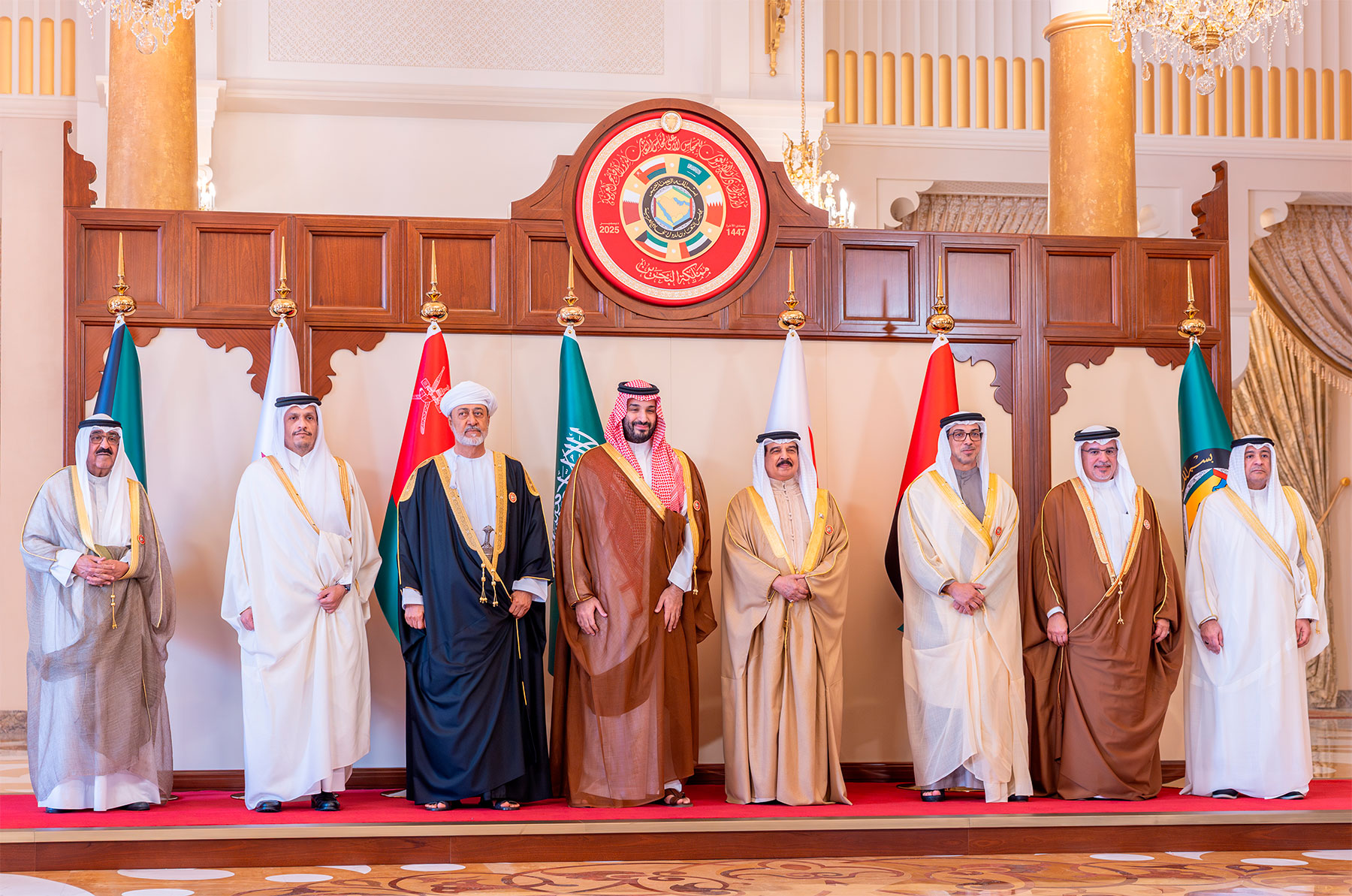
What Will Be the Consequences for the Middle East State Relations?
42. Ongoing Transformation
The present regional situation is creating conditions for the possible emergence of a new security architecture grounded in regional actors themselves. In the short term, the confrontation between Israel and the United States, on the one hand, and Iran, on the other, is likely to continue, potentially accompanied by further escalation and spillover into additional theatres such as Lebanon, Syria, and Iraq.
In the longer term, the trajectory of regional developments will be shaped both by objective factors, such as Iran’s position and the regional balance of power, and by subjective ones, including the willingness of regional elites to act pragmatically. The dilemmas currently confronting the leaders of the states involved permit diametrically opposed strategic choices; consequently, decisions are often driven not solely by rational calculation, but also by emotions and values.
Nevertheless, two principal scenarios may be identified in the medium and long term.
43. One Scenario
In theory, the basis of a future regional security system could be an Egyptian-Saudi-Iranian-Pakistani alignment, with the possible inclusion of Turkey. At present, the most problematic element of such an arrangement is the Iranian-Saudi relationship. Yet if Iran remains stable, a return to the normalization process previously facilitated by China cannot be excluded. Such a system could subsequently be stabilized either through multilateral agreements inspired by Russia’s “Concept of Collective Security in the Persian Gulf” or through a network of bilateral arrangements.
44. Another Scenario
An alternative scenario would involve the continued weakening of the Islamic Republic and the further diffusion of instability across the region. The emergence of a pro-U.S. or pro-Israeli regime in Iran, or the creation of an Israel-UAE-Iran axis aligned with U.S. and Israeli interests, currently appears improbable. A more plausible outcome would be a prolonged internal political crisis that compels Tehran to turn inward for several years.
This would not necessarily amount to the complete collapse of the political system of the kind seen in Iraq after the U.S. invasion. Nevertheless, one indirect consequence might be the spread of radicalism among both Shiite and Sunni groups, leading to the reactivation of old conflicts and the emergence of new ones.
45. Other Regional Problems
The war against Iran has effectively displaced other regional issues from the international agenda, including the Palestinian question and, with it, the future of the Gaza Strip and the Peace Council. The latter, already vulnerable to criticism, is unlikely to function effectively in the foreseeable future, thereby granting Israel greater freedom of action.
This, in turn, increases the risks of population transfer from the West Bank, which would pose a direct threat to Jordan, as well as of further repression in Gaza. In Syria, absent a revision of strategic priorities, no visible prospects for improvement exist. In Yemen, the situation likewise remains fundamentally unchanged.
What Will Be the Consequences for Russia and Other External Actors?
46. The Imperative of Friendship
For decades, Russia has taken pride in its ability to maintain positive relations with all major actors in the Middle East. Even after 2022, none of the region’s states joined anti-Russian sanctions or adopted an openly hostile stance. The President of the UAE, Mohammed bin Zayed, referred to Moscow as a “second home”; a comprehensive strategic partnership agreement was concluded with Iran; and even the change of power in Syria did not fundamentally undermine Russian-Syrian relations.
In this context, the war against Iran has posed a serious challenge for Moscow. Speculation that Russia might benefit from the conflict—for example, through rising energy prices—should not be taken too seriously, as the associated risks are considerably greater. The principal danger lies in the possible abandonment of the traditional strategy of “friendship with all,” which could entail the loss of key partners. Not only Iran, but also Israel and the GCC states, remain of central importance to Russia, and the value of these relationships can scarcely be overstated.
47. A Window of Opportunity
If Iran preserves its internal stability, the weakening of U.S. regional positions may create a window of opportunity for Russia—both in promoting its own vision of regional security, notably the “Concept of Collective Security in the Persian Gulf,” and in expanding bilateral cooperation, especially in military-technical and scientific-technological spheres, with both Iran and the Gulf Arab monarchies.
Naturally, the parameters of such cooperation would differ. Iran would primarily require assistance in economic and technological reconstruction, whereas the GCC states would be more interested in diversifying their external partnerships. In both cases, there is potential for coordinated Russian-Chinese efforts, including within multilateral institutional frameworks.
48. Logistics
Transport corridors, already regarded as a key area of cooperation with the region, are becoming even more important. This concerns not only the North-South Transport Corridor, but also its potential extensions into the Mashriq and the Gulf, which could become a principal connective mechanism for the regional subsystem.
At the same time, it is clear that Russia cannot play a major role in ensuring the security of the more distant links in this logistical chain, such as the Strait of Hormuz and maritime routes in the Indian Ocean. This makes coordination with China and other interested actors all the more necessary.
49. Shared Security Spaces
More broadly, the war against Iran has brought to the forefront the question of constructing new security systems across Eurasia, just as a resolution of the Ukrainian conflict is expected to open the way to a new security architecture in Europe.
Under an optimistic scenario—to the extent that such optimism is justified—this would entail the formation of four interconnected regional security subsystems: European (Russia-Europe), Middle Eastern, Russo-Turkish, and Eurasian.
50. The Need for Greater Activism
The evolving situation is pushing Moscow toward a return to the dynamism that once characterized its Middle Eastern policy. This should apply not only to the Iranian issue—including support for Iran, its reconstruction, the strengthening of ties with the GCC, participation in efforts to manage the Iran-Israel track, and the promotion of logistical projects—but also to the Palestinian and Lebanese questions.
(votes: 3, rating: 5) |
(3 votes) |
The situation surrounding Iran fosters a kind of fatalism among all parties—a mind-set that risks defining the geopolitical climate for years to come
Attack on Iran: A Balance of ResultsMajor players are less sensitive to crises; asymmetry of potential is hardly an obstacle to resistance; a lack of allies is a problem; but being a junior partner can lead to being held hostage to a major player’s game
Iran Prevails: Initial AssessmentsIt is difficult to expect the “golden age” promised by Trump to emerge from the upcoming negotiations
Persian Lessons: How Middle East War Will Change Gulf Monarchies“Cold Peace” with Iran and Economic Diversification
The US Allies Will Have to Reassess Their Relationships, As Their Alliances May Undermine Their Own SecurityInterview with Ivan Timofeev for Brasil de Fato and Forum Geopolitica
The Gulf States: Geographic Unity and Political FragmentationIt may be more prudent for Russia to engage the Gulf states as individual actors rather than as a cohesive bloc