
Basics of regulation of the activities of the Russian Orthodox Church in Africa
In
Log in if you are already registered
In recent years, there has been a marked shift in the focus of Russian foreign policy towards the African continent. In 2021 and 2023, two Russia-Africa summits were convened. The declaration of the 2023 summit speaks of foundational principles of these relations, i.e. “historical and time-tested friendly ties between the Russian Federation and African States, mutual respect and trust, traditions of joint struggle for the eradication of colonialism and the establishment of independence of African States”¹.
For several decades, Soviet studies of world politics paid insufficient attention to the role of religion in the international arena, due to ideological constraints. Thus, the documents of the 1960s and 1970s on the work of the USSR’s foreign policy agencies in African countries contain virtually no evidence of any research or practical interest in religious life of the continent [Mazov, Davidson, 2021]. At the same time, some reports and observations “on the ground” highlighted a high degree of religiosity among the local population. In addition, a series of academic works were published [Shpazhnikov 1981].
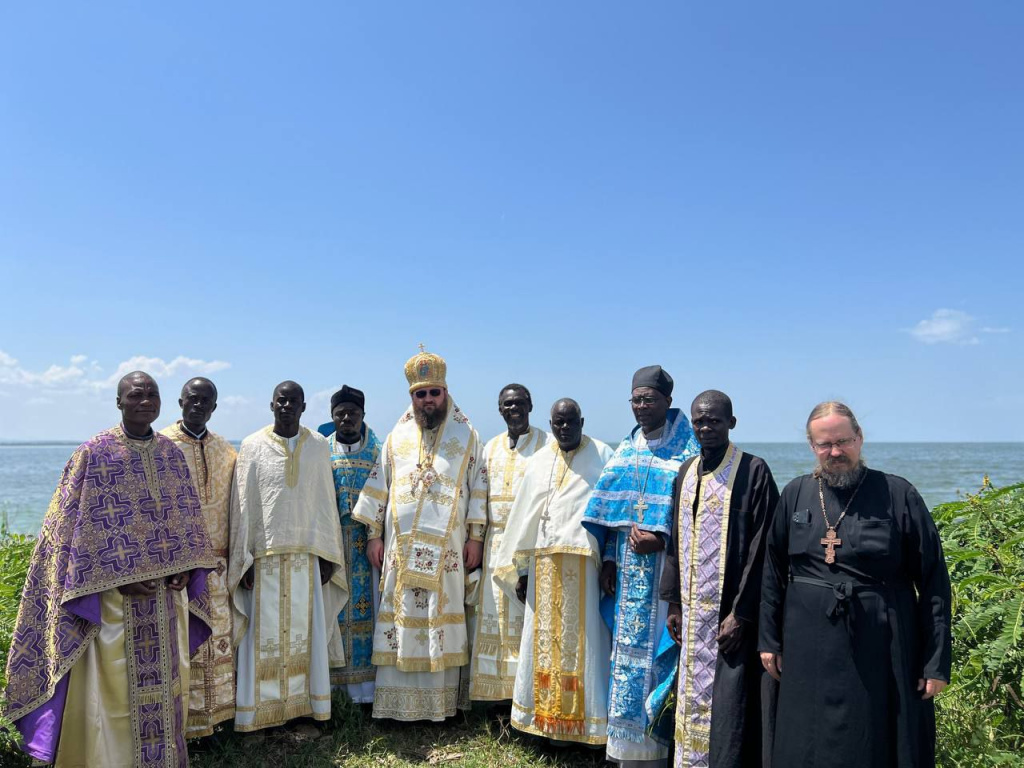
Source: mospat.ru
Radical changes in the state structure on the territory of the former USSR in the late 1980s and 1990s led to a significant extent to the disappearance of the Marxist-Leninist worldview as an ideological component of foreign policy². The resulting vacuum, including in the theoretical justification of Russia's foreign policy activities, was gradually filled by the traditional Orthodox doctrine, which is experiencing a revival in the Russian Federation after the disappearance of the USSR.
The socio-cultural life of African countries is receiving an increasing attention in modern foreign policy practice and scientific development [Trojansky et al. 2020]. In recent years, a number of researchers and practitioners of international relations in Russia and abroad have turned to the role of religious organizations in international and domestic political life in Africa [Bondarenko 2018; Ivanova 2016; Zakharov 2020].
The Russian Orthodox Church has also demonstrated a commitment to expanding its international mission, including its presence in African countries. The decision of the Holy Synod of the Russian Orthodox Church³ to establish the Patriarchal Exarchate of Africa, made at the end of December 2021, and its activities in African countries in 2022–2025 are of significant importance.
The present study does not aim to provide a comprehensive overview of all the activities of the Russian Orthodox Church in Africa; rather, it will focus on the state and legal foundations of church work in African countries, leaving aside the canonical aspects of the pastoral service of the Russian Orthodox Church.
In order to study the outlined topic, the following points will be briefly discussed: the historical origins of the presence of the Russian Orthodox Church in Africa, the general historical and political-legal context of this development, the peculiarities of the legislation of African countries in matters of regulating the work of religious associations⁴ and organizational-legal forms of church activity in Africa. The conclusion will briefly summarize the observations on the development of the activities and significance of the work of the Russian Orthodox Church in Africa.
The following sources were used in the study of the legal regulation of the Russian Orthodox Church's activity on the African continent: the legislative acts of the Russian Federation and the African states, documentary materials contained in official publications of state institutions and international organizations, fundamental research and factual works of Russian and international scholars in African studies, as well as the author's personal observations.
THE ORIGINS OF ORTHODOXY'S INTERNATIONAL ACTIVITIES
The presence of Orthodoxy on the African continent is inextricably linked to the spread of Christianity throughout this region. Therefore, let us mention only the main milestones of the evangelization of the peoples of Africa and the general territorial principles of the organization of the Orthodox churches.
The emergence of Orthodox communities in Africa is connected with the international dominance of the Eastern Roman Empire during its heyday in the second half of the first millennium, when the empire of Justinian and the zone of pastoral responsibility of Constantinople encompassed the territories of the Mediterranean, including the territories of the modern Apennine Peninsula, the Balkans, Greece, parts of the Iberian Peninsula, the South-Eastern Black Sea coast, the Southern Crimea, and the Northern extremities of the African coast [Ostrogorsky 1952]. Thus, the presence of canonical Orthodoxy on the territory of Africa dates back more than 1,500 years [Abramov, Lytus 2018].
The Eastern Roman (Byzantine or Greco-Roman) Orthodox Church had a decisive influence on the formation of numerous Christian churches on the African continent. A notable example is the Coptic Orthodox Church on the territory of Egypt and adjacent countries (Ethiopia, Nubia and the Nubian kingdoms, Axum) in the first millennium–the first half of the second millennium [Abramov, Lytus 2018].
The settlement of Orthodox communities, predominantly those belonging to one of the historic Orthodox patriarchates (e.g. the Patriarchate of Alexandria), in Eastern Africa began during the 18th–20th centuries, coinciding with the arrival of Greek merchants, travelers, and missionaries [Nigusie Kassae, Buzykina 2021].
The difficulties of spread were due to the fact that the European metropolises with colonies in Africa (France, Spain, Portugal, Italy, Germany, Great Britain, Belgium, and the Netherlands) sought to maintain a monopoly on their religion and restricted the presence of other faiths within their territories [Davidson 2014]. Orthodoxy was thus not initially the religion of the major metropolises that colonized Africa. It is thus noteworthy that, unlike European churches, Orthodox parishes began to appear in colonized countries without the status of metropolitan churches⁵.
Historically, Orthodoxy as a church and doctrine came to Kievan Rus' in the 10th century, as well as to Africa, from the Byzantine Empire⁶ and began to occupy an increasingly significant place in the system of Orthodox territories. The Russian Orthodox Church received autocephaly in 1448, patriarchy (leadership at the level of Patriarch) in 1589. It was headed by the Holy Synod from 1721 to 1917 [Vedernikov 1958], and from 1917 to the present day by the Patriarch, with the Holy Synod retaining its essential role.
The parishes of the Russian Orthodox Church, which appeared beyond the borders of the Russian Empire, initially had the function of feeding the Orthodox subjects of Russia, but also performed missionary functions. Various organizational units of the Church were established in Asia, Europe, and North America. Communities of the Russian Orthodox Church appeared in Africa at the end of the 19th century. Already in 1889 and 1896 attempts were made to establish Russian parishes in Abyssinia [Grigorieva 2023].
A permanent parish of the Russian Orthodox Church in Egypt was established in 1914. After the October Revolution and the Civil War of 1918–1921, in connection with the influx of Russian refugees, there was an increase in the establishment of Orthodox parishes on the African continent: in 1920 a church was consecrated in Tunisia, in 1922 a parish was established in Algeria, and in 1927 Russian Orthodox parishes were opened in Morocco [Nigusie Kassae, Morozova 2021]⁷.
From the point of view of church-legal organization, Orthodoxy is a transnational spiritual community of administratively autonomous local churches, currently consisting of nine Orthodox churches, including four local churches (Constantinople, Alexandria, Antioch, Jerusalem). These associations have the status of patriarchates in the historically established territories under their jurisdiction. In addition to these churches, the existence of five other patriarchates – Bulgarian, Georgian, Serbian, Moscow and Romanian (listed in chronological order) – is universally recognized. The canonical jurisdictions of these five autocephalous churches usually coincide with the configuration of the national state units, but there is no established tradition in ecclesiology regarding the recognition of new autocephalous churches established according to this principle⁸.
LEGAL BASIS FOR THE INTERNATIONAL ACTIVITIES OF THE AFRICAN PATRIARCHAL EXARCHATE
At present, the Russian Orthodox Church, of which the Patriarchal Exarchate of Africa is a part, functions as a legal entity on the basis of the Civil Statute of the Russian Orthodox Church, registered with the Ministry of Justice of the Russian Federation on November 30, 1998⁹, in accordance with Federal Law No. 125-FZ “On Freedom of Conscience and Religious Associations” dated September 26, 1997. The Statute of the Russian Orthodox Church defines the Russian Orthodox Church as a self-governing (autocephalous) centralized Orthodox religious organization uniting religious organizations of the Russian Orthodox Church for the joint exercise of the right to freedom of confession and dissemination of the Orthodox Christian faith, as well as for the care of religious and moral enlightenment of society, and is recognized by other autocephalous Orthodox Churches¹⁰.
According to the Statute of the Russian Orthodox Church, the highest bodies of Church authority and governance are the Local Council, the Council of Bishops and the Holy Synod headed by the Patriarch, which have legislative, executive and judicial power, each within its own competence¹¹.
After the radical changes in the state and legal structure of Russia in the 1980–1990s, new elements appeared in the international activities of the Russian Orthodox Church [Mitrokhin 2004]. Thus, the first step regarding the presence of the Russian Orthodox Church on the African continent was the decision of the Holy Synod of the Russian Orthodox Church on December 29, 1998 to establish in South Africa (Johannesburg) its parish in honor of St. Sergius of Radonezh. The Patriarchal Exarchate of Africa was formally established in 2021, with the stated purpose of undertaking church and missionary activities across the African continent.
The establishment of the Patriarchal Exarchate of Africa by the Holy Synod of the Russian Orthodox Church on December 29, 2021¹², was preceded by certain events in inter-confessional relations within Orthodoxy and a general tense international situation. The historical context of this decision was related to the wishes of numerous Orthodox and non-Orthodox parishes in African countries to transfer to the bosom of the Russian Orthodox Church in the face of the non-canonical and politically motivated decisions of the Patriarchates of Constantinople and Alexandria on the Ukrainian crisis. The hierarchs of the Russian Orthodox Church met the wishes and expectations of the local population.
Orthodox missionary Priest George (Maximov) noted in this regard: “After the Alexandrian Church officially entered into communion with the Ukrainian schismatics, many Russians living in Africa, both priests and parishioners, told that they did not want to be part of this unity with the schism. They had every right to have that opportunity provided for them. Therefore, back in December 2019, it was decided that these parishes would already be directly subordinate to the Russian Orthodox Church. But then many African priests and laity of the Church of Alexandria appealed to us with the same petitions. Strictly speaking, the emergence of the Exarchate for Africa is something that was proposed by the Africans themselves. This idea was born in Africa, in African minds”¹³.
At the meeting of the Synod of the Russian Orthodox Church held on March 24, 2022, it was decided to approve the Internal Regulations of the Patriarchal Exarchate of Africa¹⁴, which defines the Patriarchal Exarchate as “a canonical subdivision of the Russian Orthodox Church, established for the purpose of coordinating the liturgical, religious and educational, publishing, social, educational and missionary activities of the dioceses and other canonical subdivisions of the Russian Orthodox Church within the territory of the Exarchate and forming part of it”¹⁵.
The Internal Regulations of the Patriarchal Exarchate of Africa also state the following: “Decisions on the establishment or dissolution of the Exarchate, its name, territorial boundaries and the composition of its constituent dioceses are taken by the Holy Synod of the Russian Orthodox Church with the subsequent approval by the Council of Bishops of the Russian Orthodox Church”¹⁶.
At the same time, the Charter of the religious organization “Patriarchal Exarchate of Africa of the Russian Orthodox Church (Moscow Patriarchate)” was approved¹⁷. Thus, the Charter defines: “The purposes of the establishment and activities of the Exarchate are the joint confession and propagation of the faith in order to achieve the objectives of the joint realization by citizens of the right to freedom of confession and propagation of the Orthodox faith, as well as the coordination of the religious and educational, publishing, social, educational and missionary activities of the dioceses and other canonical subdivisions of the Russian Orthodox Church located on the territory of the Exarchate and included in its composition”¹⁸. These provisions are further specified¹⁹.
The Charter of the Patriarchal Exarchate of Africa states that the Exarchate has the right to carry out, among other things, entrepreneurial activities, corresponding to the objectives of the Exarchate's activities, as stipulated in the Charter, with the overarching aim of achieving these objectives. Such activities are recognized as profit-generating production and sale of goods and services that meet the goals of the Exarchate, as well as the acquisition and sale of securities, property and non-property rights, participation in economic companies and partnerships, in accordance with the current legislation²⁰.
The territorial scope of pastoral responsibility of the Exarchate extends to the countries of the African continent. The Exarchate consists of the North African²¹ and South African²² dioceses. The North African Diocese also incorporates the previously existing stavropigial parishes²³ of the Moscow Patriarchate in the Arab Republic of Egypt, the Republic of Tunisia and the Kingdom of Morocco. The title of the ruling bishop of the first diocese is that “of Cairo and North Africa”. The title of the ruling bishop of the second diocese is that of “Johannesburg and South Africa”.
Since November 2023, the duties of the Patriarchal Exarch have been performed by Bishop Constantine of Zaraisk, whom His Holiness Patriarch Kirill approved by decree on March 14, 2024 as Patriarchal Exarch of Africa, and on March 24, 2024, His Holiness Patriarch Kirill elevated Bishop Constantine of Zaraisk to the rank of Metropolitan at the Divine Liturgy at the Cathedral of Christ the Savior in Moscow.
Justifying the activities of the Russian Orthodox Church in Africa, His Holiness Patriarch Kirill of Moscow and All Russia, speaking at the plenary session of the Second Russia-Africa Summit in St. Petersburg on July 27, 2023, noted that despite the geographical distance, the peoples of Russia and the countries of Africa have long-standing good relations. “For many people it is valuable that we are a Church that carefully preserves the apostolic succession in doctrine, sacraments and spiritual experience, a Church that does not distort the divinely preached norms of morality to satisfy fashionable ideological trends,” His Holiness Patriarch Kirill emphasized²⁴.
LEGAL BASIS FOR THE ACTIVITIES OF THE RUSSIAN ORTHODOX CHURCH IN AFRICA
As of the beginning of 2025, the Orthodox communities of the Patriarchal Exarchate of Africa operate in 32 countries on the African continent. The flock of the Russian Orthodox Church is united in 350 parishes. More than 260 priests serve in the clergy of the Exarchate, with more than 100 of them in Kenya. The vast majority of priests are citizens of African countries²⁵.
As of March 1, 2025, state registration of communities and associations of the Russian Orthodox Church is available in South Africa, Nigeria, Tanzania, Zambia, Uganda, Mali, the Republic of Congo, Mauritius, the Central African Republic and Malawi. Registration documents have been prepared and submitted to the state authorities in Madagascar and the Democratic Republic of Congo. In a number of African countries, including Senegal, Benin, Côte d'Ivoire, Burkina Faso, Gabon, Equatorial Guinea, Mauritius, Mozambique, Angola, Burundi, Rwanda, Cameroon, Zimbabwe, Togo and others, work is underway to prepare documents for state registration.
A separate issue is the presence and work of the Patriarchal Exarch of Africa and the bishops of the two dioceses (North Africa and South Africa). Regarding creation of a legal basis for the activities of the South African bishop, a representative office of the Exarchate has been registered in Johannesburg. Preparatory work is underway to create conditions for the ministry of the North African Hierarch in the Arab Republic of Egypt²⁶. The experience of the work of the Exarchate on the legal registration of its pastoral service in Africa demonstrates that, although there are common legal bases for the organization and activity of the religious communities of the Patriarchal Exarchate of Africa, the status of such associations may also have serious differences related to the existence of large legal families of the present day and national legislations [David, Jauffret-Spinosi 2002; David, Grasmann 1988].
The legislation of African states may differ in terms of how the activities of religious associations are organized, whether national laws guarantee equal treatment of followers of different religions, whether they establish a State religion and what legal consequences this has for other religions, to what extent religious organizations operating on the territory of the country are subject to control and inspection, and to what extent the basis of the country's legislation corresponds to the actual practice of a particular religion in the country.
In a number of predominantly Muslim countries in North and West Africa, Islam exerts a significant influence on the functioning of state authorities. There are some difficulties in registering and operating non-Muslim denominations, given that proselytizing is traditionally prohibited in these countries.
In Algeria, for example, Islam is the country's state religion, as outlined in the Article 2 of the Constitution²⁷. However, the article 29 provides for freedom of conscience, which is in conflict with the norm on the State religion²⁸. Moreover, a law has been adopted to penalize those who call on a Muslim to renounce Islam and adopt another religion²⁹.
Islam is the state religion in Morocco, according to Article 3 of the Moroccan Constitution, which ambiguously states that “Islam is the religion of the State, which guarantees to all the free exercise of beliefs [cultes]”³⁰. Article 41 emphasizes the role of the head of state in matters of religion: “The King, Commander of the Faithful [Amir Al Mouminine], sees to the respect for Islam. He is the Guarantor of the free exercise of beliefs [cultes]”³¹.
In the Arab Republic of Egypt, Islam is also the state religion, according to the Constitution (Article 2)³². Freedom of religion is at the same time proclaimed in Article 53, which guarantees the freedom to have places of worship for Muslims, Christians and Jews³³.
A compromise option regarding the separation of religion and state was also found in the 2022 Tunisian constitution. While the 2014 constitution called Tunisia a “free, independent and sovereign state whose religion is Islam...”, Article 5 of the 2022 Constitution does not call the state Islamic, but reaffirms that Tunisia is “part of the Islamic nation” and the Ummah (which is seen as the worldwide community of Muslims)³⁴. The distinction emphasized by the country's president suggests that Tunisia will retain a Muslim identity but does not intend to formally adopt Islam and Islamic law at the state level³⁵.
The dynamics of the relationship between Islamic law and the official state legal system in Muslim countries depend largely on a case basis. While in the past the incorporation of Islamic law into the national legal system of many Arab and non-Arab states in Africa was generally accepted and consistent, there are now contradictory trends.
With the increasing trends towards the Islamization of legal systems in North Africa, a number of countries (Kenya, Tanzania, Ghana and Uganda) have undertaken legal reforms in recent decades whereby marriage, divorce and inheritance are no longer governed by Islamic practices. Islam in Arab and non-Arab African countries has a wide range of interpretations [Syukiyainen 2021; Arkhipov, Vasil'ev, Gusenova 2018], which is especially true for the countries south of the Sahel, where it is frequently adapted to the local cultural context, including specific forms of “Afro-Islam”.
At present, Orthodox parishes in the countries of North Africa (Egypt, Tunisia, Algeria, Morocco), which appeared there during the period of various forms of domination of these territories by European states, do not have full-fledged state registration and, strictly speaking, the legal basis for religious activity. However, there is no active opposition from the authorities to the activities of such parishes of the Russian Orthodox Church.
The second group of African states is made up of countries with predominantly Christian populations, which are the heirs of European religious and legal influence. The principle of the separation of Church and State has become one of the core principles of the legal regulation of the status of Churches and denominations in these African countries. Let us look at the fundamental provisions on the Church of the most important states. An example of the exclusion and inconsistency in the application of the principle of separation of religion and state is the legislation of Zambia³⁶, where the country is declared a “Christian nation”³⁷ in the 1996 Constitution. At the same time, the Constitution proclaims freedom of conscience for all people, including the freedom to change their beliefs, practices, preaching and professions, and prohibits discrimination on the basis of religion³⁸.
The Constitution of Kenya (adopted by referendum on August 4, 2010³⁹) declares that there shall be no state religion⁴⁰. Article 32 guarantees “freedom of conscience, religion, thought, belief and opinion”, which is interpreted as “every person has the right, either individually or in community with others, in public or in private, to manifest any religion or belief, Human dignity”⁴¹.
At the time of the adoption of the Constitution, there was criticism of the provisions for recognizing the legitimacy of the Islamic Kadhis, which was interpreted by some jurists as a violation of the principle of equality with regard to personal status, marriage, divorce, and inheritance⁴². Moreover, these exceptions were seen as violations of the principles of the separation of religion and state, non-discrimination and constitutionality⁴³.
The South African Constitution, in force since February 4, 1997, proclaims the principles of freedom of religion and belief and protection against discrimination⁴⁴. In South Africa no legislation exists that obliges religious associations to register with the state. However, registration and the existence of a legal entity confer certain benefits on religious communities, in particular tax exemption.
The Stavropigial Parish⁴⁵ of the Russian Orthodox Church in the Republic of South Africa was registered in 1997 as a “non-profit organization” and was named “Parish of Sergius of Radonezh of the Russian Orthodox Church (Moscow Patriarchate)”. Additionally, in January 2025, a tax-exempt representation of the Patriarchal Exarchate was registered as a foreign organization. Work is underway to register a so-called “voluntary association” designed to unite all five Orthodox parishes currently existing in South Africa, which do not yet have full legal status.
The right to freedom of religion was proclaimed in Uganda in 1995. Article 7 of the Constitution confirms that there is no state religion in the country⁴⁶. A peculiarity of the legal regulation is that religious groups are registered as tax-exempt limited liability companies, with the certificate issued for a 5-year period and requiring renewal after this period.
However, there are contradictory trends among African states with predominantly Christian populations. The Republic of Angola, a secular state, declares the separation of church and state in Article 41 of its Constitution. At the same time, there are serious restrictions on the exercise of freedom of conscience (for example, registration requires a minimum of 100,000 parishioners and the presence of a congregation in 12 of the country's 18 provinces). The ambiguity of the situation is also confirmed by the fact that more than 2,000 religious organizations, including Christian and Islamic ones, have been de facto active in the country since 2004, despite the complete blocking of registration of religious associations [Melton, Baumann 2010: 134].
The legislation of countries such as Egypt and Burundi requires the signing of a framework agreement or convention between representatives of the parent church and the country's Ministry of Foreign Affairs before the permanent registration of a religious community.
The draft of the framework agreements between the Patriarchal Exarchate of Africa of the Russian Orthodox Church and African states, whose legislation provides for such agreements, does not meet the criteria for being classified as an international interstate treaty in the classical sense⁴⁷. Such an agreement bears a vague resemblance to the concordats (conventions) concluded by the Roman Catholic Church as a religious organization and the “Holy See” (Vatican) as a state with Catholic countries.
The most rational approach to be adopted here would be to define such treaties as “agreements of a special nature” (sui generis), to which the rules of public international law, in particular the 1969 Vienna Convention on the Law of Treaties⁴⁸, do not automatically apply. This somewhat simplifies the process of concluding agreements⁴⁹.
The agreement and adoption of the text of the agreement may be made by direct or indirect negotiation and (or) through correspondence by electronic means. The authenticity (finality, authenticity and immutability) of the adopted texts may be established routinely, with preliminary approval of the text taking the form of initialing⁵⁰. Representatives of the subjects of negotiations act either on the basis of authority and within the scope of the rights specified in the power of attorney, or ex officio, i.e. by virtue of their position or functions. If the parties agree, the agreement may be signed in absentia at the level of authorized persons by sending signed texts or in person during visits [Tolstykh 2018]. With regard to the Russian Orthodox Church, the agreement may be signed by the Patriarchal Exarch of Africa or by the head of the Department for External Church Relations of the Russian Orthodox Church as an analogue at the ecclesiastical level of the Minister of Foreign Affairs.
In cases where there is no need to sign such an agreement, the registration procedure for religious associations and organizations is determined exclusively by the national legislation of the African states. Models of such legislation are often prepared on the basis of the prescription of the laws of former metropolises. In general terms, the legislation of a number of countries (Chad, Niger, Gabon, CAR and others) is based on the French law of July 1, 1901⁵¹, which is still in force in France and which is being adapted to local conditions in Africa [David, Jauffret-Spinosi 2002].
The legislation of African countries on the registration and regulation of religious associations generally lists the requirements for a candidate congregation and the package of documents that must be submitted to the relevant state authorities. The following standard conditions must be fulfilled: the submission of documents confirming the availability of premises or places of worship, compliance with the rules for the use of such places, the indication of the program of services, availability of documentation on the inspection or examination of the premises of the organization by the regulatory authorities of the state. The premises for the provision of services can normally only be used after obtaining permission from the relevant regulatory authority (fire, building, environmental, sanitary and hygienic, etc.) of the host country⁵². Laws may prohibit the use of school premises for religious use. It may be prohibited to hold services during working hours without special authorization.
African registration regulations frequently impose obligations on religious organizations to participate in social project initiatives, such as the establishment of schools, health clinics, and analogous organizations. There may be requirements for the number of founding members of a religious denomination. For the registration of a foreign religious denomination, the numerical requirements are usually higher than for a national denomination.
It is imperative to consider the age and educational requirements for the leaders of a religious organization (e.g., the age of the legal representative and his/her deputy must be 30 years and over, leaders must have a minimum of a bachelor's degree in theology, etc.)⁵³. There may be citizenship requirements for the leaders of the congregation or a condition of permanent residence in the country.
A prerequisite for registration is the submission of the statutes and bylaws of the congregations. In most cases, these documents refer to the canon law governing the relations of the Orthodox hierarchy, but they must also comply with the norms of national legislation. Under these conditions, when preparing the statutes of the Russian Orthodox Church units for registration, particular attention was paid to the wording on the relations of the Orthodox communities with the institutions of the Exarchate and the Patriarchate. Their charters recognize the leading role of the Holy Synod of the Russian Orthodox Church and the Exarchate, as well as the North African and South African dioceses headed by bishops.
The statutes of the subdivisions of the Patriarchal Exarchate in African states state that they are centralized associations and specify that they are part of the structures of the Russian Orthodox Church, which are under its canonical jurisdiction and represent its canonical subdivisions.
In exceptional cases, for certain reasons, the state authorities of African countries may suspend the registration of any new religious communities, although there are no obstacles to their activities. This is the case in Angola, Tanzania and Togo⁵⁴. In Kenya and Rwanda, in the last 2–3 years, campaigns to tighten control over existing religious associations have taken place, and hundreds of communities have had their registration certificates revoked. This is due to the fight against infiltrating extremist and radical sects, and sometimes abuses, when under the guise of religious organizations economic activities are carried out in order to avoid paying taxes and duties.
In a number of countries there is a two-tiered system for registering church status. At the initial stage, a temporary registration is conducted at the local level (province or municipality). After a certain period of time (ranging from one to five years), the legal entity is recognized by the central authorities (Republic of Congo, Democratic Republic of Congo and Rwanda).
In a number of complex cases, prior to the official state registration of its religious communities, the Patriarchal Exarchate has chosen to register humanitarian organizations (associations, tax-exempt companies, "socially useful companies") as a transitional option. Obtaining this legal status does not require long-term registration procedures and makes it possible to prepare the ground for the subsequent registration of a religious organization.
One of the advantages of such companies is that they can be run by foreign nationals. This is not always the case for religious organizations, where national legislation often requires that leadership functions be held by citizens of the host country.
Summarizing the observations made, it should be noted that in countries that inherited the Anglo-Saxon legal system after decolonization (mainly English-speaking countries in Africa) [David, Jauffret-Spinosi 2002; David, Grasmann 1988], as a rule, the separation of church organizations from the state is typically proclaimed, and there is a relatively liberal procedure for the registration and activities of religious organizations.
In Kenya and South Africa, for example, the registration of a religious organization is not mandatory. However, registration of a religious organization as a legal entity is required for the purpose of engaging in financial activities, opening bank accounts, receiving funds from abroad, and constructing and disposing of real estate. In a number of former British colonies that have inherited a decentralized legal system, registration of local religious communities is permitted at the level of local authorities (e.g., Nigeria, Zambia).
Most former French colonies, as well as other countries with a continental legal system, maintain a centralized, mandatory procedure for the registration of religious associations. In general terms, the legislation of these countries (Senegal, Benin, Côte d'Ivoire, Chad, Niger, CAR and others) is based on the French Law of July 1, 1901, which is adapted to the local conditions of African countries [David, Jauffret-Spinosi 2002], taking into account the influence of both Muslim and Christian populations.
The practice of the Patriarchal Exarchate of Africa in developing its activities on the continent is thus based on an approach that takes into account the circumstances and organizational and legal forms existing in each particular country. Creating conditions for the work of the religious organizations of the Russian Orthodox Church in many African countries is a long-term and time-consuming process, which is objectively connected, on the one hand, with the desire of the state authorities to counter the infiltration of undesirable religious organizations, including extremist or radical groups, and, on the other hand, with the low efficiency of the functioning of the state institutions in a number of African countries.
RIGHTS AND OBLIGATIONS OF THE AFRICAN PATRIARCHAL EXARCHATE IN THE LEGAL FRAMEWORK OF THE STATES OF THE CONTINENT
The legal status of officially registered religious associations in African states is largely consistent with the principles established in other parts of the world. Thus, in most cases, the law guarantees the inviolability of places of worship (e.g., churches, chapels, houses of worship, monasteries) and symbols of worship. It is understandable, however, that in many African countries, the legislation stipulates that if these places of worship pose a serious threat to the safety of persons or property, the civil authorities are obligated to undertake all necessary measures to ensure their protection and to inform the relevant local governing bodies of the particular churches or religious associations concerned.
In the area of financing, the legislation on religious organizations usually specify that they are permitted to possess both movable and immovable property, as well as to receive donations from their members, income derived from their own activities, aid receipts, tithes and the like. In addition, it is generally accepted that the state does not provide financial support to religious denominations, organizations or movements. In some cases, there exists an imperative to channel all monetary receipts from abroad through the country's central bank⁵⁵.
The legislation of the majority of countries stipulates the right of religious organizations to conduct meetings, prayers, services, and rites in accordance with the rules of confession and in compliance with public order. The laws of a number of countries with a predominantly Christian population stipulate that the content of confessions is confidential in the sphere of the administration of sacraments. This means that priests, including congregations of the Russian Orthodox Church, have the right to professional secrecy.
All ecclesiastical appointments, as well as appointments to ecclesiastical positions in associations of Christian confession, are made exclusively by the mother church, in accordance with canonical norms. Thus, the appointment, transfer, dismissal and acceptance of abdication of bishops, priests and other officials in African countries fall within the exclusive competence of the Russian Orthodox Church. This approach is adopted in all countries in which the Patriarchal Exarchate of Africa operates.
In accordance with the legislation of African states, religious denominations, organizations or movements have the right to sue and be sued. It is positive that in the case of any complaint or prosecution against a cleric, the judicial authorities are obliged to communicate the grounds for prosecution to the competent ecclesiastical authority at the place of residence of the person concerned. This means that in the case of prosecution of its clerics, the Russian Orthodox Church will be informed through its canonical unit on the spot.
In the area of property relations, the laws of most African states permit church legal entities to acquire, possess, dispose of and alienate both movable and immovable property, as well as property rights. As a result, the Russian Orthodox Church and its subdivisions are authorized to possess property⁵⁶.
In accordance with the prevailing legislation in African states, local church bodies are free to receive donations from the faithful and to decide on the collection of donations and all contributions intended for the fulfilment of their mission in accordance with canonical norms.
The same church persons may establish foundations for social and charitable purposes, whose activities are governed, as far as their civil consequences are concerned, by the legal regulations of the host country. In addition to the development of liturgical life, the Patriarchal Exarchate has been able to carry out numerous humanitarian, charitable and educational projects in such countries as the DRC, the Republic of Korea, Kenya, Malawi, Tanzania, the Central African Republic and several others⁵⁷. The Patriarchal Exarchate of Africa has taken under its patronage several schools and orphanages⁵⁸.
A significant application of the existing legislation in African states pertains to the provision of education and training to approximately 60 young Africans in Russia, facilitated by the Patriarchal Exarchate of Africa, commencing from March 2025⁵⁹. The translation and distribution of liturgical books into African languages, as well as the transfer of church utensils and vestments, are ongoing processes.
In accordance with the civil legislation of the majority of African countries, the Russian Orthodox Church and its canonical subdivisions have the right to build churches and church buildings. This latter norm is also applicable to all existing churches and buildings. The Patriarchal Exarchate of Africa is actively involved in the erection of capital buildings for churches in a number of African states⁶⁰.
The taxation of places, buildings and property used for the purpose of Church services and congregations is done in accordance with the prevailing tax laws. As a rule, Church institutions are exempt from taxation, with the exception of personal taxes of employees of congregations of the Patriarchal Exarchate of Africa in countries where pastoral work is carried out.
In the context of the spiritual, moral and educational value of canonical marriage, it is important that the laws of some African states with a predominantly Christian population, guarantee the Russian Orthodox Church, as well as other ecclesiastical Christian organizations, the right to perform marriages in accordance with the national legislation in this area⁶¹.
In terms of public relations, in most cases the Russian Orthodox Church is recognized as having the right to establish, govern and direct educational institutions at all levels, including university institutions such as seminaries and any other educational institutions, within the framework of the legislation of the host country in accordance with the norms of canon law and doctrine.
It is a legal requirement to submit periodic reports. It should contain the address of the headquarters and the relevant contact information. It is imperative that reports encompass a comprehensive array of information, including details of events, information on changes in governing bodies, the number of parishes and their respective addresses, payment information, information on funds received and their use, and information on disposable property.
CONCLUSION
A thorough examination of the basic legal provisions governing the Patriarchal Exarchate of Africa within the Russian Orthodox Church reveals several noteworthy observations and conclusions. It is obvious that the constitutions and laws of African states offer a variety of normative principles, different organizational and legal forms, and practical approaches to the activities of religious associations.
As this review suggests, the legislation of most African states is generally in line with the norms set out in the laws of countries with Romano-Germanic and Anglo-Saxon legal systems. However, there are discrepancies between the official norms of religious freedom legislation and the actual law enforcement and practice of the public authorities in African states⁶².
On the other hand, North African states emphasize in their constitutions that Islam is the state religion (with the exception of Tunisia, where this principle is formulated in a “softer” way). In countries where the legal system is based on Islam (Egypt, Morocco, Algeria), there are legal and de facto restrictions practiced either by the state authorities or by the general population. The prevailing norms in these countries proclaiming freedom of conscience and prohibiting discrimination on religious grounds do not always provide a real protection for the non-Muslim population.
However, in a number of countries, especially in West and East Africa, even those that recognize Islam as the state religion, there is a high degree of religious tolerance, ensured by both governmental authorities and the attitude of civil society⁶³. It is acknowledged that there are also deviations from proclaimed principles in Christian-dominated states. One illustration of this is the case of Angola, which imposes severe restrictions on small religious communities.
Although political aspects are not the point of this publication, it is noteworthy that the situation is also complicated by the policies of the Patriarchates of Alexandria and Constantinople, as reflected in the Western media that is close to them⁶⁴. However, it should not be excluded that the recent tectonic geopolitical shifts may lead to a change in the situation of this group of factors influencing the implementation of interconfessional cooperation.
In conclusion, it can be stated that in the coming years the implementation of the pastoral mission of the Russian Orthodox Church in African states, the study of the legal framework of the African states, the understanding of the values and traditions of these countries, as well as the peculiarities of the actions and motives of their state bodies, will be an important task in the work of the Patriarchal Exarchate of Africa.
The conservatism inherent in the civilizational and moral foundations of the African population fits into the historical paradigm of the Russian Orthodox Church. The priest of the Patriarchal Exarchate of Africa of the Russian Orthodox Church, Father George (Maximov), emphasized in one of his papers: "In the Russian Orthodox Church we do not accept distortions of either moral or dogmatic teachings, but firmly adhere to what was originally there. And this also finds sympathy among many Africans, indeed it is a supporting force for them"⁶⁵.
With regard to generalizable observations about the objective development of the religious landscape in Africa, studies that predict a shift of the center of Christianity from European industrialized countries to Africa and Asia should be given a serious consideration [Gorokhov 2012; Zakharov 2020].
Yale University historian Lamine Sanneh has stated that “African Christianity is not just an exotic, curious phenomenon in an obscure part of the world, but African Christianity may be a factor in future events”⁶⁶. The view that questions of religion, and more broadly, of spiritual and mystical understanding of new phenomena, will remain highly significant in the construction of African identity for a long time to come, is becoming generally accepted. This perspective, as well as the beliefs and findings of a number of researchers [Walls 2016], who have observed the growing role of Christian morality on the long-term global trends of African civilization, appears to be both fair and valid.
---
**Footnotes**
¹ Declaration of the Second Russia–Africa Summit. Official website. President of Russia. 28.07.2023. http://en.kremlin.ru/supplement/5972 (accessed: 28.02.2025)
² The conceptual interpretation of atheistic Marxism-Leninism that existed at the time was close to the Christian heresy of chiliasm, which is a theological theory within the framework of Christian eschatology about the “period of the triumph of God’s truth on earth” [Mitrokhin 1994: 277, 278].
³ Minutes of the Holy Synod of December 29, 2021. Russian Orthodox Church. 29.12.2021. (In Russ.). https://www.patriarchia.ru/db/text/5877047.html (accessed: 28.02.2025)
⁴ Ibid.
⁵ Thus, in 1929 in the British colony of Uganda two priests left the Anglican Church and, after unsuccessful attempts to form an independent church, converted to Orthodoxy. Patriarch Christopher of Alexandria (1939–1967) established three parishes in other countries – in Kenya, Central and West Africa. The next Patriarch of Alexandria Nicholas VI (1968–1986) expanded the presence of Orthodox parishes in South Africa (Cape Town) and Zimbabwe.
⁶ The term Byzantine Empire emerged in the Middle Ages, initially employed by Western European scholars and subsequently by Russian scholars. Before this period, the inhabitants of "Byzantium" considered themselves to be subjects of the Roman Empire and their church to be the Roman Church.
⁷ North African parishes of the Russian Orthodox Church Outside of Russia. Drevo. Open Orthodox Encyclopedia. 02.07.2011. (In Russ.). https://drevo-info.ru/articles/17963.html (accessed: 28.02.2025); Maksimov G.V. Russian Orthodoxy in Africa: about what the Exarchate of the Church on the Black Continent is doing. Patriarchal Exarchate of Africa. Official website. 02.02.2025. (In Russ.). https://exarchate-africa.ru/pressa-o-nas/russkoe-pravoslavie-v-afrike-o-tom-chto-delaet-ekzarhat-cze... (accessed: 28.02.2025)
⁸ Tsypin V. Establishment of autocephaly: canonical aspect. Russian Orthodox Church. Official website. 24.10.2023. (In Russ.). https://pravoslavie.ru/156891.html (accessed: 28.02.2025)
⁹ Charter of the religious organization "Russian Orthodox Church" (civil), 1998. ABC of Faith. (In Russ.). https://azbyka.ru/otechnik/dokumenty/ustav-religioznoj-organizatsii-russkaja-pravoslavnaja-tserkov-g... (accessed: 28.02.2025)
¹⁰ Ibid.
¹¹ Changes in internal structures are radical, given the centuries-old canonical foundations in the organization of the Russian Orthodox Church. See: [Vedernikov 1958].
¹² Minutes of the Holy Synod of December 29, 2021. Russian Orthodox Church. 29.12.2021. (In Russ.). https://www.patriarchia.ru/db/text/5877047.html (accessed: 28.02.2025)
¹³ Maksimov G.V. Russian Orthodoxy in Africa: about what the Exarchate of the Church is doing on the Black Continent. Patriarchal Exarchate of Africa. Official website. 02.02.2025. (In Russ.). https://exarchate-africa.ru/pressa-o-nas/russkoe-pravoslavie-v-afrike-o-tom-chto-delaet-ekzarhat-cze... (accessed: 28.02.2025)
¹⁴ Internal regulations on the Patriarchal Exarchate of Africa. Russian Orthodox Church. Official website. 24.03.2022. (In Russ.). https://www.patriarchia.ru/db/text/5911551.html (accessed: 28.02.2025)
¹⁵ Ibid.
¹⁶ Ibid.
¹⁷ Journals of the Holy Synod of March 24, 2022. Russian Orthodox Church. Official website. 24.03.2022. (In Russ.). https://www.patriarchia.ru/db/text/5910999.html (accessed: 28.02.2025)
¹⁸ Ibid.
¹⁹ "For the above purposes, the Exarchate carries out the following types (subject) of activity: worship services, rituals, sacraments, rites, religious processions and ceremonies in churches, chapels and other religious buildings and structures, as well as on the territories related to them, in other places provided for these purposes, in places of religious veneration (pilgrimage), in organizations created by the Exarchate and (or) other religious organizations of the Russian Orthodox Church, in cemeteries and other places of farewell to the deceased, as well as in residential premises; dissemination of Orthodox religious beliefs directly or through the media, including its own; missionary activity; charitable activity, activity in the field of social services for orphans and children left without parental care, the elderly and the disabled; religious education and upbringing, religious instruction; pilgrimage activities, organization of pilgrimages, reception of religious delegations, representatives of various faiths, holding national or international religious conferences, congresses, seminars; production, acquisition, distribution of religious (including liturgical) literature, audio and video recordings and other religious items." See the Journals of the Holy Synod of March 24, 2022. Russian Orthodox Church. Official website. 24.03.2022. (In Russ.). https://www.patriarchia.ru/db/text/5910999.html (accessed: 28.02.2025)
²⁰ Entrepreneurial activities include the export, import, sale (transfer for own needs) of religious (including liturgical) literature, audio and video recordings and other religious items; the publishing and printing of recorded information carriers; the activity, duplication, manufacture, distribution, and sale of religious items (products) made of precious metals and precious stones; activities related to the design, construction and restoration of buildings and religious buildings in accordance with the procedure established by law, in the implementation of which the Exarchate has the right to act as a customer; implementation of television and radio broadcasting and provision of communication services for the purposes of television and radio broadcasting. See the Journals of the Holy Synod of March 24, 2022. Russian Orthodox Church. Official website. 24.03.2022. (In Russ.). https://www.patriarchia.ru/db/text/5910999.html (accessed: 28.02.2025)
²¹ The following countries came under the pastoral responsibility of the North African Diocese: the Arab Republic of Egypt, the Republic of Sudan, the Republic of South Sudan, the Federal Democratic Republic of Ethiopia, the State of Eritrea, the Republic of Djibouti, the Federal Republic of Somalia, the Republic of the Seychelles, the Central African Republic, the Republic of Cameroon, the Republic of Chad, the Federal Republic of Nigeria, the Republic of Niger, the State of Libya, the Republic of Tunisia, the People's Democratic Republic of Algeria, the Kingdom of Morocco, the Republic of Cape Verde, the Islamic Republic of Mauritania, the Republic of Senegal, the Republic of Gambia, the Republic of Mali, Burkina Faso, the Republic of Guinea-Bissau, the Republic of Guinea, the Republic of Sierra Leone, the Republic of Liberia, the Republic of Côte d'Ivoire, the Republic of Ghana, the Republic of Togo and the Republic of Benin. In addition, the diocese included the stavropigic parishes of the Moscow Patriarchate in the Arab Republic of Egypt, the Republic of Tunisia and the Kingdom of Morocco.
²² The following countries fall within the sphere of pastoral responsibility of the Diocese of South Africa: the Republic of South Africa, the Kingdom of Lesotho, the Kingdom of Eswatini, the Republic of Namibia, the Republic of Botswana, the Republic of Zimbabwe, the Republic of Mozambique, the Republic of Angola, the Republic of Zambia, the Republic of Malawi, the Republic of Madagascar, the Republic of Mauritius, the Union of Comoros, the United Republic of Tanzania, the Republic of Kenya, the Republic of Uganda, the Republic of Rwanda, the Republic of Burundi, the Democratic Republic of the Congo, the Republic of the Congo, the Republic of Gabon, the Republic of Equatorial Guinea, the Democratic Republic of Sao Tome and Principe.
²³ This means that the parishes are directly subordinated to the Patriarch.
²⁴ For many Africans, it is valuable that the Russian Orthodox Church carefully preserves the apostolic succession, said Patriarch Kirill. Thomas. 27.07.2023. (In Russ.). https://foma.ru/dlja-mnogih-afrikancev-cenno-chto-russkaja-pravoslavnaja-cerkov-berezhno-hranit-apos... (accessed: 28.02.2025)
²⁵ Metropolitan Constantine of Zaraisk: Africa should not be underestimated. Patriarchal Exarchate of Africa. Official website. 07.02.2025. (In Russ.). https://exarchate-africa.ru/pressa-o-nas/mitropolit-zarajskij-konstantin-ne-stoit-nedooczenivat-afri... (accessed: 28.02.2025)
²⁶ Ibid.
²⁷ Algeria's Constitution of 1989, reinstated in 1996, with Amendments through 2008. Constitute. https://www.constituteproject.org/constitution/Algeria_2008.pdf (accessed: 28.02.2025)
²⁸ Ibid.
²⁹ For calls to renounce Islam and accept another religion in Algeria will be jailed and fined. ObzorCity. 22.03.2006. (In Russ.). https://obzor.city/news/63662?ysclid=m8fovn02iu222007550 (accessed: 28.02.2025)
³⁰ Constitution of Morocco 2011. Constitute. https://www.constituteproject.org/constitution/Morocco_2011 (accessed: 28.02.2025)
³¹ Ibid.
³² Constitution of the Arab Republic of Egypt. Constitute. https://constituteproject.org/constitution/Egypt_2014 (accessed: 28.02.2025)
³³ Ibid.
³⁴ Dahmani F. Tunisia: Islam, Liberation, Presidential Regime… Why Should the New Constitutional Draft Be Continued? Jeune Afrique. 01.07.2022. https://www.jeuneafrique.com/1358307/politique/tunisie-islam-libertes-regime-presidentiel-ce-quil-fa... (accessed: 28.02.2025)
³⁵ Sadaq Belaid, Tunisia's New Constitution Does Not Call Islam the State Religion. Barnabas Fund. (In Russ.). https://barnabasfund.ru/wp-content/uploads/2022/07/Novaja-konstitucija-Tunisa-ne-nazyvaet-islam-gosu... (accessed: 28.02.2025)
³⁶ International Religious Freedom Report for 2015. United States Department of State, Bureau of Democracy, Human Rights, and Labor. https://2009-2017.state.gov/j/drl/rls/irf/religiousfreedom/index.htm? (accessed: 28.02.2025)
³⁷ This term can also be translated as “Christian State”.
³⁸ International Religious Freedom Report for 2015. United States Department of State, Bureau of Democracy, Human Rights, and Labor. https://2009-2017.state.gov/j/drl/rls/irf/religiousfreedom/index.htm? (accessed: 28.02.2025)
³⁹ The Constitution of Kenya, 2010. WIPO. https://www.wipo.int/wipolex/en/text/207673#LinkTarget_22461 (accessed: 28.02.2025)
⁴⁰ Ibid.
⁴¹ Ibid.
⁴² Kadhi courts illegal, judges rule. Daily Nation. 05/24/2010. https://allafrica.com/view/group/main/main/id/00011313.html (accessed: 28.02.2025)
⁴³ Ibid.
⁴⁴ Constitution of the Republic of South Africa, 1996. WIPO. https://www.wipo.int/edocs/lexdocs/laws/en/za/za107en.pdf (accessed: 28.02.2025)
⁴⁵ In direct subordination to the Patriarch of the Russian Orthodox Church.
⁴⁶ Constitution of the Republic of Uganda. WIPO. https://www.wipo.int/wipolex/en/legislation/details/21297 (accessed: 28.02.2025)
⁴⁷ According to Article 2(1)(a)(1) of the 1969 Vienna Convention, a treaty between States means “an international agreement concluded between States in writing and governed by international law, whether such agreement is contained in a single instrument or in two or more related instruments, and whatever its particular title”. Vienna Convention on the Law of Treaties. United Nations. 1969. https://legal.un.org/ilc/texts/instruments/english/conventions/1_1_1969.pdf (accessed: 28.02.2025). By this normative definition, the Convention limited its scope in terms of persons (States) and subject matter (treaties in writing).
⁴⁸ Ibid.
⁴⁹ This usually encompasses the preparation and approval of the text of the agreement, the confirmation of the parties' powers to sign, the authentication of the agreement's texts in both Russian and a foreign language, the acceptance of the agreement's text, the execution of the agreement, and the exchange of relevant documentation, such as notes or letters.
⁵⁰ In international law, the term authentic text is used in cases where the text of an agreement was drafted, agreed upon and adopted in one language, but for ease of use, the text of this agreement is set out in two or more languages. In this case, according to the general rule, the text of the agreement in each language is considered equally authentic and has equal force, that is, equally authentic (the authenticity of the text has been established in two or more languages). In this case, the agreement may directly indicate the text in which language (or languages) will have priority in the event of disagreements in the interpretation of this document. See Loi du 1er juillet 1901 relative au contrat d'association. Legifrance. https://www.legifrance.gouv.fr/loda/id/LEGITEXT000006069570/ (accessed: 28.02.2025)
⁵¹ Loi du 1er juillet 1901 relative au contrat d'association. Legifrance. https://www.legifrance.gouv.fr/loda/id/LEGITEXT000006069570/ (accessed: 28.02.2025)
⁵² Loi No. 1/30 du 16 September 2022 portant modification de la loi No. 1/35 du 31 Dec. 2014 portant cadre organique des confessions religieurses de la Republique du Burundi. Presidence. 10.08.2023. https://presidence.gov.bi/2023/08/10/loi-no1-19-du-04-aout-2023-portant-modification-de-la-loi-no1-2... (accessed: 28.02.2025)
⁵³ Ibid.
⁵⁴ 2022 Report on International Religious Freedom: Togo. US State Department. https://www.state.gov/reports/2022-report-on-international-religious-freedom/togo/ (accessed: 28.02.2025)
⁵⁵ See, for example, Loi No. 1/30 du 16 September 2022 portant modification de la loi No. 1/35 du 31 December 2014 portant cadre organique des confessions religieurses de la Republique du Burundi. Presidence. 10.08.2023. https://presidence.gov.bi/2023/08/10/loi-no1-19-du-04-aout-2023-portant-modification-de-la-loi-no1-2... (accessed: 28.02.2025)
⁵⁶ The church in Nyeri County (Kenya) was returned to the local Orthodox community by a decision of a Kenyan court. 01.09.2022. Patriarchal Exarchate of Africa. Official website. 01.09.2022. (In Russ.). https://exarchate-africa.ru/novosti/hram-v-okruge-neri-keniya-vozvrashhen-mestnoj-pravoslavnoj-obshh... (accessed: 28.02.2025)
⁵⁷ Several humanitarian projects in Africa carried out in cooperation with Patriarchal Exarchate of Africa. Patriarchal Exarchate of Africa. Official website. 10.02.2024. https://exarchate-africa.ru/en/news/several-humanitarian-projects-in-africa-carried-out-in-cooperati... (accessed: 28.02.2025)
⁵⁸ With the support of the Exarchate, the territory of the Apostle Peter's shelter in Kenya was improved. Patriarchal Exarchate of Africa. Official website. 18.02.2025. (In Russ.). https://exarchate-africa.ru/novosti/pri-podderzhke-ekzarhata-blagoustroena-territoriya-priyuta-apost... (accessed: 28.02.2025)
⁵⁹ The Foundation for the Support of Christian Culture and Heritage provided assistance to African students of the Nikolo-Ugresh Seminary. Patriarchal Exarchate of Africa. Official website. 17.02.2025. (In Russ.). https://exarchate-africa.ru/novosti/fond-podderzhki-hristianskoj-kultury-i-naslediya-okazal-pomoshh-... (accessed: 28.02.2025)
⁶⁰ Donations. Patriarchal Exarchate of Africa. Official website. https://exarchate-africa.ru/en/donations_cat/donate/ (accessed: 28.02.2025)
⁶¹ The Liturgy and Sacrament of Marriage Celebrated at the Parish of the Apostle James in Kenya. Patriarchal Exarchate of Africa. Official website. 25.11.2024. https://exarchate-africa.ru/novosti/na-prihode-apostola-iakova-v-kenii-soversheny-liturgiya-i-tainst... (accessed: 28.02.2025)
⁶² Western researchers agree with this point. See [Walls 2016].
⁶³ Ibid.
⁶⁴ See: Orthodoxie: les tentatives d’implantation de l’Église russe sur le continent africain. Religioscope. 26.02.2025. https://www.religion.info/2025/02/26/orthodoxie-les-tentatives-dimplantation-de-leglise-russe-sur-le... (accessed: 28.02.2025); Kłyszcz I.U. Russia’s Spiritual Expansion in the Global South. Russia Post. 31.05.2024. https://russiapost.info/global_south/spiritual_expansion (accessed: 28.02.2025); Bogdanovski A. Greece enters African contest. Church Times. 17.01.2025. https://churchtimes.co.uk/articles/2025/17-january/comment/opinion/greece-enters-african-contest (accessed: 28.02.2025)
⁶⁵ Maksimov G.V. Russian Orthodoxy in Africa: about what the Exarchate of the Church is doing on the Black Continent. Patriarchal Exarchate of Africa. Official Website. 02.02.2025. (In Russ.). https://exarchate-africa.ru/pressa-o-nas/russkoe-pravoslavie-v-afrike-o-tom-chto-delaet-ekzarhat-cze... (accessed: 28.02.2025)
⁶⁶ Walls A. Historian Ahead of His Time. Christianity Today Magazine. 2007. № 2. https://christianitytoday.com/2007/02/andrew-walls-historian-ahead-of-his-time/ (accessed: 28.02.2025)
---
REFERENCES
Abramov A., Lytus (2021). Orthodoxy in Africa. In: Works of the Saratov Orthodox Theological Seminary.
№ 15. Pp. 106-121. (In Russ.)
Arkhipov V.V., Vasil'ev I.A., Gusenova P.A. (2018). Fundamentals of the theory and history of Islamic law. Saint Petersburg: SPbSU. (In Russ.)
Bondarenko D.M. (2018). From Russia with Faith: The Emergence of Old Believers in Uganda as a Reflection of Cultural Processes in Modern Africa. Siberian Historical Research. № 1. Pp. 167–199. (In Russ.). https://doi.org/10.17223/2312461X/19/12
David R., Jauffret-Spinosi C. (2002). Les Grands Systèmes de Droit Contemporains. Paris: Dalloz.
David R., Grasmann G. (1988). Einfürung in die grossen Rechtssysteme der Gegenwart. Muenchen:
C.H. Beck.
Davidson A.B. (ed.). (2014). Africa: History and Historians. Moscow: Higher School of Economics. (In Russ.)
Gorokhov S.A. (2012). Where is the center of global Christianity's growth moving? Asia and Africa Today.
№ 12. Pp. 44-48. (In Russ.)
Grigorieva S.V. (2023). Attempts to organize Russian Ecclesiastical missions in Abyssinia and their fate. Christianity in the Middle East. Vol. 7. № 4. Pp. 62–76. (In Russ.). https://doi.org/10.24412/2587- 9316-2023-00290
Ivanova L.V. Religions. (2016). In: Balezin A.S., Mazov, N.G., Filatova I.I. (Eds.). Black Africa: Past and Present. Moscow: Russian Foundation for Assistance to Education and Science, Pp. 33–38. (In Russ.)
Melton G.J., Baumann M. (Eds.). (2010). Religions of the World: A Comprehensive Encyclopedia of Beliefs and Practices. Oxford: ABC CLIO.
Mitrokhin L.N. (Ed). (1994). Christianity. Moscow: Respublika. (In Russ.)
Mitrokhin N. (2004). Russian Orthodox Church. Modern State and Current Problems. Moscow: New Literary Review. (In Russ.)
Nigusie Kassae V., Morozova N.N. (2021). Interaction of Russia and the Russian Orthodox Church with Christian communities in Egypt and Ethiopia in the second half of the 19th - early 20th century. Russian Journal of Church History. Vol. 2. № 4. Pp. 26‒36. (In Russ.). doi.org/10.15829/2686-973X- 2021-68
Nigusie Kassae V.M., Buzykina Yu.N. (2021). The Ethiopian Orthodox Church and its role in the State before 1974. Russian Journal of Church History. Vol. 2. № 3. Pp. 5-22. (In Russ.). doi.org/10.15829/2686-973X-2021-60
Ostrogorsky G. (1952). Geschichte des byzantinischen Staates. Munich: Verlag C.H. Beck.
Mazov S.V., Davidson A.B. (Eds.). (2021). Russia and Africa. Documents and Materials. 1961 - early 1970s. Moscow: Political Encyclopedia. (In Russ.)
Shpazhnikov G.A. (1981). Religions of African countries. Moscow: Nauka. (In Russ.)
Syukiyainen L.R. (2021). Islamic law and dialog of cultures in the modern world. Moscow: Higher School of Economics. (In Russ.)
Tolstykh V.L. (2018). Course of International Law. Moscow: Prospect. (In Russ.)
Trojansky M.G., Karpovich O.G., Sidorova G.M., Shangaraev R.N. (2023). Russia-Africa: Strategic Cooperation. Moscow: Diplomatic Academy, MFA of Russia. (In Russ.)
Vedernikov A.V. (Ed.). (1958). Russian Orthodox Church: structure, status, activities. Moscow: Moscow Patriarchate. (In Russ.)
Walls A. (2016). The Transmission of Christian Faith: A Reflection. In: Sanneh L., McClymond M.J. (Еds). The Wiley-Blackwell Companion to World Christianity. Hoboken: Wiley-Blackwell. Pp. 686– 698. https://doi.org/10.1002/9781118556115.ch51
Ph.D. in Law, Counselor at the Embassy of the Russian Federation in the Republic of the Congo, Head of the Rossotrudnichestvo Representation in the Republic of the Congo
Blog: Sergei Belyaev's Blog
Rating: 0


