
JVLV: JACK MATLOCK’S REVIEW OF RICHARD PIPES BIO OF YAKOVLEV AND COMMENTARY BY JIRI AND LENI VALENTA
In
Log in if you are already registered
NEW YORK REVIEW OF BOOKS
"RUSSIA, A BIG PART OF A BIG CHANGE"
JUNE 23, 2016 ISSUE, NEW YORK REVIEW OF BOOKS
By Jack Matlock, Jr.
Alexander Yakovlev: The Man Whose Ideas Delivered Russia from Communism
by Richard Pipes, Northern Illinois University Press, 151 pp., $29.95
No other damage to US foreign policy over the last quarter-century as the idea that the collapse of the Soviet Union represented the victory of the West in the cold war. The fact is that the cold war ended by negotiation to the benefit of all parties as the Soviet Union abandoned the Marxist ideology that underpinned and infused cold war competition and confrontation. The same ideology was the basis of the totalitarian system of rule that Mikhail Gorbachev tried to democratize, only to be overwhelmed by the centripetal forces within the USSR that were unleashed by his reforms. Rather than representing a Western “victory,” the dismemberment of the Soviet state illustrated the dictum that a serious attempt at reform can be the most dangerous threat to an autocracy.
In view of the centrality of the ideological shift that underlay Gorbachev’s reforms, the taming of the nuclear arms race, and the removal of the iron curtain that divided Europe, we are in Richard Pipes’ debt for calling our attention to the man whose ideas helped transform his own country and world politics during the late 1980s and early 1990s. Pipes’ compact Alexander Yakovlev: The Man Whose Ideas Delivered Russia from Communism recounts, in eighty pages, the main events in Yakovlev’s life and the essence of his views regarding freedom and democracy. This makes for a rapid and fascinating read, but allows little space for description of the political struggle required to bring these ideas even partially to fruition.
When Mikhail Gorbachev took charge of the Communist Party of the Soviet Union in March 1985, outsiders would have considered Alexander Yakovlev an unlikely source of reformist ideas. Born in 1923 in a village near Yaroslavl to a peasant family, he was wounded in World War II, and survived with a lifelong limp. He joined the Communist Party in 1943 and, after completing courses that qualified him to teach, made his career in the Party apparatus that supervised education, culture, and propaganda.
Nikita Khrushchev’s exposure of some of Stalin’s crimes in his 1956 “secret speech” to the Communist Party Congress shattered Yakovlev’s youthful faith in Stalin, but not in the Marxist philosophy that provided the ideological foundation of Communist rule. Yakovlev was considered sufficiently reliable and promising as a propagandist to be selected for an academic year of graduate study at Columbia University in 1958–1959, when the first US–USSR exchange agreement was carried out.
Upon his return to Moscow, he was promoted to the number-two position in the office that controlled propaganda and culture and, in that capacity, served as one of Leonid Brezhnev’s speechwriters. This was a period when, step-by-step, Brezhnev’s supporters were intent on restoring Stalin’s image and reversing the cultural “thaw” that had briefly flourished under Khrushchev. Yakovlev felt more and more out of place as friends he had supported, such as the Novy mir editor Alexander Tvardovsky, were forced out of their positions.
Feeling out of step with Brezhnev’s followers in the Party apparatus, in 1972 Yakovlev published an article in Literaturnaya gazeta that castigated romanticized accounts of Russia’s past as contrary to Marxist principle. The man who in 1988 would reject the “class struggle” as the basis of Soviet foreign policy defended that concept in his 1972 article. He did so primarily because he saw the glorification of Russia’s tsarist past as a cover for the restoration of Stalin’s image and promotion of the idea of a strong, omniscient leader.
Yakovlev’s superiors, who had not approved the draft of his article, made clear their dislike of it. Their reaction convinced him that he had neither tenure nor a likely future in the upper reaches of the Communist Party’s propaganda apparatus. He needed a job that would take him out of the cross-hairs of the neo-Stalinists who were becoming ever bolder.
Almost on a whim, he asked if he might be given a diplomatic assignment in an English-speaking country. Within days, he was named Soviet ambassador to Canada. He remained in Ottawa for ten years, during which he cultivated a friendship with Canadian Prime Minister Pierre Trudeau and—more important for his and the Soviet future—organized a visit by Mikhail Gorbachev, the senior Politburo member responsible for agriculture. In May 1983 Gorbachev spent a week in Canada, which provided ample opportunity for conversations with the Soviet ambassador, who by then had abandoned his faith in Marxism. In one of their private talks they found that they both felt that the Soviet Union was moving in the wrong direction; their ideas of what needed to be done tended to coincide.
As soon as Gorbachev returned to Moscow, he arranged for Yakovlev to be appointed director of the prestigious Institute of World Economy and International Relations, better known by its Russian initials, IMEMO. Back in Moscow, Yakovlev maintained frequent contact with Gorbachev. The two were sufficiently close that Andrei Gromyko’s son, Anatoly, selected Yakovlev as emissary in the delicate task of arranging for his father’s promotion to chairman of the Presidium of the USSR Supreme Soviet—the titular chief of state—in return for Gromyko’s support for Gorbachev’s election as Party general secretary.
As Andrei Gromyko proposed, the CPSU Central Committee confirmed Gorbachev as general secretary on March 11, 1985. In a private letter, President Reagan invited Gorbachev to meet with him in Washington. Yakovlev advised Gorbachev to accept, but to delay the meeting and hold it in Europe, not the US. What later was dubbed the Geneva Summit took place in November. The meeting convinced Reagan that he could deal with Gorbachev even though the CIA was advising that Gorbachev would be a greater threat to the United States than his infirm predecessors. One reason for Reagan’s optimism was that Gorbachev agreed to accept much more extensive exchanges of students, academics, professionals, and others than any earlier Soviet government had permitted.
Yakovlev accompanied Gorbachev to Geneva, and when they returned to Moscow he wrote a memorandum to Gorbachev recommending a complete restructuring of the Soviet government and the Communist Party apparatus. (Pipes includes an English translation as an appendix.) Yakovlev’s memorandum proposed establishing the office of president, elected by popular vote every ten years; splitting the Communist Party into two competing parties; establishing a parliamentary system of government; freeing the judiciary; and encouraging openness in the press. Some of these ideas were not new; many were similar to the advice the physicist Andrei Sakharov had offered over a decade earlier in his My Country and the World. Some of Yakovlev’s ideas eventually became part of perestroika— reconstruction of the system of rule—but most had to be deferred until Gorbachev and his supporters could prepare the political ground. Few would be feasible if the cold war arms race continued. None could be achieved in a single stroke or if the existing Communist Party apparatus blocked them.
At the end of 1985, Gorbachev was still consolidating his power and was not in a position to undertake radical moves. But he brought Yakovlev into the Communist Party leadership with unprecedented speed. Yakovlev was placed in charge of propaganda, then named a secretary of the Central Committee, and shortly thereafter raised to full membership in the Politburo.
Yakovlev’s new position gave him the power not just to recommend change, but to help create it. His efforts were first evident in the press, when new editors and directors, many handpicked by Yakovlev, were placed in charge of newspapers, magazines, and radio and television programs. He encouraged a broadening of the concept of glasnost—openness in discussing political and social issues. Originally the idea had been intended to produce more effective propaganda, but he used it to allow something very close to freedom of the press. Soon, the new freedom spread to all branches of Soviet culture, as writers, artists, journalists, and cinematographers took charge of the unions Stalin had created to control them.
As American ambassador in Moscow from 1987 to 1991, I had talks with Yakovlev in order to obtain his support for a broadening of educational and cultural contacts. Since he was the Politburo member monitoring foreign policy, I tried to explain why US policy goals were consistent with Soviet interests, which needed to be freed from the pressures of the arms race. Yakovlev was invariably helpful in making sure the normally sluggish Soviet bureaucracy gave priority to the programs with the United States. Opening up the press to foreign views became an integral part of glasnost, as did encouraging a virtual flood of articles and programs exposing Stalin’s crimes.
On other issues, however, Yakovlev defended the official Soviet policy at the time. Later he published in his memoirs his reports on his meetings with me. They were accurate, but worded as if he wished to make sure that nobody could accuse him of taking the side of the Americans. Nevertheless, I cannot agree with Pipes that his attitude was anti-American. Yakovlev had written much propaganda attacking American policy, but in 1986 it stopped. When Yakovlev was in power, his actions made clear that his goal was to bring to his own country the freedoms he had observed in North America. To be effective, however, he had to avoid being regarded as an instrument of American policy.
It did not take long for the Party apparat to react to the growing criticism of the Stalin era. Anti-Yakovlev leaflets began to circulate in 1987 and, in 1988, when both Gorbachev and Yakovlev were out of the country, Sovetskaya Rossiya published a letter, supposedly from a teacher in Leningrad named Nina Andreyeva, condemning the exposure of Stalin’s crimes. Its publication had been authorized by Yegor Ligachev, second only to Gorbachev in the Communist Party hierarchy. Upon his return to Moscow, Gorbachev commissioned Yakovlev to write a rebuttal for publication in the more authoritative Pravda and ordered Sovetskaya Rossiya to disavow the offending article. Nevertheless, the campaign to undermine and reverse perestroika continued, as Ligachev made clear in his subsequent memoirs.
It was most likely the publication of the Nina Andreyeva letter, following the Party’s egregious mishandling of the accident at the Chernobyl nuclear power station, that convinced Gorbachev that he could not depend on the Party to carry out genuine reform and therefore had to find a way to break the Party’s stranglehold on the country.
According to Anatoly Chernyaev, his foreign affairs adviser, Gorbachev also decided in early 1987 that he had to come to terms with the United States, and that this required not only an arms control agreement but also response to other items on the agenda that the US proposed for negotiations. These included the end of proxy conflicts in third-world regions, better protection of human rights, and lowering the barriers to the movement of people and ideas. Diplomacy concerning these issues produced a productive “Washington Summit” in December 1987, when Reagan and Gorbachev signed a treaty to eliminate both countries’ arsenals of intermediate-range nuclear missiles.
By 1988, with the arms race in check, Gorbachev was in a position to make a strong effort for political reform at home. A Party conference to institute a reform project first proposed in 1987 was scheduled for the summer, and he assigned Yakovlev and others to draft a set of “Theses” for the conference. They were published just before Reagan’s visit to Moscow in May 1988 and convinced Reagan to endorse Gorbachev’s reforms during his visit. The theses Yakovlev helped draft carried the day at the Party conference not so much because the delegates agreed with them, but because Gorbachev, the general secretary, had proposed them. Party discipline was still deeply entrenched.
Nevertheless, the debate on the principles that underlay Soviet foreign policy continued and even went public. During the summer, Eduard Shevardnadze, the foreign minister, called a meeting of Soviet diplomats to announce that the Marxist concept of class struggle would no longer be the foundation of Soviet foreign policy. After this was reported in the press, Ligachev made a public speech reaffirming allegiance to “the class character of international relations.” As ambassador, I asked Shevardnadze which view was authoritative.
Shortly afterward, Yakovlev delivered a speech insisting that the “common interests of mankind” superseded the “class struggle” that Marx and Engels had advanced. In December Gorbachev, speaking to the UN General Assembly, implicitly endorsed the same idea. The philosophy that underlay the cold war and the dictatorship of the Communist Party in the Soviet Union was thus cast aside.
During the following three years several major changes took place: the first contested elections in the Soviet Union, the establishment of a presidential system, and a vote, in a popularly elected legislature, to eliminate the Communist Party’s monopoly on political power. Simultaneously, Eastern Europe threw off its Communist rulers, Germany was unified and continued to stay in NATO, and the United States and Soviet Union agreed to cut their strategic nuclear forces by half. The USSR voted in the United Nations to oppose Saddam Hussein’s occupation of Kuwait. The three Baltic countries achieved de facto, then de jure independence.
Nevertheless, although in 1991 the Soviet Union was behaving as a virtual ally of the United States, before the end of that year—as Boris Yeltsin displaced Gorbachev—it shattered into a congeries of independent states. Yakovlev’s influence reached its peak in 1989 when, as a member of the Congress of People’s Deputies, he headed a commission to investigate the secret protocol to the Molotov-Ribbentrop Non-Aggression Pact of 1939. Up to then, the Soviet government had denied that Stalin and Hitler had made an agreement to divide Eastern Europe between them. Yakovlev’s commission concluded that the agreement had been made on Stalin’s orders and recommended that it be declared null and void.
During 1990 and 1991, relations between Gorbachev and Yakovlev became more distant and occasionally abrasive. By 1990 he was coming under increasing attack by conservative Communists, and he blamed Gorbachev for allowing some of them access to his inner circle. Yakovlev was removed from the Politburo in 1990 and placed on Gorbachev’s new Presidential Council. By 1991 the Presidential Council was disbanded and Yakovlev was named assistant to the president, without specified duties. He began to complain to friends such as Chernyaev that Gorbachev never thanked him for his services and assigned important speeches to others. Nevertheless, Yakovlev remained a Communist Party member until, in the summer of 1991, he heard on the radio that he’d been expelled, and then he resigned.
Pipes’ account gives a clear summary of Yakovlev’s ideas but devotes little attention to the way they were or were not carried out. He also argues that perestroika was exclusively Yakovlev’s doing, not Gorbachev’s. There are several problems with this approach. First, ideas are not self-implementing, as the book’s subtitle implies; they require human agency to bring about change, and we are not told enough about the actual processes by which change took place. Second, none of Yakovlev’s ideas could have been implemented if they had not been espoused by a person with the authority to carry them out. Third, Yakovlev was not the only source of ideas for perestroika. Others made important contributions. Fourth, most of Yakovlev’s proposals expressed ultimate goals, paying little attention to the strategies that would be needed to attain them. Fifth, the centralized structure of the Communist Party made it resistant to change from below but susceptible to change from the top. In fact, only the general secretary could successfully limit its power.
Perestroika was very much a creation of Gorbachev. Yakovlev’s ideas became part of perestroika only when Gorbachev espoused them, not before. Gorbachev’s task was not only to decide what the ultimate aim should be, but how to persuade, entice, browbeat, or deceive Party officials to the point where they would vote themselves out of power. Gorbachev never had anything like the exclusive authority Stalin managed to accumulate and he was acutely aware of the fact that Khrushchev had been removed by his colleagues for attempting reforms far less radical than those Gorbachev considered necessary.
In 1990 and 1991, Gorbachev would sometimes explain to foreign visitors that his task was “to turn Russian history upside down,” converting what had been “rule from the top down” to “rule from the bottom up.” Russia, he would add, had always been ruled top-down and its people had no experience ruling themselves. Bottom-up rule could come only in stages. In the late 1990s when I interviewed him for my book on Reagan and Gorbachev, I asked him why he had not moved more rapidly to take Yakovlev’s advice. He replied that in 1989 he had only three votes in the Politburo for the reforms he favored. He did not want to repeat Khrushchev’s mistake.
It was obvious to most of us watching Soviet developments at close hand in 1990 and 1991 that Gorbachev was barely managing to stay on top of the Party and state apparatus that he was trying to control. If he had attempted to split the Communist Party then, as Yakovlev wished, he could have been consumed by its outraged officials. Thus in late 1990 he made the “feint to the right” that resulted in Yakovlev’s temporary estrangement. Yakovlev had become a political liability and though Gorbachev was determined to pursue reforms, he could do so only if he stayed in control of the Party until his presidency was secure and he could risk forcing a split. At the same time, Vladimir Kryuchkov, the head of the KGB, was reporting that Yakovlev, having been recruited by the CIA, was conspiring against Gorbachev.
There is no evidence that Gorbachev took the CIA charge seriously, but he seems to have wondered at times if Yakovlev remained loyal to him. Yakovlev returned to support Gorbachev in December 1991 when he participated in the final negotiations with Boris Yeltsin that resulted in the transfer of power by which Gorbachev resigned as president of the Soviet Union, declared the office extinct, and handed over its functions to Yeltsin.
Yakovlev worked in the Gorbachev Foundation for a short time after the Soviet Union was dissolved and also briefly directed the Ostankino television station. In retrospect his greatest contributions to historical change were his refutation of Marxist theory, his exposure of the crimes of Stalinism, and his efforts to “rehabilitate” as many of Stalin’s victims as he could.
Richard Pipes’ book is a useful reminder of Yakovlev’s role in helping to end the cold war and to free his country from its Communist dictatorship. But we still need a study that places his and other reformers’ efforts in the broad setting of political, economic, and social developments during the late 1980s and early 1990s. I am confident that such a study would reinforce the view that Gorbachev’s attempt to introduce democracy to the Soviet Union was a genuine effort from within, not something forced by outside pressure. To treat the breakup of the Soviet Union as a Western victory in the cold war, as many do, not only falsifies history but has a distorting effect on both Russian and American foreign policy to this day.
WHOSE IDEAS DELIVERED RUSSIA FROM COMMUNISM?
RESPONSE TO JACK MATLOCK’S REVIEW OF RICHARD PIPES’ BOOK
By Jiri Valenta with Leni Friedman Valenta, June 22, 2016
"Unafraid, Bi-Partisan, Uphold U.S. and Freedom"
Most Americans believe that the man whose ideas helped to deliver Russia from communism was Mikhail Gorbachev. Some also believe it was Andrey Sakharov. But they surely forgot someone. As Richard Pipes shows, much of the honor goes to Alexander Yakovlev, the Russian Henry Kissinger to Gorbachev. So kudo to former U.S. Ambassador to Moscow (1987-91) Jack Matlock for his review of Pipe’s book, Alexander Yakovlev, the Man Whose Ideas Delivered Russia from Communism and Kudo to the New York Review of Books.
There are two reasons why Yakovlev is unknown to the American public. First, unlike Henry, he was kept in the shadows by his boss. Second, many prominent Russologists, admirers of Gorbachev, liked Yakovlev when he was a reform communist under Gorbachev, but abandoned him when he moved towards the more radical Yeltsin camp in 1989. My partner Leni Friedman Valenta and I were fortunate enough in 2000 to have a long interview with Yakovlev in Moscow. He was also kind enough to lend us overnight the still unpublished copy of his memoir, Omut Pamiatii. As Yakovlev reminded us bitterly, Professor Stephen Cohen put great effort into publishing the memoir of Yakovlev’s chief foe and principle hardliner, Yegor Ligachev, and even wrote the introduction to his book. By contrast, two memoirs of Alexander Yakovlev are not so far published in English. All this in spite of the kind efforts of Henry Kissinger, whose help we sought in this regard in 2002. New York publishers weren’t interested. Nor were they interested in Pipes’ just published biography of Yakovlev despite the author’s fame. Kudo to the Northern Illinois University Press which finally took a chance. Someone should now grab, translate and publish both of Yakovlev’s memoirs in Russian. They are indispensable reading, to restore Yakovlev’s place in history. Meanwhile, I have a couple of issues with Matlock’s review of Pipes’ book based on my own research. Let me begin, however, with something where we agree. Not well known is that like historian Pipes, Jack served on Ronald Reagans NSC in charge of Soviet and East European affairs during Ronald Reagan’s administration. Both men thus helped to shape the Gipper’s views on Russia. Together with Gorbachev, Reagan, of course, helped to create the political environment for Yakovlev’s ideas to blossom from 1985-89. Nevertheless, we fully agree with Matlock’s principle conclusion: “No other unfounded myth has caused as much damage to US foreign policy over the last quarter-century as the idea that the collapse of the Soviet Union represented the victory of the West in the cold war.” Sorry folks, but the Russians mainly vanquished communism themselves. As Leni and I show in our forthcoming volume on Russia’s democratic revolution, what happened in Russia was a two stage revolution, beginning with Gorbachev’s Revolution from Above. Matlock demonstrated this in his own Autopsy of an Empire, 2005. But the second stage, researched by us, was a revolution from below that came in the large Russian cities and non-Russian Soviet Republics, primarily in the Baltics and Georgia. This process, an attempted march towards true Russian democracy, has not been fully understood and needs to be as Matlock has indicated. As a fellow Kremlinologist I know Matlock quiet well and believe him to be among the two greatest ambassadors to Russia of all time –the other being George Kennan.But I disagree with him for not buying Pipes’ argument “that perestroika was exclusively Yakovlev’s doing, not Gorbachev’s.” Yes, Gorbachev had to agree to Yakovlev’s moves, but, having interviewed a few dozens of the prominent members of three brain trusts Yakovlev put together for Gorbachev in 1984-86, I believe Pipes is basically correct. As in the case of Kissinger, who presided over the NSC and benefitted from the ideas of many of his aides, he was the principle synthesizer and player, particularly after he became a member of the Politburo in 1986. Then he was able to develop and help Gorbachev present ideas to the Russian leadership. These included not just perestroika, but also Soviet “new thinking” and glasnost. New thinking was a move towards genuine détente that meant Russia’s abandoning the goal of a world communist revolution. Matlock himself recognized the importance of Yakovlev in preparing the Geneva summit between Gorbachev and Reagan. As Abel Aganbegyan, Gorbachev’s principle economic adviser, explained to me, even in the field of economics, which Yakovlev did not know too well, the economic reforms of perestroika could not have been introduced in the Politburo without Yakovlev’s strong support. Finally, the late historian, Yury Afanasyev, explained to me that the secret protocols of the 1939 Ribbentrop-Molotov pact with Hitler, discovered by Yakovlev’s office, would never have been published in the USSR without Yakovlev’s efforts in the Politburo. The leaders of the peaceful revolution in Estonia and Latvia, have confirmed that Yakovlev’s support for their movements were essential in fighting the empire’s proconsuls on the road to full independence, As for glasnost, Yakovlev shared the Politburo portfolio governing the press with arch conservative Yegor Ligachev until 1988. In this role he worked closely with and protected the democratic-minded editors of various publications, even becoming a member of the editorial board of Moscow News. Meanwhile, what many of the Gorbachev fans do not understand is that Gorbachev was not a champion of democracy. Rather, he was a centrist who adjudicated between the conservatives and reformers in his government and often vacillated over what to do. Above all, he was worried about powerful Ligachev’s reaction to his policies and the latter’s harassment of the glasnost-minded editors. I was nevertheless surprised that Matlock repeats Gorbachev’s myth that he did not move rapidly to take Yakovlev’s advice on various issues because he had only three votes in the Politburo in 1989. As we show in our own book, this excuse of Gorbachev cannot be taken seriously. In 1989, when I saw Jack in Moscow, he did not buy that thesis either-- but somehow he has changed his mind. Perhaps he forgot that there was another person of great influence in the various Soviet think tanks – Gorbachev’s late wife, Raisa, who was sitting with Yakovlev as one of the principles in all of three brain trusts. According to Yakovlev, Georgi Arbatov and others, she had a profound influence on Gorbachev’s thinking, advocating that he also considers the arguments of the nationalistic and reactionary opposition. Gorbachev was, thus unhappily faced with the impossible task of trying to reconcile the irreconcilable. I’m sure Jack recalls that for Gorbachev the main enemy in 1989-91 was Boris Yeltsin. Some biographers idealized him then and still do. Surely he performed poorly as president of Russia yet that Yeltsin, inspired by the ideas of Yakovlev and Sakharov, served as the main bulldozer for the revolution, cannot be disputed. Moreover, as Gorbachev tilted towards the reactionaries during the last phase of the revolution from 1989-91, Yakovlev, slowly became Yeltsin’s ally. Jack knows all this. In his 1905, Autopsy of an Empire, he gives credit to the fact that Yeltsin was in part inspired by Yakovlev. He also knows that Gorbachev ultimately tilted towards the putschists, hoping to use the latter against his rival and enemy, Yeltsin. Sadly, Gorbachev never moved beyond reform communism. In spite of, or perhaps because of it, he has remained a hero in the last score of years, to leading Russologists and recipient of major funding for his foundation. By and large, however, it was not the balance of power or votes in the Politburo that held back greater reforms, but Gorbachev’s centrist orientation. And above all, it was his struggles with both Yeltsin’s reformers and the neo-Bolsheviks, that led him to lose power in 1991. Matlock also wrote, “I cannot agree with Pipes that that his [Yakovlev’s] attitude was anti-American. Yakovlev had written much propaganda attacking American policy, but in 1986 it stopped.” Pipes was right again describing that Yakovlev went through his own evolution. But I also have another theory based on our 2000 interview with Yakovlev. He wound up leading an incredible double life. As he explained to us, he resolved to destroy the evil Stalinist system, but “the dissident movement was too easy to penetrate.” Thus, “not being a heroic type like Yeltsin,” he found a way to do it from within the system. In the early 1980's, when Andropov and then Konstantin Chernenko were General Secretaries, Yakovlev wanted to make sure that he would able to eventually enter the Politburo under rising Gorbachev – not easy to do considering that he was exiled to Canada for his too liberal literary style. Thus, he hit upon writing anti-American pamphlets, some under an assumed name, which clearly succeeded in fooling conservative colleagues like Ligachev, that he had “reformed.” Ligachev was surely one of the people that would have vetted his publications before letting him return to Russia and become Gorbachev’s adviser. He also must have liked what he read. Yakovlev must still be smiling in Heaven.
See also our essay review of Pipes' book, "How Would Yakovlev Advise Putin Today on Ukraine and ISIS" in the January 2016 Aspen Review
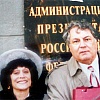
President of the Institute of Post-Communist Studies and Terrorism
Blog: US, Russia and China: Coping with Rogue States and Terrorists Groups
Rating: 0


