Erdogan’s Strategy for PKK's Disarmament, Elections, and Power
In
Login if you are already registered
(no votes) |
(0 votes) |


Juris Doctor, Researcher and lecturer at Duhok Polytechnic University, Iraqi Kurdistan Region
The Turkish Parliament's ratification on August 10, 2026, of what became known as the "Framework Law" (officially titled the "Law on Strengthening National Solidarity and Social Integration" or Law No. 7595) represented a strategic turning point in Turkish domestic politics and a development that could influence the country's foreign policy. This legislation enjoyed broad support, securing a majority of 468 votes out of 600, with 86 votes against and 12 abstentions. It entered into force a week later after President Recep Tayyip Erdogan ratified it, becoming effective a week later. This law aims to end the armed conflict with the Kurdistan Workers' Party (PKK) by establishing a legal framework to regulate the disarmament and reintegration of its fighters into society. This step is of paramount importance as it marks the first time, after four decades of armed conflict, that the PKK has succeeded in establishing a negotiating track that includes the Turkish legislative body as a key player in the political process. This marks a fundamental shift in the dynamics of the conflict and its resolution mechanisms.
Consequently, potential paths for the settlement process can be summarized in three main scenarios:
First: The possibility of a split within the PKK regarding this path, between a faction that refuses to lay down arms and another that adheres to Abdullah Ocalan's directives, is high. Despite this, Erdogan is expected to initiate a portion of the "Framework Law" by granting amnesty to a limited number of PKK members imprisoned in Turkey. However, he will likely link progress in the reconciliation process to securing Ocalan's support in the upcoming elections and ensuring his endorsement of the desired constitutional amendments.
Second: The possibility of escalating tensions on the ground due to provocations instigated by elements aligned with the Turkish opposition, seeking to obstruct efforts to enshrine Kurdish rights in the constitution. This could paralyze the entire process and prevent the implementation of its provisions. In this case, Erdogan is expected to again attempt to win over the Kurdish voting bloc and garner Ocalan's support in the elections, relying on resuming the reconciliation process once he consolidates his grip on power.
Third: The scenario of the operation's failure, while less likely, remains a possibility if popular discontent intensifies and the PKK refuses to lay down its arms. This could lead to a resumption of violent armed clashes between Turkish security forces and PKK members. The risks of this scenario are compounded by security disturbances in Iran and their direct repercussions on the Iraqi and Syrian arenas, where all relevant actors might seek to exploit the resulting security vacuum to consolidate their influence on the ground.
The Turkish Parliament's ratification on August 10, 2026, of what became known as the "Framework Law" (officially titled the "Law on Strengthening National Solidarity and Social Integration" or Law No. 7595) represented a strategic turning point in Turkish domestic politics and a development that could influence the country's foreign policy. This legislation enjoyed broad support, securing a majority of 468 votes out of 600, with 86 votes against and 12 abstentions. It entered into force a week later after President Recep Tayyip Erdogan ratified it, becoming effective a week later. This law aims to end the armed conflict with the Kurdistan Workers' Party (PKK) by establishing a legal framework to regulate the disarmament and reintegration of its fighters into society. This step is of paramount importance as it marks the first time, after four decades of armed conflict, that the PKK has succeeded in establishing a negotiating track that includes the Turkish legislative body as a key player in the political process. This marks a fundamental shift in the dynamics of the conflict and its resolution mechanisms.
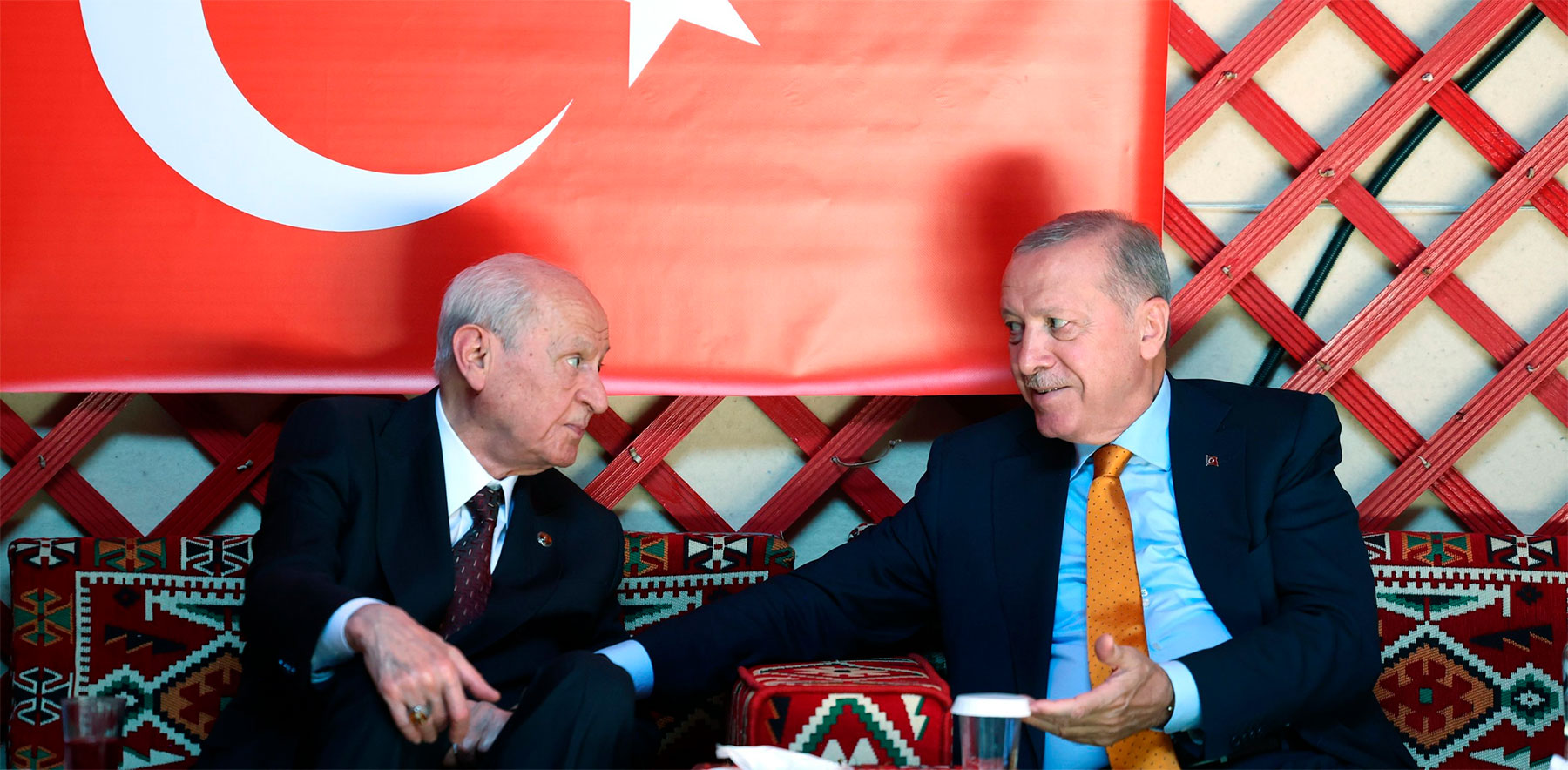
Since Devlet Bahceli, leader of the Nationalist Movement Party (MHP), made the call in October 2014, to give Abdullah Ocalan (leader of the PKK), an opportunity to play an active role in ending the armed conflict in exchange for amnesty and the opportunity to engage in political activity, negotiations between the Turkish intelligence service and Ocalan in his prison on Imrali Island—where he has been held since his arrest in 1999—have witnessed rapid developments. However, procedural steps remained stalled until the passage of the "Framework Law" by Parliament, which represents the cornerstone of the process to resolve the armed conflict. This process has been influenced by a range of overlapping factors, both domestic and international.

President Erdogan's hesitation in managing this issue stems from delicate domestic considerations, particularly his desire to avoid any negative repercussions of the political process on his fluctuating popularity among the Turkish public, especially within the nationalist camp. The president also aspires to achieve tangible political gains from this gamble, namely garnering Kurdish support for passing constitutional amendments and changing the mechanisms for electing the president, thus ensuring his continued hold on power. However, following the NATO summit held in Ankara last July, and the resulting U.S. support for strengthening Turkey's regional role and its position within the alliance, President Erdogan initiated a reactivation of the peace process with the Kurds. In doing so, he backtracked on his previous condition that parliament refrain from passing any legislation concerning amnesty for PKK militants before their complete disarmament. Instead, he gave parliament the green light to pass the "Framework Law," linking its implementation to rigorous monitoring and verification mechanisms overseen by the intelligence services to ensure the PKK's complete renunciation of armed activity.
In addition to regional and international developments related to the outcomes of the NATO summit, the strategic repercussions of a potential U.S. war on Iran, and Ankara's concerns about Israeli rapprochement with the Kurds in the region and the formation of political and security alliances between them, President Erdogan has capitalized on several current domestic factors to advance this issue. The most prominent of these are: the approaching presidential election date in the summer of 2028, which imposes a tight timeframe of no more than 18 months to finalize any political compromises or constitutional amendments before the country enters the presidential race; the escalating competition to succeed President Erdogan, coinciding with recent rumors about his declining health; and reaching understandings with Abdullah Ocalan in his prison cell regarding the future of the political process, which likely includes a commitment from Ocalan to support the constitutional amendments sought by Erdogan and endorse his candidacy in the upcoming presidential elections.
Under the existing legal framework, the Turkish National Intelligence Organization (MIT) is tasked with preparing periodic reports on the status of the PKK to verify its commitment to ending armed activity and dismantling its administrative and organizational structure. These reports are submitted to the Turkish National Security Council, chaired by President Recep Tayyip Erdogan. Upon approval by the Council, the legal privileges granted include the review of individual cases of PKK members, except for those involved in murder or serving life sentences. Accordingly, the cases of those who meet the criteria are addressed through the postponement of prosecutions, investigations, and penalties, depending on the nature of the crimes attributed to them. Although the government denies that these measures constitute a “general amnesty," the reality suggests the implementation of a conditional pardon that would allow approximately 3,500 to 3,600 prisoners and some 2,000 fighters in mountainous regions to return to their families and resume their normal lives. The law explicitly excludes those convicted of premeditated murder, as well as the organization’s leadership cadre, who are expected to seek asylum in Iraq or Europe.
The pro-government Turkish newspaper Hurriyet reported in its Monday, September 31st edition that a four-way coordination mechanism has been established, involving Ankara, Baghdad, Erbil, and Sulaymaniyah, under the supervision of the Turkish National Intelligence Organization (MIT). According to this mechanism, members of the PKK will surrender their weapons to authorities in Erbil, Sulaymaniyah, or the central government in Baghdad. These weapons will then be officially inventoried, and records of these weapons will be held by the MIT. In the same vein, the evacuation of PKK camps and hideouts will be subject to rigorous field monitoring, beginning in the Haftanin and Gara regions of Iraqi Kurdistan. Following verification that all sites have been evacuated and the PKK's personnel completely dismantled, the MIT will submit a detailed report to the Turkish National Security Council, which will then issue an official decree declaring the end of the PKK's presence, designated as a terrorist organization.
Despite the strategic importance of the reconciliation process for Turkey, as it represents a cornerstone for ending a four-decade-long armed conflict, President Erdogan is keen to maintain tight control over all aspects of this process. The legislation issued lacks guarantees of tangible political or democratic gains for either the Kurds or the Turkish state. This has raised concerns among opposition forces regarding the implementation of mechanisms. However, they found themselves compelled to support the law due to considerations related to ending the violence and renouncing weapons—an objective difficult to oppose politically.
Turkey's "Terror-Free" Initiative: A Complex Geopolitical Landscape
President Erdogan's dominance over this process is evident in three main areas:
First: The absence of a neutral third party to oversee the implementation of the mutual commitments. The Turkish government and its agencies act as both judge and jury, granting President Erdogan absolute authority to suspend or terminate the process under the pretext of the other party's non-compliance, even in the absence of conclusive evidence.
Second: The Turkish intelligence agency monopolizes the negotiations with Abdullah Ocalan while he is imprisoned, imposing strict controls on visits and correspondence to ensure the neutralization of any attempt at manipulation by Ocalan.
Third: Political rights and privileges granted to Kurds are restricted to the limits set by President Erdogan according to his political agenda and calculations of popularity. This strengthens his negotiating position in pressuring Ocalan and the Peoples' Equality and Democracy Party (DEM Party) to secure parliamentary support that serves his ambitions of holding early presidential elections or passing constitutional amendments.
Regionally, Omer Celik, the official spokesperson for the Justice and Development Party (AKP), affirmed that the goals of a "terror-free Turkey" and a "terror-free region" are inseparable and intertwined. He indicated that the parliament's ratification of this law constitutes a firm response to imperialist and Zionist hegemonic projects, emphasizing that the repercussions of this decision will extend to the Iraqi, Syrian, and Iranian arenas. These statements are not merely political rhetoric; they reveal the outlines of a new Turkish strategy toward the "Kurdish question." Through a security and geopolitical shift linked to developments in neighboring countries, Ankara seeks to alleviate the burden this issue has imposed on its foreign policy for the past four decades, thereby expanding its room for maneuver within the current regional balance of power. The most prominent strategic goal is to block any potential Israeli influence in Kurdish circles in the region and even goes beyond that towards Ankara’s ambition to absorb the Kurdistan Workers’ Party and its arms in Syria and Iran and turn them into a tool that serves the Turkish agenda in those countries in exchange for granting the Kurds inside Turkey a package of political rights.
Reconciliation Process Challenges
The Turkish-Kurdish reconciliation process faces several fundamental challenges, both internal and external. The most prominent of these can be summarized as follows:
First: Iranian pressure on its allies within the PKK to obstruct any move toward disarmament. Tehran exerts significant influence within the military wing led by Cemil Bayik, a wing that historically evolved from the "People's Liberation Army of Kurdistan" (ARGK) during the 1980s and 1990s to its current structure as the "People's Defense Forces" (HPG).
Second: The repercussions of the Syrian conflict. Turkey seeks to integrate the "Syrian Democratic Forces" (SDF) into the Syrian army, prompting the PKK to bolster its field presence by supporting the "Revolutionary Youth Movement" in northern and eastern Syria. Consequently, the party views the continued regional tension as a strategic opportunity to consolidate its security and political power, making the option of disarming unlikely in the foreseeable future.

Russia and Turkey: Partners, Rivals, or Neighbors by Necessity?
Third: The risks stemming from popular discontent within Turkey, given the potential for escalating tensions between Turkish nationalists and Kurdish factions. Despite the current limited protests by the opposition against the reconciliation process, the move to enshrine Kurdish rights in the constitution could be met with opposing actions on the ground, threatening to destabilize society.
Fourth: The government's lack of a clear vision regarding the justifications and strategic objectives of the reconciliation process has led to the formation of a popular movement rejecting these trends. Furthermore, the support of opposition parties remains conditional and confined to security frameworks. It is likely that the opposition will withdraw its support as the process moves towards more sensitive issues, such as the status of Abdullah Ocalan and the possibility of implementing the “right to hope,” especially with the approach of elections.
Fifth: The process lacks transparency. The terms of the agreement and the ultimate outcomes remain unclear, opening the door to conflicting interpretations and raising expectations or leading to unforeseen consequences that could hinder the successful completion of this delicate phase.
Settlement Process Scenarios
Consequently, potential paths for the settlement process can be summarized in three main scenarios:
First: The possibility of a split within the PKK regarding this path, between a faction that refuses to lay down arms and another that adheres to Abdullah Ocalan's directives, is high. Despite this, Erdogan is expected to initiate a portion of the "Framework Law" by granting amnesty to a limited number of PKK members imprisoned in Turkey. However, he will likely link progress in the reconciliation process to securing Ocalan's support in the upcoming elections and ensuring his endorsement of the desired constitutional amendments.
Second: The possibility of escalating tensions on the ground due to provocations instigated by elements aligned with the Turkish opposition, seeking to obstruct efforts to enshrine Kurdish rights in the constitution. This could paralyze the entire process and prevent the implementation of its provisions. In this case, Erdogan is expected to again attempt to win over the Kurdish voting bloc and garner Ocalan's support in the elections, relying on resuming the reconciliation process once he consolidates his grip on power.
Third: The scenario of the operation's failure, while less likely, remains a possibility if popular discontent intensifies and the PKK refuses to lay down its arms. This could lead to a resumption of violent armed clashes between Turkish security forces and PKK members. The risks of this scenario are compounded by security disturbances in Iran and their direct repercussions on the Iraqi and Syrian arenas, where all relevant actors might seek to exploit the resulting security vacuum to consolidate their influence on the ground.
(no votes) |
(0 votes) |
The primary objective of "Kurdish-Turkish reconciliation" is Turkish foreign policy
Russia and Turkey: Partners, Rivals, or Neighbors by Necessity?Dmitriy Trenin’s Interview with LIMES
Conflicts in the Middle East and North Africa: Current State and Possible DynamicsReport No. 110 / 2026