The Successes and Challenges of Russia-Africa Cooperation Following the 2023 Russia-Africa Summit
(votes: 7, rating: 5) |
(7 votes) |



Student at the School of International Relations Faculty, MGIMO University
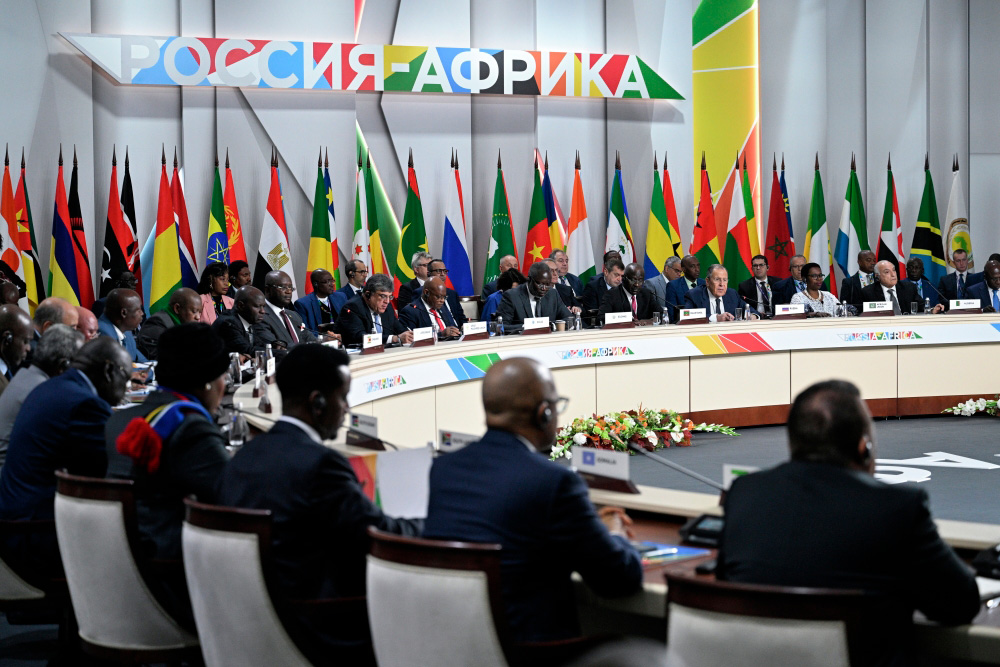
On July 11, amid the upcoming third Russia-Africa summit that will take place at the end of this October, Russian Foreign Minister Sergei Lavrov completed his African tour, visiting countries including Ethiopia, Niger, Mozambique and Burundi. During his visits, various aspects of cooperation including the preparations for the third summit were discussed. The first 2019 Russia-Africa summit was attended by all 54 African countries, with 45 of them at the level of the heads of state, whereas in the second summit, 47 countries and 27 heads of state participated. On July 20, the confirmation of the third summit’s attendance by more than 30 African states was reported. Experts now argue that the role of the third summit will have more of a ceremonial character, since the success of the summit is slowly being evaluated less on the number of attendees, and more on assessing the steps implemented to deepen cooperation.
In this sense, examining the effectiveness of the efforts made by the parties to achieve the objectives set by the outcome of the second Russia-Africa summit can provide useful insights to the attainability of the formulated goals, identify strengths that could be further developed, and possible weaknesses that could be removed or addressed.
All in all, the 2023 Russia-Africa summit has served as an impactful platform for deepening ties between Russia and African countries, both in the public and private sectors by using a multi-faceted approach of engagement. The summit took place in the context of tightening Western sanctions, Russia’s “Pivot to Asia,” the adoption of the 2023 Russian Foreign Policy Concept, where Africa sits at sixth place within Russia’s foreign policy agenda, ahead of both the U.S. and Europe for the first time ever.
In terms of security, Russia can use its leading position in the energy sector to work towards the electrification of Africa. The successes of “African Corps” signaled the deepening of military cooperation and the strategic decision made at the end of the summit (pertaining to debt cancellation and setting up the process of special fund formation) removed long-standing barriers to mutually beneficial investment projects. In additional, it is important to keep in mind that cooperation in the humanitarian sector should be considered through the prism of the African continent having “the world’s youngest population.” Thus, greater emphasis should be put on youth-oriented projects, including educational programs, networking and internship opportunities. In this sense, the Russian approach of actively engaging youth is a strength that should be further developed.
Even though the number of delegations during the second summit has somewhat shrinked, cooperation with the interested parties has successfully deepened and many strategic decisions and agreements made during the 2023 summit have been successfully implemented for the past 3 years. With this in mind, major stumbling blocks still remain in the scope of investment (mainly given the current lack of interested public parties), stumbling blocks in legal aspects (particularly so for media) and regulatory policies, language barriers, as well as challenges created by a complicated logistical network. Nevertheless, Russia and Africa sharing common values remains to be a solid foundation that will guarantee thriving and flourishing cooperation, despite any and all challenges that may lie ahead.
On July 11, amid the upcoming third Russia-Africa summit that will take place at the end of this October, Russian Foreign Minister Sergei Lavrov completed his African tour, visiting countries including Ethiopia, Niger, Mozambique and Burundi. During his visits, various aspects of cooperation including the preparations for the third summit were discussed. The first 2019 Russia-Africa summit was attended by all 54 African countries, with 45 of them at the level of the heads of state, whereas in the second summit, 47 countries and 27 heads of state participated. On July 20, the confirmation of the third summit’s attendance by more than 30 African states was reported. Experts now argue that the role of the third summit will have more of a ceremonial character, since the success of the summit is slowly being evaluated less on the number of attendees, and more on assessing the steps implemented to deepen cooperation.
In this sense, examining the effectiveness of the efforts made by the parties to achieve the objectives set by the outcome of the second Russia-Africa summit can provide useful insights to the attainability of the formulated goals, identify strengths that could be further developed, and possible weaknesses that could be removed or addressed. Hence, this article will summarize the most noteworthy developments and challenges for Russia-Africa cooperation within the past 3 years.
In the signed official declaration of the summit, six main spheres of cooperation were indicated, including: Mechanism for Dialogue Partnership; Political and Legal Cooperation; Security Cooperation; Trade and Economic Cooperation; Socio-Humanitarian Cooperation; [1] and lastly, Environmental and Climate Cooperation. In total, the declaration was compromised by an impressive 74 points. In addition to the declaration is the Action Plan for 2023-2026, which includes 181 concrete steps (in some cases even actual projects) that were adopted. This was a major step, moving away from sole-strategy result formation to outlining targeted steps for execution.
Russia’s Policy in Africa: A Geographic Dilemma
Mechanism for Dialogue Partnership
In many ways, goals established under the “Mechanism for Dialogue Partnership” section had been largely accomplished. Indeed, the resolution to hold “Russia-Africa” summits every three years was adopted. In addition, The Ministerial Partnership framework was institutionalized on an annual basis with two ministerial conferences having been already held in 2024 and 2025 (in Sochi and Cairo, respectively). Furthermore, talks between the Minister of Foreign Affairs of Russia and the Chairperson of the African Union Commission were held in 2024 in Moscow, and then in 2026 in Addis Ababa. Therefore, the institutionalization of Russia-Africa top-level dialogue has seen the progress it so anticipated.
Political and Legal Cooperation
Regarding political cooperation, there have been various notable achievements. For example, progress was made on supporting African efforts to counter the issue of the continent’s underrepresentation in the UN Security Council. During the consultations in Addis Ababa in the beginning of July, a joint statement by the Russian Foreign Minister and the Chairperson of the African Union reaffirmed Russian support for the African cause, as reflected by the unanimous adoption of the Ezulwini Consensus and Sirte Declaration. Additionally, in the field of legal cooperation, despite noticeable successes in synchronizing certain regulatory policies, some deadlocks can still be traced. Namely, inter-parliamentary conferences were not institutionalized on an annual basis.
Security Cooperation
The prospects of cooperation in the field of security became one of the most discussed topics of the summit. To better define the concept, participants used its all-encompassing interpretation of “all means necessary” for ensuring national stability and independence from the outside forces. To better understand the discussions taking place within the security dimension, it would be best to break it down into three main categories: energy security (which incorporates the six “pillar” of the summit: environmental cooperation), food security, and military cooperation.
Firstly, energy poverty eradication is high on the agenda of many African states. According to a recent IEA report, “nearly two out of every five people in Africa—around 600 million in total—still live without access to electricity.” Irina Abramova, for example, emphasizes that the energy sector should be considered by Russia as number one priority when constructing cooperation with the African continent. Here is also where the last section of the Russia-Africa 2023 summit declaration (environmental and climate cooperation) works hand in hand with issues pertaining to security cooperation. Afterall, Russia successfully develops the capacities for the generation of the alternative energy sources (nuclear power) that do not produce nitrate or sulphate gases, hence contributing to the promotion of low-carbon and low-emission energy. Currently, the only nuclear power plant in active construction is in Egypt, starting in 2022 and planned to be completed by 2027-2030. Even though this is currently the only project in effect, negotiations with other African countries on nuclear power cooperation are actively being held.
Secondly, within the summit declarations, food security is defined by the FAO as the “availability and access to sufficient, safe and nutritious food to meet the dietary needs and food preferences for an active and healthy life.” Following the second summit Russia has expanded the volume of grain exports to African countries. From 2023 to 2024, exports rose by 19%, reaching $7 billion dollars. In the first six months of 2026, trade volumes reached $2.9 billion, showing an increase of 40%, compared to the same period of previous year. That being said, value-added food products for sustainable development are still needed: flour not grain, as it was during the Russian Empire. It is now more important for African countries to move from raw materials to high‑value‑added products, while simultaneously addressing the systemic problems in agriculture, rather than simply importing grain.
Third, Moscow accounts for about a third of all arms supplies to Africa (with Angola, Ethiopia, Nigeria and Uganda being the main buyers of Russian arms). In recent years in the sphere of military cooperation Russia-Africa relations have significantly deepened. One major development in the past 3 years could be considered formation of the “African Corps” at the end of 2023, and the spread of its operations in African countries, with high demand for Russian military support, particularly in the unstable region of Sahel.
Another indicator are the various intergovernmental agreements signed between Russia and African states in the sphere of military-technical cooperation. Since 2023, approximately 150 agreements worth over $20 billion have been signed with 48 African states. As noted by the head of Rosoboronexport, Alexander Micheev, the African continent now accounts for 30% of the company's order portfolio.

Trade and Economic Cooperation
Current Russia-Africa economic cooperation is carried out by Russian domestic companies, such as Alrosa (diamond sector in Angola, Botswana and Zimbabwe), Lukoil (offshore blocks in Ghana, Cameroon and Nigeria), Rusal (Guinea), Renova (South Africa) and others gradually entering African markets.
Aside from the many developments, a major stumbling block that prevented Russia and Africa concerned investment. It was difficult to invest in mutually beneficial projects given the serious debt burden, which can be traced back to the era of the Soviet Union. However, Russia began the process of debt cancellation in 1996. In fact, Russia wrote off $23 billion dollars in 2023 and $20 billion dollars in 2024. In contrast to the 1993, the Russian policy of encouraging African states “to repay their debt to the former USSR, including through reinvestment, resale of debt obligations, etc.” continues to successfully resolve the long-standing issue. In August of 2023, the Russian government also proposed to create a special investment fund to support Russian investors in Africa. As reported by the Minister of Economic Development of the Russian Federation, the fund is currently on the stage of development and preparation. In addition, new intergovernmental commissions, as well as logistical routes, are being established.
Apart from investment, trade turnover between Russia and African countries in 2023–2026 had seen a steady growth rate, rising from $18 billion in 2022 to approximately $28 billion in 2025. A major driver for rapid trade growth during this period was the pressure of the Western sanctions on Russia, which contributed to trade reorientation, the context of which became a central focus for African countries. Nevertheless, trade continues to be concentrated on raw materials, which President of Uganda Yoweri Museveni has emphasized to be a major issue for many African countries, calling for Russian representatives of both the public, as well as private sector, to intensify the process of adopting a policy of product diversification and increase trade volumes in value-added products.
In addition, the African Union becoming a permanent member of the G20 in 2023 reflected the success reached in the aim of incorporating Africa into the economic integration of the so-called “Global South,” in which Russia stands out as one of the greatest advocates. In the same regard, the admission of Ethiopia and Egypt into BRICS in 2024 reflected the further success of Russia’s sincere support.
Socio-Humanitarian Cooperation
When examining the humanitarian aspect of Russia-Africa cooperation, a distinct feature of the African continent is that it is “the youngest region of the world,” with the fastest growing population which needs to be taken into account. In his speech at a plenary session, the then-chairperson of the African Union, President of Comoros Azali Assoumani, highlighted the importance of African youth’s engagement as the number one priority for the continent. In this sense, the World Youth Festival (WYF) organized by Russia’s Rosmolodezh and its resounding success in 2024 acts as a striking example of the successful implementation of the summit’s aim to “promote the organization of thematic events to further strengthen and develop youth cooperation,” especially as representatives of some African countries have participated in the event. Many experts note that the WYF resembles Russia’s policy of viewing the youth as active entities of global processes, contrasting the Western approach. Thus, the WYF exceeds in being the only platform for such interaction. Expanding its work to the informational and other types of support for the youth representatives in finding opportunities in Russia is thus critical for expanding cooperation.
In addition, Russia–Africa media cooperation is on the rise, led by Russia Today (RT), Sputnik and African Initiative (founded in the aftermath of the second Russia-Africa summit). In the past 3 years, the scope of their work has noticeably expanded. As an example, in 2024, RT introduced a program with a prominent Pan-Africanist orator, Professor Lumumba, seen by experts as a successful effort in targeting African audiences. However, stumbling blocks for Russia in the media sphere continue to persist. Namely, a major issue for Russian media in Africa today lies not in the lack of content quality, but in the underdevelopment of the information transmission methods. A figurative example could be considered the absence of Russian national satellite TV on the continent. As some experts point out, even though Russia possesses experience in broadcasting information on large territories, and therefore has strategic advantage, the lack of investment in the logistics to improve media reach remains a major barrier in carrying out projects. A proposed solution to the problem could be to boost public subsidies and search for an interested public party either on the Russian or African side.
Apart from an increased media presence, the Russian Orthodox Church has played an increasing role in the continent. The Head of RT’s African Content Production, Svyatoslav Shegolev, noted during his opening speech at the round table “African media landscape,” organized by RIAC at the end of June, that the work of the Russian Orthodox Church in Africa enjoys a distinct success in terms of media coverage. In 2022, Patriarch Kirill in the plenary session of the Russia–Africa 2023 summit, delivered a speech during which he explained that the strength of Russia–Africa cooperation lies in the mutual understanding of the fundamental bases of a person’s life: adherence to tradition, love and respect for history, a strive for kindness and truth, emphasizing that Russia has never looked at the African continent as a space for resource extraction and colonization.
It is also important to keep in mind that Sub-Saharan Africa accounts for the majority of the most severe diseases in the world, which is why health cooperation of significant character for the African states. In the declaration of the summit, a goal was outlined to “facilitate participation in joint research projects, organization of scientific conferences and seminars.” The progress on this track was visible; in particular, the two Russian-African International Conferences on Infectious Disease were held in 2024 and 2026. Furthermore, in March 2026, Russkiy Mir has announced plans to open a Joint Research Center in Congo Republic.
Also, during the most recent summit, special attention was allocated to space-related matters. Multiple agreements were signed, including the Declaration of the Second Russia–Africa Summit on the Prevention of an Arms Race in Outer Space. As Director of the Institute for African Studies of the Russian Academy of Sciences Irina Abramova noted, following the imposition of Western sanctions and restrictions, Russia has lost access to ground stations for receiving satellite downlinks in the Southern Hemisphere. In this regard, cooperation with African countries located in the Southern Hemisphere in the space sphere is of strategic interest for Russia.
Conclusion
All in all, the 2023 Russia-Africa summit has served as an impactful platform for deepening ties between Russia and African countries, both in the public and private sectors by using a multi-faceted approach of engagement. The summit took place in the context of tightening Western sanctions, Russia’s “Pivot to Asia,” the adoption of the 2023 Russian Foreign Policy Concept, where Africa sits at sixth place within Russia’s foreign policy agenda, ahead of both the U.S. and Europe for the first time ever.
In terms of security, Russia can use its leading position in the energy sector to work towards the electrification of Africa. The successes of “African Corps” signaled the deepening of military cooperation and the strategic decision made at the end of the summit (pertaining to debt cancellation and setting up the process of special fund formation) removed long-standing barriers to mutually beneficial investment projects. In additional, it is important to keep in mind that cooperation in the humanitarian sector should be considered through the prism of the African continent having “the world’s youngest population.” Thus, greater emphasis should be put on youth-oriented projects, including educational programs, networking and internship opportunities. In this sense, the Russian approach of actively engaging youth is a strength that should be further developed.
Even though the number of delegations during the second summit has somewhat shrinked, cooperation with the interested parties has successfully deepened and many strategic decisions and agreements made during the 2023 summit have been successfully implemented for the past 3 years. With this in mind, major stumbling blocks still remain in the scope of investment (mainly given the current lack of interested public parties), stumbling blocks in legal aspects (particularly so for media) and regulatory policies, language barriers, as well as challenges created by a complicated logistical network. Nevertheless, Russia and Africa sharing common values remains to be a solid foundation that will guarantee thriving and flourishing cooperation, despite any and all challenges that may lie ahead.
[1] In full, “Scientific, Technical, Educational, Cultural, Sports, Health, Youth, and Information Cooperation.”
(votes: 7, rating: 5) |
(7 votes) |
Russia faces a tough choice in Africa: either to focus on low-risk and highly competitive markets, where projects will depend on a changeable political climate and eventualities or to explore high-risk and low-competition markets where Moscow has inherent non-market advantages and where dialogue with local authorities is mostly pragmatic
African Countries in BRICS: New Opportunities for Economic and Political CooperationWorking Paper No. 97 / 2026